Category Archives: Entrevistas – Interviews

Entrevista: Oliver Valverde – El artesano

foto: gentileza de   Oliver & Co. fotógrafos: Paul Cassidy, Pablo Pérez

foto: gentileza de Oliver & Co.      fotógrafos: Paul Cassidy, Pablo Pérez

Oliver Valverde es una joven promesa. Autodidacta e intuitivo, logró crear su propia marca Oliver&Co. y hacerla crecer más allá de las fronteras de su España natal. Su estilo relajado y libre de afectación se refleja en sus creaciones.

Siempre es placentera la ocasión -como la que tenemos hoy- de conversar con nuestro talentoso amigo.

¿Cómo comenzó tu relación con los perfumes?

Hola Caro, pues creo que empezó en el momento en el que me di cuenta del placer que me proporcionaba quemar inciensos y aceites esenciales en mi espacio vital, incluso los usaba mientras pinchaba discos en mi época como disc-jockey, hace como 12 años ya. Con aquellos olores la atmósfera cambiaba, todo lo sentía de otra manera, era casi místico. Con el paso del tiempo, y por mi curiosa personalidad, fui descubriendo diferentes olores, compraba aceites puros en los herbolarios y los usaba como aromaterapia, leía sobre los efectos en la mente, me interesaba por la Botánica, las infusiones, el té, los perfumes… todo lo relacionado con el gusto y el olfato. Pero nunca imaginé que iba a dedicarme a esto. Lo que estudié fue técnico de sonido, y durante años fui disc-jockey. De ahí también mi pasión por la música. 

¿Qué perfumes u olores dejaron huella en tu memoria?

Muchísimos ! Lo bueno de los olores es que en el momento no te acuerdas, pero cuando de repente hueles algo que te recuerda a un olor que descubriste en el pasado, zas ! de repente tu mente vuelve a la velocidad de la luz a ese momento exacto. Es maravilloso. Por ejemplo, si huelo el incienso clásico de Nag Champa, puedo recordar con todo detalle cuando ensayaba mis actuaciones como DJ en la habitación de casa de mis padres. Es un olor que dejó huella, y hay muchos más. 

Tengo entendido que sos autodidacta ¿Cómo fueron tus comienzos y tus primeros intentos?

Pues comencé haciendo velas en mi cocina, sin tener claro hacia donde me dirigía… Después de haber trabajado en diferentes empresas, tenía claro que quería ser independiente y ser libre a nivel creativo. Fue un proceso experimental, que poco a poco fui conduciendo con mi intuición y fue tomando forma hasta llegar a convertirse en un proyecto de vida. Durante todo ese proceso, fue cuando me di cuenta de que todas esas materias primas estaban ahí esperándome. Fue revelador. Y entonces me aventuré aún sin tener conocimientos técnicos o una carrera de química. En ese momento quería hacer eso, quería descubrir porque me atraía tanto todo ese mundo. Simplemente sentí que todo eso formaba parte de mi naturaleza, y aposté todo por ello. 

¿Cuáles son tus materias primas preferidas?

Depende del momento, no me gusta darle exclusividad a unas u otras… simplemente dejo que fluyan por mis manos según la fórmula en la que esté trabajando.

¿Qué intentás comunicar a través de tus perfumes? 

Realmente mi forma de trabajar no parte de una historia concreta, no empiezo con ideas del tipo, ¨a que quiero que huela mi próximo perfume¨?.

Si hay algo que comunicar, no sería de un perfume concreto, sino de todo el proceso en si. Pasión, artesanía, pureza, fuerza, locura, serenidad, placer, felicidad, melancolía, energía… y todas y cada una de las cualidades de las materias primas como tal. Es una forma de trabajar experimental, donde elementos como el azar o la intuición son muy importantes para mi. 

Si Madrid, tu ciudad, tuviera un perfume ¿cómo sería?

Sería un perfume seco, duro, con notas de asfalto y polvo, y quizá algunas notas verdes… No muy agradable la verdad… Aunque en realidad no soy yo de poner olores a las ciudades.

¿Qué planes tenés para un futuro cercano?

Pues de momento en expansión, nuevos puntos de venta y distribución en algunos países. Además estoy trabajando en un perfume que me fascina y que dejé aparcado el año pasado por falta de tiempo. Si vienes a Pitti te lo mostraré ! Espero verte por allí de nuevo. 

Caro

foto: Oliverandco.es

foto: Oliverandco.es

Interview: Oliver Valverde – The artisan

Oliver Valverde is a young promise. Self trained and intuitive, he succeeded in creating his own brand Oliver&Co. and making it grow beyond the borders of his native Spain. His relaxed and unaffected style is reflected in his creations.

Conversing with our talented friend is always a pleasurable experience.

How did you relationship with fragrances start?

Hello Caro, well, I think it all started at the precise moment when I became aware of the pleasure I obtained from burning incense and essential oils in my living space, I was even using them when I played music in my times as a disc-jockey, some 12 years ago. The atmosphere would change with those smells, I would feel everything in a different manner, it was almost mystical. As time went by, moved by my curious personality, I started to discover different scents, I would buy pure oils at the herbalist’s and I would use them as aromatherapy, I would read about their effects over the mind, I was interested in Botanics, herbal infusions, tea, fragrance…everything that was related to the senses of taste and smell. But I never imagined it would become my job.  I studied to be a sound technician, and I was a disc-jockey for years. That’s where my passion for music comes from.

What fragrances or smells have left an imprint in your memory?

So many of them! The good thing about smells is that, at the moment you may not realize but you might smell something that reminds you of a smell from the past and – eureka!- your mind goes back to that exact moment at the speed of light. It is wonderful. For instance, if I smell the classic Nag Champa incense, I can remember with great detail my rehearsals as a disc-jockey in my room at my parents’ house. It is a smell that left a mark, and there are many more.

I understand you are self trained. What were your beginnings and your first trials like?

Well, I started making candles in my kitchen, without knowing where I was heading to… After having worked for several companies, I knew for sure I wanted to be independent and free on a creative level. It was an experimental process, which I was guiding step by step through my intuition and it was slowly taking shape until it became a life project. It was during this whole process when  I realised that all those raw materials were there, waiting for me. It was revealing. And so I took the plunge, even though I didn’t have a chemistry career or  technical knowledge. It was what I wanted to do at that precise moment, I wanted to know why that world appealed so much to me. I simply felt all that was part of my nature and I went for everything. 

What are your favorite raw materials?

It depends on the moment, I don’t like to give exclusivity to one or others… I simply let them play in my hands according to the formula I’m working with.

What do you intend to communicate through your fragrances? 

My way of working doesn’t stem from a concrete story, I don’t start with ideas such as ¨what do I want my next fragrance to smell like¨?.

If there’s anything to be communicated, it wouldn’t be a scent but the whole process itself. Passion, craftsmanship, purity, strenth, madness, serenity, pleasure, happiness, melancholy, energy… and every one of the qualities of the raw materials as such. It is an experimental way of working, where elements like chance and intuition are very important for me. 

If Madrid, your city, had a fragrance, What would it be like?

It would be a dry, tough fragrance with asphalt and dust notes, and perhaps a few green notes… Not too pleasant actually… but I don’t tend to attribute scents to cities

What are your plans for the near future?

I am currently in expansion, with new sales points and distribution in more countries. I am also working on a fragrance I find fascinating which I left standing last year due to time constraints. If you come to Pitti I will show it to you! I hope to see you there again. 

Caro

Entrevista: Naomi Goodsir – Espíritu independiente

foto: Naomigoodsirparfums.com

foto: Naomigoodsirparfums.com


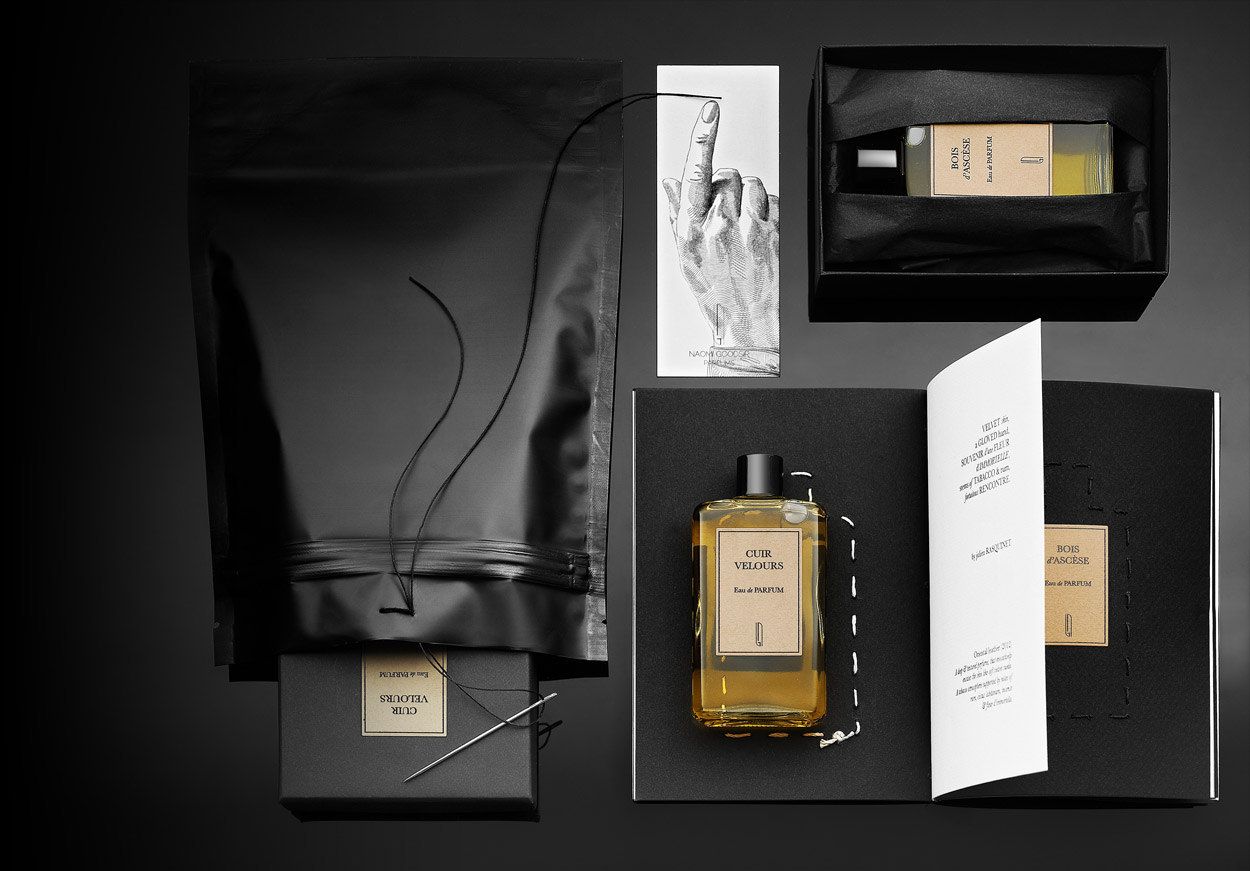
Al ver por primera vez el elaborado stand de Naomi Goodsir Parfums en Pitti Fragranze juzgué un poco demasiado rápido y pensé que la marca estaba enfatizando su imagen porque, sin dudas, la calidad de sus perfumes debía ser bastante floja. Nunca estuve más equivocada en mi vida.
 
Las primeras dos fragancias de la marca son elegantes y distintivas. A pesar de que Cuir Velours -me enamoré locamente de esta gamuza amielada- y Bois d’Ascése son tan diferentes como el día y la noche, hay un misterioso air de famille entre ellos.
Nunca me sentí tan feliz de estar equivocada. Por supuesto, la imagen y packaging cuidadísimos de la marca tampoco molestan.
 
Quiero agradecer a la carismática Naomi el haber tenido la amabilidad de responder a  mis preguntas.


Siendo sombrerera y diseñadora ¿Por qué sentiste la necesidad de crear una línea de fragancias?
 
Luego de estudiar diseño de modas en Sydney, me convertí en sombrerera,  creando tocados couture por más de una década. Mi estilo y savoir-faire me permitieron colaborar con numerosos diseñadores de moda en Australia y el extranjero, concibiendo tocados para sus pasarelas y colecciones. Sigo diseñando y haciendo sombreros y accesorios para el cuerpo, como carteras, muñequeras, gargantillas, etc. y también colaboro con variados artesanos.
Los perfumes son una extensión de mi creatividad.
Conocí a Renaud Coutaudier, un visionario con quien comparto ideas, que ha estado trabajando en la industria del Perfume, como director creativo, por más de 10 años. Juntos decidimos expresar nuestras sensibilidades a través de la creación de nuestra propio universo de fragancias finas. Por lo tanto resultó natural para mí moverme en esa dirección. Pensamos, sin ninguna idea pretenciosa, lanzar nuestra propia visión de la alta perfumería – hecha en Francia. También vivimos en la Riviera Francesa, muy próximos a Grasse. Así que los perfumes son formulados y mezclados cerca.

Las fragancias Naomi Goodsir han sido producidas con el mismo grado de involucramiento y pasión que mis accesorios de moda.

 
-Aprecio el hecho de que tu colección sea pequeña ¿Es  una decisión consciente ? 
 
Definitivamente. La alta perfumería lleva tiempo, quiero decir que primero hay que lograr un aprendizaje y un sentimiento muy personal con un perfumista. Nos llevó aproximadamente dos años presentar nuestros dos primeros perfumes. Teníamos que encontrar el equilibrio correcto entre lo que queríamos en términos de formulaciones y diseño. Pero hemos estado pensando en hacer algo por más de cuatro años.
Preferimos ver nuestros perfumes como una propuesta alternativa. Artística de cierta manera, si considerás que los autores son perfumistas independientes, libres de crear y expresar su visión de mi propio universo creativo. Es una colaboración basada en la confianza, intercambio de ideas y percepciones. Esto también lleva tiempo.
No se crea un perfume simplemente porque agradará a « un mercado específico», sino porque traerá una emoción, una sonrisa… Todo esto es muy personal. Así que sí, fue una decisión consciente. Y a veces es mejor empezar por algo pequeño y estar completamente feliz con lo que uno ha creado.
 

¿Hay algún elemento común a todos tus perfumes? Si es así ¿cuál?
 
Un perfume debe reflejar un universo personal y único. Son  ‘accesorios invisibles perfumados’ que creemos (y deseamos) expresan de una manera bella y delicada el mundo que habito.
Nuestros eaux de parfum son formulados alrededor de una materia prima noble tales como un cuero aterciopelado/tabaco o un incienso  ahumado/amaderado, así que creo que ese es el elemento común a nuestras dos primeras fragancias. Encuentro que la textura es algo que me resulta inspirador cuando diseño o creo un sombrero, así que esperamos que el perfume sea un poco texturado también.
Cuir Velours es un perfume profundo y con textura, que evocadoramente envuelve la piel como suave gamuza. Bois d’Ascèse es un humo que cautiva y tranquiliza.
Los narices tras los perfumes crearon esencias que capturan  ‘mi microcosmos’. Son perfumistas talentosos, independientes y libres de expresar su arte a través de un material noble. Julien Rasquinet -entrenado por Pierre Bourdon- e Isabelle Doyen son los primeros autores.
Julien Rasquinet es un perfumista joven y talentoso que tiene mucho para expresar. Hemos conocido a Isabelle Doyen por años, como amiga y como consagrada perfumista que ha inspirado a tantos otros. Ambos Isabelle y Julien tienen un aguo sentido del humor (que es tan importante) con una gran apreciación por las artes y ambos son de mente libre.
 
Tus fragancias han sido muy bien recibidas por el público ¿a qué  atribuís esto?
 
Cuando decidimos presentar nuestros dos perfumes en Pitti Fragranze en Florencia en Septiembre de 2012, estábamos felices sólo de podercompartirlos con más personas. No teníamos expectativas. El público respondió bien y fue un placer para nosotros. Los perfumes eran lo que queríamos, sin estar guiados por el mercado. Supongo que nuestra pasión y en primer lugar el asombroso trabajo de  Julien Rasquinet (junto con nuestra evaluación) hicieron el resto.


¿Qué importancia le das a la imagen?
 
Realmente nunca pensé en eso.
Me gusta crear lo que me venga a la mente sin pensar en ”una imagen”.
La imagen está relacionada con un momento en el tiempo y hoy día todo va muy rápido, así que desde mi lugar permanezco igual. No quiero sobreexponerme. En la vida es bueno ser una misma y hacer las cosas de la mejor manera posible. Si eso crea una imagen, bueno, que así sea.
 
¿Creés que el perfume está relacionado con el género?
 
No creemos que el perfume esté relacionado con el género. Si algo te gusta– te gusta con independencia del género. En el caso de nuestros dos primeros perfumes, nos ha sorprendido que tanto a hombres como a mujeres les gusten de igual manera. Es decir que alguien puede preferir a uno por sobre el otro, pero se da de manera pareja en ambos géneros.
Yo uso Bois d’Ascese con mucha más frecuencia que Cuir Velours. Se podría asumir que Bois d’Ascese sería más masculino… eso diría más acerca de mí…
Hablemos entonces de perfumes sin género.
 
¿Cuán importante es el perfume en tu vida diaria?
 
El perfume se ha convertido en algo muy importante en mi vida cotidiana. Nunca recibí educación orientada a alta perfumería, pero luego de conocer a Renaud quien me introdujo en este delicioso mundo, empecé a aprender y apreciar el poder y la maravilla de los aromas.
Si considerás un perfume como una capa invisible, una sensación íntima que te hace sentir confianza, igual que una pieza de moda. No podés verlo, pero vuelve una y otra vez para recordarte su presencia. Es la misma aproximación que con las bellas artes, una especie de adicción estética. También, creemos firmemente que un nariz es un artista increíble que formula composiciones, a veces obras maestras, que pueden ser usadas todos los días – envolviendo a quien las lleva.
Así que en la mañana, antes o después de vestirse , unas gotas de perfume pueden hacer maravillas para la mente. Después de todo, el perfume no tiene que ver sólo con oler bien sino con sentirse bien también.
 
¿Qué aromas te gustaría poder embotellar?
 
Los olores asociados con el campo Australiano, lo que llamamos ‘the bush’ – el olor del eucalipto, las acacias, el trigo y paja cortados y la tierra. Estos olores siempre me traen a la mente una sensación poderosa de una presencia omnisciente y de libertad. La sensación de ser tan pequeña en los grande espacios abiertos, y sin embargo viva, libre y en casa.
También tuve la suerte de estar alrededor de los caballos desde una edad muy temprana y adoro cualquier olor que emane de un caballo. El roce del hocico de un caballo es mágico – terciopelo con bigotitos.
Así que el olor que desearía embotellar sería el de un caballo mezclado con el del campo Australiano. Sucio, animal y fuerte….
 
Caro
 
foto: Naomigoodsir.com

foto: Naomigoodsir.com

 Interview: Naomi Goodsir – Independent spirit
 
When I first saw Naomi Goodsir Parfums’ elaborate display at Pitti Fragranze I judged a bit too quickly and thought the brand was emphasizing their image because, of course, the quality of their fragrances was quite weak. I have never been so wrong in my life.
 
The brand’s first two fragrances are elegant and distinctive. Even though Cuir Velours -I fell madly in love with this honeyed suede- and Bois d’Ascése are as different as night and day, there’s still a mysterious air de famille between them.
I have never felt happier about being wrong. Of course, the brand’s careful image and packaging don’t hurt.
 
I want to thank the charismatic Naomi for taking the time to answer my questions.
 
 
As a milliner and designer, why did you feel the need to create a fragrance line?
 
After studying fashion design in Sydney, I became a milliner, creating couture head pieces for more than a decade. My style and savoir-faire enabled me to collaborate with numerous fashion designers in Australia and abroad, conceiving  headpieces for their catwalks and collections. I still continue to design and make hats and body ‘accoutrements’ such as hand bags, cuffs, chokers etc. and also collaborate with various artisans.
Perfumes are an extension of my creativity. I met Renaud Coutaudier, a like-minded visionary who has worked in the perfume industry, as a creative director for over 10 years. Together we decided to express our sensibilities through the creation of our own fine perfumery universe. It therefore seemed natural for me to proceed in that direction.
We thought, without any pretentious idea, to launch our own vision of a fine perfumery – Made in France. We also live on the French Riviera, very close to Grasse. So the perfumes are formulated and blended nearby. Naomi Goodsir Parfums have been produced with the same amount of involvement and passion as for my fashion accessories.
 
I appreciate the fact that your collection is small. Is this a conscious decision ? 
 
Definitely. Fine perfumery takes time, I mean it is first an apprentissage and a very personal feeling with a perfumer. It took approximately two years to introduce our first two perfumes. We had to find the right balance between what we wanted in terms of formulations and design. But we have been thinking about doing something for over four years.
We prefer to see our perfumes as an alternative offer. Artistic in a way, if you consider that the authors are independent perfumers, free to create and to express their vision of my own creative universe. It is a collaboration based on trust, exchange of ideas and sensibilities. This also takes time.
You don’t create a perfume simply because it will please « a specific market », but rather because it brings you an emotion, a smile… All of this is very personal. So yes, it was a conscious decision. And sometimes it’s better to start very small and be completely happy with what you have created.
 
Is there a common element to you fragrances? If so, what is it?
 
A perfume has to reflect a unique and personal universe. They are ‘invisible fragrant accessories’, which we believe (and hope) express in a beautiful and delicate manner, the world that I inhabit.
Our eaux de parfum, are formulated around a noble raw material such as a velvety leather/tobacco and a smokey woody/incense, so I guess that is the common element to our first two fragrances. I find that texture is very inspiring to me when designing and creating a hat, so we hope that the perfume is a little textured too.
Cuir Velours is a deep and textured perfume, that evocatively encases the skin like soft velvet suede. Bois d’Ascèse a captivating and reassuring smoke.
The noses behind the perfumes created scents that capture ‘my microcosm’. They are talented perfumers, independent and free to express their art through a noble raw material. Julien Rasquinet -trained by Pierre Bourdon- and Isabelle Doyen are the first authors.
Julien Rasquinet is a young and talented perfumer with a lot to express. We have known Isabelle Doyen for years, as a friend and as a major perfumer who has inspired many others. Both Isabelle and Julien have a witty sense of humour (which is so important) with a great appreciation for the arts and both are free minded. 
 
Your fragrances have been very well received by the public. What do you attribute this to?
 
When we have decided to introduce our two perfumes at Pitti Fragranze in Florence in September 2012, we were just happy to share them with various people. We had no expectations, whatsoever. The public responded well and it was a true pleasure for us. The perfumes were what we wanted without being driven by the market. I guess our passion and firstly the amazing work of Julien Rasquinet (along with our evaluating) did the rest.
 
What importance do you give to image?
 
I have never really thought about it.
I create whatever I want without thinking of ”an image”.
Image is related to a moment of time and nowadays everything goes so fast, so from my side I keep the same. I just don’t want to be over exposed. In life it’s good to be yourself and do things to the best of your ability. If that creates an image, well then so be it.
 
-Do you think fragrance is gender-related?
 
We don’t believe that perfume is gender related. If you like something – you like it regardless of gender. For both our first two perfumes we have been surprised that both male and female like them equally. I.e. someone may prefer one over the other, but it works out evenly for both genders.
I wear Bois d’Ascese far more frequently than Cuir Velours. You could assume that Bois d’Ascese would be more masculine…that could say more about me…Let’s talk about genderless perfumes.
 
How important is fragrance in your everyday life?
 
Fragrance has become very important to me in my everyday life. I never had an education towards fine perfumery, but after meeting Renaud who introduced me to this delightful world, I started to learn and appreciate the power and wonder of scent.
If you consider a perfume as an invisible layer, an intimate sensation that makes you feel confident, just like a fashion piece. You cannot see it, but it comes back to you time and time again to remind you of its presence. It is the same approach with fine arts, a kind of aesthetic addiction. Also, we firmly believe that a perfumer is an incredible artist who formulates compositions, sometimes masterpieces, which can be worn everyday – enveloping the wearer.
So before you get dressed of a morning, or after, a dab or spray of a fragrance can do wonders for your mind. After all, perfume is not only about smelling good, but feeling good too.
 
What scent would you like to be able to bottle?
 
The smells associated with the Australian countryside, we call it ‘the bush’ – the smell of eucalyptus, wattle, cut chaff,wheat and dirt. These smells always bring to mind an overwhelming sense of an omniscient presence and freedom. The feeling of being so small in the great outdoors, yet alive, free and home.
I was also fortunate enough to be around horses from a very young age and I love any kind of smell permeating from a horse. The touch of a horses nose is magical – velvet with sparse whiskers.
So for me, the scent that I would wish to bottle would be the smell of a horse mixed with the smell of the Australian countryside. Dirty, animalistic and strong….
 
Caro

Entrevista: Jan Ewoud Vos, fundador de Puredistance – Sentido y sensibilidad

foto: Puredistance.com

foto: Puredistance.com

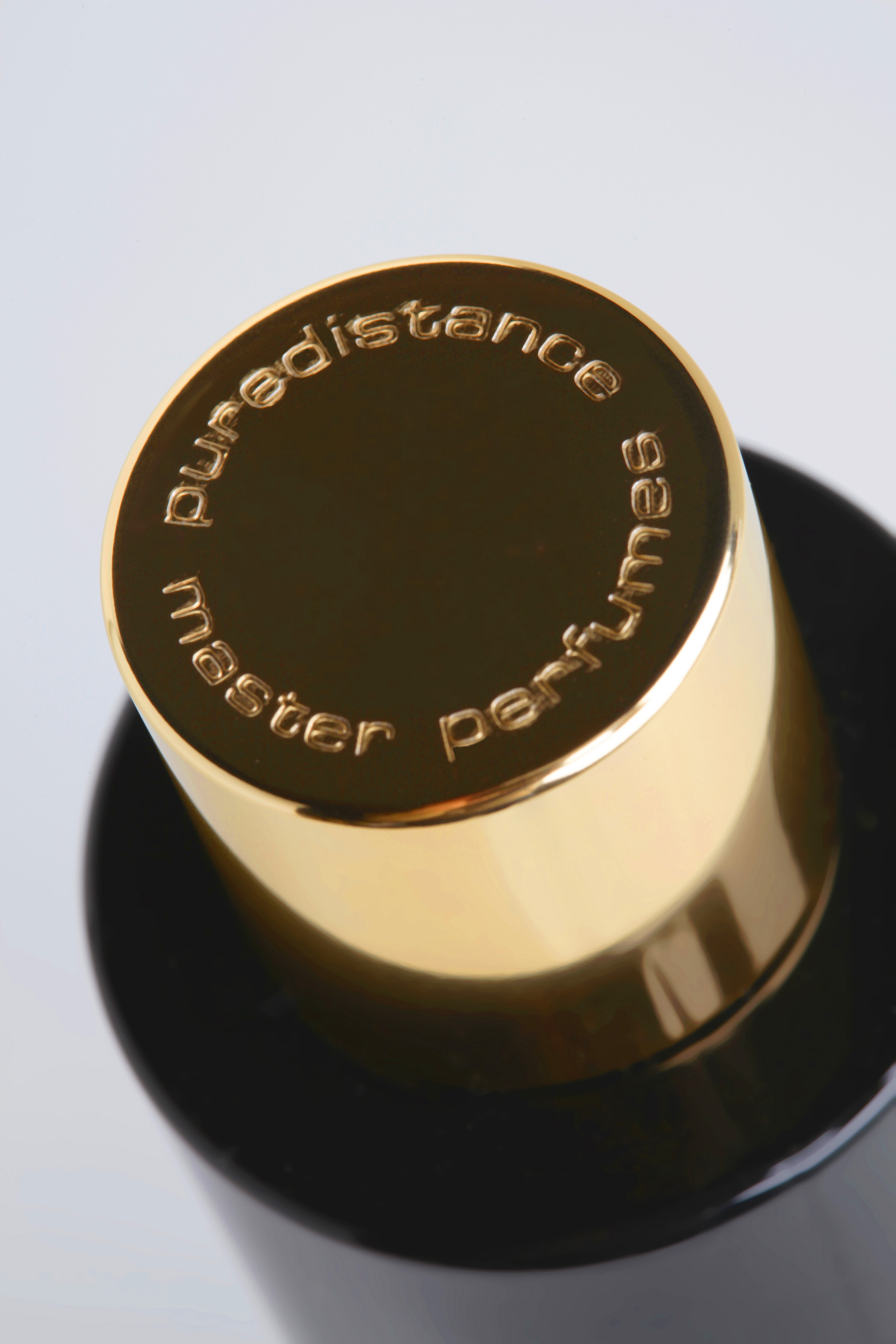
Fue hace muy poco que descubrí Puredistance, una marca que me llevó a reevaluar mi aproximación al lujo, la perfumería y la belleza.

Magníficas fragancias, discretas y modernas; botellas de diseño lujoso pero depurado e inmaculado servicio al cliente -rápido y efectivo- parecen ser los elementos necesarios para lograr un equilibrio ideal. Su fantástico Opardu ya ocupa el primer lugar en mi lista de compras.

Jan Ewoud Vos, fundador de la marca, fue suficientemente amable para compartir algunos de sus puntos de vista con nosotras.  Debajo pueden encontrar sus respuestas, sensibles y sensatas.

-¿Por qué el nombre Puredistance ?

La idea original del nombre  Puredistance se basa en un sueño que tuve en 2002. Una mañana desperté, medio dormido, y aún estaba soñando. En mi sueño vi a una hermosa dama, mínimamente ataviada con un simple y elegante vestido blanco, entrando a una habitación donde se encontraban otras personas  en una fiesta. Gente bebiendo, algunos ostentando, personas excesivamente vestidas, hablando demasiado alto…Esta dama está descalza. Ella no lleva ningún logo ni joyas. Aparte del vestido blanco, no lleva nada. Y es extraordinariamente bella. En una manera pura. En una manera natural. En una manera simple.  Pensá en Grace Kelly… su belleza pura crea una distancia: ‘‘Puredistance”.

-Constantemente hacés referencia a la ”elegancia atemporal” ¿Cómo la describirías y por qué creés que es importante?

La elegancia atemporal es para mí una manera simple de elegancia que tiene que ver con un modo de moverse, comportarse y vestirse fluído y sin esfuerzo. Siempre en una forma respetuosa para los demás y el ambiente. El valor de la elegancia atemporal es para mí el hecho de que resalta el lado bello y positivo de la humanidad, algo que realmente necesitamos, especialmente hoy. La elegancia debe ser dominada a través del ejercicio. Los animales nacen con los genes que les dicen cómo moverse y correr con elegancia, no necesitan aprenderlo.  Nosotros, por el contrario, tenemos que aprender cómo movernos y caminar mirando a nuestros padres y a aquellas personas que están a nuestro alrededor. La mayor parte de nuestra conducta es aprendida a lo largo de los años copiando y practicando. Por lo tanto considero la elegancia muy a menudo el resultado de trabajo duro combinado por supuesto con un cierto talento.

-¿Cuán importante es la belleza? ¿Tiene que ser parte de la ecuación?

Me refiero a lo que dije recién sobre la elegancia. Creo que necesitamos belleza como un bienvenido escape cuando a nuestra mente le hace falta distracción del stress diario y las aburridas rutinas cotidianas. Buscamos la belleza en pinturas, libros, arquitectura, autos, muebles, películas, ropa, perfume… la lista no tiene fin. Y en tanto que la belleza no se convierta en una obsesión (lo que hoy, lamentablemente, sucede demasiado a menudo) creo que la belleza es un modo muy seguro y confiable de escapar por un momento a la áspera realidad.

-La marca está radicada en los Países Bajos, las fragancias son creadas en los Estados Unidos, pero abriste tu primera boutique en  Viena ¿Por qué?

Viena me resulta un buen lugar para el nacimiento de nuestra marca. Viena es blanca, pura, bella, elegante y original (pocos perfumes comienzan en Viena!). Pero cuando nuestra marca se desarrolló, el foco se movió más y más hacia los Maestros Perfumistas, quienes realmente crean los perfumes y viven en Nueva York (Annie Buzantian) y Londres (Roja Dove). Veo a Puredistance  como una marca internacional, cosmopolita, que no puede ser reducida a un país o ciudad. Personas y compañías de todo el mundo: Italia, Suiza, Francia, Inglaterra, Estados UnidosAlemania y los Países Bajos, juegan una parte importante en el proceso creativo. Tenemos nuestras oficinas centrales en los Países Bajos porque me gusta vivir allí y porque es conveniente para la logística. Los Países Bajos resultan un lugar perfecto para hacer funcionar una organización profesional efectiva y para hacer envíos internacionales. Pero al fin y al cabo todo comienza con la creación de la fragancia, así que ”Hecho por Maestros Perfumistas en Londres y Nueva York”, es lo que mejor nos define.

-¿Cuanto ayudó tu background en dirección creativa como director creativo en perfumería?

Enormemente. Durante más de 30 años he intentado encontrar las soluciones más hermosas, a menudo visuales. Crear fotografía, películas, pinturas, logos y otras obras de arte. Siempre tratando de mantener las cosas simples, para mostrar la esencia. Espero que todo el trabajo duro (pero grato) se muestre en el ADN de la colección Puredistance!

-¿Por qué elegiste a Annie Buzantian y Roja Dove como narices?

No fue tanto cuestión de elegir a Annie ¡Nuestra cooperación estaba escrita en las estrellas! Luego de haber visualizado el concepto de Puredistance hice un brief. Texto, fotografía y música, comunicando lo que Puredistance significaba para mí. Luego comenzó la búsqueda de un perfumista. Conocí a Mick van Vlijmen en el aeropuerto Schiphol de Amsterdam. Mick estaba a punto de mudarse a Firmenich, un productor de fragancias finas que es líder en el mundo, en Nueva York. A Mick realmente le gustó la idea de Puredistance y me prometió mostrársela a algunos de los mejores perfumistas de Firmenich

Y ahora empieza la parte asombrosa de la historia. Cuando le mostró el briefAnnie Buzantian, la Maestra Perfumista de Firmenich, se puso pálida y miró incrédulamente la primera imagen del brief. Un aviso de moda, tomado de una revista, en el que una mujer – vestida simplemente con un vestido de seda gris- una mujer con hermosa piel marrón – se ve fotografiada de pie en la nieve… Ella le dice a Mick: “Mick, no necesito crear este perfume…” Abre un cajón en su oficina, saca exactamente el mismo aviso y le dice: “Hace dos años usé el mismo aviso como inspiración para crear mi propia fragancia personal, mi propia obra maestra… tratando de combinar frescura y calidez en el mismo perfume…” 

Claramente tenía que suceder de esa manera. Jung lo llamaría sincronicidad: dos personas teniendo la misma idea sin conocerse. 

Y le pedí a Roja Dove porque estábamos juntos en el negocio –Roja ya vendía nuestra marca en su Haute Parfumerie en Harrods– y porque yo sabía que Roja es muy bueno creando perfumes de alta calidad y usando sólo los ingredientes más finos. También realmente lo atrajo el concepto que yo tenía en mente para Puredistance M.

-¿Qué reacciones y emociones esperás que los perfumes de Puredistance despierten en quienes las huelen?

Espero que los haga sentir bellos y elegantes, que los haga sentir como si fueran los protagonistas de una película clásica de su actor o actriz preferidos. Y espero que sientan este ”toque de clase” que todos nuestros perfumes comparten.

-¿Podrías nombrar algunas fragancias clásicas que admires?

Me encanta el original Chanel Antaeus. Mi preferido.

-¿Qué significa el lujo hoy?

Tiempo de calidad para uno mismo. Tiempo de calidad para tus hijos. Tiempo de calidad para tu pareja. Tiempo de calidad para tu pasión. Y comprar pocos productos verdaderamente especiales que te hagan feliz por mucho tiempo. Eso es lo que considero lujo verdadero en el mundo ‘desarrollado’ de hoy, donde las personas piensan más en cantidad que en calidad. Donde las personas han olvidado cómo disfrutar lo que es más próximo y cercano. Donde el sobreconsumo se ha vuelto normal. Por eso, en Puredistance sólo presentamos una fragancia cada año o dos. Nos parece que menos es más. Prefiero tener un par de clientes que realmente disfrutan de nuestros perfumes y saben que llevan una fragancia de excepción, que está hecha con amor y no es para cualquiera, que vender montones de Puredistance cada año. El nivel de satisfacción de nuestros clientes es muy, muy alto y me gusta mantenerlo así.

-¿Qué cosas te inspiran?

La Naturaleza. La inocencia y la forma natural de hacer de los niños. La visión y rebeldía de Coco Chanel. La música de Chopin y Adele y David Bowie y la voz y el piano deFreddie Mercury. El Cine francés e italiano. Los movimientos fluídos de Roger Federer. El silencio. El glamour decadente de los Rolling Stones en sus días y noches de gloria. La belleza en general de Italia y los italianos. La elegancia y belleza simple de Grace Kelly. La herencia y clase de Aston Martin. La fotografía de Frans Lanting y Helmut Newton. La pintura de Kees van Dongen y Monet. Un cielo lleno de estrellas en la montaña. El pragmatismo holandés. Las palabras de Krishnamurti. Mi abuelo. Mi madre.

Caro

foto: Puredistance.com

foto: Puredistance.com

Interview: Puredistance founder Jan Ewoud Vos – Sense and sensibility

It was shortly ago that I discovered Puredistance, a brand that made me rethink my whole approach to luxury, fragrance and beauty.

Magnificent perfumes which are at a time understated and modern; bottles with luxurious  yet streamlined design and flawless customer service -fast and effective- seem like all the necessary elements to achieve an ideal balance. Their dreamy Opardu has already sprung to the top of my ”must buy” list.

Jan Ewoud Vos, founder of the brand, was kind enough to share some of his points of view with us.  Below you can find his sensitive and sensible answers.

-Why  the name Puredistance?

The original idea of the name of Puredistance was based on a dream I had back in 2002. I woke up one morning, half asleep, and was still dreaming. In my dream I saw a beautiful lady, minimally dressed in a simple, elegant white dress, stepping into a room where people have a party. People drinking, some people showing off, people overdressing, people talking too loud… The lady is barefooted. The lady does not wear any logos or jewelry. Apart from the white dress she wears nothing. And she is stunningly beautiful. In a pure way. In a natural way. In a simple way. Think of Grace Kelly… her pure beauty creates a distance: ‘Puredistance‘.

-You constantly refer to ‘’timeless elegance’’. How whould you describe it and why do you think it is important?

Timeless elegance for me is a simple way of elegance that has to do with a fluid and effortless way of moving, behaving and dressing. Always in a respectful way for the other person and the environment. The value of timeless elegance to me is the fact it highlights the beautiful, positive side of mankind, something we really need, especially today. Elegance must be mastered through exercise. Animals are born with the genes that tell them how to move and run elegantly, they don’t have to learn this. We on the contrary have to learn how to move and walk by looking at our parents and the people around us. Most of our behavior is learnt over the years by copying and practicing. Therefore I consider elegance more often than not the result of hard work combined of course with a certain talent for it.

-How important is beauty? Does it have to be part of the equation?

I refer to what I just said about elegance. I think we need beauty as a welcome escape when our mind needs some distraction from daily stress and daily boring routines. We look for beauty in paintings, books, architecture, cars, furniture, movies, clothes, perfume… the list is endless. And as long as beauty doesn’t become an obsession (which happens today unfortunately too often) I think beauty is a very safe and trusted way of escaping the harsh reality for a moment.

-The brand is based in the Netherlands, the fragrances are created in the US but you opened your first boutique in Vienna. Why?

I found Vienna to be a good place for the birth of our brand. Vienna is white, pure, beautiful, elegant and original (few perfumes start in Vienna!). But when our brand developed the focus switched more and more to the Master Perfumers who actually create the perfumes and they live in New York (Annie Buzantian) and London (Roja Dove). I see Puredistance as an international, cosmopolitan brand that cannot be traced back to one country or city. People and companies from all over the world: Italy, Switzerland, France, England, USA, Germany and the Netherlands, play an important part in the creation process. We have our headquarters in the Netherlands because I like to live there and because it is convenient for logistics. The Netherlands is a perfect country for running an effective, professional organization and shipping internationally. But in the end it is all starts with the creation of the fragrance, so ‘Made by Master Perfumers in London & New York‘, is what we stand for most.

-How has your background in creative direction helped you as creative director in fragrance?

Enormously. For more than 30 years now I have always tried to come up with the most beautiful, often visual, solution. Creating photography, movies, paintings, logos and other works of art. Always trying to keep things simple, to show the essence. I hope all the hard (but nice) work shows in DNA of the Puredistance Collection!

-Why did you choose Annie Buzantian and Roja Dove as noses?

It was not so much a question of choosing Annie; our cooperation was written in the stars! After I had visualised the concept of Puredistance I made a briefing of it. Text, photography and music, communicating what Puredistance meant to me. Then the search for a perfumer started. I met Mick van Vlijmen at Schiphol Airport in Amsterdam. Mick was about to move to Firmenich in New York, one of the world’s leading producers of fine fragrances. Mick really liked the idea of Puredistance and promised me to show it to some of the best perfumers at Firmenich. 

And now the amazing part of the story starts. When he showed the briefing to Annie Buzantian, the Master Perfumer at Firmenich, she turned pale and looked in disbelief at the front picture of the briefing. A fashion advertisement from a magazine in which a woman – simply dressed in a silk, gray dress –  a woman with a beautiful warm, brown skin – is photographed standing in the snow…  She tells Mick: “Mick, I don’t need to create this fragrance…” She opens a drawer in her office, pulls out exactly the same advertisement and tells him: “Two years ago I used the same advertisement as inspiration for creating my personal fragrance, my own masterpiece… trying to combine coolness and warmth in one and the same fragrance…” 

It clearly was meant to happen that way. Jung would call it synchronicity: two people having the same idea without knowing each other. 

And I asked Roja Dove because we were already in business, Roja sold our brand in his Haute Parfumerie in Harrods, and because I knew Roja was very good in creating high quality perfumes using only the finest ingredients. Also the concept I had in mind for Puredistance M really appealed to him.

-What reactions, emotions do you expect Puredistance fragrances to elicit upon those who smell them?

I hope it will make them feel beautiful and elegant, make them feel like playing the main role in a classic movie from their favorite actor or actress. And I hope they feel this ‘touch of class’ that all our perfumes share.

-Could you name a few classical fragrances you admire?

I love the original Chanel Antaeus. My favorite.

-What does luxury mean today?

Quality time for one self. Quality time for your children. Quality time for your partner. Quality time for your passion. And purchasing a few truly special products that will make you happy for a long time. That is what I consider true luxury in today’s ‘developed’ world, where people think more about quantity than quality. Where people have forgotten how to enjoy that what is most dear and near. Where overconsumption has become normal. Therefore we at Puredistance only introduce one fragrance every one or two years. We find less is more. I rather have a couple of clients that truly enjoy our fragrances and know they wear an exceptional perfume that is made with love and is not for everyone, than selling tons of Puredistance every year. The level of satisfaction of our customers is very, very high and I like to keep it that way.

-What inspires you?

Nature. The innocence and natural way of doing of children. The vision and rebelliousness of Coco Chanel. Music of Chopin and Adele and David Bowie and the voice and piano play of Freddie Mercury. French and Italian movies. The fluid movements of Roger Federer. Silence. The decadent glamour of the Rolling Stones in their glory days and nights. The overall beauty of Italy and the Italians. The elegance and simple beauty of Grace Kelly. The heritage and class of Aston Martin. Photography by Frans Lanting and Helmut Newton. Paintings by Kees van Dongen and Monet. A sky full of stars in the mountains. Dutch down-to-earthiness. The words of Krishnamurti. My grandfather. My mother.

Caro

foto: Puredistance.com

foto: Puredistance.com

Silvio Levi – El hombre orquesta

foto: gentileza de Calé, Fragranze d'Autore

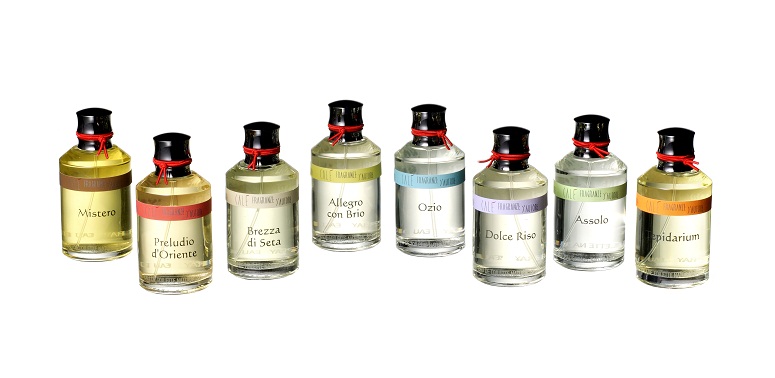
Silvio Levi ha sido, durante años, el distribuidor en Italia de marcas como Clive Christian, Knize, Les Nez, Creed y Floris. No satisfecho con eso, en 2008 creó Calé Fragranze d’Autore, su propia línea. Es también creador de Esxence -una exhibición internacional de fragancias con base en Milán– y ha escrito numerosos artículos sobre Perfumería Artística. Su pasión por los perfumes resulta contagiosa.

El Sr. Levi compartió su mirada sensible -y sensata- sobre el tema con nosotras.

-¿Cómo definiría la Perfumería Artística?

En términos generales, me refiero a los perfumes hechos sin restricciones de marketing, perfumes que tienen el propósito de traducir una historia emocional convirtiéndola en una creación que puede ser ”escuchada” con la nariz, recibiendo las mismas palabras escritas pero oliendo en vez de leyendo…

Es un hecho que la Perfumería Artística, teniendo como target potencial a una cantidad limitada de consumidores, logra mejores resultados si es propuesta en el marco de trabajo correcto, así que ambos criterios estético-artístico y distributivo deben ser respetados.

-Con respecto a las materias primas ¿Ve una tendencia hacia los naturales o hacia los sintéticos?

Cuanto más coherentemente crezca el negocio de la Perfumería Artística en el mundo, más asistiremos a una demanda recuperada de aceites esenciales, la demanda de los cuales se vio recientemente afectada por la necesidad de evitar variabilidad estacional o alérgenos en las fórmulas por los grandes jugadores de la industria.

Muchas materias primas ya no se encuentran disponibles porque la producción local no tiene más demanda. Esto afectó actividades locales tradicionales como la cosecha de rosas en Rumania o el jazmín en el norte de África, que se volvieron menos rentables día a día por la competencia de sustitutos y especialidades sintéticas.

Así que  para el vetiver, vainilla, guaiac, sándalo, tuberosa, una demanda más alta tendrá efectos positivos en la agricultura local, reduciendo el abandono de estas actividades sustentables y eco-compatibles. Sin embargo, desde hace siglos, la contribución de nuevas materias primas olfativas resulta invaluable.

No creo que haya una tendencia en beneficio de uno por sobre el otro. Lo más importante es la creación de perfumes que provoquen una emoción, que cuenten una historia, que pongan a uno de un humor muy especial,  más que un ingrediente en particular. Como en cualquier Arte…música, pintura, escultura, literatura, las materias primas deben ser lo más diferentes posibles, preciosas o muy pobres, lo que hace a una obra maestra es cómo el artista ensambla los ingredientes para obtener una pieza de arte. Un acorde, en música como en perfumería, siempre es más que la simple suma de sus componentes.

-¿Por qué sintió la necesidad de crear Calé, su propia marca?

Luego de haber escrito tantos textos para las marcas que distribuímos y de haber conocido a tantos perfumistas y propietarios de marcas, se suponía que yo sabría algo especial acerca del atractivo de la creación de perfumes pero tenía clarísimo que, a pesar de ser Químico, nunca seré un nariz. Lleva tanto tiempo, tanto ejercicio diario, una gran lealtad a una “Divinidad” como el Arte del Perfume.

Por otra parte, me gusta tanto escribir, inventar novelas y cuentos que, obviamente, me gustaría darles más “vida” permitiendo que también puedan ser “olidos”.

Cuando estudié en profundidad la Historia de la Perfumería y tuve más contactos en este campo me di cuenta de que a menudo un perfume es una creación en  equipo, como en música cuando una canción tiene ”letra por”… y ”música por”… ¡Los mismos dos autores trabajando con otros artistas seguramente harían creaciones completamente distintas! La canción es el resultado de fusionar la creatividad de ambos autores.

Así que decidí empezar a contarle mis historias a un perfumista que también es un amigo, Maurizio Cerizza, y les dimos vida a algunas novelas… Recientemente trabajé también con mi amigo Mark Buxton y otros se sumarán a ayudarme a dar un aroma a mis historias. Nada más. Un juego alegre entre amigos que disfrutan de tener un desafío y una apuesta que ganar. 

La verdadera devolución es mirar a los ojos de quienes huelen mis  (nuestras)  creaciones y  escucharlos decir palabras que estaban en mi briefing… ¡El mensaje vuela en el aire y los alcanza! Maravilloso.

Tengo muchas historias en mi mente y en mis anotaciones, y -afortunadamente- muchos amigos capaces de usar los aceites esenciales tal como yo uso las palabras.

-¿Cuál es su creación favorita de Calé?

¡Nunca le preguntes a papá qué hijo es el preferido! Me encanta Dolce Riso porque mi hija lo usa desde que tenía 16, dos años antes de que lanzáramos la marca en 2008. Adoro Roboris, ese es mi perfume, y Fulgor porque a partir de mi visita el 15 de agosto de 2004 al Valle de la Muerte, en Nevada, compartí dos aspectos diferentes de la misma experiencia con dos amigos y creamos dos perfumes completamente distintos…¡Gracias Wakantanka y  Lakotas!

Me encanta Mistero porque está dedicado a mi gran maestro y amigo Guy Robert y a un Químico de la Universidad de Stanford, Barry Trost. Ambos me enseñaron tanto y me permitieron confiar en mí mismo simplemente mostrándome el camino y no dándome lecciones. Dios los bendiga y permita que todos conozcamos personas así durante nuestras vidas ¡Es mejor que ganar la lotería, creeme!

-¿Quiénes son sus narices favoritos?

Es una larga lista, pero me gustaría mencionar:

Isabelle Doyen: Una dama sumamente amable y que tiene gran energía. Mi creación favorita es la poco conocida L’Antimatiere, para Les Nez

Geza Schoen: Un hombre loco con sentido del humor ¡Pensá en Escentric Molecules 01! Pero también está detrás de tres creaciones de Clive Christian!

Mark Buxton: ¡Nunca crecerá! Fue y será siempre un bebé y un hombre sumamente agradable. El dandismo en sus creaciones es muy sutil. Un adicto al vetiver que tiene la originalidad de ser el autor de las creaciones de los primeros diez años de  Comme des Garcons.

Maurizio Cerizza: Jamás cesa de agradecerme por haberle permitido descubrir la Perfumería Artística y permitirle jugar libremente, con gran placer.

Sandrine Videault: Vive en Caledonia,  tiene una cultura inmensa y un  gran respeto por el Arte del Perfume. Hizo la réplica del Kyphy para el Museo de El Cairo. Ella estudia los diferentes aspectos de la cultura del perfume en distintas poblaciones y es una nariz capaz de lograr una maravillosa fragancia de tiare.

Maurice Maurin: Un maestro, padre de Amazone, que ama su lugar, su familia, cocinar y darle al Arte del Perfume un rol en más aspectos de la cultura y vida humanas (niños, teatro, comida, vino…)

Guy Robert: Nos dejó este año, pero será un referente para futuras generaciones de perfumistas.

Christophe Laudamiel: Nunca cesa de sorprenderme! Bravo!

Lorenzo Villoresi: Nos conocemos desde hace años y es un placer ver su desarrollo en la creación de fragancias. Descubre perfumes gracias a la Filosofía…creo que eso le da un comodín.

 La lista podría ser más y más larga:  aquí menciono algunos de aquellos que realmente mezclan aceites esenciales. Hay también una lista de narradores de historias, co-autores de fragancias. También los considero artistas.

 
-¿Qué perfumes han dejado marca en su alma?

Siempre digo: yo era  Eau Sauvage de Dior, luego J.F de Floris, Vetiver de Guerlain, Bois du Portugal y Silver Mountain Water de Creed y hoy Roboris de Calé Fragranze d’Autore.

Luego hay algunos perfumes que me encantan, pero que no puedo llevar porque no encajan con mi carácter: Green Irish Tweed, Knize Ten, Tilleul, Clive Christian N°1. Casi me olvido de mencionar Chanel 19 y Caron pour un Homme
-¿Qué cambios le gustaría ver en el mundo de las fragancias?

 Me encantaría que el perfume sea considerado menos un producto y más una necesidad. Una necesidad que complete nuestra propia forma de vestir, nuestra elección de colores, nuestra eleccipon de materiales, nuestros zapatos, nuestro peinado. Un perfume nos anuncia cuando llegamos y deja un recuerdo de nosotros cuando nos vamos. El perfume es nuestro discreto embajador.

Así que me gustaría que más y más consumidores sientan la responsabilidad de elegir su propio compañero olfativo. Pido coherencia y pasión.

Caro
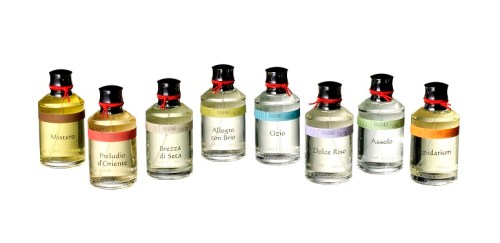
foto: gentileza de Calé, Fragranze d’Autore

Silvio Levi – The multitasker

Silvio Levi has been, for years, the Italian distributor of brands like Clive Christian, Knize, Les Nez, Creed and Floris. Not satisfied with that, in 2008 he created Calé Fragranze d’Autore, his own line. He is also the creator of Esxence -an international fragrance exhibition based in Milan– and has written many articles on Artistic Perfumery. His passion for fragrance is truly contagious.

Mr. Levi shared his sensitive -and sensible- views on the subject with us.

-How would you define Artistic Perfumery?

Generally speaking, I refer to perfumes made without marketing constraints, perfumes that have the aim to “translate” an emotional story in a creation you can “listen” with your nose, getting the same written  words without reading but smelling…

It’s a matter of fact that Artistic Perfumery, having as a potential target a limited amount of consumers, obtains better results if proposed in the proper framework. So both aesthetic/artistic and distributive criteria have to be respected.

-With regard to raw materials, are you seeing a trend towards naturals or synthetics?

The more coherently the Artistic Perfumery business will grow  in the World, the most we will assist to a recovered demand for essential oils, the demand of which was recently affected by the need to avoid seasonal variability or allergens  in formulas composition by the big players.

Many raw materials are no longer available because local production had no more a demand. That affected traditional local activities like rose recollection in Romania or jasmine in North Africa, which become less profitable day by day because of the competition with synthetic substitutes and specialties.

So, as per vetiver, vanilla, guaiac, sandalwood, tuberose, a higher demand will have positive effects on local agriculture reducing the abandon of this sustainable and eco-compatible activities. Nevertheless, since centuries, the contribution of new olfactive raw materials is invaluable for the new creativity!

I don’t think there will be a trend on benefit of one or the other. The most important thing is  the creation of perfumes that will give an emotion, tell a story, put you in a very special mood,  more than the single raw material. As in any Art…music, painting, sculpture, literature, the raw materials should be the most different possible, precious or very poor, what makes a masterpiece is how the artist asssembles the ingredients obtaining a piece of art. An accord, in music as in perfumery, is always more than the simple sum of its components!
-Why did you feel the need to create Calé, your own brand?

After I wrote so many texts for the brands we distribute and I met so many perfumers, brand owners, I supposed to know something special about the “allure” of  perfume creation  but I was aware that, despite I’m a chemist, I will never be a nose! It takes so much time, so much daily exercise, a great loyalty to a “Divinity” like the Perfume Art.

On the other hand I love so much to write, to invent novels and stories and I, obviously, would like to give them more “life”  letting them to be also “smelled”.

When I studied deeply the History of  Perfumery and I had more contacts in the field I realised that quite often a perfume is a team creation, like in music when a song has ”words by”… and ”music by”… The same two authors working with other artists will make surely completely different creations! The song is a result of merging of the creativity of both the authors.

So I decided to start to tell my stories to a perfumer who is also a friend, Maurizio Cerizza, and we gave life to some novels… Recently I also worked with my friend Mark Buxton and others will come to help me to give a smell to my stories. Nothing else. A joyful game between friends that love to have a challenge and a bet to win.

The real return is to look into the eyes of those smelling one of my (our)  creations and listening her/him telling some words that are words of my briefing… the message flies in the air and reaches them! Wonderful.

I have a lot of stories in my head and in my notes….and fortunately a lot of friends capable to use the essential oils as I use words!
-What is your favorite creation from Calé?

Never ask daddy which son is the preferred! I love Dolce Riso because my daughter has been wearing it since she was 16, two years  before we launched in 2008 the brand. I love Roboris, that’s my perfume, and Fulgor because starting from my visit on 15th August 2004 in the Death Valley in Nevada, I shared two different aspects of the same experience with two friends and we created two completely different perfumes….thank you Wakantanka and  Lakotas!

I love Mistero because it is dedicated to my great master and friend Guy Robert and to a Chemist of Stanford University, Barry Trost. Both of them taught me so much and let me trust in myself simply by showing me the way and not giving me lessons. God bless them and let everyone meet people like them during their lifetime. It’s better than winning the lottery, believe me!
-Who are your favorite noses?

It’s a long list but I’d love to mention:

Isabelle Doyen: Such a kind lady who has a great power in her. My favourite creation is the little-known L’Antimatiere for Les Nez

Geza Schoen: A crazy man with a sense of humor. Think of Escentric Molecules 01! But he was also behind three Clive Christian creations!

Mark Buxton: He will never grow up! He was and will remain a baby and a enjoyable man. The dandism in his creations is very subtle. A vetiver addict who has the originality of being the author of the first ten years creations by Comme des Garcons

Maurizio Cerizza: He never stops thanking me for letting him discover Artistic Perfumery and to let him play freely, with immense pleasure!

Sandrine Videault: She lives in Caledonia,  has an immense culture and a great respect for the Perfume Art. She made the Kyphy replica for El Cairo Museum, she studies the different aspects of perfume culture in different populations and she is a nose capable of making a wonderful tiare fragrance.

Maurice Maurin: A master, the father of Amazone, who loves this territory, his family, cooking and  giving the Art of Perfume a role in more aspects of human life and culture (children, theatre, food, wine…)

Guy Robert: He left us this year but he will be  a reference for future generations of perfumers

Christophe Laudamiel: He never stops to surprise me! Bravo!

Lorenzo Villoresi: We have known each other for years and it’s a pleasure to assist to his development in creating fragrances. He discovers perfumes thanks to Philosophy…I think that will grant him a “joker”.

The list could be longer and longer:  here I have mentioned some of those that I know who really mix essential oils. There is also a list of story tellers co-authors of fragrances. I also regard them as artists.

 
-What fragrances have left their mark on your soul?

I use to say: I was  Eau Sauvage by Dior, then J.F by Floris, Vetiver  by Guerlain, Bois du Portugal and Silver Mountain Water by Creed and today Roboris by Calé Fragranze d’Autore.

Then there are some fragrances I love but I cannot wear because they don’t fit with my character: Green Irish Tweed, Knize Ten, Tilleul, Clive Christian N°1. Oh, I forgot to quote Chanel 19 and Caron pour un Homme
-What changes would you like to see in the fragrance world?

 I’d love perfume to be be considered less of a product and more of a need. A need to complete our own way of dress, our choices of colors, our choice of materials, our shoes, our hair style. A perfume announces us when we are coming  and leaves a memory of us when we leave. Perfume  is our discreet ambassador.

So I’d like more and more consumers to feel the responsibility to choose their own olfactive companion. I ask for coherency and passion.

Caro
Capturando el espíritu del perfume – Entrevista a Frédéric M. Thibaud

Las fragancias entran primero por los ojos. La forma, color y material con que está confeccionado un frasco nos adelanta visual y -por qué no?- táctilmente de qué se trata el perfume que estamos por sentir.

El diseño de botellas de perfumes ha sido desde siempre parte fundamental del mensaje que emite el aroma en cuestión. Al punto que muchas de ellas se transforman en auténticas piezas de colección.

Para introducirnos en el tema, conversamos con Frédéric Michel Thibaud. Él es un diseñador independiente de frascos de perfumes (pueden ver algunos de sus trabajos en su website) y vive en la “Meca de la Perfumería”: la ciudad de Grasse. Agradecemos su amable participación en esta entrevista.

– ¿Qué nos puede contar acerca de usted y de su métier?

Siempre he sido creativo. Luego de 25 años de trabajo mecánico, de la mano con una pasión por las computadoras y el pensamiento inventivo, comencé a diseñar en serio cuando alguien me pidió que creara un alambique en miniatura para su nueva asociación. No sólo fuí capaz de diseñarlo sino también suministré los planos y la información técnica para reproducirlo a gran escala. Poco tiempo después, en 2008/2009, creé para ellos otros 4 productos relacionados con los perfumes. Viviendo en Grasse, apunté al diseño de botellas de perfume y, ya confiado en mis habilidades me lancé por mi cuenta como freelance en 2009.

-¿Dónde aprendió su profesión?

Siendo el hijo de un exitoso vendedor de botellas y trabajando por muchos años creando herramientas para hacer botellas. Pude aprender CAD en mi tiempo libre. Por muchos, muchos años siempre he usado la computadora para comunicar mis ideas, comenzando por planos en 2D y poco a poco con 3D. El diseñar es un don natural en mí, siempre he estado creando en mi mente, todos los días. Hoy puedo traducir mis pensamientos en imágenes.

– ¿Cómo es el proceso de diseño de un frasco de perfume?

Empieza con la inspiración, la cual puede venir del brief del cliente o de mi propias ideas. Luego lo dibujo a mano, seguido por los dibujos en 3D y finalmente hago el modelo volumétrico virtual en 3D, listo para ser moldeado por los fabricantes de la botella y de la tapa.

– ¿Qué se requiere para que una botella resguarde su contenido?

Para asegurar el uso cómodo del consumidor, la forma de una botella de vidrio tiene su importancia junto con la correcta concepción del cuello de la botella, para eliminar los riesgos de pérdida. En lo referente a las fragancias sensibles a la luz, el acabado juega un rol importante en ello.

– ¿Cuál es la conexión entre la botella y el jugo?

Cuando un cliente me entrega un brief intento alinearme al estilo indicado, por supuesto. Pero para mí, la mayoría de las veces, mis mejores diseños de frascos provienen de la necesidad de crear una forma nueva y única que acompañe al espíritu del perfume.

– ¿Existen tendencias de diseño de frascos o podría decirse que es un arte libre?

Están ambos en este trabajo. Las tendencias son un estilo, pero un diseñador debe inventar y crear las tendencias así como también para mí, el diseño es un arte libre.

-Si tuviera que elegir de entre sus propias creaciones ¿cuáles son sus preferidas?

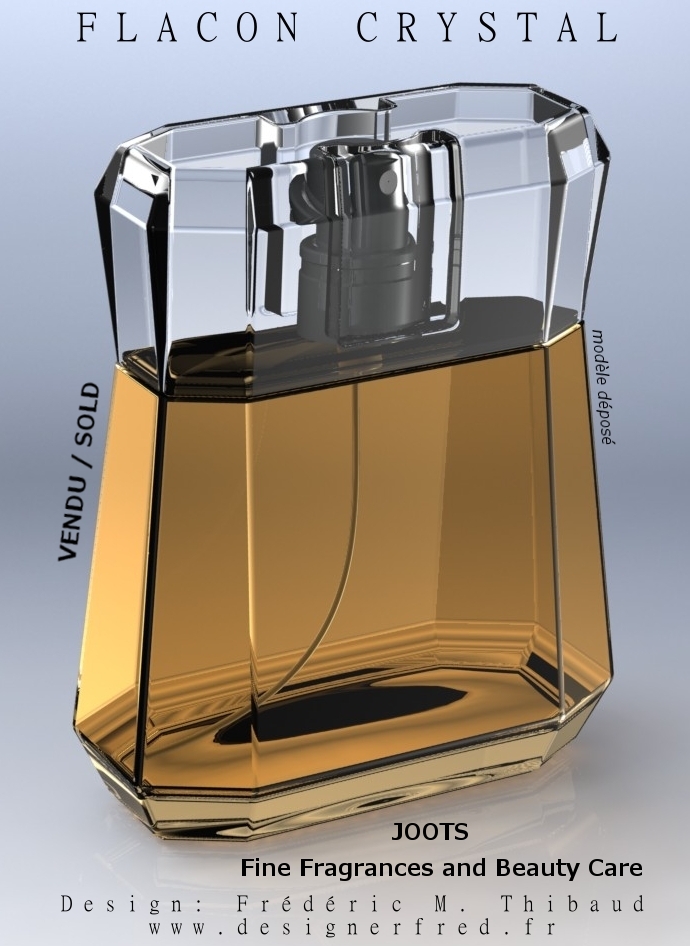
Amo a uno de mis primeros diseños, el cual tiene dos superficies superiores: el “Flacon Fontaine”. También representa mi debut en el diseño de botellas. El “Flacon Crystal” también está en mi top list. Pero amo a todos mi trabajos, tal como un padre ama a sus hijos.

– ¿A cuáles diseñadores de botellas de perfume usted admira?

A todos aquellos que dedican su vida al diseño, porque esa es también mi meta. Pierre Dinand, por el trabajo de toda su vida.

– ¿A qué botella histórica usted más admira?

La de Fendi by Fendi (1985) por Pierre Dinand. Me encanta su perfil bajo y su elegante tapa.

-En su opinión ¿la perfumería es un arte?

Por supuesto que sí. Y amo estar relacionado con ella.

Virginia

Nota: esta entrevista fue publicada en el blog Notas & Acordes el 30/05/12.

imagen: gentileza de Frédéric M. Thibaud

Capturing the spirit of the perfume – Interview with Frédéric M. Thibaud

The fragrances enter first through our eyes. The shape, color and material of a bottle gives us a visual and -why not?- tactile preview of the perfume that we will smell.

The perfume bottle design has always been a fundamental part of the message emitted by the perfume. Going further, many bottles become authentic collection pieces.

To introduce us to the subject, we talk with Frédéric Michel Thibaud. He is an independent perfume bottle designer (you can see some samples of his designs in his website) and he lives at Grasse (the Mecca of Perfumery). We thank him for his kind participation in this interview.

– What can you tell us about you and your métier?

I’ve always been creative, and after 25 years of mechanical work coupled with a passion for computers, and inventive thinking, I started out serious design work when someone asked me to create a miniature alambic for his newassociation. Not only was I able to design it, but I furnished the plans and technical information to reproduce them in large series. Shortly after in 2008 –2009 I created 4 more perfume related products for them. Living in Grasse I aimed for the perfume bottle design, and now confident of my abilities, I launched out Freelance in 2009.

– Where did you learn your profession?

Being the son of a successful bottle salesman, working for many years creating bottle tooling, I was able to learn about C.A.D. in my free time, for many many years, I’ve always used the computer to communicate my ideas, starting out with 2D plans, slowly learning 3D. Designing for me is a natural gift, I’ve always created almost every day in my mind, and today I translate my thoughts into pictures.

– What is the process to design a perfume bottle?

First the inspiration, which may come from a client’s brief or my own free thinking, then the hand sketch, followed by 3D drawings, and finally the volume engineered 3D virtual model, ready for the mold makers of the bottle and over cap.

– What is required for a bottle to protect its content?

The shape of a glass bottle has an importance, to enable comfortable use of the end user, along with the correct conception of the bottle neck, to eliminate the risk of leaks. As for light sensitive fragrances, the finishing can play a role in that.

– What’s the connection between the bottle and the juice?

When a client gives me a brief, I try to align the style of course, but most of the time for me, my best bottle designs come from needing to create a new and unique shape, with the spirit of the perfume.

– Are there design trends or is it a kind of free art?

Both are at work here, the trends are a style, but a designer must invent and create the trends, so true design is free art, for me.

– If you had to choose from your own creations, which are your favorite designs?

I love one of my first designs, which has 2 superior top surfaces, the “Flacon Fontaine”, also represents my debuts in bottle design. The “Flacon Crystal” is also on my top list, but I love all my work, like a father loves his children.

– Which perfume bottle designers you admire?

All of the designers who make a living from bottle design, because thats my goal. Pierre Dinand, for his lifelong work.

– Which historical bottle you admire the most?

Fendi by Fendi (1985) by Pierre Dinand. I love its low profile, and sleek over cap.

– In your opinion, is perfumery an art?

Yes, of course, and I love to be associated with it.

Virginia

Note: this interview was published at 05/30/12 in Notas & Acordes fragrance blog.

imagen: gentileza de Frédéric M. Thibaud