foto: Gentileza WienerBlut
Como nostálgica confesa me pregunto si podría encontrar algo más irresistible que una casa bautizada con el nombre de un vals de Strauss y que, además, logra capturar el aura del viejo imperio Austrohúngaro.
La marca vienesa WienerBlut embotella el espíritu de la Viena del Fin de Siècle, un momento en el que la ciudad -como crisol artístico y cultural- brilló con su máximo esplendor. Klubwasser, la primera fragancia de la línea, fue creada por Alexander Lauber en colaboración con el nariz Pierre-Constantin Gueros y lanzada en 2009.
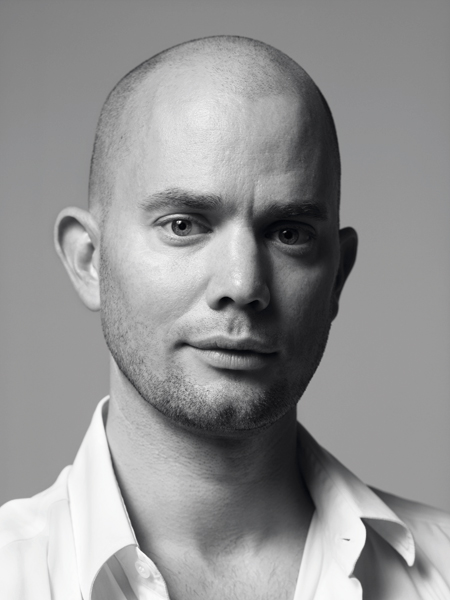
Disfruté enormemente de la oportunidad de conversar con Herr Lauber, propietario y Director Creativo de WienerBlut.
¿Son tus fórmulas reconstrucciones históricas o interpretaciones modernas del aura de una era?
Un poco de cada cosa, dependiendo del perfume. Con Volkamaria por ejemplo, realmente quise experimentar el aroma original de la planta, así que encontramos un vivero que tenía brotes y la cultivamos nosotros mismos. La fórmula original era sólo un intento de copiar el olor de los capullos y no contenía cantidad real alguna de Volckameria Fragrans como ingrediente, lo que es típico de aquella época y también bastante divertido, porque es un gran ejemplo de como -incluso en esos tiempos- la imagen del ingrediente promocionado era aparentemente más importante que su presencia real en la fórmula.
Hoy sucede lo mismo con productos masivos que dicen estar construídos alrededor del iris o del oud o de cualquiera que sea el gusto de la temporada, pero que puede no contener la más mínima cantidad de él. Quise, sin embargo, entender la idea original antes de desarrollar nuestra propia interpretación que, tal como la original, está basada en una nota de iris. Y sí: usamos iris entre las materias primas.
Dicho esto, no veo el punto de las recreaciones históricas exactas, a menos que uno haya estado haciéndolo por años, como Santa Maria Novella. Encuentro mucho más interesante el hacer foco en la idea general de una fórmula original y tratar de llevarla a otros lugares, con los medios de la perfumería moderna.
¿Qué te inspira?
La identidad cultural en general, y en particular la identidad cultural de Viena como sede del imperio Austríaco. Alrededor del Fin de Siècle, Viena era probablemente la ciudad más europea de toda Europa, con medio millón de habitantes más que hoy, y rica en diversidad étnica. La pompa sin rival de la corte real e imperial chocaba con el “Wiener Moderne“, el vibrante escenario de intelectuales y artistas, y por supuesto, con toda clase de movimientos políticos. Desafortunadamente, mucha de esta riqueza cultural ha sido perdida o destruida o desheredada activa o pasivamente, así que rastrear fragmentos e historias de la época es casi como una búsqueda del tesoro. Por ejemplo: me enteré hace poco de que, a fines del siglo XIX, Viena albergaba la segunda industria manufacturera de seda más grande de toda Europa. Apenas puede encontrarse rastro de ello hoy.
Por suerte, hay algunas excepciones. Recientemente visité uno de los pocos talleres textiles de seda que quedan en Viena. Sus fábricas habían sido arrasadas en la guerra, pero gracias a la innovación constante hoy pueden producir nuevamente ”Wiener Hofdamast“, el elaborado damasco de seda típico de la corte vienesa del siglo XIX.
¿Cómo nació WienerBlut?
A partir de la fascinación por la época y por el término “Wiener Blut” mismo. Significa “Sangre Vienesa” y alude obviamente a la ”sangre azul”, pero en mi opinión transmite una categoría distinta de nobleza, una que va más allá de tener meramente ascendencia aristocrática: la nobleza de una cierta cultura y su savoir vivre, caracterizada -por una parte- por la ociosa grandeza del imperio y -por otra- por la inquietud de sus pueblo amante del placer. Un término muy complejo, me gustaría poder pedirle una definición a Arthur Schnitzler.
¿Cuál es, en tu opinión, la importancia de la belleza en un perfume?
Cualquier fórmula bien construida posee un cierto grado de belleza inmanente, pero de la forma en que lo veo yo, la verdadera magia ocurre cuando un perfume complementa la belleza de la persona que lo porta. Así que siempre está presente el contexto individual y, en este contexto, incluso una fragancia que puede importarme poco a título personal puede de pronto tornarse bella, o todo lo contrario.
¿Qué notas u olores te evocan a Viena, la actual y la antigua?
Hablando en términos históricos amplios, una nota dulce y amarga a la vez sería adecuada, pero si me piden que señale un aroma puntual…en algunos de los cafés tradicionales de Viena hay bancos con su tapizado original de terciopelo rojo. Este terciopelo ha absorbido décadas de vida vienesa: el humo y cenizas de cigarros y cigarrillos; algo de vino, café, pastelería y goulash, el polvillo común de la ciudad. Como olor, es un poco ráncio y mórbido, pero también reconfortante de una manera extraña, especialmente en días lluviosos y fríos. No tengo idea de por qué los almohadones de los cafés parisinos no huelen igual, pero simplemente no lo hacen.
¿Qué tan importante es el perfume en tu vida cotidiana?
Cuando niño, trataba de capturar los olores de los lugares que me gustaban sellando libros dentro de bolsas plásticas o llenando frascos de vidrio con tierra y plantas. Siempre quise poseer ciertos aromas para poder evocar las imágenes y estados de ánimo que me traían a la mente. Esta es una de las cosas que continúan fascinándome sobre los perfumes: lograr recuperar un cierto sentimiento o experiencia en cualquier momento, con sólo abrir una botella. Es realmente un milagro.
Así que están las fragancias que evocan experiencias pasadas, pero también me entusiasman mucho los aromas nuevos. Cada vez que pruebo un nuevo perfume, tiene la promesa de mostrar un nuevo aspecto de la vida.
¿Cuáles son tus próximos planes?
No puedo contar más sobre el proyecto por ahora, pero estamos trabajando sobre una emocionante fragancia nueva que planeamos lanzar este otoño. Estamos desarrollando también una serie de accesorios.
Caro

foto: Gentileza WienerBlut
WienerBlut – By the Danube
As a self-confessed nostalgic, I wonder if I would be able to find anything more irresistible than a house named after one of Strauss‘ waltzes and which also manages to capture the aura of the old AustroHungarian empire.
Viennese brand WienerBlut bottles the spirit of Fin de Siècle Vienna, a time when the city -as a cultural and artistic melting pot- shone at its brightest. Klubwasser, the house’s first fragrance, was created by Alexander Lauber in collaboration with nose Pierre-Constantin Gueros and launched in 2009
We greatly enjoyed our opportunity to talk to Herr Lauber, owner and Creative Director of WienerBlut.
Are your formulas historic reconstructions or modern interpretations of the aura of a certain era?
A little bit of both, depending on the fragrance. With Volkamaria for instance, I really wanted to experience the original scent of the plant, so we found a plant nursery that had the seedlings and cultivated them ourselves. The original formula was just an attempt to copy the smell of the blossoms and didn’t contain any actual raw material of Volckameria Fragrans, which is typical of the time and also quite funny, because its a great example of how, even then, the image of the claimed raw material was apparently more important than its actual presence in the formula.
Today it’s the same story with mass products that claim to be about iris or oud or whatever the taste of the season is, but may not even contain traces of it. Nonetheless I wanted to understand the original idea before we went on to develop our own interpretation, which, like the original, is based on an iris note. And for the record: we did use raw materials of the iris.
That said, I don’t see the point of exact historic recreations, unless you have actually been doing it for hundreds of years, like Santa Maria Novella. I find it much more interesting to focus on on the overall idea of an original formula and try to take it to new lengths, with all the means of modern perfumery.
What inspires you?
Cultural identity in general, and in particular the cultural identity of Vienna as seat of the Austrian empire. Around the Fin de Siècle, Vienna was probably the most European city in Europe, with half a million more residents than today, and rich with ethnic diversity.The unrivaled pomp of the imperial and royal court clashed with the “Wiener Moderne” a vibrant scene of intellectuals and artists, and of course with all kinds of political movements. Unfortunately, a lot of this cultural wealth has been lost or destroyed or actively and passively disowned, so looking for fragments and stories of the time is almost like treasure hunting. For example: I recently learned that in the late 19th century, Vienna was home to the second largest silk manufacturing industry in Europe. You can hardly find a trace of that today.
Luckily, there are some exceptions. I just visited one of the few remaining Viennese silk weaving mills. Their factories had been destroyed in the war, but thanks to continuous innovation, today they are able to produce “Wiener Hofdamast” once again, the elaborate quality of silk damask typical for the Viennese Court in the 19th century.
How was WienerBlut born?
Out of fascination for the time and for the term “Wiener Blut” itself. It means “Viennese Blood” and obviously alludes to “blue blood”, but in my opinion it conveys a different category of nobility, one that goes further than merely being of aristocratic descent: the nobility of a certain culture and its savoir vivre, characterized by the idle grandness of the empire on the one hand and the restlessness of its pleasure loving people on the other. A very complex term, I wish we could ask Arthur Schnitzler for a definition.
What is, in your opinion, the importance of beauty in a perfume?
Any well crafted formula has a certain degree of immanent beauty, but the way I see it, the real magic happens when a fragrance compliments the beauty of the person wearing it. So there is always the individual context, and in this context, even a fragrance I may not especially care for personally can suddenly become wonderful, or the other way around.
What notes or scents evoke Vienna -both present day and old- to you?
Speaking in broad historic terms, a bittersweet note would be adequate. But if you ask me to pinpoint a certain scent … in some of the traditional cafés in Vienna you will find benches with original red velvet cushioning. This velvet has absorbed decades of Viennese life: the smoke and ashes of cigars and cigarettes, bits of wine and coffee and pastry and gulasch, the plain dust of the city. As a scent, it’s a bit stale and morbid, but also comforting in a weird way, especially on a cold, rainy day. I have no idea why the cushions of Parisian cafés don’t smell the same, but they just don’t.
How important is fragrance in your everyday life?
As a child, I tried to capture the scents of places I loved by sealing books in plastic bags or filling glass jars with soil and plants. I have always wanted to own certain scents in order to evoke the pictures and moods they bring to mind. This is one of the things that continues to fascinate me with fragrance: being able to retrieve a certain feeling or experience any time, just by opening a bottle. It really is a miracle.
So there are the fragrances that evoke past experiences, but I am also very excited about new scents. Each time I test a new perfume, it holds the promise of seeing some new aspect of life.
What plans do you have next?
I can’t tell you more about the project as of now, but we are working on an exciting new fragrance that we are planning to launch this fall. We are also developing a series of accessories.
Caro

imagen: Gentileza WienerBlut




 Té de Violetas