Category Archives: Entrevistas – Interviews

Lorenzo Villoresi – El alquimista

foto: Gentileza Lorenzo Villoresi

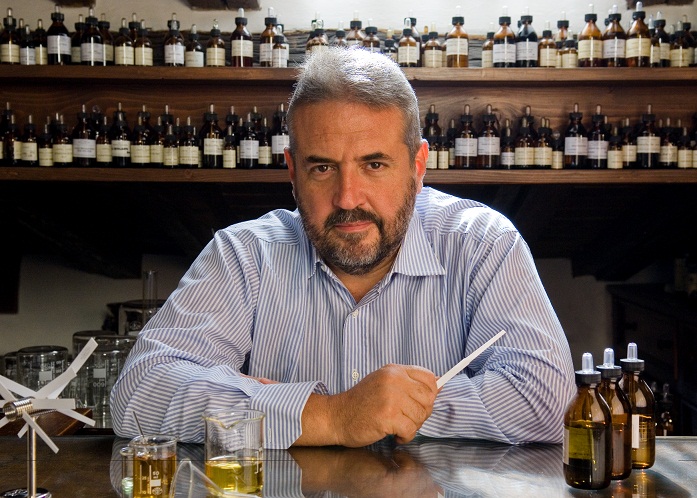
Los italianos en general y los florentinos en particular saben una cosita o dos sobre belleza y armonía. Lorenzo Villoresi ha estado creando perfumes desde 1981. En 1990 el hobby, que había sido inspirado por sus viajes a Medio Oriente, dio lugar a la casa que conocemos hoy. Independiente y autodidacta, Villoresi fue laureado con el Prix Francois Coty en 2006.

Las fragancias de Villoresi poseen una cualidad clásica y familiar y sin embargo parecen recubiertas de un aura mística. Sus creaciones son sensuales: inocentemente como el delicado floral Iperborea, o de manera más cruda, como el irresistible Musk; incluso el marino Aura Maris y el verde Yerbamate  se ven infundidos de una sutil carnalidad. No entraré en detalles acerca de los productos corporales, la calidad de los cuales encuentro sobresaliente.  

Lorenzo Villoresi también crea fragancias personalizadas (el equivalente  haute couture a la colección “prêt-à-porter“) y planea inaugurar un atelier interactivo, dedicado a esencias y perfumes, en su Florencia natal.

Logramos hacerle algunas preguntas al maestro:

-¿Cree que hay una identidad italiana o, más espécíficamente,  florentina en sus perfumes?

No lo creo, porque ninguno de ellos ha sido inspirado por un tema florentino. Nos sentimos y nos gusta ser internacionales bajo un punto de vista cultural; no nos identificamos con ningún estilo o período histórico. Nuestras fragancias pertenecen a diferentes culturas, mitos y leyendas de distintos países y épocas. Quizás la nueva fragancia que recién lanzamos, Aura Maris de la colección  Mare Nostrum es más “italiana”, porque está relacionada con el mar Mediterráneo. ¡Pero el Mediterráneo no es solamente italiano! ¡Así que podríamos decir que Aura Maris, igual que Piper Nigrum, es “antiguo Romano-Italiano”!
-¿A qué huele Florencia para usted?

La Florencia sublimada, la Florencia de mis sueños y recuerdos, huele a flores de primavera de las colinas que rodean la ciudad, a los árboles de magnolia y las glicinas de los jardines escondidos; a las especias y hierbas de los viejos mercados y a los olores de las distintas actividades de los artesanos.

 
-¿Qué involucra su idea de elegancia?
L a elegancia es no seguir ninguna tendencia de moda y, cuando es posible, crear prendas, zapatos o accesorios a medida. Incluso los más sencillos. Por ejemplo, si quiero una camisa verde y no encuentro ninguna cómo la que me gustaría, debería buscar la tela y mandarla a hacer por un sastre, sin preocuparme en absoluto si está de moda o no. Tal como la imagino. Hay una frase famosa de Emilio Pucci que dice “¿El estilista? El comienzo del fin del estilo”.

-¿A qué apunta cuando crea una nueva fragancia?

Intento crear una dimensión muy especial, con extraordinarias visiones, sentimientos, sensualidad y emociones.

-Sus creaciones son innegablemente bellas ¿Cuán importante es crear belleza?

Gracias por el elogio! La belleza es importante porque hace bien a los ojos y al corazón. La belleza también representa una suerte de “estrella polar”, un sueño, un deseo muy elevado y de esta manera indica una especie de  “camino del arcoiris”, un “puente” hacia el paraíso y el infinito.

-¿Qué aroma le gustaría recrear en forma líquida?

El aroma del desierto y del placer y libertad que siento cuando estoy allí solo, día y noche!

-¿Cuál le gustaría que fuera su legado?

Ser bueno y crear más y más cosas buenas y bellas.

Caro
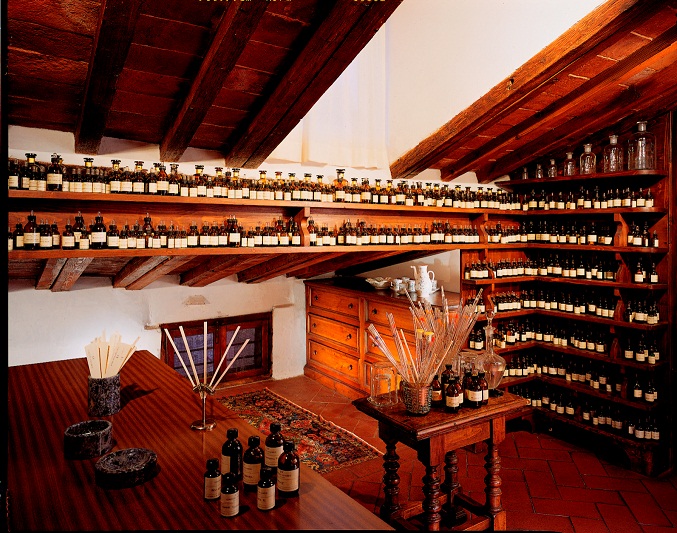
foto: gentileza Lorenzo Villoresi

Lorenzo Villoresi – The alchemist

Italians in general and Florentines in particular know a thing or two about beauty and harmony. Lorenzo Villoresi has been creating artistic perfumes since 1981. In 1990 his hobby, which had been inspired by his trips to the Middle East, gave way to the house we know today. Independent and self taught, Villoresi was awarded with the Prix Francois Coty in 2006.

 Villoresi‘s fragrances possess a classic and familiar quality, yet there’s an aura of otherworldliness to them. His creations are sensual: innocently so, like the delicate floral Iperborea, or in a raw way, like the irresistible Musk; even the marine   Aura Maris and the green Yerbamate feel infused with a subtle carnality. I will not even get into detail about the body products, the quality of which I find outstanding.  

Lorenzo Villoresi also creates personalised fragrances (the haute couture equivalent to the “prêt-à-porter” collection) and is planning to open an interactive atelier, dedicated to essences and perfumes, in his native Florence.

We managed to ask the master a few questions:

-Do you think there’s an Italian or, more specifically,  Florentine identity to your fragrances?

I don’t think so, also because none of them is inspired by a Florentine theme. We feel and like to be international under a cultural point of view; we do not identify with any style or historical period. Our fragrances belong to different cultures, myths and legends of different countries and times. Maybe the new fragrance that just came out, Aura Maris of the Mare Nostrum collection is more “Italian”, because it is related to the Mediterranean sea. But the Mediterranean sea is not only Italian! So we could say that Aura Maris, like Piper Nigrum, are “ancient Italian-Roman”!
-What does Florence smell like to you?

The sublimated Florence, the Florence of my dreams and memories, smells like spring flowers from the hills around the city, like the magnolia trees and the wisteria from the hidden gardens; like the spices and the herbs of the old markets and like the smells of the different activities  of the craftsmen.

 
-What does your idea of elegance entail?
Elegance is not to follow any fashion trend and where possible to create custom made clothes, shoes, accessories, etc. Even simple ones. For example if I feel like wishing, a green shirt and I don’t find one the way I like it,  I should try to find the tissue and have it made by a tailor, completely without worrying if it is fashionable or not.  Just the way I imagine it. There is a famous sentence of Emilio Pucci who said “The Stylist? The beginning of the end of style”.

-What do you aim for when you create a new fragrance?

I aim to create a very special dimension with extraordinary visions, feelings, sensuality and emotions.

-Your creations are undeniably beautiful. How important is to create beauty?

Thank you for the compliment! Beauty is important, because it does good to the eyes and to the heart. Beauty also represents a sort of “polar star”, a dream, a very high wish and in this way it indicates a sort of “rainbow way”, a “bridge” towards paradise and the infinite.

-What scent would you like to be able to re-create in liquid form?

The scent of the desert and of the pleasure and freedom that I feel when I am there alone, night and day!

-What would you want your legacy to be?

To be good and to create more and more good and beautiful things.

Caro

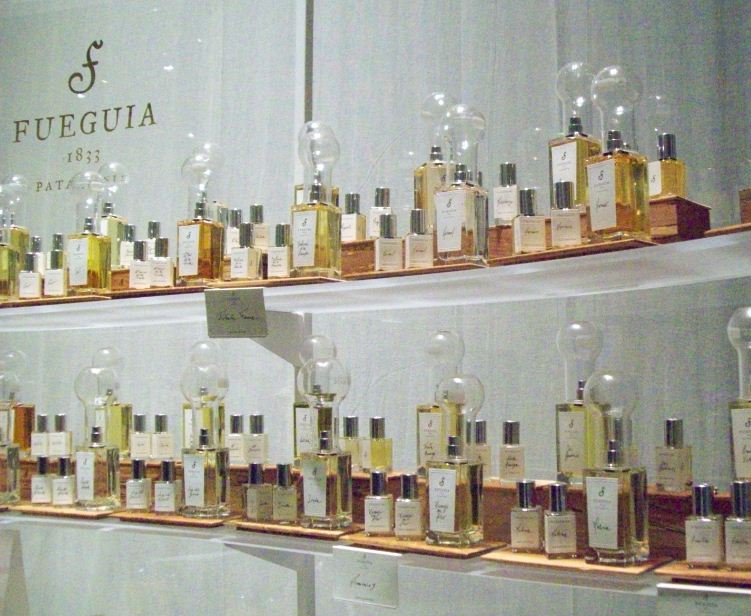
Los aromas de Patagonia en Florencia – Fueguia 1833 en Pitti Fragranze

foto: Caro Fernandez

Tal como conté en mis primeras impresiones sobre Pitti Fragranze, me dio enorme gusto ver a nuestro país presente en la feria, notar que el stand de Fueguia 1833 fue uno de los más concurridos y saber que la marca fue nombrada por la organización como una de 10 marcas de excelencia .

Pocos días después del evento, pude hacerle unas preguntas a Julián Bedel, fundador de la casa.

– Me consta que Fueguia despertó gran interés entre los asistentes a Pitti Fragranze ¿A qué cualidades lo atribuís?

A dos cosas que se dan sinérgicamente:

1- Somos la única marca surgida en las últimas décadas que formula, elabora, envasa y vende sus productos de forma vertical. Esto era la norma a principios del siglo XX, pero en la actual era de la tercerización, se perdió completamente. Ahora, ni el dueño de la marca ni el perfumista terminan sabiendo qué es lo que utiliza el laboratorio elaborador y ninguno de los tres sabe bajo qué condiciones se envasó y preservó el producto. 

2- La otra es el fuerte uso de materias primas naturales, que otras marcas no se permiten usar, pero que el consumidor cada vez busca más.

-¿Qué perfumes o familia de perfumes encontraron más eco entre los visitantes a la feria?

¡Todas! Y es lo que me sigue dando ganas de seguir expandiendo las familias. La gente está abierta y se deja fascinar.

-Ahora que tienen distribuidor en Italia (Campomarzio) ¿Cuáles son los siguientes pasos en la expansión?

Muy tranquilos, queremos que el distribuidor en Italia pueda trabajar codo a codo con nosotros, que los consumidores estén bien atendidos y puedan viajar por nuestras historias. Tenemos una propuesta para abrir un local propio en París que también nos tienta y considero que se puede dar en sinergía con Italia, pero paso a paso.

Nuestro principal desafío es poder seguir fabricando en la Argentina que eso, desagraciadamente, es más difícil que una expansión internacional!

-¿Qué busca el público local (argentino) en Fueguia?

Todos los clientes buscan lo mismo, magia y calidad. Un balance entre lograr la fascinación y seducción de un perfume con toda la durabilidad y poder de sillage.

-Hace poquísimo lanzaron Huemul (un almizcle animálico y dulzón, inspirado en un ciervo patagónico) ¿Cuál será la próxima creación?

Dos creaciones: Una es un trío entre mimosas y acacias (todas vienen de la misma especie) con iris. La otra es una en la que vengo trabajando hace mucho y cuyos resultados siguen sin convencerme: Vanilla planifolia. Desde fin de siglo XIX las grandes marcas francesas usan la vainillina y los otros derivados sintéticos de la familia, pero falta un soliflore puro, la versión natural, super carnal con su propio carácter de orquídea.

Caro

foto: Fueguia.com

The scents of Patagonia in Florence – Fueguia 1833 goes to Pitti Fragranze

As I told in my  first impressions about Pitti Fragranze, I felt glad to see our country present at the fair, observe that  Fueguia 1833 ‘s display was one of the most visited and know that the brand was recognized by the organization as one of  10 ten brands of excellence .

A few days after the event, I was able to ask Julián Bedel, founder of the house, a few questions.

-I know for a fact that Fueguia arose great interest among the concurrents to Pitti Fragranze. What characteristics do you atribute this to?

There are two factors that act sinergically:

1- We are the only brand -among those born in the last decades- that formulates, elaborates, bottles and sells their products vertically. That was the norm at the beginning of the XX century, but in these times of outsourcing, it is completely lost. Now, neither the company owner nor the nose ends up knowing what the laboratory actually uses and none of them knows exactly under which conditions the product is bottled and stored. 

2- The other one is a strong use of natural raw materials that other brands do not allow themselves to work with, but that the consumer is demanding more and more.

-What fragrance (or fragrance family) was the most celebrated among the visitors to the fair?

All of them! And that is what makes me more excited to continue the expansion of the families. People are open to new things and they allow themselves to become fascinated.

-Now that you have a distributor in Italy (Campomarzio). Which are the next steps for expansion?

Very calm, we want our  Italian distributor to be able to work closely with us; we want our customers to find excellent service and also to find that they can travel through our stories. There’s also the prospective opening of a store in  Paris, which is also very tempting and I consider it can happen sinergically with  Italy, but we are going step by step.

Our main challenge is to be able to continue to elaborate our products in Argentina which is, unfortunately,  more difficult than an international expansion!

-What does the local (Argentinian) customer look for in Fueguia?

All of our customers are looking for the same: magic and quality. A balance between the fascination and seduction inherent to a perfume with the added value of excellent longevity and sillage.

-You launched Huemul (a sweetish and animalic musk, inspired by a Patagonian deer) shortly ago. What will the next creation be?

We have two creations in the works: one is a trio of mimosa and acacia (which are related between them) with iris. As for the other one, I have been working on it for a long time and I am still not satisfied with the results: Vanilla planifolia. Since the end of the XIX century, big French houses have been using vanillin and other synthetical derivatives, but I feel what’s missing is a pure soliflore, the natural version, very carnal, with its own orchid character.

Caro

Roja Dove – El maestro

foto: Gentileza Roja Dove

La semana pasada, la encantadora Gaba se abrió camino entre los frascos de cristal de la  Roja Dove Haute Parfumerie en Londres y compartió su visita.

Hoy tengo el privilegio de hablar con el multifacético hombre que está detrás de ese  proyecto: Roja Dove, Professeur de Parfums, escritor, creador extraordinario,  apasionado narrador y uno de los expertos más renombrados del mundo cuando de fragancias se trata. Fue difícil encontrar un número razonable de preguntas para hacerle, ya que la perspectiva de esta entrevista despertó en mí una curiosidad inagotable.

Quiero agradecer profundamente al Sr. Dove y a Eddie, su asistente, por su amable y valiosa ayuda.

¿Cómo nació la Roja Dove Haute Parfumerie?

Fui invitado  a tomar una taza de té por un hombre llamado George Hammer. Antes de que me sentara, dijo “Me gustaría abrir una perfumería con usted”. Yo estaba tan sorprendido que contesté que sólo preferiría una taza de té, por favor. Luego de que hablamos por un rato, pensé que quizás sería una buena idea abrir un negocio y Harrods debe ser la mejor tienda en el mundo para abrir un negocio- así que acepté.

Cuando tuvimos que ponerle un nombre a la perfumería, dije “sabes, la mayoría de las perfumerías vende el equivalente a prêt a porter, esto va a ser como haute couture – como haute parfumerie“. Y así nació el nombre: la Roja Dove Haute Parfumerie. Fui la primera persona en usar este término; ahora entró al mainstream, con muchas otras compañías usándolo.

¿Qué criterio emplea para seleccionar las fragancias que son vendidas en la Roja Dove Haute Parfumerie?

Decidí que quería abrir una perfumería que sólo trabajara los perfumes que  creyera los mejores ejemplos de su tipo, así que  la perfumería es la única en el mundo donde alguien ha podido ir a las casas y seleccionar solamente las fragancias que  creo  se adaptan a mi criterio – a una selección editada de lo mejor, no la generalidad de la industria de tener que representar el catálogo principal de las marcas.

En mi perfumería, he elegido todos los perfumes que considero son los mejores ejemplos de su tipo, un altar a la gran creatividad.

¿Cómo describiría –en pocas palabras- su propia línea, Roja Parfums?

Es la redefinición dramática del lujo y la sofisticación en perfumería para la era moderna.

¿Qué puede uno esperar encontrar en un frasco de Roja Parfums?

Perfumes que son altamente originales, hechos con materias de la mejor calidad – esos son los sellos de mi trabajo.

¿Cómo describiría cada creación de Roja Parfums en tan pocas palabras como sea posible?

Lujo sensual, complejo y intransigente.

¿Qué puede uno esperar encontrar en un frasco de Roja Dove Bespoke Parfumerie?

Mi trabajo en perfumería a medida comenzó cuando me pidieron que creara un perfume a medida para una subasta de beneficencia en Christie’s para el Terrence Higgins Trust. Manolo Blahnik puso un par de zapatos con el boceto original, Mercedes puso un nuevo auto deportivo, y había unas vacaciones para ocho en las Maldivas. Decidí pedirle a  Baccarat -tenía muy buenos amigos trabajando allí en ese momento-  si podían volver a producir una botella art deco que me encantaba. Dijeron que sí, así que decidí poner la botella vacía en mi lote para la subasta. El ganador tendría entonces un perfume creado especialmente para él dentro de la botella. De todos los lotes, fue el que logró el precio más alto en la subasta.

Un perfume Roja Dove Bespoke será un perfume que te identifique, que verdaderamente capture a la persona cuyo corazón late por debajo, que dure toda una vida y se vuelva parte de uno- para siempre.

¿Qué aspectos no son negociables cuando crea una fragancia?

Todos los aspectos de mi trabajo. Cada una de mis creaciones debe ser  lo mejor que pueda ser. Tengo un dicho que cada uno en mi firma conoce y entiende: “Es suficiente, nunca es suficiente”.

¿Hay alguna instancia en la que uno debería preferir eau de parfum por sobre parfum?

No en mi opinión. Los dos fueron hechos para ser usados juntos, el primero brindando un fondo, el segundo, dando presencia. Tristemente, creo que hemos perdido el arte de perfumarnos.

Me llevó años ganarme el título de “perfumista”, no “eau de toilettista”.

¿Cuál es la importancia de la belleza en un perfume?

Resulta muy fácil hacer un perfume que shockee deliberadamente – creo que son vulgares y pueriles. No es tan fácil crear una fragancia que evolucione de manera tal que sorprenda  a menudo a la vez que se torna más bella con cada minuto que pasa.

Si tuviera que nombrar los cinco perfumes más influyentes de todos los tiempos ¿Cuáles serían?

Chypré de Coty, ya que inició el acorde chypré tal como lo conocemos hoy.

Shalimar de Guerlain, ya que estableció el acorde oriental como lo conocemos hoy.

L’Air du Temps de Nina Ricci, ya que redefinió la frescura en el acorde floral sin necesidad de apoyarse en materiales clásicos como el gálbano o la hoja de violeta, y es responsable por el desarrollo de la mayoría de las armonías florales que vemos hoy.

Chanel No.5 de Chanel, ya que permitió la entrada del couturier y trajo un nuevo estilo de creatividad en el que los materiales abiertamente sintéticos no sólo no se escondían, sino que daban un paso al frente.

Quelques Fleurs de Houbigant, ya que definió el bouquet floral y aún es responsable por la estructura de todos los florales lanzados hoy día – nada mal si pensamos que fue creado hace cien años.

Cómo le gustaría ser recordado por las generaciones venideras?

Como alguien que siguió su corazón, se volvió parte de la vida de las personas, rompió reglas y ayudó a redefinir y devolver el lujo y la creatividad en el mundo de la perfumería.

Caro

foto: Gentileza Roja Dove

Roja Dove – The maestro

Last week, the charming Gaba wandered her way among the crystal flacons of the  Roja Dove Haute Parfumerie in London and shared her visit.

Today, I have the privilege of talking to the multifacetic man behind that project: Roja Dove, Professeur de Parfums, author, creator extraordinaire,  passionate storyteller and one of the world’s leading experts when it comes to fragrance. It was really difficult to find a reasonable number of questions to ask, since the prospective of this interview arose in me an insatiable curiosity.

I want to deeply thank Mr. Dove and Eddie, his assistant, for their kind and valuable help.

How was the Roja Dove Haute Parfumerie born?

I was invited for a cup of tea by a man called George Hammer. Before I was seated he said, “I would like to open a perfumery with you”. I was so surprised I said I would just like a cup of tea please. After we spoke for a while I thought maybe it would be a good idea to open a shop and Harrods has to be the greatest store on earth to open a shop in – so I agreed.

When it came to naming the perfumery, I said, “you know, most perfumeries sell the equivalent of prêt a porter, it will be like haute couture – like haute parfumerie“. And so the name was a born; the Roja Dove Haute Parfumerie. I was the first person to use this term; it has now entered the mainstream, with many other companies using it.

What criteria do you use to select the fragrances that are sold at Roja Dove Haute Parfumerie?

I decided that I wanted to open a perfumery that only stocked the scents that I thought were the very best examples of their type, and so the perfumery is the only one in the world where someone has a been able to go to the houses and select only the scents that I believe fitted my criteria – an edited selection of the very best, not the industry norm of having to represent the brands’ main catalogue.

In my perfumery, I have chosen all the scents that I believe are the best examples of their type – a shrine to great creativity.

How would you describe –in few words- your own line, Roja Parfums?

It is the dramatic redefinition of luxury and sophistication in perfumery for the modern age.

What can one expect to find in a bottle of Roja Parfums?

Scents which are highly original, made with the very best quality materials – these are the hallmarks of my work.

How would you describe each creation from Roja Parfums in as few words as possible?

Uncompromising, complex, sensual luxury.

What can one expect to find in a bottle of Roja Dove Bespoke Parfumerie?

My work in bespoke perfumery began when I was asked to create a bespoke scent for a charity auction at Christie’s for the Terrence Higgins Trust. Manolo Blahnik put up a pair of shoes with the original drawing of them, Mercedes put up a new sports car, and there was a holiday for eight in the Maldives. I decided to ask Baccarat, I had very good friends working there at the time, if they would re-blow an art deco bottle I loved.They said yes, and so I decided to put up the empty bottle as my auction lot. The winner would then have a scent made for them to put into it. Of all the lots, it fetched the highest price at the auction.

A Roja Dove Bespoke scent will be a signature scent, truly capturing the person whose heart beats beneath, lasting a lifetime, and becoming part of you – forever.

When you create a fragrance, what are you uncompromising about?

Every aspect of my work. Everything I create has to be the best it can possibly be. I have a saying which everyone in my firm knows and understands – “it will do, will never do”.

Are there any instances in which one should we choose eau de parfum over parfum?

Not in my opinion. The two were made to be used together, the former giving background, the later giving presence. Sadly, I believe we have lost the art of perfuming ourselves.

It took me years to earn the title “parfumeur”, not “eau de toiletteur”.

What is the importance of beauty in a fragrance?

It is very easy to make a scent which deliberately shocks – I think they are vulgar and puerile. It is not so easy to create a scent which evolves in such a way that it often surprises whilst becoming more beautiful with each passing moment.

If you had to name the five most influential fragrances ever, what would they be?

Chypré by Coty, as it started the chypré accord as we know it today.

Shalimar by Guerlain, as it established the oriental accord as we know it today.

L’Air du Temps by Nina Ricci, as it re-defined freshness in the floral accord without needing to rely on classical materials such as galbanum or violet leaf, and is responsible for the development of most floral harmonies we see today.

Chanel No.5 by Chanel, as it allowed the couturier in and brought about a new style of creativity where overt synthetic materials were not hidden but pushed to the fore.

Quelques Fleurs by Houbigant, as it defined the floral bouquet and still is responsible for the structure of all florals launched today – not bad if you think it was launched one hundred years ago.

How would you like to be remembered by future generations?

As someone who followed their heart, became part of people’s lives, broke rules, and helped redefine and restore luxury and creativity in the world of perfumery.

Caro


Arquiste Parfumeur- Profundas, profundas raíces

foto: Gentileza Arquiste             fotógrafo: Ilan Rabchinskey

Esta semana tuve la muy agradable oportunidad de intercambiar algunas palabras con Carlos Huber,  arquitecto nacido en Ciudad de México y especializado en preservación histórica. 

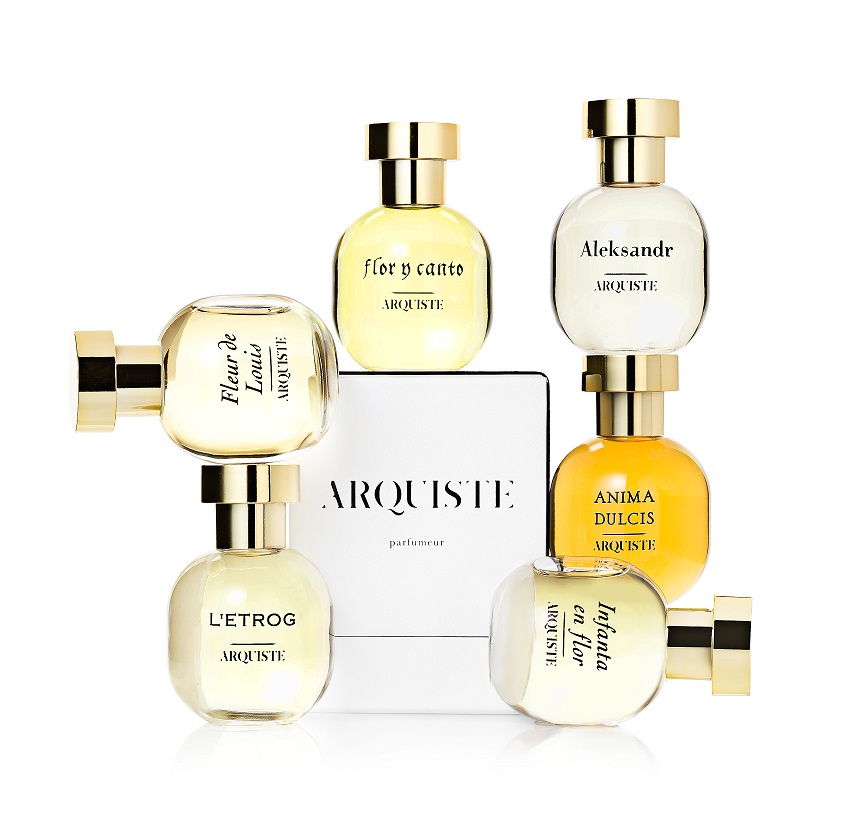
Carlos es  el creador y curador de Arquiste, una línea inspirada por la Historia y que encuentra la mayor parte de sus motivos en el rico pasado de México y EspañaArquiste fue lanzada el año pasado y se convirtió en una de las novedades más celebradas de 2011.

La idea de esta entrevista me alegraba doblemente: en parte por mi afición a los perfumes históricos y en parte porque me interesaba conocer mejor este valioso aporte latinoamericano a la industria de la perfumería.

Siendo arquitecto ¿Cómo fue que decidiste adentrarte en el universo de los perfumes?

Después de tomar cursos con el célebre perfumista mexicano Rodrigo Flores-Roux (el único latinoamericano trabajando actualmente en el mercado internacional de fragancias finas), me di cuenta que para mí, el mundo de los perfumes era algo más que una afición o un  hobby. Vinculaba mucho a los aromas con la memoria y la alusión a lugares y momentos específicos. Quería combinarla con mi estudio y carrera como restaurador para crear una experiencia fuera de lo común; mi idea era que a través de los sentidos se podía interpretar e incluso restaurar una anécdota especifica, aunque fuera lejana…

¿Percibís que tus raíces Hispánicas influyen de alguna manera en tu relación con los aromas?

Desde luego; tengo una afinidad por la tradición española de aguas de colonia a base de flor de azahar, aguas frescas de lavanda y otro tipo de fougéres. Soy gran fan de todos los productos clásicos del grooming masculino. Me gustan esas colonias viejas de barbería clásica, y creo que aprendí a poner atención a los ‘aromas’ gracias a mis abuelos, que siempre iban muy formales, muy tipo “Señor” latino.

Además, México es un país muy rico donde todos los sentidos están siempre entretenidos. Las flores mexicanas son la aportación mas grande de nuestro país al mundo de los olores ¿Qué sería de la perfumería francesa sin el nardo mexicano?

¿Qué perfumes o aromas de tu infancia recordás?

Creo que la memoria es algo muy curioso: puede ser selectiva o para nada. Para mí, la infancia es una mezcla entre el Agua de Colonia Sanborns que mis padres me compraban (una colonia de flor de naranjo muy limpia y ‘normalita’ típica en México), y los olores de la Ciudad de México, que tiene para mí una mezcla de olores muy especiales: el olor de las tortillerías, de los eucaliptos que se encuentran por toda la ciudad, del nardo en las florerías, del pan dulce de panadería, del trompo de tacos al pastor de una taquería, y de las gardenias que se venden en manojitos en las calles. Incluso el olor de los productos de limpieza que se usan en suelos y calles es muy particular.    

 ¿Cuál de las fragancias de Arquiste resultó más complicada de crear y por qué?

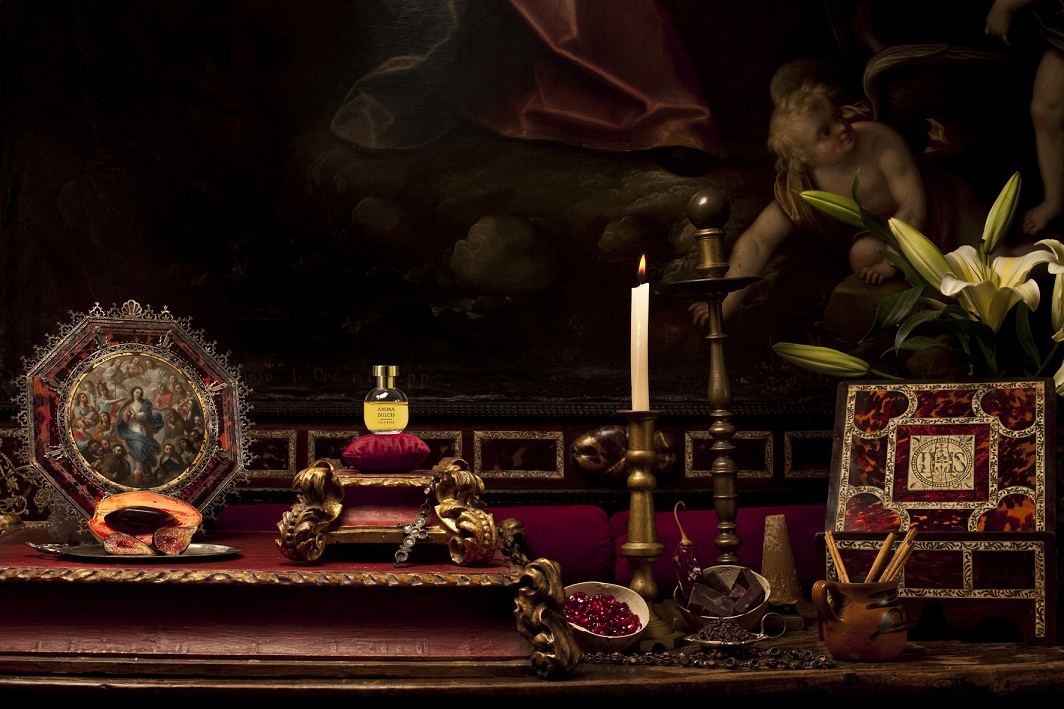
Anima Dulcis está basada en mi tesis de restauración, que es un plan maestro para un convento abandonado del Centro Histórico de la Ciudad de México, el Ex-Convento de Jesús María. En cuanto a información, la investigación nos había dado información muy precisa en cuanto a materias e ingredientes: los materiales de construcción del convento (las vigas de cedro y los muebles de nogal, el yeso de las paredes y los suelos de barro cocido) aromas comunes de cada espacio (el jazmín huele-de-noche en macetas del patio central, el incienso y las azucenas en la iglesia), e incluso especias utilizadas en las recetas de la cocina del convento (cacao, canela, comino, orégano, clavo y vainilla por ejemplo).

La idea era acompañar a las monjas a lo largo del día, desde la interpretación de la cocina con sus especias, pasando por el patio con su huele-de-noche y atravesando pasillos y estancias con ese olor a madera tan típico de los edificios coloniales, hasta llegar a la iglesia, donde el incienso es protagonista. Por eso mismo, fue un perfume que fue muy complicado de hacer, ya que tenía demasiadas cosas muy ‘ricas’ y complejas. No salía, no salía, y de repente, un día…descubrimos la combinación perfecta que era exactamente como si nos hubiéramos introducido en la historia…todo estaba ahí para hacer el recorrido pausado del convento. Por eso es un aroma tan especial, empieza con las especias dulces y barrocas, pero de repente sorprende una nota verde que más adelante nos lleva por maderas y almizcles hacia un incienso regenerador.

 ¿Cuál fragancia de la línea es tu favorita y por qué?

Fleur de Louis. Trabajé mucho en la investigación de este perfume. Quería encontrar el mayor grado de información sobre el encuentro en 1660 de las cortes francesa y española en la Isla de los Faisanes y trabajar con las auténticas formulas francesas del siglo XVII. El resultado es un perfume que mezcla estas formulas originales con la experiencia olfativa de este islote en el País Vasco. Es un perfume de ingredientes naturales que remite a un tiempo donde la naturaleza era la inspiración suprema; es elegante y complejo, pero muy natural y fresco.

¿Usás perfume cotidianamente? ¿Cómo lo elegís?

Todos los días, y lo reaplico siempre en la tarde/noche. Lo elijo depende del clima y la humedad afuera, pero sobre todo, del estado de ánimo o de las actividades del dia. Definitivamente tengo un número reducido de perfumes preferidos, pero varío mucho entre ellos. 

 ¿Qué aroma (lugar, momento histórico, planta, animal, etc) te gustaría reproducir?

La gardenia real, pura y fresca. Casi selvática.

Caro

foto: Gentileza Arquiste           fotógrafo: Ilan Rabchinskey

Arquiste Parfumeur – Deep, deep roots

This week I had the very pleasant chance to exchange a few words with Carlos Huber,  an architect born in Mexico City who specializes in Historic Preservation. 

Carlos is also the creator and curator of Arquiste, a line inspired by History which finds most of its motifs in the rich past of México and Spain. Arquiste was launched last year and became one of the most celebrated fragrance novelties of 2011.

The prospect of this interview seemed doubly tempting, on the one hand because of my enthusiasm for historic perfumes; and on the other, because I was interested in knowing more about a valuable LatinAmerican contribution to the fragrance industry. 

Being an architect, how did you decide to enter the fragrance world?

After studying with the celebrated Mexican nose Rodrigo Flores-Roux (the only LatinAmerican currently working in the fine fragrance market), I realized that to me the world of fragrance was something else than a pastime or a hobby. I linked smells with memory and the allusion to specific places and moments. I wanted to combine it with my studies and career in Restoration in order to create a unique experience; my idea was that, through the senses, it was possible to interpret and  even recreate a specific anecdote, however remote…

Do you perceive your Hispanic roots somehow influence your relationship with scents?

Of course; I have an affinity for the Spanish tradition of orange-blossom based eaux de cologne, fresh lavender waters and other sorts of  fougéres. I am a big fan of all the classical masculine grooming products. I like those old colognes  from classic barbershops and I think I learnt to pay attention to “scents” thanks to my grandfathers, who were always very formal, very much your Latino “Señor” .

Add to that the fact that Mexico is a country rich in entertaining the senses. Mexican flowers are the biggest contribution from our country to the world of fragrances. What would French perfumery be without the Mexican tuberose?

What fragrances or smells from your childhood do you remember the most?

I think memory is something very curious: it can be very selective or not at all. My childhood was to me a mix between the Sanborns eau de cologne that my parents used to buy for me (a very clean and “normal” orange blossom eau de cologne, typical in Mexico), and the smells of Mexico City, which to me  combines all kinds of scents: the smell of the tortillerías, of the eucalyptus you can see all aroundthe city, of the tuberoses in the flower shops, of the sweet breads from the bakers , of the roasting spit for tacos al pastor from the taco bars, and of the gardenias sold in small  bunches on the streets. Even the smell of the cleaning products used on floors and streets is very special. 

Which fragrance from the Arquiste line was the most difficult to create and why?

Anima Dulcis is based on my restoration thesis, which is  a master plan for an abandoned convent in the Historic Centre of Mexico City, the former Convent of Jesus Maria. Our research gave us very precise information on the materials and ingredients : the convent building materials (cedar beams and the walnut furniture, plaster walls and clay soils), the fragrances from each space in the convent (the night blooming jasmine in the flower pots of the central patio, the incense and the lilies in the church), and even spices used in the recipes in the  kitchen of the convent (cacao, cinnamon, cumin, oregano, cloves and vanilla for instance).

The idea was to accompany the nuns throughout a day, from the interpretation of the kitchen with its spices, passing through the patio with its night blooming jasmine  and walking through corridors and rooms with the smell of wood so typical of the colonial buildings, up to the church, where the incense was the protagonist. For this reason, it was a perfume that was hard to design because it was very ‘rich’ and complex. Nothing, nothing, and then suddenly, one day we discovered the perfect combination … it was exactly as if we had  travelled back in History… everything was there to make the slow journey  through the convent. That is why it is such a special scent, it starts with those sweet baroque spices, but suddenly surprises you with a green note that later takes one along the woods and musk to a regenerating incense.

Which fragrance is your favorite from the line and why?

Fleur de Louis. I worked very hard on the research for that fragrance. I wanted to find as much information as possible about the encounter in  1660 between the French and Spanish courts in the Isla de los Faisanes, and I wanted to work with the authentic French formulas of the XVII century. The result is a fragrance that mixes these original formulas with the olfactory experience of this isle in the Basque Country. It is a perfume of natural ingredients that brings one back to a time where nature was the supreme inspiration; it is elegant and complex, yet very natural and fresh.

Do you wear fragrance daily? How do you choose it?

Every day, and I always reapply in the evening/night. I make my choice depending on the weather and humidity, but, above all, based on my mood or activities. I definitely have a reduced number of favorite fragrances but I rotate a lot among them.  

 What smell/aroma (place, historic moment, plant, animal, etc) would you like to recreate?

True gardenia, pure and fresh. Almost jungle-like.

Caro

foto: Gentileza Arquiste

Eau d’Italie Un Bateau pour Capri – Una entrevista

foto: Ilsecoloxix.it

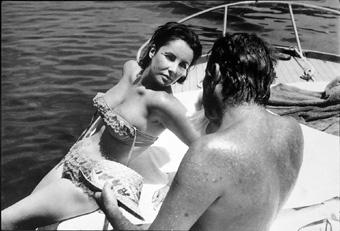
La inspiración para Un Bateau pour Capri les llegó a  Marina Sersale y Sebastián Álvarez Murena – creadores de la línea Eau d’Italie  mientras revisaban viejas fotos de glamorosos huéspedes enel hotel Le Sirenuse.

Algunas de estas criaturas tan chic eran famosas (Liz Taylor y Grace Kelly solían visitar Le Sirenuse), algunas no; pero todas ellas disfrutaban plenamente de la dolce vita en esta ubicación paradisíaca, sin perder ni una pizca de glamour.

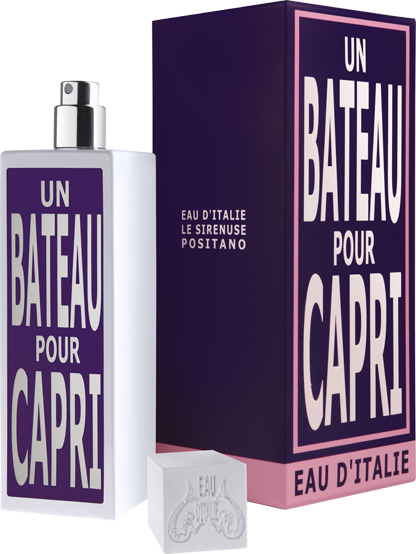
La fragancia ostenta notas de peonía, fresia, durazno, jazmín sambac, rosa centifolia, heliotropo, maderas solares, cedro y almizcle.

Conversamos con el Sr. Álvarez Murena acerca de la creación más reciente de Eau d’Italie.

El hotel Le Sirenuse encarna a nuestro entender el verdadero lujo moderno (exclusividad, calidad impecable desprovista de ostentación, ambiente relajado) ¿De qué manera se ven reflejados esos aspectos en Un Bateau Pour Capri?

Gracias. No quisiera robarles las palabras, pero esa descripción del lujo del hotel coincide precisamente con lo que buscamos para Eau d’Italie en todos sus perfumes. La idea es justamente la de ofrecer una calidad impecable desprovista de ostentación, palabra por palabra, con una exclusividad que surge de una distribución muy esmerada. Sus palabras describen precisamente lo que de hecho es nuestra manera de trabajar.

De qué manera difiere Un Bateau Pour Capri de otros perfumes que evocan el glamour de la década de los años 1950s y que en su mayoría destacan notas de cosméticos (polvos, lápiz labial, aroma a violetas)? 

 Si tengo que ser franco, no sabría bien qué contestar, porque la verdad es que cuando empezamos un proyecto nunca lo hacemos comparándolo a lo que ya hay en el mercado. Me explico mejor: nuestro perfume anterior, Jardin du Poète, pertenece a una categoría en la cual ya hay muchos perfumes muy bien hechos, muy agradables y bien construidos, pero que por sus características (notas muy volátiles), tienden a durar poco sobre la piel. Por lo cual si hubo comparación, fue en relación a que lo que buscábamos era un cítrico/verde perfecto, efervescente, luminoso, pero con duración. En el caso de Un Bateau pour Capri lo que buscábamos era evocar las características de un período, pero en clave contemporánea. O sea, evocar, más que replicar.

La construcción de los perfumes de Eau d’Italie es eminentemente moderna ¿Cómo logran compatibilizar esa característica con un glamour retro?

Eso es lo que quería explicar en la pregunta anterior: en nuestra opinión la clave es evocar, más que replicar.

 Hace meses, cuando el nuevo perfume era sólo un proyecto, nos contaste que incluiría una particular nota de peonía ¿Alguna razón especial por la que hayan elegido esa flor?

Espero que esta contestación no los desilusione pero…el motivo es que la peonia nos gusta mucho… Lo que nos intrigaba de las peonías (las que tienen perfume, quiero decir) es esa capacidad de emanar un perfume exquisito de manera constante pero discreta.

 La gran mayoría de vuestros perfumes fueron compuestos por (el genio del incienso) Bertrand Duchaufour, excepto Au Lac (orquestado por el maestro de la pulcritud Alberto Morillas). El talento y nariz detrás de Un Bateau pour Capri es Jacques Cavallier, quien tiene un historial pródigo en perfumes de carácter más carnal  ¿Por qué pensaron que él sería el indicado para esta creación?

Creo que la verdad es que fue un encuentro perfecto entre el perfumista y el proyecto: desde la primeras pruebas Cavallier estaba en el buen camino, sin duda.

Los perfumes de la línea Eau d’Italie no se ajustan demasiado a restricciones de género, pero Un Bateau pour Capri –a priori- parecería ser eminentemente femenino ¿Lo es? ¿Existe algún motivo para esta elección?

Sí, eso es verdad: en general hemos tratado de evitar algo que no nos convence del todo, lo de predeterminar el género de los perfumes. Sobre todo porque a veces el hacerlo nos dió sorpresas: Bois d’Ombrie, que son cueros y maderas, en nuestra opinión iba a ser un perfume más bien masculino, pero rápidamente se convirtió en un best seller entre las mujeres. Pero en el caso de Un Bateau pour Capri creo que no hay dudas: es un femenino, super femenino. Después podemos debatir ad eternam qué es femenino y qué es masculino, nosotros seríamos los primeros en ponerlo en cuestión, pero creo que en este caso no caben demasiadas dudas. ¡Lo cual no implica que no sea exquisito usado por hombres! Pero sin duda menos habitual.

¿Por qué la elección de concentración eau de parfum?

La explicación es simple: generalmente cuando terminamos un perfume lo probamos también en concentraciones diferentes a la que usamos durante la creación, más bajas y más altas, para ver cual es más adecuada para ese perfume. En base al resultado de estas pruebas decidimos la concentración final, que en este caso resultó ser una concentración alta, de eau de parfum.

Aunque Eau d’Italie aún no está presente en el mercado local (Argentina), sabemos que tiene sus fieles seguidores ¿Qué características creés que el público argentino apreciará particularmente en Un Bateau Pour Capri?

Tal vez  pueda parecer raro lo que les digo, sobre todo en el ámbito de una entrevista, pero mi opinión personal es que más allá de todo lo que podamos decir y explicar acerca de un perfume, la opinión final es la que se obtiene probándolo. En el caso de Un Bateau pour Capri, creo que lo que el público argentino puede apreciar es un impecable clásico femenino que no cansa nunca.

Caro

foto: Eauditalie.com

Eau d’Italie Un Bateau pour Capri – An interview

The inspiration for Un Bateau pour Capri came to Marina Sersale and Sebastián Álvarez Murena –creators of the Eau d’Italie line- as they were rummaging through old photos of glamorous guests at Le Sirenuse.

Some of these über chic individuals were famous (both Liz Taylor and Grace Kelly used to visit Le Sirenuse), some were not, but all of them enjoyed la dolce vita to the fullest in this paradisiacal setting without losing an ounce of glamour.

The fragrance boasts notes of peony, freesia, peach, sambac jasmine, rosa centifolia, heliotrope, solar wood, cedarwood and musk

We talked to Mr. Álvarez Murena about Eau d’Italie‘s latest creation.

The Hotel Le Sirenuse embodies true modern luxury (exclusivity, flawless quality devoid of ostentation, relaxed environment). How are those aspects reflected in Un Bateau Pour Capri?

 Thank you. I wouldn’t like to steal your words, but your description of the hotel’s luxury coincides precisely with what we try to achieve in each Eau d’Italie fragrance. The idea is to offer flawless quality devoid of ostentation, word by word, with an exclusivity that arises from a very careful distribution. Your words describe precisely what in fact is our way of working.

How does Un Bateau Pour Capri differ from other fragrances that evoke the glamour of the 1950s and which, in most cases, have dominant notes of cosmetics (face powder, lipstick, violets)?

If I must be honest, I wouldn’t really know what to answer, because when we start a project we never do it comparing it to what already exists on the market. To put it more clearly: our previous fragrance, Jardin du Poète, belongs to a category  of very  good, pleasant and well executed fragrances, but  which due to their characteristics (very volatile notes), tend to have poor longevity on the skin. Therefore, if there ever was a comparison it was in relation to what we were looking for:  a perfect green/citrus with efervescence and luminosity, but with lasting power. In the case of Un Bateau pour Capri we were looking to evoke the characteristics of a certain period but on a contemporary note. We were more interested in evoking than replicating.

 The construction of Eau d’Italie‘s fragrances is eminently modern. How did you manage to make that trait compatible with retro glamour?

There, that’s what I was trying to explain in the previous question: in our opinion the key is to evoke rather than replicate.

Months ago,when the new fragrance was still a project, you told me it would include a particular peony note. Is there any special reason why you chose that flower?

I hope the answer doesn’t disappoint you but…the reason is that we like peony very much. What keeps us intrigued about peonies (the fragrant ones, I mean)  is their ability to emanate their exquisite aroma in a constant yet discreet way.

Most Eau d’Italie fragrances have been composed by (incense genius) Bertrand Duchaufour, except Au Lac (orchestrated by master of pulchritude Alberto Morillas). The talent and nose behind Un Bateau pour Capri is Jacques Cavallier, who has a prolific background in fragrances of a more carnal character. Why did you think he would be the best choice for this creation?

I think it was a perfect match between the nose and the project: since the first trials Cavallier was on the right path, without a doubt.

Eau d’Italie fragrances are not too bound by gender restriction, but Un Bateau pour Capri –a priori– seems to be eminently feminine in character. Is it? Is there any conscious decision behind this? 

What you say is true, in general we have tried to avoid something we are unconvinced about: predeterminating the gender of our fragrance. Especially because on a few occasions when we did it proved surprising: Bois d’Ombrie, which boasts leather and wood notes, was going to be a mainly masculine fragrance in our opinion, but soon proved to be a best seller among women.  However in the case of Un Bateau pour Capri I think it is no doubt feminine. We could in fact go on about what is feminine and what is masculine, we would be the first to question this, but I think in this case there is no room for doubt.  Which doesn’t mean that it wouldn’t be exquisite on a man! Yet less customary.

Why did you choose an eau de parfum formula ?

The explanation is simple: usually when we finish a fragrance we try it in varying concentrations  – more or less –  to see which is best suited for this fragrance.  Based on the results of these tests we then decide the final concentration, which in this case was a high concentration of eau de parfum.

Although Eau d’Italie does not have a presence yet in the local market (Argentina), we know it has a loyal cult following. What traits do you think your Argentinian customers will particularly appreciate in Un Bateau Pour Capri?

This may sound strange to you particularly within the context of an interview, but my personal opinion is that beyond everything we can say and explain about a fragrance, the opinion that matters the most will be what comes to you when you try it. In the case of Un Bateau pour Capri, I think what the Argentinian public may appreciate the most is an impeccable feminine classic that one can never get tired of.

Caro