
Silvio Levi ha sido, durante años, el distribuidor en Italia de marcas como Clive Christian, Knize, Les Nez, Creed y Floris. No satisfecho con eso, en 2008 creó Calé Fragranze d’Autore, su propia línea. Es también creador de Esxence -una exhibición internacional de fragancias con base en Milán– y ha escrito numerosos artículos sobre Perfumería Artística. Su pasión por los perfumes resulta contagiosa.
El Sr. Levi compartió su mirada sensible -y sensata- sobre el tema con nosotras.
-¿Cómo definiría la Perfumería Artística?
En términos generales, me refiero a los perfumes hechos sin restricciones de marketing, perfumes que tienen el propósito de traducir una historia emocional convirtiéndola en una creación que puede ser ”escuchada” con la nariz, recibiendo las mismas palabras escritas pero oliendo en vez de leyendo…
Es un hecho que la Perfumería Artística, teniendo como target potencial a una cantidad limitada de consumidores, logra mejores resultados si es propuesta en el marco de trabajo correcto, así que ambos criterios estético-artístico y distributivo deben ser respetados.
-Con respecto a las materias primas ¿Ve una tendencia hacia los naturales o hacia los sintéticos?
Cuanto más coherentemente crezca el negocio de la Perfumería Artística en el mundo, más asistiremos a una demanda recuperada de aceites esenciales, la demanda de los cuales se vio recientemente afectada por la necesidad de evitar variabilidad estacional o alérgenos en las fórmulas por los grandes jugadores de la industria.
Muchas materias primas ya no se encuentran disponibles porque la producción local no tiene más demanda. Esto afectó actividades locales tradicionales como la cosecha de rosas en Rumania o el jazmín en el norte de África, que se volvieron menos rentables día a día por la competencia de sustitutos y especialidades sintéticas.
Así que para el vetiver, vainilla, guaiac, sándalo, tuberosa, una demanda más alta tendrá efectos positivos en la agricultura local, reduciendo el abandono de estas actividades sustentables y eco-compatibles. Sin embargo, desde hace siglos, la contribución de nuevas materias primas olfativas resulta invaluable.
No creo que haya una tendencia en beneficio de uno por sobre el otro. Lo más importante es la creación de perfumes que provoquen una emoción, que cuenten una historia, que pongan a uno de un humor muy especial, más que un ingrediente en particular. Como en cualquier Arte…música, pintura, escultura, literatura, las materias primas deben ser lo más diferentes posibles, preciosas o muy pobres, lo que hace a una obra maestra es cómo el artista ensambla los ingredientes para obtener una pieza de arte. Un acorde, en música como en perfumería, siempre es más que la simple suma de sus componentes.
-¿Por qué sintió la necesidad de crear Calé, su propia marca?
Luego de haber escrito tantos textos para las marcas que distribuímos y de haber conocido a tantos perfumistas y propietarios de marcas, se suponía que yo sabría algo especial acerca del atractivo de la creación de perfumes pero tenía clarísimo que, a pesar de ser Químico, nunca seré un nariz. Lleva tanto tiempo, tanto ejercicio diario, una gran lealtad a una “Divinidad” como el Arte del Perfume.
Por otra parte, me gusta tanto escribir, inventar novelas y cuentos que, obviamente, me gustaría darles más “vida” permitiendo que también puedan ser “olidos”.
Cuando estudié en profundidad la Historia de la Perfumería y tuve más contactos en este campo me di cuenta de que a menudo un perfume es una creación en equipo, como en música cuando una canción tiene ”letra por”… y ”música por”… ¡Los mismos dos autores trabajando con otros artistas seguramente harían creaciones completamente distintas! La canción es el resultado de fusionar la creatividad de ambos autores.
Así que decidí empezar a contarle mis historias a un perfumista que también es un amigo, Maurizio Cerizza, y les dimos vida a algunas novelas… Recientemente trabajé también con mi amigo Mark Buxton y otros se sumarán a ayudarme a dar un aroma a mis historias. Nada más. Un juego alegre entre amigos que disfrutan de tener un desafío y una apuesta que ganar.
La verdadera devolución es mirar a los ojos de quienes huelen mis (nuestras) creaciones y escucharlos decir palabras que estaban en mi briefing… ¡El mensaje vuela en el aire y los alcanza! Maravilloso.
Tengo muchas historias en mi mente y en mis anotaciones, y -afortunadamente- muchos amigos capaces de usar los aceites esenciales tal como yo uso las palabras.
-¿Cuál es su creación favorita de Calé?
¡Nunca le preguntes a papá qué hijo es el preferido! Me encanta Dolce Riso porque mi hija lo usa desde que tenía 16, dos años antes de que lanzáramos la marca en 2008. Adoro Roboris, ese es mi perfume, y Fulgor porque a partir de mi visita el 15 de agosto de 2004 al Valle de la Muerte, en Nevada, compartí dos aspectos diferentes de la misma experiencia con dos amigos y creamos dos perfumes completamente distintos…¡Gracias Wakantanka y Lakotas!
Me encanta Mistero porque está dedicado a mi gran maestro y amigo Guy Robert y a un Químico de la Universidad de Stanford, Barry Trost. Ambos me enseñaron tanto y me permitieron confiar en mí mismo simplemente mostrándome el camino y no dándome lecciones. Dios los bendiga y permita que todos conozcamos personas así durante nuestras vidas ¡Es mejor que ganar la lotería, creeme!
-¿Quiénes son sus narices favoritos?
Es una larga lista, pero me gustaría mencionar:
Isabelle Doyen: Una dama sumamente amable y que tiene gran energía. Mi creación favorita es la poco conocida L’Antimatiere, para Les Nez
Geza Schoen: Un hombre loco con sentido del humor ¡Pensá en Escentric Molecules 01! Pero también está detrás de tres creaciones de Clive Christian!
Mark Buxton: ¡Nunca crecerá! Fue y será siempre un bebé y un hombre sumamente agradable. El dandismo en sus creaciones es muy sutil. Un adicto al vetiver que tiene la originalidad de ser el autor de las creaciones de los primeros diez años de Comme des Garcons.
Maurizio Cerizza: Jamás cesa de agradecerme por haberle permitido descubrir la Perfumería Artística y permitirle jugar libremente, con gran placer.
Sandrine Videault: Vive en Caledonia, tiene una cultura inmensa y un gran respeto por el Arte del Perfume. Hizo la réplica del Kyphy para el Museo de El Cairo. Ella estudia los diferentes aspectos de la cultura del perfume en distintas poblaciones y es una nariz capaz de lograr una maravillosa fragancia de tiare.
Maurice Maurin: Un maestro, padre de Amazone, que ama su lugar, su familia, cocinar y darle al Arte del Perfume un rol en más aspectos de la cultura y vida humanas (niños, teatro, comida, vino…)
Guy Robert: Nos dejó este año, pero será un referente para futuras generaciones de perfumistas.
Christophe Laudamiel: Nunca cesa de sorprenderme! Bravo!
Lorenzo Villoresi: Nos conocemos desde hace años y es un placer ver su desarrollo en la creación de fragancias. Descubre perfumes gracias a la Filosofía…creo que eso le da un comodín.
La lista podría ser más y más larga: aquí menciono algunos de aquellos que realmente mezclan aceites esenciales. Hay también una lista de narradores de historias, co-autores de fragancias. También los considero artistas.
-¿Qué perfumes han dejado marca en su alma?
Siempre digo: yo era Eau Sauvage de Dior, luego J.F de Floris, Vetiver de Guerlain, Bois du Portugal y Silver Mountain Water de Creed y hoy Roboris de Calé Fragranze d’Autore.
Luego hay algunos perfumes que me encantan, pero que no puedo llevar porque no encajan con mi carácter: Green Irish Tweed, Knize Ten, Tilleul, Clive Christian N°1. Casi me olvido de mencionar Chanel 19 y Caron pour un Homme…
-¿Qué cambios le gustaría ver en el mundo de las fragancias?
Me encantaría que el perfume sea considerado menos un producto y más una necesidad. Una necesidad que complete nuestra propia forma de vestir, nuestra elección de colores, nuestra eleccipon de materiales, nuestros zapatos, nuestro peinado. Un perfume nos anuncia cuando llegamos y deja un recuerdo de nosotros cuando nos vamos. El perfume es nuestro discreto embajador.
Así que me gustaría que más y más consumidores sientan la responsabilidad de elegir su propio compañero olfativo. Pido coherencia y pasión.
Caro
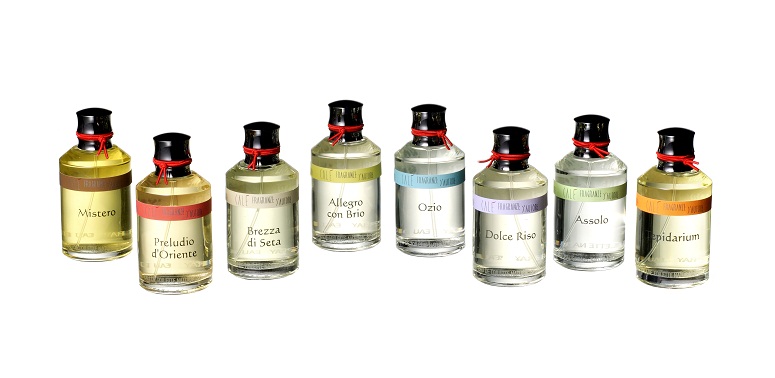
foto: gentileza de Calé, Fragranze d’Autore
Silvio Levi – The multitasker
Silvio Levi has been, for years, the Italian distributor of brands like Clive Christian, Knize, Les Nez, Creed and Floris. Not satisfied with that, in 2008 he created Calé Fragranze d’Autore, his own line. He is also the creator of Esxence -an international fragrance exhibition based in Milan– and has written many articles on Artistic Perfumery. His passion for fragrance is truly contagious.
Mr. Levi shared his sensitive -and sensible- views on the subject with us.
-How would you define Artistic Perfumery?
Generally speaking, I refer to perfumes made without marketing constraints, perfumes that have the aim to “translate” an emotional story in a creation you can “listen” with your nose, getting the same written words without reading but smelling…
It’s a matter of fact that Artistic Perfumery, having as a potential target a limited amount of consumers, obtains better results if proposed in the proper framework. So both aesthetic/artistic and distributive criteria have to be respected.
-With regard to raw materials, are you seeing a trend towards naturals or synthetics?
The more coherently the Artistic Perfumery business will grow in the World, the most we will assist to a recovered demand for essential oils, the demand of which was recently affected by the need to avoid seasonal variability or allergens in formulas composition by the big players.
Many raw materials are no longer available because local production had no more a demand. That affected traditional local activities like rose recollection in Romania or jasmine in North Africa, which become less profitable day by day because of the competition with synthetic substitutes and specialties.
So, as per vetiver, vanilla, guaiac, sandalwood, tuberose, a higher demand will have positive effects on local agriculture reducing the abandon of this sustainable and eco-compatible activities. Nevertheless, since centuries, the contribution of new olfactive raw materials is invaluable for the new creativity!
I don’t think there will be a trend on benefit of one or the other. The most important thing is the creation of perfumes that will give an emotion, tell a story, put you in a very special mood, more than the single raw material. As in any Art…music, painting, sculpture, literature, the raw materials should be the most different possible, precious or very poor, what makes a masterpiece is how the artist asssembles the ingredients obtaining a piece of art. An accord, in music as in perfumery, is always more than the simple sum of its components!
-Why did you feel the need to create Calé, your own brand?
After I wrote so many texts for the brands we distribute and I met so many perfumers, brand owners, I supposed to know something special about the “allure” of perfume creation but I was aware that, despite I’m a chemist, I will never be a nose! It takes so much time, so much daily exercise, a great loyalty to a “Divinity” like the Perfume Art.
On the other hand I love so much to write, to invent novels and stories and I, obviously, would like to give them more “life” letting them to be also “smelled”.
When I studied deeply the History of Perfumery and I had more contacts in the field I realised that quite often a perfume is a team creation, like in music when a song has ”words by”… and ”music by”… The same two authors working with other artists will make surely completely different creations! The song is a result of merging of the creativity of both the authors.
So I decided to start to tell my stories to a perfumer who is also a friend, Maurizio Cerizza, and we gave life to some novels… Recently I also worked with my friend Mark Buxton and others will come to help me to give a smell to my stories. Nothing else. A joyful game between friends that love to have a challenge and a bet to win.
The real return is to look into the eyes of those smelling one of my (our) creations and listening her/him telling some words that are words of my briefing… the message flies in the air and reaches them! Wonderful.
I have a lot of stories in my head and in my notes….and fortunately a lot of friends capable to use the essential oils as I use words!
-What is your favorite creation from Calé?
Never ask daddy which son is the preferred! I love Dolce Riso because my daughter has been wearing it since she was 16, two years before we launched in 2008 the brand. I love Roboris, that’s my perfume, and Fulgor because starting from my visit on 15th August 2004 in the Death Valley in Nevada, I shared two different aspects of the same experience with two friends and we created two completely different perfumes….thank you Wakantanka and Lakotas!
I love Mistero because it is dedicated to my great master and friend Guy Robert and to a Chemist of Stanford University, Barry Trost. Both of them taught me so much and let me trust in myself simply by showing me the way and not giving me lessons. God bless them and let everyone meet people like them during their lifetime. It’s better than winning the lottery, believe me!
-Who are your favorite noses?
It’s a long list but I’d love to mention:
Isabelle Doyen: Such a kind lady who has a great power in her. My favourite creation is the little-known L’Antimatiere for Les Nez
Geza Schoen: A crazy man with a sense of humor. Think of Escentric Molecules 01! But he was also behind three Clive Christian creations!
Mark Buxton: He will never grow up! He was and will remain a baby and a enjoyable man. The dandism in his creations is very subtle. A vetiver addict who has the originality of being the author of the first ten years creations by Comme des Garcons
Maurizio Cerizza: He never stops thanking me for letting him discover Artistic Perfumery and to let him play freely, with immense pleasure!
Sandrine Videault: She lives in Caledonia, has an immense culture and a great respect for the Perfume Art. She made the Kyphy replica for El Cairo Museum, she studies the different aspects of perfume culture in different populations and she is a nose capable of making a wonderful tiare fragrance.
Maurice Maurin: A master, the father of Amazone, who loves this territory, his family, cooking and giving the Art of Perfume a role in more aspects of human life and culture (children, theatre, food, wine…)
Guy Robert: He left us this year but he will be a reference for future generations of perfumers
Christophe Laudamiel: He never stops to surprise me! Bravo!
Lorenzo Villoresi: We have known each other for years and it’s a pleasure to assist to his development in creating fragrances. He discovers perfumes thanks to Philosophy…I think that will grant him a “joker”.
The list could be longer and longer: here I have mentioned some of those that I know who really mix essential oils. There is also a list of story tellers co-authors of fragrances. I also regard them as artists.
-What fragrances have left their mark on your soul?
I use to say: I was Eau Sauvage by Dior, then J.F by Floris, Vetiver by Guerlain, Bois du Portugal and Silver Mountain Water by Creed and today Roboris by Calé Fragranze d’Autore.
Then there are some fragrances I love but I cannot wear because they don’t fit with my character: Green Irish Tweed, Knize Ten, Tilleul, Clive Christian N°1. Oh, I forgot to quote Chanel 19 and Caron pour un Homme…
-What changes would you like to see in the fragrance world?
I’d love perfume to be be considered less of a product and more of a need. A need to complete our own way of dress, our choices of colors, our choice of materials, our shoes, our hair style. A perfume announces us when we are coming and leaves a memory of us when we leave. Perfume is our discreet ambassador.
So I’d like more and more consumers to feel the responsibility to choose their own olfactive companion. I ask for coherency and passion.
Caro






 Té de Violetas