Tag Archives: vainilla – vanilla

Parfum d’Empire Cuir Ottoman – Exuberancia y equilibrio

imagen: Ottomanhistorypodcast.com Osman Hamdi Bey, At the Mosque Door, 1891, Oil on canvas, 203 x 123.5 cm, University of Pennsylvania Museum of  Archaeology and Anthropology

imagen: Ottomanhistorypodcast.com  “En la puerta de la mezquita”, 1891 artista: Osman Hamdi Bey

Desde tiempos antiguos (2000-1200 A.C.) el arte de la curtiduría ha sido desarrollado por los Hititas en la AnatoliaTurquía. El trabajo del cuero conllevaba un gran peso simbólico en las comunidades turcas: un sentido de lo sagrado y de los valores. Pero además, el cuero tenía también un importante valor económico: se le llamaba“teri” y “tirik”, un impuesto que los antiguos clanes del lugar le pagaban al Khan.

Marc-Antoine Corticchiato -perfumista y alma mater de Parfum d’Empire– creció entre Córcega y Marruecos. Él demuestra ese particular mix cultural creando Cuir Ottoman como un tributo al tradicional trabajo del cuero de Anatolia. Es el exotismo de lo oriental en el imaginario occidental; un lujo exuberante moldeado con equilibrio y moderación.

Las breves impresiones iniciales sobre la piel remiten a un blend de whiskytabaco y cuero. Este último acorde es una cálida dulzura de benjuí que suaviza los matices más combustibles del styrax; y el cistus le ofrece una frescura casi verdosa. Una tersa nota de iris fluctúa, elegante y delicada, entre un acabado cremoso y uno apolvado.

El exotismo aparece con remotos toques de incienso que se entrelazan con una cadencia ambarada de tonkavainilla y bálsamo de Tolú: esta mélange es dulce pero a veces amarga y oscura. No obstante, el gran secreto de esta sensual composición es el jazmín egipcio, una delicia floral blanca que se transforma en un imaginario fruto de azúcar. Como dijo el perfumista: “tan blanco y opulento como las odaliscas pintadas por DelacroixIngres y Matisse“.

A pesas de que hemos incluído a Cuir Ottoman en un Top 5 (muy) masculino, creo que -además- este eau de parfum florece de una forma delicada sobre la piel femenina.

Virginia

Origen de la muestra: Regalo por compra en Luckyscent.
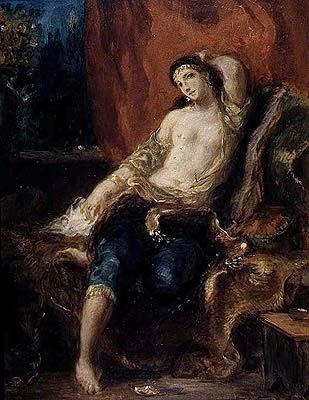
imagen: Artble.com "Odalisque", artista: Eugene Delacroix

imagen: Artble.com “Odalisque”, 1857   artista: Eugene Delacroix

Parfum d’Empire Cuir Ottoman – A balanced exuberance

The art of tannery was developed by the Hittites in Anatolia, Turkey, Since the very old times (2000-1200 B.C). In Turkish communities, leatherwork carried holy and symbolic meanings and values. But leather also had an important economic value: it was called “teri” and “tirik”, a tax paid to Khan in old Turkish clans.

Marc-Antoine Corticchiato -perfumer and alma mater of Parfum d’Empire– grew up between Corsica and Morocco. He displays that particular cultural mix creating Cuir Ottoman as a tribute to the traditional Anatolian leatherwork . It is Eastern exoticism set in a Western imaginary; an exuberant luxury shaped with balance and moderation.

The brief initial impression on the skin is a blend of whisky, tobacco and leather. This last accord is a warm sweetness of benzoin which smooths the fuel hues of styrax; and cistus brings a greenish freshness. A soft iris note fluctuates, elegant and delicate, between a creamy and a powdery finish.

The exoticism appears with distant touches of frankincense that interlaces with an ambery cadence of tonka, vanilla and Tolu Balsam: this mélange is sweet but at times bitter and dark. However the big secret of this sensual composition is Egyptian jasmine, a white floral delight that becomes in an imaginary fruit of sugar. As the perfumer said:“as white-fleshed and opulent as the odalisques painted by Delacroix, Ingres and Matisse.

Despite of our having included Cuir Ottoman in a (very) masculine top 5, I think this eau de parfum also flourishes delicately on feminine skin.

Virginia

Origin of sample: Gift with purchase from Luckyscent.

foto: Parfumdempire.fr

Olivier Durbano Amethyst – Neblina púrpura

foto: Elogedelart.canalblog.com  Apolo, talla en amatista atribuída a Solón (30-20 AC), The J. Paul Getty Museum

foto: Elogedelart.canalblog.com     Apolo, talla en amatista atribuída a Solón (30-20 AC), The J. Paul Getty Museum

Ya había disfrutado del vivaz Rose Quartz, había recibido elogios de completos desconocidos sobre Rock Crystal y me había asombrado ante -¡oh, humo sagrado!- Black Tourmaline. Por alguna causa fortuita, mi muestra de Amethyst en cambio había encontrado el camino al fondo de un cajón y quedó olvidada allí por un año y medio. Olivier Durbano, como quizás recuerden, es un joyero francés. Sus creaciones, las fragantes y las que no, parecen permeadas de una cruda poesía. Sus eaux de parfum tienen una adecuada sensación mineral y el incienso y otras resinas son notas recurrentes en su obra perfumada.

Ayer tuve que hacer parada en boxes en mi joyería preferida para hacer arreglos a una pulsera. Mientras esperaba vi un despampanante collar de plata y amatistas -corto, dramático, con grandes piedras irregulares- y me encapriché con él.  Aunque (¡ay!) no lo compré, de regreso me puse a divagar sobre las amatistas,  que siempre se contaron entre mis piedras preferidas, sus correspondencias y simbología. Por supuesto, Olivier Durbano Amethyste fue el primer perfume que busqué apenas llegué a casa.

La amatista era usada por los Griegos para prevenir la embriaguez y proteger contra envenenamientos. Más tarde, Leonardo Da Vinci sostuvo que pdía mejorar la inteligencia y  mantener alejados los malos pensamientos. La amatista era también la piedra preferida de Catalina la Grande (era mucho más escasa, por ende más preciada, en esos tiempos). Hoy los monjes tibetanos emplean en su meditación rosarios hechos con cuentas de amatista.En la astrología occidental la gema se asocia al planeta Júpiter y a los signos de Sagitario y Piscis.

Volviendo al tributo de Durbano: el perfume gravita alrededor de una nota de incienso; este incienso es bonito y amigable, ni solemne ni austero, pero aún así lleva la característica “aspereza”de las creaciones de Olivier.Una nota transparente de pimienta en la salida pronto se aúna con palo rosa, cuyo aroma dulzón y especiado recuerda las virutas de madera que quedan después de afilar los lápices. Amethyst es amaderado y especiado, sí, pero atravesado por un suave matiz frutado que le es dado por delicadas notas de uva y frambuesa (énfasis en “delicadas”). Luego de le explosión pimentosa y amaderada del comienzo no quedan asperezas.  Almizcle, sándalo y vainilla hacen que la fragancia mute lentamente en un capullo acogedor. De sillage discreto y longevidad moderada, Amethyst huele agradablemente natural y mucho más suave que las otras opciones de la colección Pierres Poèmes .

Caro

Origen de la muestra: muestra gentileza de Olivier Durbano

Si les agrada el Arte en general, los instamos a visitar el interesante blog www.alaintruong.com

foto: Olivierdurbano.com

foto: Olivierdurbano.com

Olivier Durbano Amethyst – Purple haze

I had already enjoyed the lively Rose Quartz, I been complimented by perfect strangers on Rock Crystal and was stunned by -holy smoke!- Black Tourmaline. Due to unknown and fortuitous reasons, my sample of Amethyst had found its way to the back of a drawer and remained forgotten for a year and a half. Olivier Durbano, as you may remember, is a French jeweler. His creations, perfumed and otherwise, seem infused with raw poetry. His eaux de parfum have a befitting mineral feel to them and frankincense and other resins are recurrent notes in his fragrant oeuvre.
Yesterday I had to make a pit stop at my favorite jeweler’s in order to have a bracelet repaired. While I waited I saw the most imposing amethyst and silver necklace -short, dramatic, with big tumbled stones- and became infatuated with it. Although (alas!) I didn’t purchase it, on my way back I mused about amethysts,  which have always been among my favorite stones, their correspondences and symbology. Of course, Olivier Durbano Amethyste was the first fragrance I reached for as soon as I got home.

Amethyst was used by the Greeks to prevent drunkenness and as protection against poisoning. Later, Leonardo Da Vinci sustained that it could improve intelligence and keep evil thoughts at bay. Amethyst was also Catherine the Great‘s favorite stone ( it was much scarcer thus more valuable in those days). Today Tibetan monks use rosaries made of amethyst beads in their meditation. In Western astrology the gem is associated with the planet Jupiter and the signs of Sagittarius and Pisces.

Back to Durbano‘s tribute: the perfume gravitates around a frankincense note; this incense is pretty and friendly, not solemn or austere, but it still bears the characteristic “roughness”of  Olivier‘s creations. A sheer pepper note in the opening is soon joined by rosewood, whose sweet and spicy aroma is reminiscent of pencil shavings. Amethyst is woody and spicy, yes, but pervaded by a soft fruitiness via delicate notes of grape and raspberry (emphasis on “delicate”). After the initial woody peppery burst, no sharp edges remain.  Musk, sandalwood and vanilla help the fragrance morph slowly into a cozy cocoon.With discreet sillage and moderate longevity, Amethyst smells pleasantly natural and softer than the other offerings in the Pierres Poèmes collection.

Caro

Origin of sample: sample courtesy of Olivier Durbano

If you enjoy Art in general, we strongly encourage you to visit  the beautiful blog www.alaintruong.com

Von Eusersdorff Classic Mimosa – Conmovedora inocencia

foto: Tasertail.deviantart.com/

foto: Tasertail.deviantart.com/

“¡Colonia de bebito! ¡Qué lindo! Es un floral transparente, suave y acuoso”… Sí, es cierto si quizás lo olemos desde la botella (au debouché) o durante los primeros 5 minutos después de haberlo aplicado sobre la piel. Pero después se percibe algo más, un bello y misterioso toque. ¿De qué se trata? No lo sé pero de lo que ahora sí estoy segura es que Classic Mimosa (2011) no es para bebitos.

El azahar –un almizclado balance perfecto entre floral blanco, hojas verdes y matices cítricos– ha sido siempre asociado con la colonia para bebés. El camino tomado por la casa Von Eusersdorff  para ensamblar este ingrediente con un inocente bouquet de rosavioleta y mimosa (Acacia Decurrens) es muy interesante porque, sin embargo, hay un aire de seriedad.

Aquella sensación inicial tan limpia se vuelve almendrada -a veces mullida, a veces mantecosa- debido a la mimosa. Ese es el suelo donde los pétalos de una rosa aterciopelada es espolvoreada por talco de violetas. Luego comienza una sinergia con la vainilla y el almizcle: la dulzura se hace más y más etérea e hipnótica.

Una hora después hay una ligera nota salada impregnando la composición de una forma maravillosa. No se trata de una salinidad marina: es el aroma de una lágrima brillante. Ahora puedo entender la razón por la que este eau de parfum femenino es delicado pero emocionalmente intenso.

Sin embargo, Classic Mimosa no es triste, sino conmovedor. Hace latir más fuerte al corazón y da alas para soñar o para mirar hacia atrás y recordar los buenos viejos tiempos.

Virginia

Origin de la muestra: Cortesía de Von Eusersdorff.

foto: Tribaspace.com

foto: Tribaspace.com

Von Eusersdorff Classic Mimosa – Soulful innocence

“Baby cologne! So cute! It’s a clear, soft, watery floral”… Yes, it’s true perhaps  when sniffing it directly from the bottle (au debouché) or during the first 5 minutes after it was applied onto the skin. But then one perceives something else, a mysterious and beautiful touch. What is it? I don’t know for sure but now I’m positive Classic Mimosa (2011) is not a babish fragrance.

Orange blossom has always been associated with baby cologne, a perfect musky balance between white floral, green leaves and citric hues. The path taken by  Von Eusersdorff house to assamble this ingredient with an innocent bouquet of rose, violet and mimosa (Acacia Decurrens) is very interesting because evertheless there is an air of seriousness.

That initial clean sensation becomes almondy -sometimes fluffy sometimes buttery- because of the mimosa. It’s the ground where velvety rose petals are dusted by violet powder. Then a synergy with vanilla and musk begins; the sweetness is more and more ethereal and hypnotic.

One hour later, there is a light salty note pervading the composition in a marvelous way. It is not an oceanic/beachy saltiness: this is the scent of a bright tear. Now I can understand the reason why this feminine eau de parfum is delicate but emotionally intense.

However Classic Mimosa is not sad, but soulful. It makes the heart beat faster and gives wings to dream on or look back on good old times.

Virginia

Origin of sample: sample courtesy of Von Eusersdorff.

foto: Torange.us

foto: Torange.us

Amouage Ubar – Joie de vivre

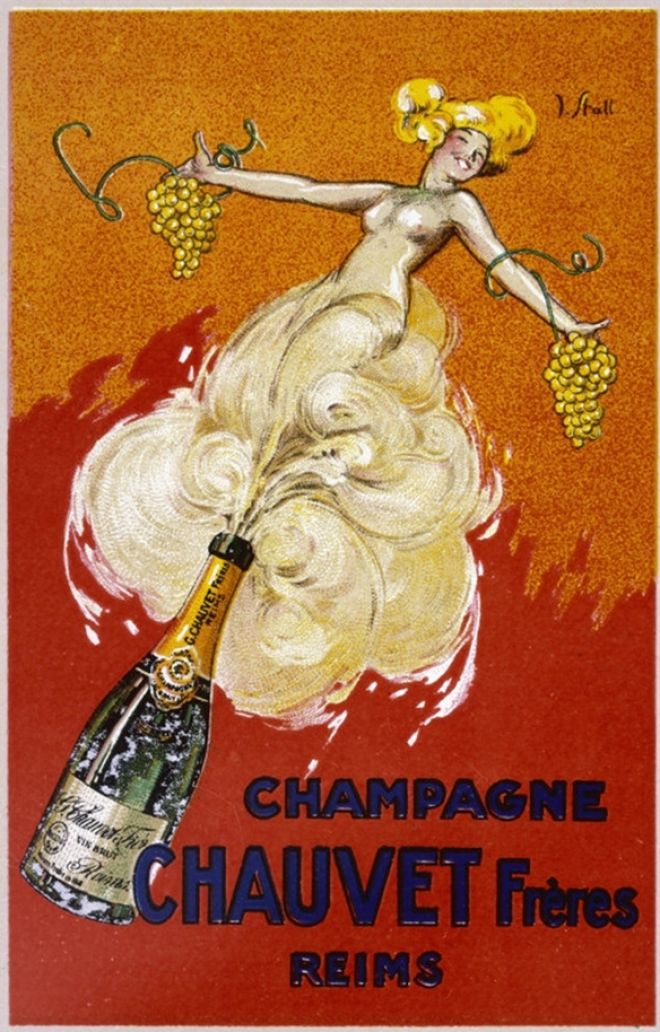
imagen: Vintageadbrowser.com

imagen: Vintageadbrowser.com

Existen unos pocos -muy pocos- perfumes que siempre logran inundarme de alegría. De hecho sonreí ante la sola idea de reseñar Ubar, ya que eso me daría la excusa perfecta para marinarme en él durante el transcurso de varios días.

Lanzado originalmente por Amouage en 1995, fue discontinuado y relanzado en 2009 bajo una fórmula diferente. La fragancia lleva el nombre de una legendaria ciudad árabe perdida bajo la arena. En modo alguno exótico, Ubar (en su versión actual) huele muy muy clásico y muy muy francés. La alusión a las arenas del desierto es, sin embargo, evidente en la botella, cuya pintura dorada se desvanece hacia la parte superior.

Ubar es una explosión floral. La salida centellea con mandarina y con el olor característico -frutado, alimonado- de la Litsea Cubeba (May Chang). La impresión inicial es crujiente, ligeramente verde, casi punzante. Una nota vívida y esplendente de rosa damascena pronto endulza el verdor, pero la verdadera estrella de la composición es el lirio del valle. Su aparición parece fundir juntas todas las demás flores de este bouquet blanco (fresias, jazmines, azahares, tuberosa) volviéndolas más cremosas. El lirio del valle pierde su consabida condición virginal y se deja corromper por una lasciva civeta. El genio de Ubar reside en este aspecto animal del lirio del valle y en el hecho de que la mezcla conserva su frescura en medio de la opulencia descarada.

La mélange resultante es el equivalente olfativo a tomar una (o dos, o tres) copas de champagne: burbujeante, efervescente, alegre. Ubar demuestra proyección y longevidad excelentes. Se siente embriagador, festivo y  -oh, claro que sí- tiene segundas intenciones.

Caro

Origin of sample: bottle purchased at MiN New York

foto: Amouage.com

foto: Amouage.com

Amouage Ubar – Joie de vivre

There are a few -very few-  fragrances that never fail to suffuse me with joy. In fact, I beamed at the mere idea of reviewing Ubar, as that would give me the perfect excuse to marinate in it over the course of some days.

Originally launched by Amouage in 1995, it became discontinued and relaunched 2009 under a different formula. The fragrance bears the name of a legendary Arabian city which was lost under the sands. Not exotic by any means, current Ubar smells very very classic and very very French. The allusion to the sands of the desert is evident, however, on the  bottle whose pale gold paint fades toward the top.

Ubar is a floral explosion. The opening sparkles with tangerine and the characteristic smell -fruity, lemony- of Litsea Cubeba (May Chang). The initial impression is crisp, slightly green, almost sharp. A splendid, nitid  rosa damascena note soon sweetens the greenness, but the true star of the composition is lily of the valley. Its appearance seems to meld together all the other flowers in this white bouquet (freesia, jasmine, orange blossom)  rendering them creamier. The lily of the valley loses its usual virginal  condition  as it becomes corrupted by a lascivious civet; the genius of Ubar resides in this animalic lily of the valley and in the fact that the blend retains its freshness amidst the unabashed opulence.

The resulting mélange is the olfactory equivalent to drinking  one (or two, or three) glasses of champagne: bubbly, effervescent, cheerful. Ubar boasts excellent projection and longevity. It feels inebriating, festive and -oh, yes- it does have second intentions.

Caro

Origin of sample: bottle purchased at MiN New York

foto: Jewelsdujour.com

foto: Jewelsdujour.com

Von Eusersdorff Classic Patchouli – Patchouli supremo

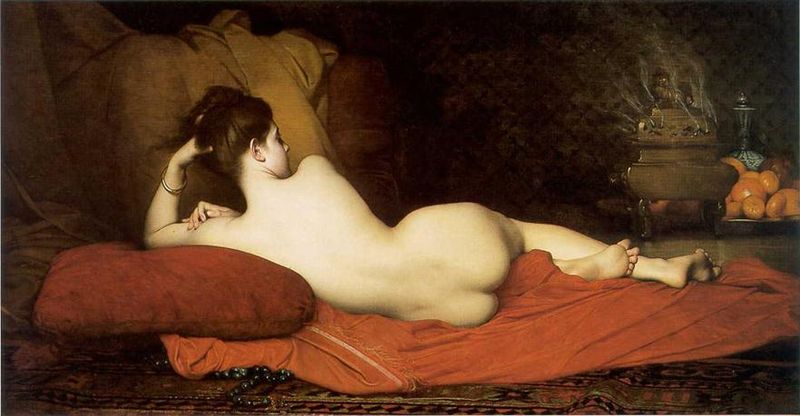
imagen: En.wikipedia.org  artista: Jules Joseph Lefebvre    "Odalisca", 1874

imagen: En.wikipedia.org   artista: Jules Joseph Lefebvre   “Odalisca”, 1874

Tan pronto como recibimos nuestras muestras de Von Eusersdorff, cada una de nosotras –Virginia en California, Caro en Buenos Aires– buscamos primero el mismo perfume: Classic Patchouli. Aunque no somos adoratrices del patchouli, sabíamos que Classic Patchouli es la fragancia insignia de la marca y queríamos comprobar si estaba a la altura del runrún.

El patchouli (pogostemon patchouli) se popularizó en Europa a comienzos del siglo XIX ya que se usaba para perfumar los chales indios que estaban tan de moda en ese entonces. Las hojas de patchouli mantenían alejadas a las polillas y prestaban su aroma a los chales mientras éstos viajaban de India a Europa. El aceite esencial de patchouli es uno de los pocos que mejora con el paso del tiempo; su olor característico es dulce, terroso, almizclado y mohoso.

Las dos pudimos percibir los efluvios de Classic Patchouli al abrir la caja, mientras la botellita estaba aún cerrada. Este es un patchouli que invita a inhalar profundamente, una y otra vez. Su belleza es clásica y depurada y el efecto general, narcótico y adictivo.

En la salida, la bergamota parece explotar mientras prepara el camino para la nota de patchouli; por un breve instante una sutil nube alcanforada evoca la espesura de viejos bosques. Luego, una textura crocante, como hojas secas hechas de chocolate amargo, emerge de la tonka, deliciosamente cumarínica (que también brinda su hermosa cualidad atalcada), realzando la aspereza del patchouli. Durante unos minutos, la terrosidad y el bosque están por todas partes; son la antecámara de la magia cremosa del sándalo. La sensación general es tersa, avainillada, de textura casi mantecosa. La vainilla nunca sofoca y el  sándalo parece actuar como un puente, suavizando la transición de patchouli a vanilla. 

El resultado es muy voluptuoso y un poco exótico. Caro dice que sólo quiere hablar en Italiano  cuando usa Classic Patchouli ya que ningún otro idioma es lo suficientemente sensual para hacerle justicia.

Nos encanta Classic Patchouli en nosotras, pero creemos que en un hombre -¡oh,sí!- sería el equilibrio perfecto entre león rugiente y gatito que ronronea.

Caro y Virginia

Origen de la muestra: Muestra gentileza de Von Eusersdorff

Nota bene: Hemos hablado brevemente acerca de Von Eusersdorff en nuestra reseña de Classic Myrrh

foto: Duoparadigms.com

foto: Duoparadigms.com

Von Eusersdorff Classic Patchouli – Supreme patchouli

As soon as we received our Von Eusersdorff samples, each of us –Virginia in California, Caro in Buenos Aires– reached for the same fragrance first: Classic Patchouli. Although we are not patchouli worshippers, we knew Classic Patchouli was the brand’s flagship fragrance and we wanted to verify whether it would live up to the hype.

Patchouli (pogostemon patchouli) became popular in Europe at the beginning of the XIX century since it was used to scent the Indian shawls which were in vogue at the time. The patchouli leaves would keep moths at bay and lend their aroma to the shawls  while they were transported from India to Europe. Patchouli essential oil is one of the few that improves with age; its characteristic smell is sweet, earthy, musky and musty .

Both of us were able to sniff the emanations of Classic Patchouli as we opened the box, while the tiny bottle was still closed. This is a patchouli that makes one want to inhale deeply, once and again and again. Its beauty is classic and streamlined  and the overall effect, narcotic and addictive.

In the opening bergamot seems to explode as it paves the way for the patchouli note; for a brief moment, a subtle camphorous cloud evokes ancient woods and forests. Then, a crispy texture like dried leaves made of dark chocolate emerges from the deliciously coumarinic tonka (which also lends its beautiful powderiness), highlighting the roughness of patchouli. For a few minutes, earthiness and woods are everywhere; they are the antechamber of the creamy magic of sandalwood. The overall feel is sleek, vanillic, almost buttery in texture. The vanilla never overpowers and  sandalwood seems to act like a bridge, smoothing out the transition from patchouli to vanilla. 

The result is very voluptuous and just a bit exotic. Caro says she only wants to speak in Italian  when she wears Classic Patchouli as no other language would be sensual enough to do it justice.

We love Classic Patchouli on ourselves, but  we think on a man -¡oh, yes!- it would be the perfect balance between roaring lion and purring kitten.

Caro & Virginia

Origin of sample: sample courtesy of Von Eusersdorff

Nota bene: We have talked briefly about Von Eusersdorff on our Classic Myrrh review 

foto: Voneusersdorff.com

foto: Voneusersdorff.com