Tag Archives: patchouli

Stendhal Ambre Sublime – Dulce velo dorado

foto: Crystal-clover.com

Hacía tiempo ya que los perfumes Stendhal habían despertado mi curiosidad. Nombres como Elixir Noir y Ambre Sublime agregan un irresistible aura de misterio aunque las fragancias resulten relativamente fáciles de encontrar y su precio no sea prohibitivo. 

Ambre Sublime fue la que atrapó mi atención primero. La probé en un blotter y, antes de que la vendedora volviera a poner la tapita en el tester, quise saber cómo olería sobre la piel.

Familiar y a la vez exótico, este ambar almizclado -levemente especiado con canela, vainilla y cardamomo- se siente tan reconfortante como una tarta de manzanas. Las notas de maderas (patchouli, madera de Cashmere, sándalo) añaden profundidad y evitan que se convierta en un gourmand, mientras que bálsamos como el Tolu, benjuí y cistus prestan una buena dosis de misticismo. La base es ligerísimamente atalcada.

Esta belleza serena manifiesta su presencia de manera constante sin volverse jamás pesada u opresiva. Se mantiene cerca de la piel y es sublimada por su calor; su aliento dorado flota delicadamente alrededor de quien la porta. Si les gustan las fragancias cálidas y avainilladas, pero no quieren sofocar a quienes se acercan,  Ambre Sublime podría ser una buena opción. 

Encuentro la concentración más cercana a un  eau de toilette que a un eau de parfum, pero dado que en esta ocasión estaba buscando algo ligero y apropiado para uso cotidiano, no me quejo en absoluto. La longevidad es excelente.

Caro

Origen de la muestra: Botella comprada en La Parfumerie, Buenos Aires
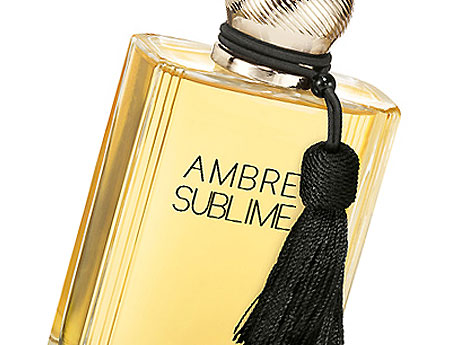
foto: Scentstore.co.uk

Stendhal Ambre Sublime – Sweet golden veil

I had long been intrigued by Stendhal perfumes. Names like Elixir Noir and Ambre Sublime may add an irresistible aura of mystery but the fragrances are relatively easy to find and their price is not prohibitive.

Ambre Sublime was the one that grabbed my attention first. I tried it on a blotter and, before the sales assistant put the cap back on the tester, I wanted to try it on my skin. 

Familiar yet exotic, this musky amber -lightly spiced up with cinnamon, vanilla and cardamom- feels as comforting as apple pie. The wood notes (patchouli, Cashmere wood, sandalwood) add depth and prevent it from turning into a gourmand, while balsams like Tolu, benzoin and cistus lend a good dose of mysticism. The base is oh so slightly powdery.

This serene beauty has a costant presence but never becomes heavy or opressive. It stays close to the skin and is sublimated by its warmth; its golden breath floating gently around the wearer. If you love warm vanillic fragrances, but do not want to choke those who get close, Ambre Sublime might be a good option. 

I find the concentration closer to an eau de toilette than an eau de parfum, but since on this occasion I was looking for something light and appropriate for everyday use, I am not complaining at all. The staying power is excellent.

Caro

Origin of sample: Bottle bought at La Parfumerie, Buenos Aires

Robert Piguet Visa – Para comerte mejor

foto: Nycityeats.com

Aunque la bomba sexy Fracas y la chica mala Bandit sean probablemente las primeras en acudir a la mente cuando se menciona la casa Piguet, todas las fragancias de su línea clásica valen la pena ser probadas.  

Visa, un embriagador gourmand oriental, fue creado por Germaine Cellier, en 1945, durante la vida del couturier Robert Piguet. Mucho más tarde, en 2007, fue reorquestado por Aurelien Guichard y es esa versión la que se encuentra disponible hoy.

Promocionado como “el pasaporte (de quien lo porta) a un encuentro exótico”, Visa no  resulta tan extraño como sugiere el slogan, aunque sí especialmente adictivo y apetitoso. Este gourmand perfectamente equilibrado y que conjura frutas maduras (bergamota,  mandarina y pera, pero más manifiestamente durazno), desbordantes de néctar, me mantiene oliendo febrilmente mis muñecas. 

El corazón es ricamente floral, presidido por un bouquet clásico de flor de naranjo, rosa e ylang-ylang. Notas amaderadas de patchouli y sándalo prevalecen en el fondo, que es dulce, avainillado y suavemente polvoriento, evocador de cuero (¿Las valijas infaltables para este viaje?) fino espolvoreado con azúcar impalpable. Suena extraño, huele delicioso.

Visa es un claro ejemplo de cómo deben ser los gourmands: complejos y  seductores, mas nunca literales. No huele como un postre, pero inspira ganas de serlo.

Caro

Origen de la muestra: cortesía de Perfumerías Nadia, Madrid

foto: Robertpiguetparfums.com

Robert Piguet Visa – The better to eat you with

While bombshell Fracas and bad girl Bandit are probably the first perfumes that spring to mind when the house of Piguet is mentioned, all of their classic fragrances are worth a try.  

Visa, an inebriating oriental gourmand, was created by Germaine Cellier in 1945, during couturier Robert Piguet‘s lifetime. It was reorchestrated, much later, in 2007, by Aurelien Guichard and that is the version which is available today. Touted as “its wearer’s passport to an exotic encounter”, we find Visa far less exotic than the slogan suggests but nonetheless addictive and mouthwatering.

A perfectly balanced gourmand that conjures ripe fruits (bergamot,  mandarin  and pear, but most prominently peach), dripping with nectar, it keeps me feverishly sniffing my wrists. The heart is richly floral, presided by a classical bouquet of orange flower, rose and ylang-ylang. Woody notes of patchouli and sandalwood prevail in the drydown which is sweet, vanillic and softly powdery, evocative of fine leather (the indispensable suitcases for this journey?) sprinkled with icing sugar. Sounds weird, smells delicious.

This is, we think, what gourmands should be like: complex, seductive but never literal. It doesn’t smell like dessert but inspires one to become one.

Caro

Origin of sample: Courtesy of Perfumerías Nadia, Madrid

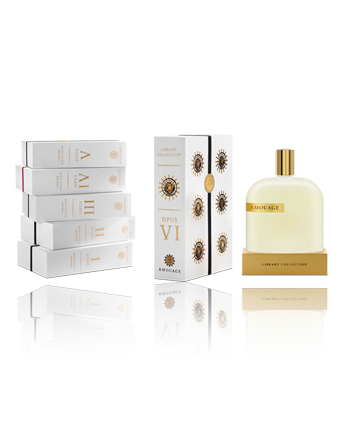
Amouage Opus VI – Eterno resplandor

imagen: Fanpix.net

No me sucede a menudo esto de esperar al cartero con  anhelo ni saludarlo con un beso en la mejilla, pero esta vez realmente ansiaba poner mis narices sobre el último lanzamiento de Amouage, Opus VI.

Olfatoriamente más conectado con Opus V que con ninguna otra fragancia de la Library Collection, instantáneamente se convirtió en mi  Opus  favorito, destronando a mi amado, el nostálgico y teñido de violetas Opus III.

El perfume fue inspirado por el filme Eterno Resplandor de la Mente sin Recuerdos o, más específicamente, “por la destrucción y reinvención del conocimiento y los recuerdos”. El diseño de la caja representa la eternidad como recuerdos rotos, simbolizando el fin de un affaire amoroso.

Opus VI se presenta como una fragancia de dualidades (simple/complejo, feminino/masculino, pasado/presente, unidad/fragmentación) que inteligentemente encarna el concepto deseado bajo la forma de un ámbar increíblemente moderno y liviano.

Opus VI es igualmente ambarado, acuerado y amaderado; igualmente masculino y femenino. Las cálidas notas se funden unas con otras tan suavemente que da una cabal sensación de unidad y parece engañosamente simple a la vez. Es moderno y minimalista y sin embargo algo en él huele atávico y primitivo…¿Qué podría ser más primitivo que el cuero y las maderas? 

Las notas, según Amouage, son: pimienta de Szechuan,  incienso  pimenta racimosa en la salida. Periploca, cipriol (el nagarmotha indio, emparentado con el papiro) y patchouli en el corazón, sobre una base de Ambranum, Z11, sándalo y cistus. Realmente aprecio el hecho de que Amouage haya empezado a listar los sintéticos usados entre las notas de sus fragancias, otra oportuna jugada del Director Creativo Christopher Chong.

Por mi parte, estaría encantada de vivir una eterna e inmaculada historia de amor con Opus VI.

Caro

Origen de la muestra: Muestra gentileza de Amouage

foto: Amouage.com

Amouage Opus VI – Eternal Sunshine

It is not often that I expect the postman with such anxiety or greet him with a kiss on the cheek but this time I was really eager to lay my nostrils on Amouage‘s latest release, Opus VI.

Olfactorily more linked to Opus V than to any other fragrance from the Library Collection, it instantly became my favorite Opus dethroning my beloved, the nostalgic and violet-tinged Opus III.

The fragrance was inspired by the film Eternal Sunshine of the Spotless Mind or, more specifically, “by the destruction and reinvention of knowledge and memories”. The design on the box represents eternity as broken memories, symbolising the end of a love affair.

I find Opus VI a fragrance of dualities (simple/complex, feminine/masculine, past/present, unity/fragmentation) that cleverly embodies the desired concept under the guise of an incredibly modern and lightweight amber.

Opus VI is equally ambery, leathery and woody; equally masculine and feminine. The warm  notes merge together so smoothly, it gives an accomplished sense of unity and seems deceptively simple at the same time. It is modern and streamlined yet there’s something that smells atavic and primitive about it…what could be more primitive than leather and wood?

Notes, according to Amouage, are: Sichuan pepper, frankincense and  St Thomas bay in the opening. Periploca, cypriol (the Indian nagarmotha, related to papyrus) and patchouli in the heart, over a base of Ambranum, Z11, sandalwood and cistus. I truly appreciate the fact that Amouage has started to list synthetics among the notes of their fragrances, another smart move from Creative Director Christopher Chong

I guess I would be glad to have an eternal and untainted love story with Opus VI.

Caro

Origin of sample: Sample courtesy of Amouage

Dior Dioressence (vintage) – Golpe de genialidad

imagen: Liveauctioneers.com            ilustración: René Gruau

En 1969, mi venerado Guy Robert fue comisionado por Dior para componer un nuevo perfume. La fragancia en sí sería de carácter muy animal y se publicitaría como “le parfum barbare”. El nombre ya estaba listo: Dioressence.  

Luego de varios intentos infructuosos, la inspiración le llegó a Monsieur Robert cuando, para eliminar restos de ambargris de sus manos, las lavó con un jabón imitación de Miss Dior*. Al olerlas luego:“voilá!”, allí estaba el aroma animal que había estado buscando. Así nació el primer perfume oriental de Dior.  Durante una expedición de “caza de perfumes” tuve la buena fortuna de encontrar un diminuto frasco de 1/4 de onza en una tienda igualmente pequeña. 

Au débouché, percibo geranio, rosa, canela y patchouli, pero al aplicarlo en las muñecas, Dioressence se transforma en el oriental especiado más suave que pueda imaginarse, rico y cremoso. Su oscura sensualidad se ve realzada por vainilla, patchouli y una bellísima nota de ambargris.  El sillage es mucho más avainillado que la fragancia misma pero – tratándose de concentración parfum–  de todos modos el aroma permanece cerca de la piel. 

Dioressence corporiza perfectamente el zeitgeist de los 1970s y comparte características con YSL Opium y Estee Lauder Youth Dew, aunque huele más vigente que ellos.  Lejos de tener carácter meditabundo o introspectivo, Dioressence exige ser portado fuera de casa y con ánimo festivo.

Caro

Origen de la muestra: frasco comprado en perfumería Togat’s, Buenos Aires.

*Miss Dior había sido creado en 1947 por Jean Carles y Paul Vacher. El líquido que se vende hoy bajo el mismo nombre guarda poca o ninguna similitud con el original.

foto: Profumo.it

Dior Dioressence (vintage) – Stroke of genius

In 1969, my worshipped Guy Robert was commissioned by Dior to compose a new fragrance. The scent itself should be very animalic and would be advertised as “le parfum barbare”. They already had the name: Dioressence.

After a few fruitless trials, inspiration struck Monsieur Robert when he washed off some ambergris from his hands with a Miss Dior* knockoff soap. He smelled his hands and “voilá!”, there was the animalic scent he had been searching for. Thus Dior‘s first oriental fragrance was born. During one of my fragrance hunting expeditions, I was fortunate enough to find a tiny 1/4 oz vial of vintage parfum in an equally tiny fragrance store.

Au débouché, I perceive geranium, roses, cinnamon and patchouli. But after dabbing it on my wrists, Dioressence develops into the smoothest spicy oriental, creamy and rich. Its dark sensuality is enhanced by vanilla, patchouli  and the most beautiful ambergris note imaginable. The sillage is a lot more vanillic than the fragrance itself but -this being parfum concentration- the scent stays quite close to the skin.

Dioressence embodies perfectly well the zeitgeist of the 1970s and shares a certain vibe with YSL Opium and Estee Lauder Youth Dew but manages to smell more current than them. Far from being meditative or introspective, Dioressence demands to be worn out of the house and with a festive mood.

Caro

Origin of sample: vial bought at Perfumería Togat’s, Buenos Aires

*Miss Dior had been created in in 1947 by Jean Carles and Paul Vacher.The juice sold today under the same name bears little to no resemblance to the original.

Rancé 1795 Laetitia – Madame Mère

imagen: costumes.org

La familia Rancé comenzó a producir guantes perfumados en Grasse, en los años 1600. A finales del siglo siguiente, se especializó en la elaboración de fragancias finas. Se dice que Francois Rancé fue el perfumista favorito de Napoleón y que creó varios perfumes para él. Hoy la casa basa su éxito en la imaginería bonapartiana que inspira sus mezclas y en la gran calidad de sus delicadas fragancias, que agradan especialmente a aquellos de gustos clásicos.

Laetitia fue inspirado por Maria Letizia Ramolino (1750-1836), madre de Napoleón. Nacida en Córcega en el seno de una familia noble, esta mujer fuerte y de belleza severa montaba a caballo durante sus embarazos, insistía en que sus niños se bañaran día por medio en una época en la que una vez al mes era considerada suficiente y se rehusó a aprender Francés incluso luego de que Córcega pasara a formar parte de Francia. Enseñó a sus hijos -a través del ejemplo- moderación en la prosperidad y grandeza de alma ante la adversidad.

Al rociar el perfume, una nube cítrica y especiada de bergamota,  mandarina  y nuez moscada eleva instantáneamente nuestro ánimo. En seguida se manifiesta una fuerte nota de patchouli que envuelve un radiante corazón floral de rosa búlgara, azahar, glicina y magnolia. Las flores prestan sofisticación a esta mezcla donde impera el patchouli y la cálida cualidad solar del azahar y la magnolia se hace especialmente evidente.

En una base maravillosamente dorada el ambar, la vainilla y el bálsamo de Tolu  logran endulzar la mezcla, pero es -¡Sí, adivinaron!- el omnipresente patchouli quien brinda equilibrio y evita que el perfume se torne empalagoso.

Laetitia huele muy natural (un rasgo común a todas las propuestas de Rancé) y tiene una longevidad excelente. Es una fragancia refinada pero desprovista de timidez y enfática sin rozar la vulgaridad. Como la mismísima Madame Mère.

Caro

Origen de la muestra: muestra cortesía de Perfumería Nadia, Madrid

foto: zentraldrogerie.com

Rancé 1795 Laetitia – Madame Mère

The Rancé family started producing perfumed gloves in Grasse in the 1600s. In the late 1700s, they specialized in the making of fine fragrances. It is said  Francois Rancé was Napoleon‘s favorite perfumer and that he created many perfumes for him. Today the house bases its success on the Bonapartian imagery that inspires their blends and in the great quality of their delicate fragrances which appeal mostly to classical tastes.

Laetitia was inspired by Maria Letizia Ramolino (1750-1836), mother of Napoleon. Born in Corsica to a noble family, she was a strong woman of severe beauty who rode horses through her pregnancies, insisted that her children  should bathe every other day in a time when once a month was the norm and refused to learn French even after Corsica became part of France. She taught -through example- moderation during prosperity and greatness of soul during adversity.

Upon spraying the fragrance, a citrusy and spicy cloud of bergamot,  mandarine and nutmeg instantly lifts our moods. Soon a strong patchouli note envelops the radiant floral heart of Bulgarian rose, orange blossom, wisteria and magnolia. The flowers lend sophistication to the patchouli-dominant blend and the warm solar quality of orange blossom and magnolia is especially evident.

In a wonderfully golden base amber, vanilla and Tolu balsam manage to sweeten the fragrance, but it is -you guessed it- the omnipresent patchouli which provides balance and prevents the blend from becoming too sweet.

Laetitia smells very natural (a trait common to all Rancé offerings) and has excellent longevity.  The fragrance is refined but devoid of shyness and emphatic without verging on vulgarity. Just like Madame Mère herself.

Caro

Origin of sample: sample courtesy of Perfumería Nadia, Madrid