Tag Archives: rosa – rose

Parfums DelRae Emotionnelle – Fruto andrógino

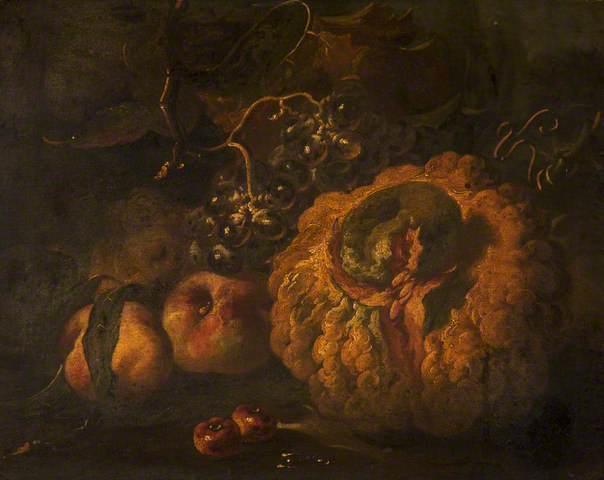
imagen: bbc.co.uk A Melon and Other Fruit artista: Giovanni Paolo Spadino

imagen: bbc.co.uk    A Melon and Other Fruit
  artista: Giovanni Paolo Spadino

No soy muy fanática de los acordes frutales en los perfumes. Si tuviera que elegir una fragancia sin olerla, probablemente pasaría por alto aquella que tenga frutas entre sus notas más sobresalientes. Pero la gente cambia de opinión: hoy conecté con un maduro, tibio y especiado cantalupo.

Este tipo de melón (Cucumis Melo Cantalupensis) fue enlist ado por DelRae Roth (Directora Creativa de la sanfranciscana marca de nicho Parfums DelRae) entre los aromas que le recordaban a su estancia de un año completo en Francia. Compartió sus memorias olfativas con el perfumista Michel Roudnitska y, como resultado, Emotionnelle fue dado a luz en 2006.

Se trata de un eau de parfum que, además del elemento inspirador antedicho, cuenta con un par más de conexiones emocionales. En primer lugar, el melón fue la nota clave de avant-garde de Le Parfum de Thérèse, una fragancia personal creada exclusivamente por Edmond Roudnitska (padre de Michel y uno de los más importantes perfumistas modernos) para su esposa Thérèse, a fines de los años 50’s. Recién después de la muerte de Edmond (1996) este perfume estuvo disponible para el público vía Editions de Parfums.

En mi caso, este ingrediente me retrotrae a mi adolescencia. Mi padre solía usar un perfume exquisito con una nota acuática de melón muy prominente. No recuerdo el nombre ni la marca pero sí estoy segura de tres cosas: 1) era una botella de forma cuadrada y el jugo era de color verde claro; 2) me gustaba muchísimo; 3) se lo usaba muchísimo.

De cualquier manera, la cuestión es que encuentro esta nota frutal bastante maleable pues su jugosa dulzura encaja muy bien en composiciones unisex.El perfumista ha añadido una textura gamuzada de hojas de violeta y cedro, resaltando el costado dandy de la vida. Y la ciruela pasa, la rosa,el clavo y el ámbar insuflan el espíritu de delicias en abundancia, convirtiendo a este cantalupo en una apetitosa calabaza especiada. 

Esta es la primera vez que huelo una creación de Michel Roudnitska. Su talento fue suficiente para hacerme cambiar de opinión respecto de la dulzura frutal en los perfumes; también me invita a continuar expandiendo mis horizontes olfativos.

Virginia

Origen de la muestra: Comprada en Luckyscent.

Nota bene: Otra fragancia de Edmond Roudnitska con notas de melón en su composición es la emblemática Diorella. Pueden leer sobre ella aquí.

foto: Barneys.com

foto: Barneys.com

Parfums DelRae Emotionnelle – An androgynous fruit

I’m not a big fan of fruity accords in perfumes. If I were to choose a fragrance without sniffing it first, I probably skip those have fruits among their main notes. But since people change their mind, today I’ve connected with a ripe, warm and spicy cantaloupe.

This type of melon (Cucumis Melo Cantalupensis) was listed by DelRae Roth (Creative Director of the Sanfranciscan niche brand Parfums DelRae) among the aromas that remind her of full year stay in France. She shared these scented memories with perfumer Michel Roudnitska and the result was Emotionnelle, which  was born in 2006.

Besides that, this eau de parfum has few more -emotional- links. First of all, melon was an avant-garde key note in 1950’s Le Parfum de Thérèse, a unique fragrance created by Edmond Roudnitska (Michel’s father and one of the most important modern perfumers) for his wife Thérèse. The perfume was intended solely for her; it was only after Edmond’s passing (1996) that became available to the public via Editions de Parfums.

In my case, this ingredient takes me back to my teenage years. My father used to wear a perfume with a very prominent watery melon note. I don’t remember either its name or the the brand’s but I’m sure about three points: 1) it came in a square shaped bottle and the juice was light green in color; 2) I liked too much; 3) I borrowed it from him too often.

In any case, I find this fruity note very malleable because its juicy sweetness fits very well in unisex compositions. The perfumer has added a suede texture of violet leaves and cedar highlighting the dandy side of the life. And prune, rose, clove and amber insufflate the spirit of delights in abundance, converting this cantaloupe in a mouthwatering spiced  pumpkin.

This is the first time I smell one of Michel Roudnitska‘s creations. His talent sufficed to change my mind about fruity sweetness in perfume and also invites me to continue expanding olfactory horizons.

Virginia

Origin of sample: Vial purchased from Luckyscent.

Nota bene: Another emblematic Edmond Roudnitska‘s fragrance with melon notes is Diorella. You can read our review here.

Von Eusersdorff Classic Mimosa – Conmovedora inocencia

foto: Tasertail.deviantart.com/

foto: Tasertail.deviantart.com/

“¡Colonia de bebito! ¡Qué lindo! Es un floral transparente, suave y acuoso”… Sí, es cierto si quizás lo olemos desde la botella (au debouché) o durante los primeros 5 minutos después de haberlo aplicado sobre la piel. Pero después se percibe algo más, un bello y misterioso toque. ¿De qué se trata? No lo sé pero de lo que ahora sí estoy segura es que Classic Mimosa (2011) no es para bebitos.

El azahar –un almizclado balance perfecto entre floral blanco, hojas verdes y matices cítricos– ha sido siempre asociado con la colonia para bebés. El camino tomado por la casa Von Eusersdorff  para ensamblar este ingrediente con un inocente bouquet de rosavioleta y mimosa (Acacia Decurrens) es muy interesante porque, sin embargo, hay un aire de seriedad.

Aquella sensación inicial tan limpia se vuelve almendrada -a veces mullida, a veces mantecosa- debido a la mimosa. Ese es el suelo donde los pétalos de una rosa aterciopelada es espolvoreada por talco de violetas. Luego comienza una sinergia con la vainilla y el almizcle: la dulzura se hace más y más etérea e hipnótica.

Una hora después hay una ligera nota salada impregnando la composición de una forma maravillosa. No se trata de una salinidad marina: es el aroma de una lágrima brillante. Ahora puedo entender la razón por la que este eau de parfum femenino es delicado pero emocionalmente intenso.

Sin embargo, Classic Mimosa no es triste, sino conmovedor. Hace latir más fuerte al corazón y da alas para soñar o para mirar hacia atrás y recordar los buenos viejos tiempos.

Virginia

Origin de la muestra: Cortesía de Von Eusersdorff.

foto: Tribaspace.com

foto: Tribaspace.com

Von Eusersdorff Classic Mimosa – Soulful innocence

“Baby cologne! So cute! It’s a clear, soft, watery floral”… Yes, it’s true perhaps  when sniffing it directly from the bottle (au debouché) or during the first 5 minutes after it was applied onto the skin. But then one perceives something else, a mysterious and beautiful touch. What is it? I don’t know for sure but now I’m positive Classic Mimosa (2011) is not a babish fragrance.

Orange blossom has always been associated with baby cologne, a perfect musky balance between white floral, green leaves and citric hues. The path taken by  Von Eusersdorff house to assamble this ingredient with an innocent bouquet of rose, violet and mimosa (Acacia Decurrens) is very interesting because evertheless there is an air of seriousness.

That initial clean sensation becomes almondy -sometimes fluffy sometimes buttery- because of the mimosa. It’s the ground where velvety rose petals are dusted by violet powder. Then a synergy with vanilla and musk begins; the sweetness is more and more ethereal and hypnotic.

One hour later, there is a light salty note pervading the composition in a marvelous way. It is not an oceanic/beachy saltiness: this is the scent of a bright tear. Now I can understand the reason why this feminine eau de parfum is delicate but emotionally intense.

However Classic Mimosa is not sad, but soulful. It makes the heart beat faster and gives wings to dream on or look back on good old times.

Virginia

Origin of sample: sample courtesy of Von Eusersdorff.

foto: Torange.us

foto: Torange.us

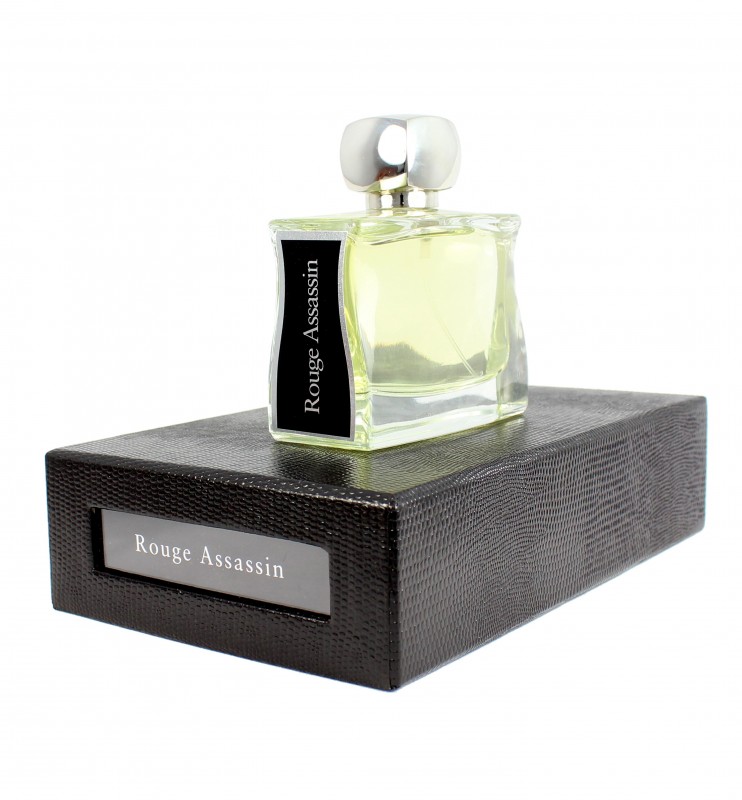
Jovoy Paris Rouge Assassin – Lápiz labial rosado

imagen: Hprints.com   ilustrador: Chéri Herouard para La Vie Parisienne, 1919

imagen: Hprints.com     ilustrador: Chéri Herouard   (La Vie Parisienne, 1919)

Jovoy es una perfumería establecida en París que abrió sus puertas por primera vez en 1923; fue reabierta en 2010 y hoy ofrece una amplísima gama de fragancias para conocedores, entre ellas su propia marca. Conocí Rouge Assassin durante un viaje. En aquel momento tenía tal resfrío que todavía me pregunto cómo logré percibir sus delicadas notas y conservar el recuerdo. Grande fue mi alegría cuando Virginia, de paso en Buenos Aires,  trajo consigo una botella.

Rouge Assassin fue compuesto por Amélie Bourgeois (Flair). Según Jovoy: “Dos tipos de mujeres de los años veinte se cruzan en el mismo espacio sin conocerse jamás:  Una es ‘la maitresse de ces messieurs’, una amante según la tradición del Segundo Imperio (estas elegantes mujeres mantenidas se contaban entre las primeras clientas de Jovoy) y la “garçonne”, un término para la mujer emancipada, cuyo aspecto podrá haber sido por momentos andrógino, pero que fue la primera en la historia de la moda femenina en revelar sus piernas. Pronto los brassieres  reemplazarían a los corsets. Las medias gruesas desaparecieron en favor de otras de seda, que se lucían enrolladas sobre una liga por encima de las rodillas. Fue en esta época que aparecieron los primeros lápices labiales.  Rouge Assassin rinde tributo a esas mujeres temerarias e imparables que subvirtieron el orden establecido y rompieron todas las reglas.”

Rouge Assassin -a pesar de su nombre- no resulta oscuro, salvaje ni agresivo. Quizás un exceso de fragancias animales y operáticas me haya echado a perder,   pero me aventuraría a describirlo como inocente. Este es un coqueto floral almizclado que flota alrededor del usuario y murmura con suavidad; demasiada suavidad a menos que recuerde aplicarlo en abundancia. Parece más evocador de las pálidas damas de la Belle Époque que de las independientes  flappers de los 1920s: no hay alusiones al Orientalismo, no hay maderas exóticas, no hay tabaco.

Me gusta leer a Rouge Assassin como un relato olfativo sobre la transición que hicieron las mujeres en los primeros años del siglo XX: un floral atalcado suave (rosa, iris, polvos de arroz) es atravesado por un trazo de lápiz labial sutil pero definido que le presta una textura cerosa. La sensación general,más moderna que histórica o retro, es realzada por almizcles blancos y maderas lustradas. Estas últimas le confieren una cierta profundidad; si bien no lo oscurecen demasiado.

En resumen, en lugar del arma letal que el nombre insinúa, encuentro un eau de parfum delicadamente sugestivo, incluso lúdico. Su sillage es discreto y la longevidad, excelente. Recomiendo una aplicación pródiga a fin de poder apreciar mejor sus matices.

Caro

Origen de la muestra: Botella comprada en Scent Bar, L.A.

Gaia Fishler, de The Non Blonde lo describe como pleno y seductor. Si quieren leer sus impresiones, pueden encontrarlas aquí. 

foto: Jovoyparis.com

foto: Jovoyparis.com

Jovoy Paris Rouge Assassin – Pink lipstick

Jovoy is a Paris based perfumery which opened its doors for the first time in 1923; restored in 2010, it now offers a vast array of fragrances for connoisseurs, among these, their own namesake brand. I first came across Rouge Assassin during a trip. I had such a terrible cold at the time, I wonder how I ever managed to perceive its delicate notes and keep their memory with me. Great was my joy when Virginia  brought a bottle along with her on her recent visit.

Rouge Assassin was composed by Amélie Bourgeois (Flair). According to Jovoy: “Two types of women from the Twenties mingle in the same space without ever really meeting:  One is ‘la maitresse de ces messieurs’, a mistress in the tradition of the Second Empire (such chic kept women were among Jovoy’s first clients) and  the “garçonne”, a term for the emancipated woman, whose look may have been androgynous at times, but who was the first in the history of women’s fashion to reveal her legs. Soon, brassieres would replace corsets. Thick stockings vanished in favor of silk ones worn rolled over a garter above the knee. It was at this time that the first lipsticks appeared.  Rouge Assassin pays tribute to those fearless, unstoppable women who upended the established order and broke all the rules.”

Rouge Assassin -despite its name- is not dark, wild or aggressive. I might have been spoiled by excessively operatic and animalic fragrances, but I would go far and describe it as innocent. This is a coquettish musky floral that floats around the wearer and whispers softly; too softly if don’t remember to spritz prodigally. It appears more evocative of the pale ladies of the Belle Époque than the  independent flappers of the 1920s: there are no allusions to Orientalism, no exotic woods, no tobacco.

I like to read Rouge Assassin as an olfactory tale of the transition women underwent in the early years of the XX century: a soft powdery floral (rose, iris, rice powder) becomes pierced by a subtle but definite stroke of lipstick which lends a waxy texture. The overall feel, more modern than historic or retro, is enhanced by white musks and waxed woods.The latter lend a certain depth but do not darken the composition.

All in all, instead of the lethal weapon its name implies, I find a softly suggestive, even playful, eau de parfum. Sillage is discreet and longevity excellent. I encourage prodigal application in order to better appreciate all its nuances.

Caro

Origin of sample: Bottle purchased at Scent Bar, L.A.
Gaia Fishler, from The Non Blonde describes it as full bodied and seductive. You might like to read her impressions too.

Amouage Ubar – Joie de vivre

imagen: Vintageadbrowser.com

imagen: Vintageadbrowser.com

Existen unos pocos -muy pocos- perfumes que siempre logran inundarme de alegría. De hecho sonreí ante la sola idea de reseñar Ubar, ya que eso me daría la excusa perfecta para marinarme en él durante el transcurso de varios días.

Lanzado originalmente por Amouage en 1995, fue discontinuado y relanzado en 2009 bajo una fórmula diferente. La fragancia lleva el nombre de una legendaria ciudad árabe perdida bajo la arena. En modo alguno exótico, Ubar (en su versión actual) huele muy muy clásico y muy muy francés. La alusión a las arenas del desierto es, sin embargo, evidente en la botella, cuya pintura dorada se desvanece hacia la parte superior.

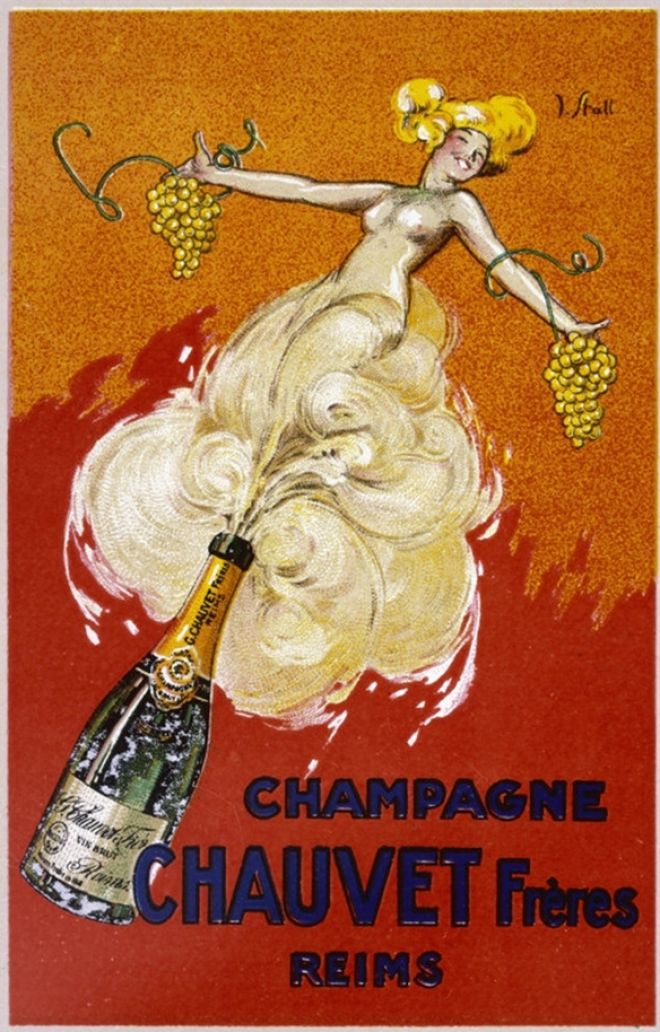
Ubar es una explosión floral. La salida centellea con mandarina y con el olor característico -frutado, alimonado- de la Litsea Cubeba (May Chang). La impresión inicial es crujiente, ligeramente verde, casi punzante. Una nota vívida y esplendente de rosa damascena pronto endulza el verdor, pero la verdadera estrella de la composición es el lirio del valle. Su aparición parece fundir juntas todas las demás flores de este bouquet blanco (fresias, jazmines, azahares, tuberosa) volviéndolas más cremosas. El lirio del valle pierde su consabida condición virginal y se deja corromper por una lasciva civeta. El genio de Ubar reside en este aspecto animal del lirio del valle y en el hecho de que la mezcla conserva su frescura en medio de la opulencia descarada.

La mélange resultante es el equivalente olfativo a tomar una (o dos, o tres) copas de champagne: burbujeante, efervescente, alegre. Ubar demuestra proyección y longevidad excelentes. Se siente embriagador, festivo y  -oh, claro que sí- tiene segundas intenciones.

Caro

Origin of sample: bottle purchased at MiN New York

foto: Amouage.com

foto: Amouage.com

Amouage Ubar – Joie de vivre

There are a few -very few-  fragrances that never fail to suffuse me with joy. In fact, I beamed at the mere idea of reviewing Ubar, as that would give me the perfect excuse to marinate in it over the course of some days.

Originally launched by Amouage in 1995, it became discontinued and relaunched 2009 under a different formula. The fragrance bears the name of a legendary Arabian city which was lost under the sands. Not exotic by any means, current Ubar smells very very classic and very very French. The allusion to the sands of the desert is evident, however, on the  bottle whose pale gold paint fades toward the top.

Ubar is a floral explosion. The opening sparkles with tangerine and the characteristic smell -fruity, lemony- of Litsea Cubeba (May Chang). The initial impression is crisp, slightly green, almost sharp. A splendid, nitid  rosa damascena note soon sweetens the greenness, but the true star of the composition is lily of the valley. Its appearance seems to meld together all the other flowers in this white bouquet (freesia, jasmine, orange blossom)  rendering them creamier. The lily of the valley loses its usual virginal  condition  as it becomes corrupted by a lascivious civet; the genius of Ubar resides in this animalic lily of the valley and in the fact that the blend retains its freshness amidst the unabashed opulence.

The resulting mélange is the olfactory equivalent to drinking  one (or two, or three) glasses of champagne: bubbly, effervescent, cheerful. Ubar boasts excellent projection and longevity. It feels inebriating, festive and -oh, yes- it does have second intentions.

Caro

Origin of sample: bottle purchased at MiN New York

foto: Jewelsdujour.com

foto: Jewelsdujour.com

Oriza L. Legrand Jardins d’Armide – Entre tules y flores

imagen: Wga.hu artista: Louis-Jean-François Lagrenée  Rinaldo y Armida, 1766

imagen: Wga.hu     artista: Louis-Jean-François Lagrenée       Rinaldo y Armida, 1766

Armida, la hechicera sarracena, era un motivo recurrente en las artes de los siglos XVII y XVIII. Ópera, ballet y pintura rindieron tributo a su belleza.  Cuenta la historia que Armida llevó a Rinaldo -su querido cruzado- a un jardín encantado para mantenerlo prisionero.  Existen distintos finales dependiendo de la versión:  La Jerusalén Libertada, el poema épico de Torquato Tasso, concluye con Armida y Rinaldo juntos, reinando felices por siempre.

Aunque ya había intercambiado unas palabras con Monsieur Lambert (pueden leer nuestra entrevista con él aquí) y conocía sobre el patrimonio histórico de la casa, no había probado ninguno de sus perfumes. Cuando nuestra colega bloguera Kafka celebró un generoso sorteo de Oriza L. Legrand el mes pasado, me zambullí con ansias y resulté una de las ganadoras. Unas semanas después, chillaba de emoción (y no exagero) mientras abría la caja recién llegada de París.

Jardins d’Armide es un floral seriamente atalcado. Originalmente compuesto en 1909, ha sido reorquestado recientemente con materias primas modernas. La atmósfera de la Belle Époque está definitivamente presente y sin embargo no resulta anticuado. Au debouché, percibo las violetas atalcadas que estaban tan en boga a principios del 900, pero al rociarlo, oigo cantar a los ángeles, veo flores cayendo del cielo y siento tules de tonos pastel envolviéndome. Y no, no estoy alucinando.

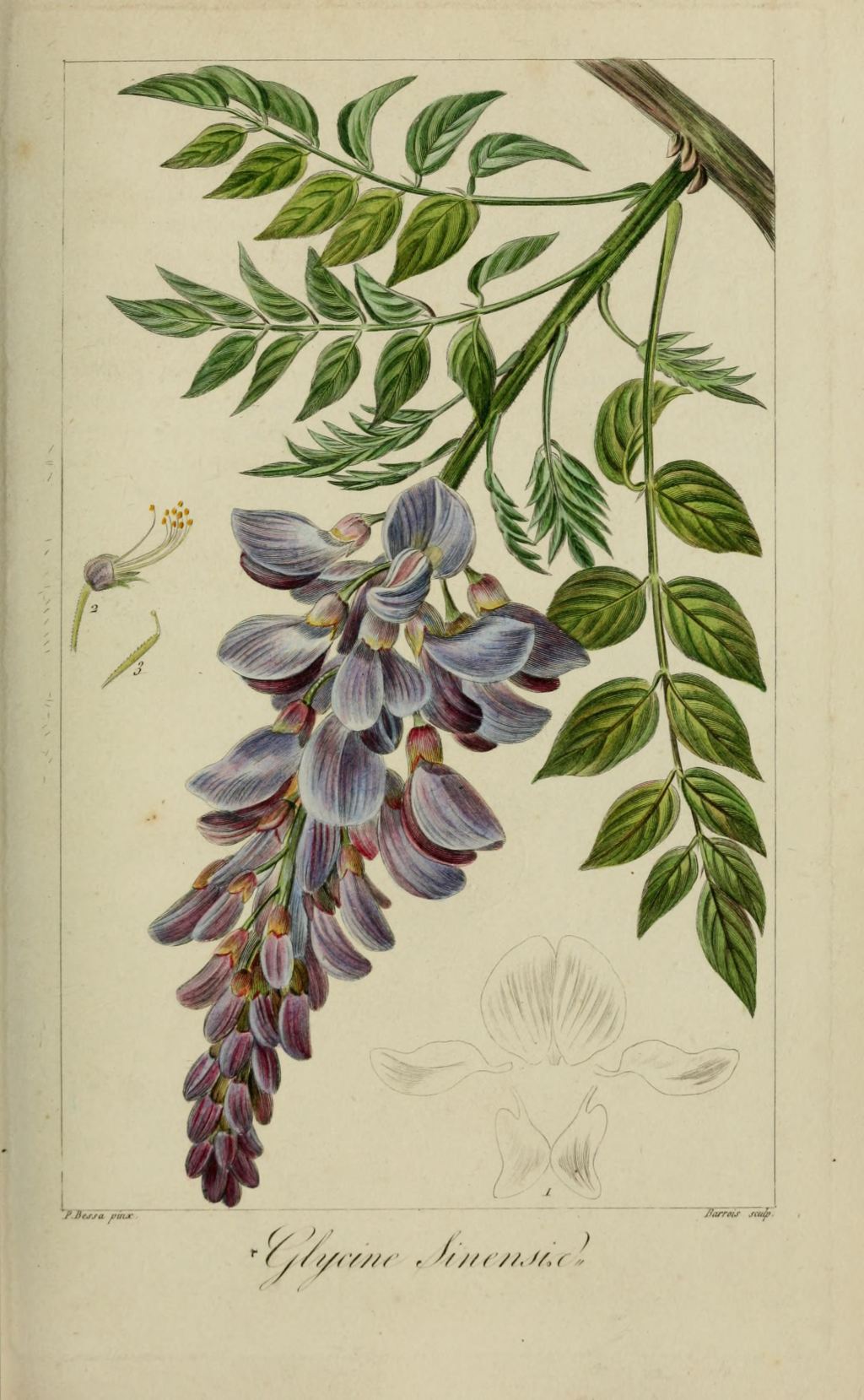
Los aspectos rosados-verdes-cítricos del  geranio se funden en una nítida nota de rosa que se torna, progresivamente, meliflua y cremosa. Armide ahora adquiere el dulzor de los bombones; para ser precisa, me recuerda vívidamente al loukoum  (rosa, almendras, miel, azúcar impalpable) pero nunca cruza la línea gourmand. Sigue siendo un magnífico floral atalcado en el que rosas, azahares y glicinas descansan sobre una base de almizcle blanco.  Se manifiesta una leve sensación cosmética debido a la cremosidad, al polvo y a la jabonosidad transmitida por la combinación de  flor de naranjo y almizcles blancos. Lo encuentro reconfortante pero no relajado en exceso y en modo alguno casual. Si los jardines de Armida olían de esta forma, puede entenderse el deseo de quedar prisionero allí.

Un solo spritz basta para quedar envuelta en una nube fragante por buena parte del día. Escala posiciones hacia mi top 5.

Caro

Origen de la muestra:  sorteo de Oriza L. Legrand realizado en Kafkaesque

foto: Orizaparfums.com

foto: Orizaparfums.com

Oriza L. Legrand Jardins d’Armide –  Amidst tulle and flowers

Armida, the Saracen sorceress, was a recurring motif in the arts of the XVII and XVIII centuries. Painting, opera and ballet paid tribute to her beauty. The story goes that Armida took Rinaldo -her beloved crusader- to an enchanted garden in order to keep him captive. There are different endings depending on the version:  Jerusalem Delivered, the epic poem by Torquato Tasso, concludes with both Armida and Rinaldo together, reigning happily ever after.

Although I had already exchanged a few words with Monsieur Lambert (you may read our interview with him here) and knew about the historical heritage of the house, I had not tried any of their fragrances. When fellow blogger Kafka hosted a generous Oriza L. Legrand last month, I eagerly  jumped in and became one of the lucky winners. A few weeks later, I was shrieking with excitement (no exaggeration) as I tore open the box which had just arrived from Paris.

Jardins d’Armide is a seriously powdery floral.Originally composed in 1909, it has been recently reorchestrated employing modern raw materials. The Belle Époque atmosphere is clearly present, nonetheless it doesn’t feel dated. Au debouché, I perceive the powdery violets that were so in vogue at the turn of the century but when I spritz it on, I hear angels sing, see flowers falling from the skies and feel pastel colored tulle wrapping around me. And no, I am not hallucinating.

The rosy-green-citrusy aspects of geranium fade into a clear rose note which becomes progressively honeyed and creamy. Armide now acquires the sweetness of bonbons; to be precise, it strongly reminds me of Turkish delight (rose, almond, honey, icing sugar) but never crosses the gourmand line. It remains a magnificent powdery floral in which roses, orange blossom and wisteria rest on a white musk base. A slight cosmetic feel manifests itself due to the creaminess, the powder and the soapiness conveyed by the orange blossom and white musks pairing. I find it comforting but not excessively relaxed and definitely not casual. If Armida‘s gardens smelled like this, one could understand the wish to remain captive there.

Just one spritz suffices to become wrapped in a fragrant cloud for the best part of the day. Straight to my top 5 it goes.

Caro

Origin of sample: Oriza L. Legrand draw hosted at Kafkaesque

imagen: Environnement.ecole.free.fr

imagen: Environnement.ecole.free.fr