Category Archives: Perfumes

Les Parfums de Rosine Roseberry – Primavera bucólica

foto: All-creatures.org

foto: All-creatures.org

Aunque una sea parcial a los perfumes operáticos y barrocos, gran parte del tiempo la agenda exige algo menos demandante.  De la misma manera en que la mayoría de las ocasiones no requieren de tacos altos, vestido de noche y las joyas de la abuela, los perfumes grandilocuentes a veces quedan fuera de la ecuación. Es el momento exacto en que “agradable” y “bonito” son bienvenidos.

“Bonito” resume con bastante exactitud a Roseberry, un eau de parfum  compuesto por Pierre Bourdon en 1997 para Les Parfums de Rosine. La casa parisina está dedicada a traducir todas las (aparentemente infinitas) facetas de la rosa al perfume. Claramente apasionada por  esta flor, la fundadora –Marie Hélène Rogeon- es la bisnieta de Louis Panafieu, quien solía crear eaux de cologne para el emperador Napoleón III.

Verde, floral y frutado, Roseberry resulta ideal para usar en primavera…o para conjurarla cuando el tiempo aún está frío. Aquí las rosas no conforman un bouquet arreglado primorosamente sino que parecen crecer al azar en un prado, matizadas por el dulzor herbáceo de la manzanilla. Una jugosa nota de  zarzamora endulza la rosa un poco más aún, pero lo frutal no resulta  abrumador. Finalmente prevalece el carácter floral de la composición a la par que una ligera jabonosidad refuerza su sensación de limpieza.

Fresca y aireada, esta fragancia transmite una alegría serena a lo largo de su evolución, que es bastante lineal.  Roseberry se mantiene cerca de la piel y su longevidad es mediana. Aunque menos distintivo que otras propuestas de la casa, resulta tan adorable que no puedo resistirme a su encanto.

Caro

Origen de la muestra: Muestra gentileza de perfumerías Nadia, Madrid


foto: Les-parfums-de-rosine.com

foto: Les-parfums-de-rosine.com

Les Parfums de Rosine Roseberry – Bucolic springtime

While one may be partial to operatic, baroque and statement-making fragrances, most of the time schedule calls for something a bit less demanding.  In the same way  most occasions don’t require high heels, an evening gown and one’s best jewels, big fragrances are some times out of the  equation. It is the exact moment when “nice” and “pretty” are most welcome.
“Pretty” very much sums up what Roseberry is about.  An eau de parfum  composed by Pierre Bourdon for Les Parfums de Rosine in 1997. The Parisian house is devoted to translating all of the (seemingly infinite) facets of  rose into fragrance. Clearly passionate about this flower, founder Marie Hélène Rogeon is the great granddaughter of Louis Panafieu, who used to create eaux de cologne for emperor Napoleon III.

Green, floral and fruity, Roseberry makes an ideal choice for springtime…or to summon up the season when the weather is still cold. The roses here do not form an artfully arranged bouquet; they seem, instead, to grow randomly in the wild, nuanced by the herbaceous sweetness of chamomile. A juicy  blackberry  note sweetens the rose even more but the fruitiness is not overpowering. In the end the floral character of the blend prevails while a faint soapiness reinforces its clean feel.

Fresh and airy, this fragrance conveys a serene joy throughout its (quite linear) evolution. Roseberry wears quite close to the skin and has average longevity. Although less distinctive than other offerings from the house, I find it so adorable I cannot resist its charm.

Caro

Origin of sample: Sample courtesy of Perfumerías Nadia, Madrid


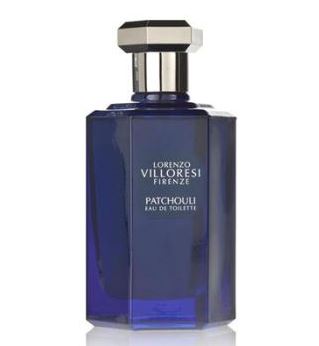
Lorenzo Villoresi Patchouli – Para caballeros curtidos y muñecas de porcelana

imagen: Payer.de  "Hooker's journal of Botany and Kew Garden Miscellany", 1849

imagen: Payer.de “Hooker’s journal of Botany and Kew Garden Miscellany”, 1849

Una actriz a quien conozco estaba preparándose para una fiesta glamorosa a la que llevaría un delicado vestido de seda blanca. Mientras me ocupaba de su maquillaje, una débil estela de patchouli me tomó por sorpresa. “Qué perfume es?” pregunté; “patchouli” fue su vaga respuesta. La nota -alcanforada y algunas veces acre- olía dulce y singular en ella, un verdadero aroma distintivo.

Una tarde, dos años después, nuestra conversación viró hacia la perfumería y, una vez más, inquirí sobre su patchouli, que resultó ser el de Lorenzo Villoresi. Esta eau de toilette nunca me había impresionado antes como dulzona ni la habría asociado con los rasgos de una belleza de porcelana. De hecho, siempre he pensado que debe adaptarse de maravillas a un caballero.

El patchouli (pogostemon patchouli) –como hemos mencionado en reseñas anteriores– se popularizó en Europa a comienzos del siglo XIX century y se usaba para perfumar los chales indios que estaban de moda en esa época. Las hojas de patchouli mantenían alejadas a las polillas a la vez que prestaban su aroma a los chales mientras eran transportados de India a Europa. Según Robert Tisserand en su excelente El Arte de la Aromaterapia,  las personas se negaban a comprar los chales si éstos no olían a patchouli. Incluso cuando empezaron a producirse en Gran Bretaña, perduró la costumbre de perfumarlos de esta manera. Los chales eventualmente pasaron de moda, pero el patchouli se quedó. Era también un ingrediente clásico en la tinta india ya que ayudaba a fijar el color y aceleraba el tiempo de secado del líquido.

La aproximación de Villoresi al patchouli es honesta y desprovista de adornos; bastante lineal y de estilo clásico. Estoy segura de que no convertirá a aquellos que sienten aversión por el patchouli, pero es una opción excelente y fácil de llevar para quienes apreciamos esta nota. Fresco, ligeramente verde y tan terroso que evoca el suelo húmedo de un bosque, no está endulzado con vainilla o tonka (como Classic Patchouli) ni benjuí (como es el caso de Coromandel). Huele como una versión más aireada y chispeante de un buen aceite esencial de patchouli y resalta las mismas facetas: the el cosquilleo mentolado, la cualidad mohosa, la astringencia, antes de volverse uno con la piel. Casi olvido mencionar que el patchouli ha sido empleado durante siglos como afrodisíaco; quizás debería haber empezado por allí.

Lorenzo Villoresi Patchouli tiene proyección y tenacidad excelentes para un eau de toilette. La casa ofrece esta fragancia también en forma de perfume al aceite.

Caro

Origen de la muestra: Muestra gentileza de Lorenzo Villoresi


foto: Lorenzovilloresi.it

foto: Lorenzovilloresi.it

Lorenzo Villoresi Patchouli – For rugged gents and porcelain dolls

An actress I know was getting ready for a glamorous party in which she would wear a delicate white silk gown. As I was doing her makeup, a faint trail of patchouli caught me by surprise. “What are you wearing?” I asked; “patchouli“was her vague answer. The camphoraceous and sometimes acrid note smelled sweetly unique on her, a true signature scent.

One afternoon some two years later, our conversation switched towards  fragrance and  I inquired again about her patchouli, which turned out to be Lorenzo Villoresi‘s . This eau de toilette had never struck me as sweet before, nor would I have associated it with the features of a porcelain beauty. In fact, I had always thought it would nicely befit a gentleman.

Patchouli (pogostemon patchouli) –as we have mentioned in previous reviews– became popular in Europe at the beginning of the XIX century and was used to scent the Indian shawls which were in vogue at the time. The patchouli leaves would keep moths at bay and lend their aroma to the shawls  while they were transported from India to Europe. According to Robert Tisserand in his excellent The Art of  Aromatherapy,  people wouldn’t buy the shawls if they were not scented with patchouli. Even when they started being woven in Britain, the custom of scenting them in this manner remained. The shawls eventually went out of fashion but patchouli stayed. It was also a classic ingredient in Indian ink as it helped set the color and speed the liquid’s drying time.

Villoresi‘s approach to patchouli is honest and devoid of frills; classic in style and pretty linear. I am quite sure this will not convert  those who have an aversion to patchouli, but it is an excellent and wearable option for those of us who appreciate the note. Fresh, slightly green and so earthy it evokes the damp soil of a forest, it is not sweetened by vanilla and tonka (like Classic Patchouli) or benzoin (like Coromandel). It smells very much like an airier sparklier version of good patchouli essential oil and highlights the same facets: the minty tingle, the mustiness, the astringency, before becoming one with the skin. I almost forgot to mention that patchouli has been used for centuries as an aphrodisiac; perhaps that’s where I should have started.

Lorenzo Villoresi Patchouli has excellent projection and tenacity for an eau de toilette. The house also offers this fragrance in the form of perfume oil.

Caro

Origin of sample: Sample courtesy of Lorenzo Villoresi

Rochas Femme parfum (vintage) – Objeto de deseo

foto: Nymag.com  (Getty Images)

foto: Nymag.com (Getty Images)

La segunda guerra mundial no terminaba aún; era 1943 y Edmond Roudnitska había estado trabajando en un edificio que tenía un basurero a un lado y una fábrica de pintura al otro. En medio de este contexto brutal estaba a punto  de crear una de las obras maestras del siglo: Rochas Femme.

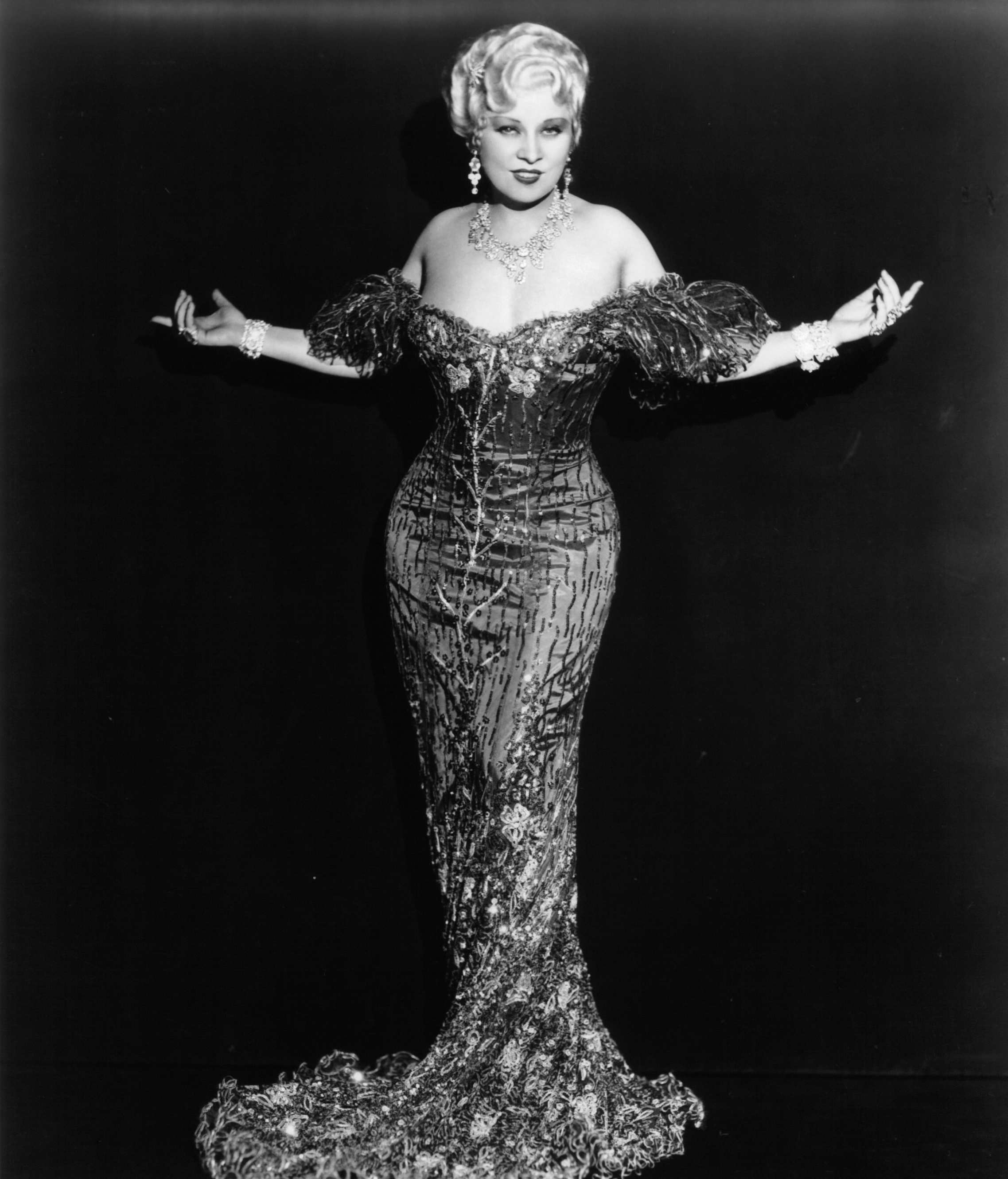
La fragancia había sido encargada por Marcel Rochas como regalo de bodas para su joven esposa Hélène y sería presentada un año más tarde. La botella original -cuyas curvas, dicen, fueron modeladas según las de Mae West fue firmada por Lalique. El motivo de encaje negro, emblemático de Femme, fue también inspirado por la Srta. West.

“Cualquiera puede hacer un rico olor. El truco es crear un perfume que tenga alma” diría el legendario Roudnitska muchos años más tarde, pero su voluptuoso elixir tenía tanto de cuerpo como de alma. Femme resultaría tan trascendente que su influencia puede apreciarse con claridad en perfumes que aparecieron en escena mucho, mucho más tarde  (Balenciaga Quadrille, Shiseido Feminité du Bois, The Party in Manhattan, Amouage Jubilation 25, Vero Profumo Mito).

Un chipre frutado superlativo, evocador de sudor y retozos de alcoba, Femme en versión vintage huele tan íntimo que es capaz de sobresaltar incluso a quien lo lleva. El acorde de fruta demasiado madura, hilo rojo en la obra de Roudnitska, no podía estar ausente en esta creación. Su cualidad frutada es densa y nectárea, como si se tratara de un espeso licor imaginario de ciruela, durazno, rosa, jazmín (indólico) y cuero. Una base animal intensifica la sensación de opulencia, que bordea lo barroco. Resulta inevitable pensar que la mejor manera de lucirlo es entre las sábanas, en buena compañía.

Femme es un perfume que no envejece particularmente bien; si logran encontrar un frasco cuyo contenido esté en buenas condiciones, se sentirán inmensamente recompensados.

Caro

Origen de la muestra: frasco regalo de un familiar

Nota bene: Rochas Parfums es actualmente propiedad de Procter & Gamble. No hemos probado Femme en su formulación actual.

foto: Caro Fernandez

foto: Caro Fernandez

Rochas Femme parfum (vintage) –  Object of desire

WWII was not yet over; it was 1943 and Edmond Roudnitska had been  working in a building that had a rubbish dump on one side and paint factory on the other. Amidst this brutal context he was  about to create one of the masterpieces of the century: Rochas Femme.

The fragrance had been commissioned by Marcel Rochas as a wedding gift for his young wife Hélène and would be launched a year later. The original bottle -whose curves are said to have been modeled after Mae West’s- was signed by Lalique. The emblematic black lace motif was also inspired by Ms. West.

“Anyone can make a nice smell. The trick is to create a fragrance that has a soul” said the legendary Roudnitska many years later, but his voluptuous elixir had as much of a body as it had a soul. Femme would prove so transcendent that its influence shines clear in fragrances that arrived into the scene much, much later (Balenciaga Quadrille, Shiseido Feminité du Bois, The Party in Manhattan, Amouage Jubilation 25, Vero Profumo Mito).

A superlative fruity chypre evocative of sweat and bedroom romps, vintage Femme smells so intimate it might startle even its wearer. An accord of overripe fruit, the red thread in Roudnitska‘s oeuvre, couldn’t be absent from this creation. Its fruitiness is dense and nectarous, like a thick imaginary liquor of plum, peachrose, (indolic) jasmine and leather. An animalic base increases the feel of opulence, which borders on baroque.  One cannot help but think it should be best worn between the sheets, in good company.

Femme is a fragrance that doesn’t age particularly well; if you can find a bottle whose contents are in good condition, you will feel immensely rewarded.

Caro

Origin of sample: bottle gifted by a relative

Nota bene: Rochas Parfums is nowadays owned by Procter & Gamble. We haven’t sniffed Femme in its current formulation.

Mario Tomas El Poeta – Un efluvio narcótico

imagen: Histoire-image.org   Verlaine au café Procope artista: Cesare Bacchi

imagen: Histoire-image.org     “Verlaine en el café Procope”    artista: Cesare Bacchi

Ajenjo, bohemia y poesía… Como si fuera un tributo al legendario café parisino Le Procope, Mario T. Gomez -perfumista de Oakland, California– condensa el espíritu de una época intelectual y artística en los efluvios de El Poeta. Este perfume atrayente y exquisito conduce a un estado mental ambivalente: arrobamiento y lucidez.

Creo que es una experiencia fantástica el ir “bordeando” las fragancias, acercandome de a poco, antes de avalanzarme sobre ellas y rociarlas sobre la piel. Así que en este caso, oliendo primero desde la botella, se percibe licoroso y centellante con chispas anisadas. La sensación es como si pequeñas agujas -rodeadas por una dulce y almizclada nube- le pincharan a uno en la punta de la nariz.

Una vez aplicado, El Poeta se apacigua. Pero un narcótico acorde de sándalo e higo, se levanta para arengar a la caballería: la dulzura del anís, la salinidad almizclada del coriandro y la frescura mentolada del enebro. Ya rodeados por tal excitante estado de ánimo, la intoxicante armonía del ron imbuído de vainilla nos termina de encauzar hacia una trampa de la cual no querremos salir.

Esta composición es la estrella de la flamante marca Mario Tomas. Es una pieza maestra escrita con palabras olfativas por un emergente poeta de los perfumes.

Virginia

Origen de la muestra: Kit de prensa de FRAGments 2014.

foto: Novelasyliteraturadehoy.blogspot.com

foto: Novelasyliteraturadehoy.blogspot.com

Mario Tomas El Poeta – A narcotic emanation

Absinthe, Bohemia and poetry… Mario T. Gomez -a perfumer based in Oakland, California– condenses the spirit of an intellectual and artistic era in the emanations of El Poeta. As if it was a tribute to legendary Parisian café Le Procope, this inviting and luscious perfume leads one to an ambivalent state of mind: trance and lucidity.

I think it’s fantastic to border fragrances -much like rivers- before one decides to plunge into them. So smelling this au debouché, it appears boozy and scintillating with aniseed sparks. The feel is a bit like small needles -surrounded by a sweet musky cloud- stinging one’s nose.

Once applied to the skin El Poeta becomes subdued. But a narcotic accord of sandalwood and fig suddenly rises to harangue the cavalry: sweet anise, musky salty coriander and cold minty juniper. Once stuck in such an excited mood, an inebriating harmony of vanilla-infused rum leads us to an ambush we do not want to escape.

This composition is the star of the brand new  Mario Tomas line. It is a masterpiece written with olfactory words by an emerging poet of perfumes.

Virginia

Origin of sample: Press kit from FRAGments 2014.

foto: Virginia Blanco

foto: Virginia Blanco

Molinard Habanita – Femineidad con actitud masculina

foto: Gildedgypsiesvintage.blogspot.com

foto: Gildedgypsiesvintage.blogspot.com

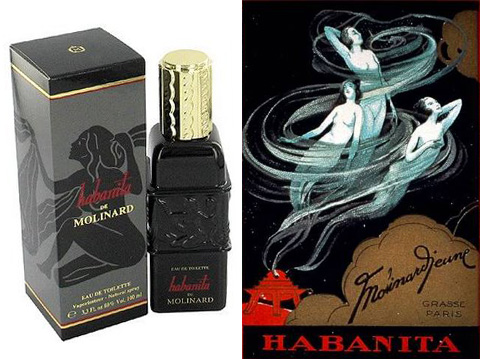
Una de las casas perfumísticas más tradicionales nacidas en Grasse es Molinard. Fue fundada en 1849 y en 1920 se instalo también en París. Un año después lanzó Habanita, el eau de toilette más importante de su historia. El frasco -de color negro y con ninfas en relieve- se llamo Beauty y fue creado por René Lalique.

En 1988, de “la nariz” de perfumistas de la Escuela de Roure, relanzaron Habanita. Y no es casualidad que haya sucedido en esa epoca. Creo que esta fragancia de la familia oriental representa algo muy puntual que sucedió durante aquellas dos décadas en las que salió a la palestra. Más adelante veremos qué.

Percibido au débouché (desde el frasco) es cálido, licoroso y dulce gracias a las notas de melocotón. Pero aplicado sobre la piel, Habanita “muestra las garras”. La combinación de rosa e ylang-ylang lanza destellos de olor a hule. A los minutos, puede parecerse un poco más al caucho quemado, tal vez por el cuero que ostenta como nota de base. Sin embargo, casi media hora después, puedo afirmar que sí parece un típico eau de toilette, ‘domesticado’ con apolvadas notas de vainilla. Recién aquí aparece la suavidad.

En los años 20’s -producto del horror vivido en la 1° Guerra Mundial– el recato y la sobriedad fueron dejados de lado para vivir la vida a fondo. La mujer, que hasta el momento había estado relegada a la casa (preferentemente secundando como esposa de un señor acaudalado), ahora se mostraba en un rol social y sexual activo. No sólo coqueteaba, usaba el cabello a la garçon y mostraba las piernas; sino que también jugaba deportes al aire libre, comenzaba a votar y a ir a las universidades. Años en que fulguraban figuras como Virginia Woolf, Colette y Gertrude Stein.

En los 80’s se completa este proceso de avance femenino a la par de los hombres, ya con las mujeres en altos cargos empresariales y políticos. Y ni hablar de la moda masculina llevada por mujeres: hombreras, blazers, pantalones, maquillaje que endurece los rasgos y tacos para ver el mundo desde arriba.

Habanita simboliza a esa mujer: atrapante, ambiciosa, embriagante y de carácter fuerte, pero siempre femenina.

Virginia

Origen de la muestra: regalo de un familiar.

Nota: esta reseña fue publicada en el blog Notas & Acordes el 21/09/11.

foto: Fragrantica.com

Molinard Habanita – Femininity with a masculine attitude

One of the more traditional perfume houses from Grasse is Molinard: founded in 1849, it was set in Paris in 1920. Habanita, the most important fragrance in this brand’s history, was launched one year later. Its bottle -black in color and with embossed nymphs- was called Beauty and had been created by René Lalique.

In 1988, “from the nose” of School Roure perfumers, Molinard relaunched Habanita. And it is not a coincidence that it happened at that exact time. I think this oriental fragrance is representative of something very specific that befell during those two decades in which it jumped onto the arena. We will later see why.

Perceived au debouché (from the bottle) this eau de toilette is warm, liquorous and sweet thanks to its notes of peach. But once applied to the skin, Habanita“shows its claws”. The combination of rose and ylang -ylang flashes touches of rubber. Within minutes, it may smell more akin to burnt rubber, perhaps due to the leathery base note. However – almost half an hour later- I can say that it smells more like a typical eau de toilette; it is now ‘ tamed ‘ with powdery vanilla notes. Only softness appears here.

In the ’20s -as a result of horror lived during the 1st World War– modesty and sobriety were pushed aside and life was enjoyed to the fullest. Women, who had until then been relegated to the house (ideally as wives to wealthy gentlemen), were now showing themselves in a more active social and sexual role. Not only flirting, wearing their hair a la garçon and exposing her legs; but also playing outdoor sports, voting and going to university. Figures such as Virginia WoolfColette and Gertrude Stein gleamed in those years.

In the 80’s this process of female leading alongside men became complete; it is no longer unusual to see women in senior business and political positions. Not to mention traditional menswear worn by women: shoulder pads, blazers, pants, makeup that made the traits look harder and high heels in order to see the world from above.

Habanita symbolizes that type of woman: engaging, ambitious, heady and strong willed, but always feminine.

Virginia

Origin of sample: Gift from a relative.

Note: This review was posted in Spanish on 09/21/11 on Notas & Acordes fragrance blog.

foto: Brunssen.com.mx