Category Archives: Perfumes

Parfum d’Empire Cuir Ottoman – Exuberancia y equilibrio

imagen: Ottomanhistorypodcast.com Osman Hamdi Bey, At the Mosque Door, 1891, Oil on canvas, 203 x 123.5 cm, University of Pennsylvania Museum of  Archaeology and Anthropology

imagen: Ottomanhistorypodcast.com  “En la puerta de la mezquita”, 1891 artista: Osman Hamdi Bey

Desde tiempos antiguos (2000-1200 A.C.) el arte de la curtiduría ha sido desarrollado por los Hititas en la AnatoliaTurquía. El trabajo del cuero conllevaba un gran peso simbólico en las comunidades turcas: un sentido de lo sagrado y de los valores. Pero además, el cuero tenía también un importante valor económico: se le llamaba“teri” y “tirik”, un impuesto que los antiguos clanes del lugar le pagaban al Khan.

Marc-Antoine Corticchiato -perfumista y alma mater de Parfum d’Empire– creció entre Córcega y Marruecos. Él demuestra ese particular mix cultural creando Cuir Ottoman como un tributo al tradicional trabajo del cuero de Anatolia. Es el exotismo de lo oriental en el imaginario occidental; un lujo exuberante moldeado con equilibrio y moderación.

Las breves impresiones iniciales sobre la piel remiten a un blend de whiskytabaco y cuero. Este último acorde es una cálida dulzura de benjuí que suaviza los matices más combustibles del styrax; y el cistus le ofrece una frescura casi verdosa. Una tersa nota de iris fluctúa, elegante y delicada, entre un acabado cremoso y uno apolvado.

El exotismo aparece con remotos toques de incienso que se entrelazan con una cadencia ambarada de tonkavainilla y bálsamo de Tolú: esta mélange es dulce pero a veces amarga y oscura. No obstante, el gran secreto de esta sensual composición es el jazmín egipcio, una delicia floral blanca que se transforma en un imaginario fruto de azúcar. Como dijo el perfumista: “tan blanco y opulento como las odaliscas pintadas por DelacroixIngres y Matisse“.

A pesas de que hemos incluído a Cuir Ottoman en un Top 5 (muy) masculino, creo que -además- este eau de parfum florece de una forma delicada sobre la piel femenina.

Virginia

Origen de la muestra: Regalo por compra en Luckyscent.
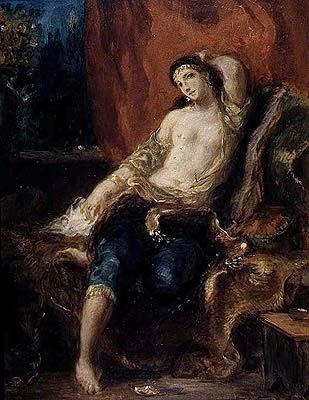
imagen: Artble.com "Odalisque", artista: Eugene Delacroix

imagen: Artble.com “Odalisque”, 1857   artista: Eugene Delacroix

Parfum d’Empire Cuir Ottoman – A balanced exuberance

The art of tannery was developed by the Hittites in Anatolia, Turkey, Since the very old times (2000-1200 B.C). In Turkish communities, leatherwork carried holy and symbolic meanings and values. But leather also had an important economic value: it was called “teri” and “tirik”, a tax paid to Khan in old Turkish clans.

Marc-Antoine Corticchiato -perfumer and alma mater of Parfum d’Empire– grew up between Corsica and Morocco. He displays that particular cultural mix creating Cuir Ottoman as a tribute to the traditional Anatolian leatherwork . It is Eastern exoticism set in a Western imaginary; an exuberant luxury shaped with balance and moderation.

The brief initial impression on the skin is a blend of whisky, tobacco and leather. This last accord is a warm sweetness of benzoin which smooths the fuel hues of styrax; and cistus brings a greenish freshness. A soft iris note fluctuates, elegant and delicate, between a creamy and a powdery finish.

The exoticism appears with distant touches of frankincense that interlaces with an ambery cadence of tonka, vanilla and Tolu Balsam: this mélange is sweet but at times bitter and dark. However the big secret of this sensual composition is Egyptian jasmine, a white floral delight that becomes in an imaginary fruit of sugar. As the perfumer said:“as white-fleshed and opulent as the odalisques painted by Delacroix, Ingres and Matisse.

Despite of our having included Cuir Ottoman in a (very) masculine top 5, I think this eau de parfum also flourishes delicately on feminine skin.

Virginia

Origin of sample: Gift with purchase from Luckyscent.

foto: Parfumdempire.fr

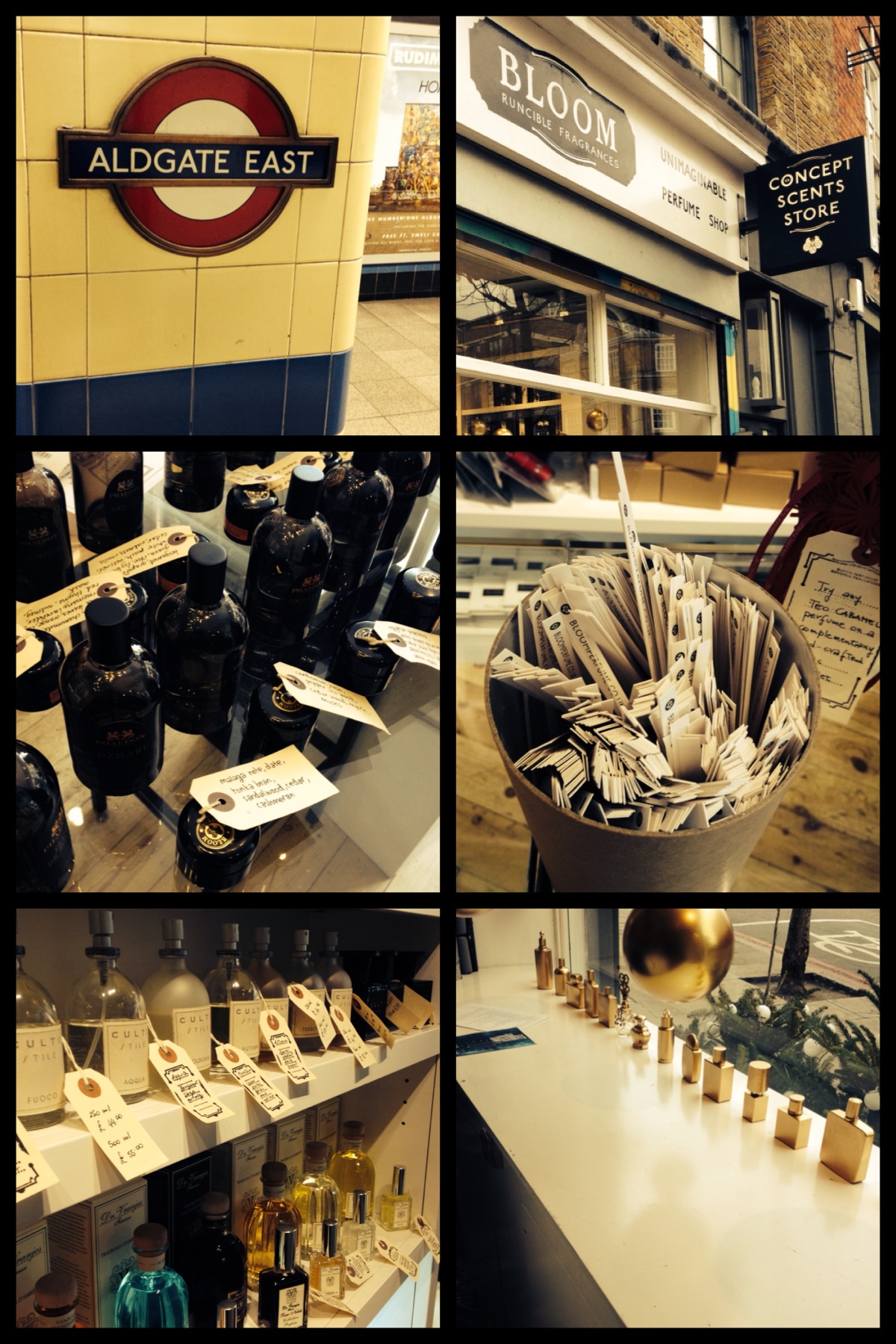
Bloom Perfumery (Londres) – Tesoro escondido

foto: Soledad Caneda

foto: Bee Caneda

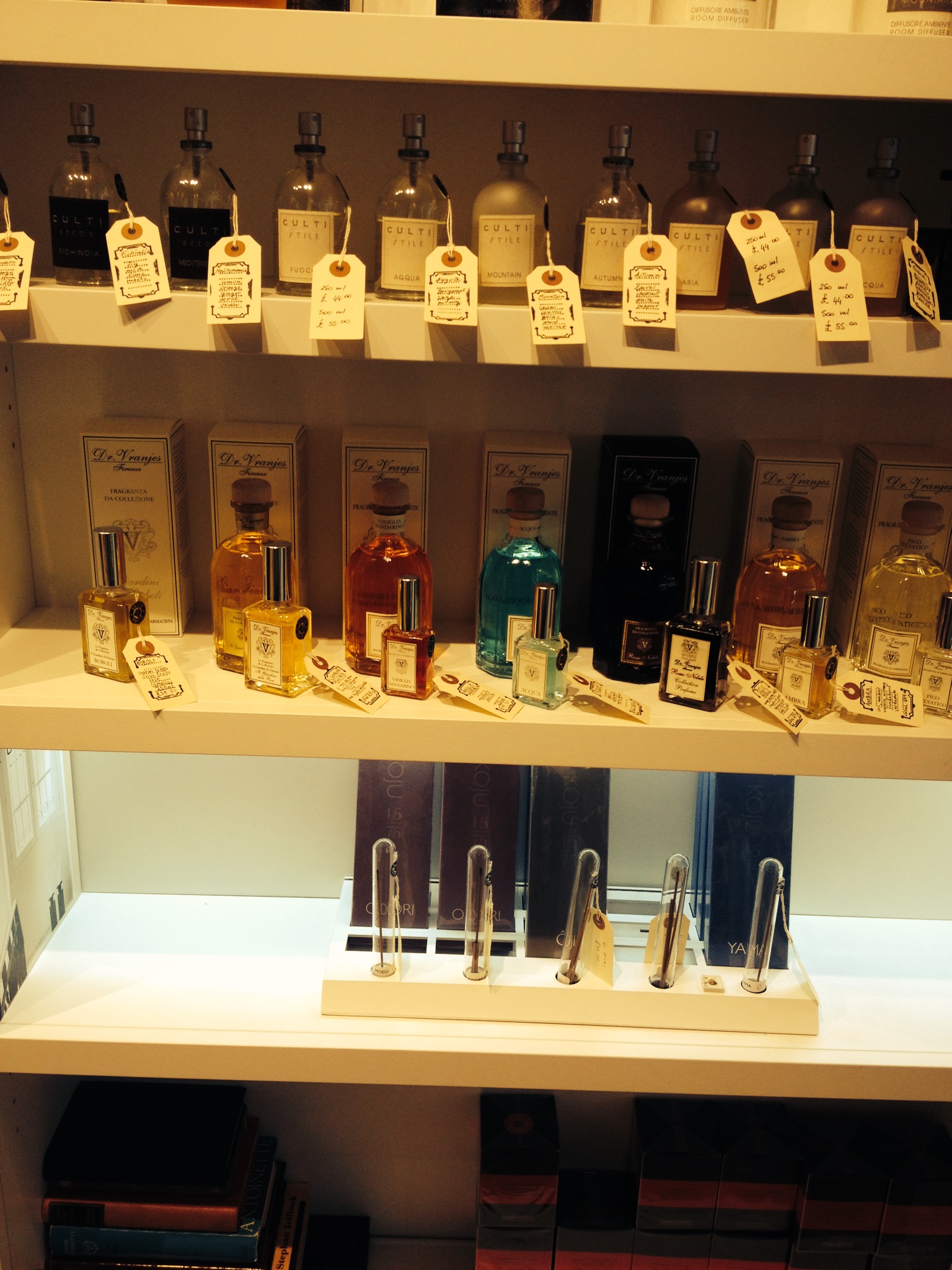
foto: Soledad Caneda  Perfumes ambientales Dr. Vranjes

foto: Bee Caneda      Perfumes ambientales Culti y Dr. Vranjes

Apenas me enteré de que mis amigas  Soledad y Bee pasarían sus vacaciones en Londres, les pregunté -por favor, por favor- si podían hacer una compra por mí.

Propuse que hicieran escala en Bloom Perfumery principalmente porque el negocio  vende Vero Profumo (lo que yo estaba buscando), pero también porque me encantaba su website tan monono,que ahora ha sido actualizado en favor de un diseño ligeramente más dinámico. La dueña, Oksana Polyakova, con quien me contacté para averiguar disponibilidad de stock, resultó especialmente atenta.

Bloom Perfumery está ubicado en la vivaz zona de Spitalfields  (más exactamente en la intersección de Hanbury Street y Commercial Street), en el  East End de Londres. La tienda en sí no es enorme aunque ofrece una selección muy inteligente de perfumes (Phaedon, Arquiste, Téo Cabanel, Jardins d’Écrivains, Frapin y Les Parfums de Rosine entre otras marcas).

Soledad y Bee se mostraron contentas de haberse tomado el tiempo para visitar Bloom ya que de otro modo no se habrían aventurado por las adyacencias.  Spitalfields perdió hace tiempo la reputación dudosa que tenía en la época victoriana y florecen los restaurants, tiendas vintage y mercados de pulgas.

Además de mi preciado frasquito, trajeron muestras y, por supuesto, fotos.

Caro

foto: Soledad Caneda  Blotters

foto: Bee Caneda         Blotters

Bloom Perfumery (London) – Hidden treasure

When I heard my friends  Soledad and Bee would be spending their holidays in London, I asked if they could  -pretty please- custom purchase a certain something for me.

I suggested they stop by Bloom Perfumery mainly because the shop stocks  Vero Profumo (what I was looking for) but also because I adored their extra-cute website, which has now been updated in favor of a slightly more dynamic design. Owner Oksana Polyakova -whom I became in contact with in order to check product availability- was beyond helpful.

Bloom Perfumery is located in the lively Spitalfields area (more precisely at the Hanbury Street and Commercial Street junction), in the East End of London. The shop itself is not huge but offers a very clever selection of fragrances (Phaedon, Arquiste, Téo Cabanel, Jardins d’Écrivains, Frapin and Les Parfums de Rosine among others).

In the end, Soledad and Bee were happy they took the time to visit Bloom since they would have otherwise not ventured into the neighbouring zone. Spitalfields has long lost the dubious reputation it had in Victorian times and blooms (no pun intended) with restaurants, vintage stores and flea markets.

Besides my precious flacon, they brought back samples and, of course, pictures.

Caro

foto: Soledad Caneda  perfumes de Frapin, línea inspirada en cognacs finos

foto: Bee Caneda    perfumes de Frapin, línea inspirada en cognacs finos

foto: Soledad Caneda

foto: Bee Caneda     Parfums de Rosine, Jardins des Ecrivains y Blood Concept

foto: Soledad Caneda  Phaedon

foto: Bee Caneda    Phaedon

foto: Soledad Caneda  ¡Misión cumplida!

foto: Bee Caneda   Misión cumplida

Olivier Durbano Amethyst – Neblina púrpura

foto: Elogedelart.canalblog.com  Apolo, talla en amatista atribuída a Solón (30-20 AC), The J. Paul Getty Museum

foto: Elogedelart.canalblog.com     Apolo, talla en amatista atribuída a Solón (30-20 AC), The J. Paul Getty Museum

Ya había disfrutado del vivaz Rose Quartz, había recibido elogios de completos desconocidos sobre Rock Crystal y me había asombrado ante -¡oh, humo sagrado!- Black Tourmaline. Por alguna causa fortuita, mi muestra de Amethyst en cambio había encontrado el camino al fondo de un cajón y quedó olvidada allí por un año y medio. Olivier Durbano, como quizás recuerden, es un joyero francés. Sus creaciones, las fragantes y las que no, parecen permeadas de una cruda poesía. Sus eaux de parfum tienen una adecuada sensación mineral y el incienso y otras resinas son notas recurrentes en su obra perfumada.

Ayer tuve que hacer parada en boxes en mi joyería preferida para hacer arreglos a una pulsera. Mientras esperaba vi un despampanante collar de plata y amatistas -corto, dramático, con grandes piedras irregulares- y me encapriché con él.  Aunque (¡ay!) no lo compré, de regreso me puse a divagar sobre las amatistas,  que siempre se contaron entre mis piedras preferidas, sus correspondencias y simbología. Por supuesto, Olivier Durbano Amethyste fue el primer perfume que busqué apenas llegué a casa.

La amatista era usada por los Griegos para prevenir la embriaguez y proteger contra envenenamientos. Más tarde, Leonardo Da Vinci sostuvo que pdía mejorar la inteligencia y  mantener alejados los malos pensamientos. La amatista era también la piedra preferida de Catalina la Grande (era mucho más escasa, por ende más preciada, en esos tiempos). Hoy los monjes tibetanos emplean en su meditación rosarios hechos con cuentas de amatista.En la astrología occidental la gema se asocia al planeta Júpiter y a los signos de Sagitario y Piscis.

Volviendo al tributo de Durbano: el perfume gravita alrededor de una nota de incienso; este incienso es bonito y amigable, ni solemne ni austero, pero aún así lleva la característica “aspereza”de las creaciones de Olivier.Una nota transparente de pimienta en la salida pronto se aúna con palo rosa, cuyo aroma dulzón y especiado recuerda las virutas de madera que quedan después de afilar los lápices. Amethyst es amaderado y especiado, sí, pero atravesado por un suave matiz frutado que le es dado por delicadas notas de uva y frambuesa (énfasis en “delicadas”). Luego de le explosión pimentosa y amaderada del comienzo no quedan asperezas.  Almizcle, sándalo y vainilla hacen que la fragancia mute lentamente en un capullo acogedor. De sillage discreto y longevidad moderada, Amethyst huele agradablemente natural y mucho más suave que las otras opciones de la colección Pierres Poèmes .

Caro

Origen de la muestra: muestra gentileza de Olivier Durbano

Si les agrada el Arte en general, los instamos a visitar el interesante blog www.alaintruong.com

foto: Olivierdurbano.com

foto: Olivierdurbano.com

Olivier Durbano Amethyst – Purple haze

I had already enjoyed the lively Rose Quartz, I been complimented by perfect strangers on Rock Crystal and was stunned by -holy smoke!- Black Tourmaline. Due to unknown and fortuitous reasons, my sample of Amethyst had found its way to the back of a drawer and remained forgotten for a year and a half. Olivier Durbano, as you may remember, is a French jeweler. His creations, perfumed and otherwise, seem infused with raw poetry. His eaux de parfum have a befitting mineral feel to them and frankincense and other resins are recurrent notes in his fragrant oeuvre.
Yesterday I had to make a pit stop at my favorite jeweler’s in order to have a bracelet repaired. While I waited I saw the most imposing amethyst and silver necklace -short, dramatic, with big tumbled stones- and became infatuated with it. Although (alas!) I didn’t purchase it, on my way back I mused about amethysts,  which have always been among my favorite stones, their correspondences and symbology. Of course, Olivier Durbano Amethyste was the first fragrance I reached for as soon as I got home.

Amethyst was used by the Greeks to prevent drunkenness and as protection against poisoning. Later, Leonardo Da Vinci sustained that it could improve intelligence and keep evil thoughts at bay. Amethyst was also Catherine the Great‘s favorite stone ( it was much scarcer thus more valuable in those days). Today Tibetan monks use rosaries made of amethyst beads in their meditation. In Western astrology the gem is associated with the planet Jupiter and the signs of Sagittarius and Pisces.

Back to Durbano‘s tribute: the perfume gravitates around a frankincense note; this incense is pretty and friendly, not solemn or austere, but it still bears the characteristic “roughness”of  Olivier‘s creations. A sheer pepper note in the opening is soon joined by rosewood, whose sweet and spicy aroma is reminiscent of pencil shavings. Amethyst is woody and spicy, yes, but pervaded by a soft fruitiness via delicate notes of grape and raspberry (emphasis on “delicate”). After the initial woody peppery burst, no sharp edges remain.  Musk, sandalwood and vanilla help the fragrance morph slowly into a cozy cocoon.With discreet sillage and moderate longevity, Amethyst smells pleasantly natural and softer than the other offerings in the Pierres Poèmes collection.

Caro

Origin of sample: sample courtesy of Olivier Durbano

If you enjoy Art in general, we strongly encourage you to visit  the beautiful blog www.alaintruong.com

Gucci L’Arte di Gucci – Espinas y rosas

imagen: Fanpop.com

imagen: Fanpop.com

L’Arte di Gucci es todo lo severo que un perfume puede llegar a ser; no encierra nada de juguetón o coqueto. Creado en 1991, cuando la tendencia de fragancias grandes ya declinaba en favor de los florales acuosos, fue discontinuado inexplicablemente apenas 16 años más tarde, en 2007. L’Arte  se convirtió en un perfume de culto entre los aficionados a los chipres y a las rosas y definitivamente vale la pena ser rastreado. L’Arte es un chipre de rosa en la misma vena que Ungaro Diva (Diva es más dulce y ambarado).Si les gusta Diva, Paloma Picasso, Knowing y Soir de Lune, es muy probable que L’Arte les agrade también.

Esta rosa es potente: especiada y meliflua, frutada en cierto modo agrio. El tagetes (caléndula) y una definida nota de manzanilla suman identidad a los matices frutales y agrestes. Los brotes de grosella negra prestan a la mezcla su característico aroma verde-frutado-urinoso, por ende -a pesar de sus tonalidades de miel– la rosa no se vuelve dulce y la fragancia tampoco. Deviene, sin embargo, en una flor perfectamente redondeada, presta para descansar  sobre  una base de sándalo y notas animales (almizcle, castóreo). Su sensualidad es madura y distante -casi hostil- pero rica y compleja.

Bellamente siniestra, L’Arte es una rosa espinosa y oscura que rompe corazones sin el menor indicio de sentimentalismo. Sugerimos combinarla con afiladísimos stilettos  y  lápiz de labios rojo.

Caro

Origen de la muestra: botella de eau de toilette comprada en Perfumería Togat’s, Buenos Aires

foto: Yushainternational.com

foto: Yushainternational.com

Gucci L’Arte di Gucci – Thorns and roses

L’Arte di Gucci is as severe as a fragrance can get; there is nothing playful or flirty abut it. Created in 1991, when the trend for such big fragrances was declining in favor of aquatic florals, it was unexplainably discontinued only 16 years later, in 2007. L’Arte  has become a bit of a cult fragrance among chypre and rose afficionados and is definitely worth tracking down. L’Arte is a rosy chypre in the same vein as Ungaro Diva (Diva is sweeter and more ambery). If you like Diva, Paloma Picasso, Knowing and Soir de Lune, chances are L’Arte will be your cup of tea too.

This rose is potent: spicy and honeyed, fruity in a sour kind of way. Tagetes (marigold) and a nitid chamomile note add up to the wild fruitiness.  Blackcurrant bud lends its characteristic green-fruity-urinous scent so -despite its hints of honey– the rose never becomes sweet and neither does the fragrance. It results, nonetheless, in a perfectly rounded flower, ready to rest on a base of sandalwood and animal notes (musk, castoreum). Its sensuality is mature and distant -almost hostile- but complex and rich.

Beautifully sinister, L’Arte is a dark thorny rose that breaks hearts without the smallest suggestion of sentimentality. We suggest you pair it with red lipstick and your sharpest stilettos.

Caro

Origin of sample: bottle of eau de toilette purchased at Perfumería Togat’s, Buenos Aires

foto: Theguardian.com   copyright: Getty

foto: Theguardian.com    copyright: Getty

Parfums DelRae Emotionnelle – Fruto andrógino

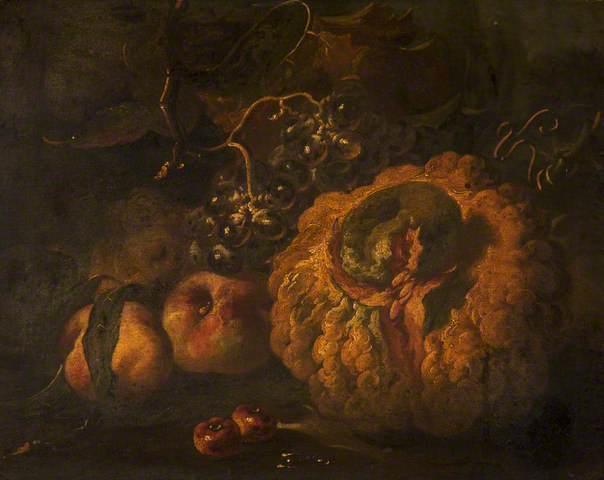
imagen: bbc.co.uk A Melon and Other Fruit artista: Giovanni Paolo Spadino

imagen: bbc.co.uk    A Melon and Other Fruit
  artista: Giovanni Paolo Spadino

No soy muy fanática de los acordes frutales en los perfumes. Si tuviera que elegir una fragancia sin olerla, probablemente pasaría por alto aquella que tenga frutas entre sus notas más sobresalientes. Pero la gente cambia de opinión: hoy conecté con un maduro, tibio y especiado cantalupo.

Este tipo de melón (Cucumis Melo Cantalupensis) fue enlist ado por DelRae Roth (Directora Creativa de la sanfranciscana marca de nicho Parfums DelRae) entre los aromas que le recordaban a su estancia de un año completo en Francia. Compartió sus memorias olfativas con el perfumista Michel Roudnitska y, como resultado, Emotionnelle fue dado a luz en 2006.

Se trata de un eau de parfum que, además del elemento inspirador antedicho, cuenta con un par más de conexiones emocionales. En primer lugar, el melón fue la nota clave de avant-garde de Le Parfum de Thérèse, una fragancia personal creada exclusivamente por Edmond Roudnitska (padre de Michel y uno de los más importantes perfumistas modernos) para su esposa Thérèse, a fines de los años 50’s. Recién después de la muerte de Edmond (1996) este perfume estuvo disponible para el público vía Editions de Parfums.

En mi caso, este ingrediente me retrotrae a mi adolescencia. Mi padre solía usar un perfume exquisito con una nota acuática de melón muy prominente. No recuerdo el nombre ni la marca pero sí estoy segura de tres cosas: 1) era una botella de forma cuadrada y el jugo era de color verde claro; 2) me gustaba muchísimo; 3) se lo usaba muchísimo.

De cualquier manera, la cuestión es que encuentro esta nota frutal bastante maleable pues su jugosa dulzura encaja muy bien en composiciones unisex.El perfumista ha añadido una textura gamuzada de hojas de violeta y cedro, resaltando el costado dandy de la vida. Y la ciruela pasa, la rosa,el clavo y el ámbar insuflan el espíritu de delicias en abundancia, convirtiendo a este cantalupo en una apetitosa calabaza especiada. 

Esta es la primera vez que huelo una creación de Michel Roudnitska. Su talento fue suficiente para hacerme cambiar de opinión respecto de la dulzura frutal en los perfumes; también me invita a continuar expandiendo mis horizontes olfativos.

Virginia

Origen de la muestra: Comprada en Luckyscent.

Nota bene: Otra fragancia de Edmond Roudnitska con notas de melón en su composición es la emblemática Diorella. Pueden leer sobre ella aquí.

foto: Barneys.com

foto: Barneys.com

Parfums DelRae Emotionnelle – An androgynous fruit

I’m not a big fan of fruity accords in perfumes. If I were to choose a fragrance without sniffing it first, I probably skip those have fruits among their main notes. But since people change their mind, today I’ve connected with a ripe, warm and spicy cantaloupe.

This type of melon (Cucumis Melo Cantalupensis) was listed by DelRae Roth (Creative Director of the Sanfranciscan niche brand Parfums DelRae) among the aromas that remind her of full year stay in France. She shared these scented memories with perfumer Michel Roudnitska and the result was Emotionnelle, which  was born in 2006.

Besides that, this eau de parfum has few more -emotional- links. First of all, melon was an avant-garde key note in 1950’s Le Parfum de Thérèse, a unique fragrance created by Edmond Roudnitska (Michel’s father and one of the most important modern perfumers) for his wife Thérèse. The perfume was intended solely for her; it was only after Edmond’s passing (1996) that became available to the public via Editions de Parfums.

In my case, this ingredient takes me back to my teenage years. My father used to wear a perfume with a very prominent watery melon note. I don’t remember either its name or the the brand’s but I’m sure about three points: 1) it came in a square shaped bottle and the juice was light green in color; 2) I liked too much; 3) I borrowed it from him too often.

In any case, I find this fruity note very malleable because its juicy sweetness fits very well in unisex compositions. The perfumer has added a suede texture of violet leaves and cedar highlighting the dandy side of the life. And prune, rose, clove and amber insufflate the spirit of delights in abundance, converting this cantaloupe in a mouthwatering spiced  pumpkin.

This is the first time I smell one of Michel Roudnitska‘s creations. His talent sufficed to change my mind about fruity sweetness in perfume and also invites me to continue expanding olfactory horizons.

Virginia

Origin of sample: Vial purchased from Luckyscent.

Nota bene: Another emblematic Edmond Roudnitska‘s fragrance with melon notes is Diorella. You can read our review here.