Category Archives: Perfumes

Fueguia 1833 Caoba – Cóctel de patchouli

imagen: Stuartxchange.org

El patchouli (pogostemon patchouli) se popularizó en Occidente a  comienzos   del siglo XIX, cuando era usado para perfumar los chales  indios tan de moda por ese entonces. Las hojas de patchouli mantenían alejadas a las polillas y daban su aroma a los chales mientras éstos eran transportados de la India a Europa. Según Robert Tisserand en su excelente El Arte de la Aromaterapia la gente se negaba a comprar los chales si no estaban perfumados con patchouli. Incluso cuando los chales comenzaron a tejerse en Gran Bretaña, se mantuvo la costumbre de seguir perfumándolos con este aroma. Eventualmente los chales pasaron de moda, pero el patchouli quedó.

En Caoba, Fueguia 1833 intenta replicar el momento en que un exótico chal es sacado de su preciosa caja de madera y el aroma del  patchouli flota en el aire. Esta mezcla contiene un porcentaje muy alto (más del 35%) de distintos tipos de patchouli; algunos han sido rectificados para quitarles las partes que huelen sucio. Caoba resulta en una mélange elegante y depurada, lejos de las connotaciones “hipponas” que injustamente suele sufrir el patchouli. La rosa búlgara (otto y absoluto) y el cacao orgánico (absoluto) brindan mullidez y dulzor al cóctel. El absoluto de rosa es un ingrediente por el que siento especial debilidad; tuve la oportunidad de olisquear este en particular en el laboratorio de Fueguia 1833 y lo encontré celestial: rico, profundo y con matices de miel. Caoba se torna más suave y dulce en el fondo con la presencia de sándalo, pero es siempre el patchouli quien domina la escena.

Observo en mi libro de Tisserand -y no quiero dejar de mencionarlo- que tanto el patchouli como la rosa y el sándalo tienen sólida reputación de afrodisíacos. Quizás por este motivo Caoba sería, también, fabuloso en forma de vela.

Caro

Origen de la muestra: Muestra gentileza Fueguia 1833
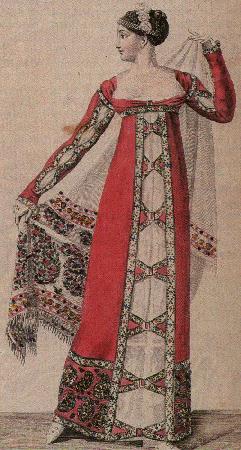
imagen: Locutus.ucr.edu

Fueguia 1833 Caoba – Patchouli cocktail

Patchouli (pogostemon patchouli) became popular in Europe at the beginning of the XIX century. It was then used to scent the Indian shawls which were in vogue at the time. The patchouli leaves would keep moths at bay and lend their aroma to the shawls  while they were transported from India to Europe. According to Robert Tisserand in his excellent The Art of  Aromatherapy,  people wouldn’t buy the shawls if they were not scented with patchouli. Even when the shawls started being woven in Britain, the custom of scenting them in this manner remained. The shawls eventually went out of fashion but patchouli stayed.

In Caoba, Fueguia 1833 intends to replicate the instant when an exotic shawl is taken from its precious wooden box and the aroma of patchouli wafts into the air. The blend contains a very high percentage (above 35%) of several different types of patchouli; some of them have been rectified to remove the dirty-smelling bits. Caoba results in an elegant and streamlined mélange, far from the usual hippy-ish connotations of patchouli.  Organic Cacao (absolute) and Bulgarian rose (both otto and absolute) give plushness and sweetness to the cocktail.  Rose absolute is a raw material I have a weakness for; I had the chance to smell this particular one at the Fueguia 1833 laboratory and found it heavenly: rich, deep, with honeyed nuances. Caoba gets softer and sweeter in the drydown with the presence of sandalwood, but it is still patchouli who dominates the scene.

I read in my Tisserand book -and I wouldn’t want to leave it out- that patchouli, as well as rose and sandalwood are reputed to have aphrodisiac properties. Maybe because of this Caoba would make, too, a fabulous candle.

Caro

Origin of sample: sample courtesy of Fueguia 1833

Parfumerie Generale L’Eau de Circé – Poción mágica

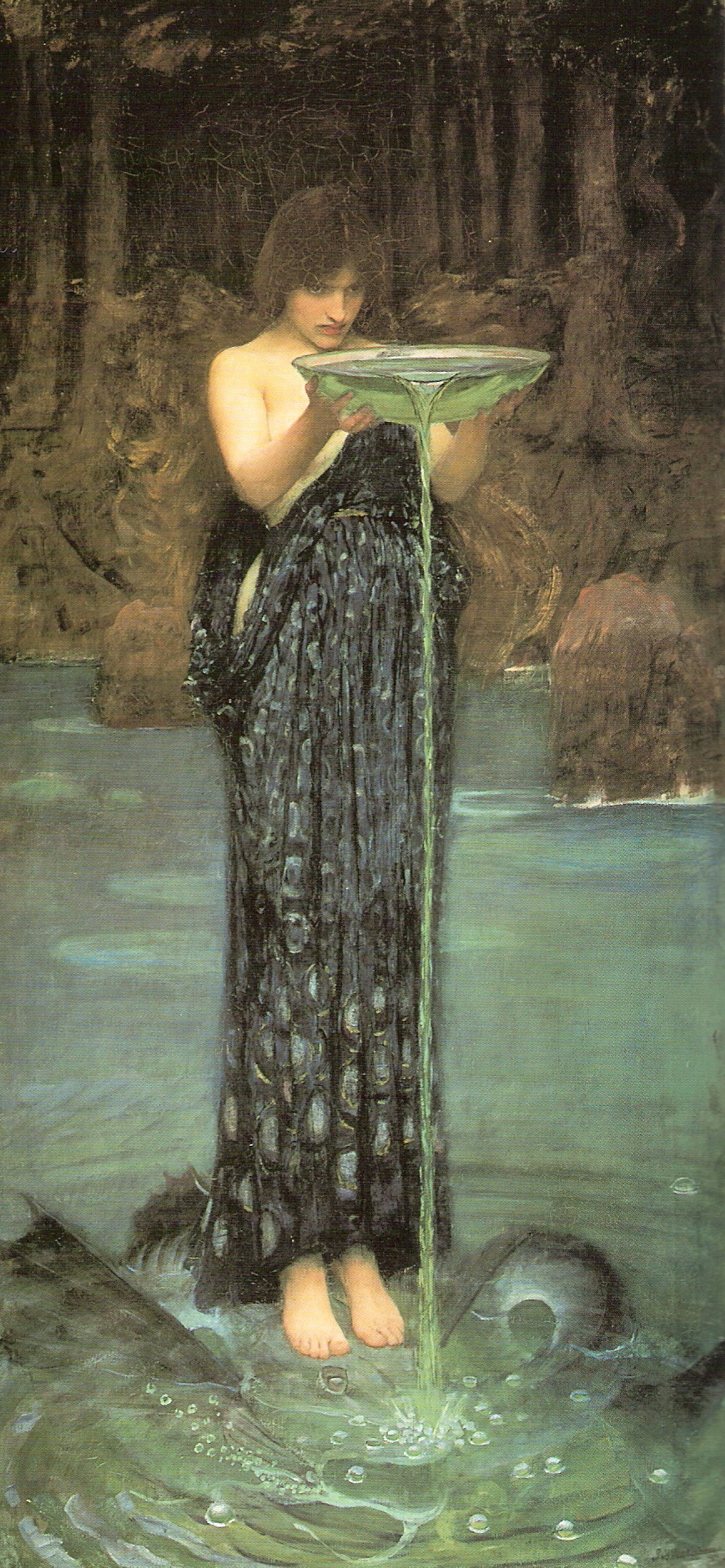
imagen: En.wikipedia.org artista: John William Waterhouse “Circe invidiosa”

Parfumerie Generale, una colección nacida en 2002, toma las iniciales de su creador, Pierre Guillaume, y juguetea con ellas. No puedo menos que  coincidir con las afirmaciones de esta casa de que “la búsqueda de la unicidad no debería dar como resultado fragancias excesivamente intelectuales que son imposibles de portar” y que “la contemporaneidad y la provocación no necesariamente van de la mano”. Parfumerie Generale practica lo que predica: las creaciones del Sr. Guillaume son altamente originales, elegantes y eminentemente fáciles de llevar.

Circe, uno de los tantos personajes que Odiseo encontró en su viaje, era una bella hechicera que convertía a los hombres en animales y que metamorfoseó a los compañeros de Odiseo en cerdos. L’Eau de Circé fue creada en 2004. Este aireado floral frutal oriental, como una poción mágica, lentamente me hizo caer bajo su embrujo.

 Una dulce mandarina se entremezcla con el hipnótico aroma de la orquídea que, a su vez, se realza y torna más arrebatador  con la adición de notas de jazmín ylang-ylang. El durazno, magistralmente ejecutado, brinda su madurez jugosa sin tintes sintéticos o baratos. La suavidad de la miel,  contrapuesta a la áspera carraspera del patchouli, presta una tensión que añade carácter y fuerza a una mezcla ya bella.

Notas que tradicionalmente se inclinan hacia la pesadez aquí se presentan ligérísimas y etéreas. A pesar de su calidez y dulzor, L’Eau de Circé jamás pierde transparencia. Es increíblemente delicada y, aun así, tan  embriagadora  como el brebaje original de Circe.

Origen de la muestra: muestra cortesía de Perfumería Nadia, Madrid

foto: Parfumerie-generale.com

Parfumerie Generale L’Eau de Circé – Magic potion

Parfumerie Generale, a collection born in 2002, takes the initials of his creator, Pierre Guillaume, and humorously plays with them. I cannot help but agree with the house’s statements that “the quest for uniqueness should not result in overly intellectual fragrances that are impossible to wear” and that “contemporariness and provocation do not necessarily go hand in hand”. Parfumerie Generale does as it preaches: Mr. Guillaume‘s creations are highly original, elegant and eminently wearable.

Circe, one of the many characters Odysseus encountered on his journey, was a beautiful sorceress that would turn men into animals and metamorphosed  Odysseus‘ companions into pigs. L’Eau de Circé was created in 2004. This airy fruity floral oriental, much like a magic potion, slowly made me fall under its spell.

A sweet note of tangerine mingles with the hypnotic aroma of orchid which, in turn, is enhanced and turned headier by jasmine and ylang-ylang. Peach, masterfully executed, gives its juicy ripeness without ever smelling synthetic or cheap. The smoothness of honey, counterposed against the dry raspiness of patchouli lends a tension that adds character and strength to an already beautiful blend.

Notes traditionally prone to heaviness are here rendered weightless and ethereal. Despite its warmth and sweetness, L’Eau de Circé never loses transparence. This is incredibly delicate but not weak at all and as inebriating as Circe‘s original brew.

Caro

Origin of sample: Sample courtesy of Perfumería Nadia, Madrid

Grossmith Phul-Nana – El aroma de la discreción

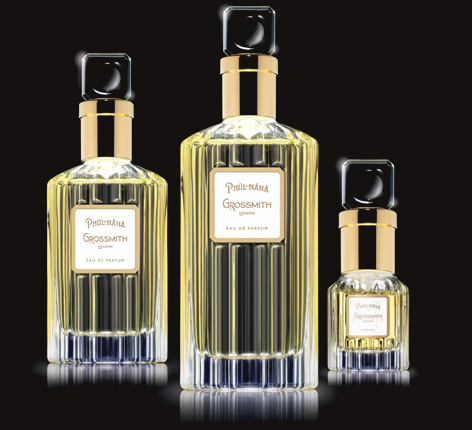
imagen: gentileza Grossmith

Siendo nostálgica por el gusto de la nostalgia misma, es natural que cuente a  Grossmith entre  mis casas favoritas. Ya hablé un poco sobre su historia  en mis reseñas de Betrothal y Hasu-no-Hana

La fragancia que estoy probando hoy, Phul-Nana (“linda flor” en Hindi) fue compuesta originalmente en 1891 y, durante años, se consideró la creación insignia de la marca. Fue promocionada como “un bouquet de las flores más selectas de la India” y, luego, como “el perfume más romántico del mundo”.  Pero Phul-Nana no es floral -no al menos en un sentido estricto- ni tampoco  especialmente romántico. Es, en cambio, discreto, apropiado y tradicional. Me recuerda a la mezcla (casera y secreta) con que mi impecable abuelo solía perfumar sus pañuelos.

La salida chispea con el amargor hesperidado de la naranja y los matices igualmente hesperidados, aunque más delicados, de la bergamota. La presencia limpia y jabonosa del neroli  preside el bouquet, permeando la mezcla. La tuberosa, prominente en la cultura y mitología de India, presta  su redondez, pero no transmite un carácter particularmente femenino.  Estoy segura de que hay algo de rosa allí también (era, eso seguro, parte de la mezcla  que usaba mi abuelo). Vanilla, opopanax, sándalo y tonka ayudan a lograr un fondo cálido y sensual. Unos años después de la creación de Phul-Nana, esta base se popularizaría junto con la creciente tendencia de los perfumes orientales. 

Phul-Nana es ligero y fresco en un sentido tradicional. Huele familiar y a la vez fascinante con sus facetas florales-orientales-fougères. Imagino un caballero (o dama, claro) elegante y conservador luciéndolo con aplomo. La pulcritud,  buenos modales y discreción no pasan de moda.

Origen de la muestra: Gentileza de Perfumerías Nadia, Madrid

foto: Grossmithlondon.com

Grossmith Phul-Nana – The scent of discretion

Being nostalgic for the sake of nostalgia itself, it was expected that Grossmith  would become one of my favorite houses. I have already talked a bit about their history in my reviews of Betrothal and Hasu-no-Hana . 

The fragrance I am sampling today, Phul-Nana (“lovely flower” in Hindi), originally composed in 1891, was for years  Grossmith‘s most celebrated creation. It was touted as “a bouquet of India‘s choicest flowers” and, later, as “the world’s most romantic perfume”. But Phul-Nana is neither floral -not in a strict sense at least- nor especially romantic. It is instead discreet, tasteful and traditional. It reminds me of the (homemade and secret) blend my impeccable  grandfather used to scent his handkerchiefs with.

The opening sparkles with bitter hesperidic notes of orange and  equally hesperidic but more delicate nuances of bergamot. The clean and soapy presence of neroli  presides the bouquet, pervading the blend. Tuberose, prominent in Indian culture and mythology, lends its roundness, but doesn’t convey a particularly feminine character. I am sure there is some rose in there too (it was, for sure, in my grandfather’s blend). Vanilla, opopanax, sandalwood and tonka contribute towards a warm  and sensual drydown. A few years after the creation of Phul-Nana this drydown would become popular with the increasing trend of oriental perfumes. 

Phul-Nana is light and fresh in an old-school sense. It smells familiar yet fascinating with its floral-oriental-fougère aspects. I can picture an elegant and conservative gentleman (or lady, of course) wearing this with aplomb. Cleanliness, good manners and discretion are always in fashion.

Origin of sample: Courtesy of Perfumerías Nadia, Madrid

Una receta perfumada

foto: Etsy.com/shop/EmmaDear

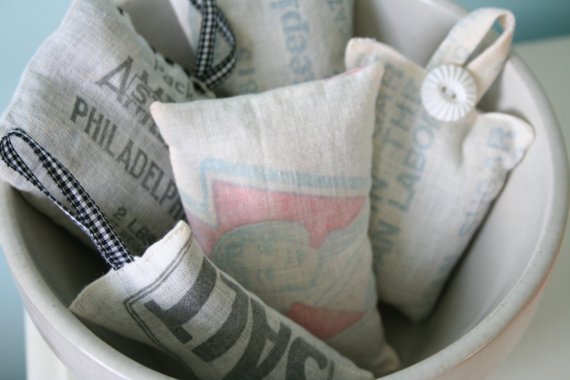
Hojeando un viejo libro de 1922, “Les Recettes de la Maison”, Masson & Cie. Editeurs, encontramos una receta de Parfum a la rose pour sachets, ideal para rellenar bolsitas de tela que luego perfumarán cajones o placards. La misma mezcla puede usarse, también, a modo de potpourri.

El procedimiento requiere combinar 200g de raíz de iris pulverizada (se usaba como fijador para las fragancias), 600 g de hojas de rosas, 100g de madera de sándalo y otro tanto de patchouli. Mezclar bien y finalmente agregar 3 g de esencia de geranio y 2 g de esencia de rosas.

¡Tengan un fragante fin de semana!

Virginia y Caro

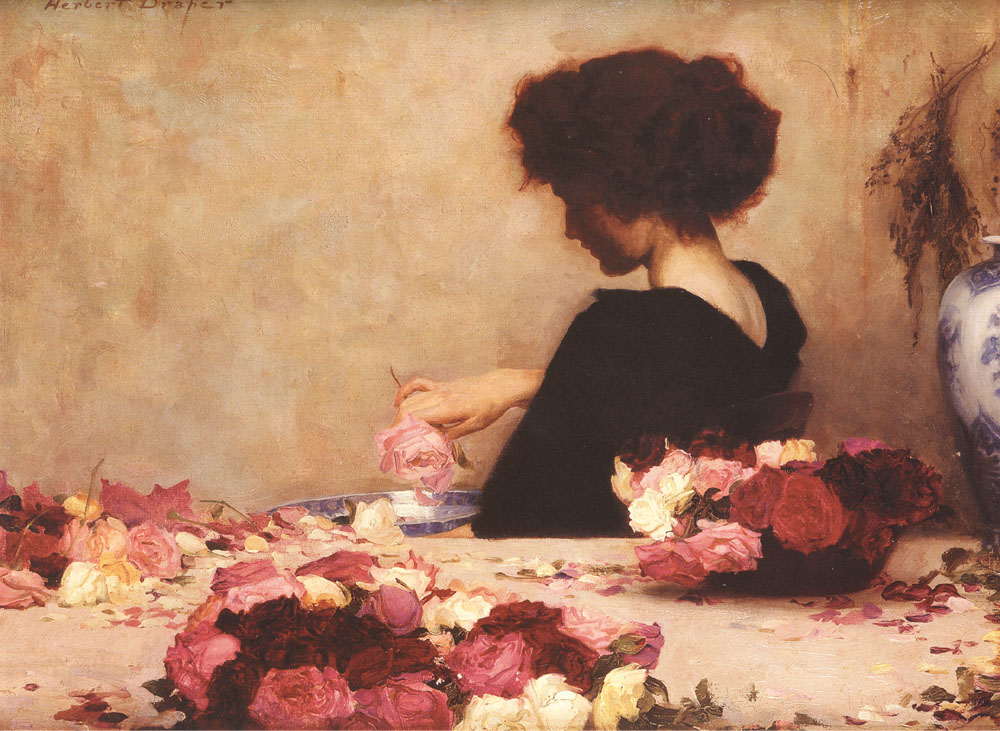
imagen: En.wikipedia.org    artista: Herbert James Draper    “Pot Pourri”, 1897

A fragrant recipe

Browsing an old book from 1922, “Les Recettes de la Maison”, Masson & Cie. Editeurs, we found a recipe for Parfum a la rose pour sachets, ideal for filling little fabric pouches that will later give their scent to drawers or cupboards. The mix can also be used as potpourri.

The procedure requires combining 200g powdered iris root (it was used as a fixative for fragrances), 600 g rose leaves, 100g sandalwood and 100g patchouli. Mix well and, finally, add 3 g geranium essence and 2 g rose essence.

Have a fragrant weekend!

Virginia & Caro

“Top 10″ – Deliciosa vainilla

foto: Laviadelgusto.it

Los Aztecas empleaban la vainilla (vanilla planifolia) para dar sabor al chocolate. Más tarde, los Españoles la llevaron a Europa. Allí fue utilizada como afrodisíaco, como antídoto y para tratar la histeria. Para el siglo XIX, ya era apreciada como ingrediente en alta perfumería.

Se dice que tiene propiedades calmantes, afrodisíacas y antidepresivas. En perfumes -aunque agradable- puede con facilidad tornarse monótona o demasiado dulce. Nos gusta tropical, combinada con ylang-ylang;  misteriosa, mezclada con resinas para un efecto ahumado o gourmand, acompañada por almendras o limón.

Hoy compartimos algunos de nuestros perfumes preferidos con notas dominantes de vainilla:

Rochas Tocade El genio de Maurice Roucel brilla en esta insolente fragancia de rosa y vainilla. El fondo es íntimo y atalcado.

Caron Pour Un Homme Lavanda y vainilla se equilibran mutuamente en este clásico masculino y casi terapéutico. Amargo y dulce a un tiempo.

-Hermes Hermessence Vanille Galante Imaginen la más ligera espuma floral a la vainilla preparada en un restaurant de cocina molecular. Etérea, florece maravillosamente sobre la piel.

-Guerlain Aqua Allegoria Ylang & Vanille Dos poderosos afrodisíacos  (vainilla e ylang-ylang) se fusionan en este dulce  (y lamentablemente discontinuado) eau de toilette, evocador de los mares del Sur.

Fragonard Fleur de Vanille Un gourmand delicado y exótico que sublima la vainilla con cacao, almendras, ylang-ylang y benjuí. Difícil de resistir, incluso por quienes no son amantes de la vainilla.

-Jean Paul Gaultier Gaultier2 Una creación unisex del nariz Francis Kurkdjian, sexy y muy reconfortante. Ámbar, vainilla y almizcle son los jugadores clave.

-Roger & Gallet Vanille Un eau douce limpio y refrescante donde la vainilla se ve agradablemente balanceada por bergamota, mandarina y pomelo.

-Serge Lutens Un Bois Vanille La profundidad y riqueza que esperaríamos de Lutens están definitivamente presentes en esta vanilla para adultos. Ahumada, oscura y compleja.

Anné Pliska Anné Pliska  Luego de una salida chispeante, esta fragancia de culto muestra su corazón de naranja, vainilla, ambar y almizcle.

-L’Artisan Parfumeur Havana Vanille Ahumado y etéreo a la vez como sólo Duchaufour lo logra, este dulce eau de parfum aúna vainilla, ron, clavo de olor, tabaco y cuero.

-Annick Goutal Vanille Exquise Un suave y sofisticado eau de toilette donde una vainilla cremosa y no gourmand se engalana con detalles de almendra y maderas.

Prácticamente nos desmayamos de placer al leer la review de nuestra querida Olfactoria acerca de  Mona di Orio Vanille (que  aún no hemos podido probar).

Es posible que también quieran echar un vistazo al post sobre la vainilla  publicado en el maravilloso blog Olibanum.

Virginia y Caro

foto: Sdspezie.com

Top 10 – Delicious vanilla

The Aztecs used vanilla (vanilla planifolia) to give flavor to chocolate. Later, the Spanish brought it to Europe. There it was used as an afrodisiac, as an antidote and to treat hysteria. By the 19th century, it was already appreciated as an ingredient for fine perfumery.

It is said to have calming, antidepressant and afrodisiac properties. In fragrances -although pleasant- it can easily become boring or too sweet. We like it tropical, paired with ylang-ylang;  mysterious, mixed with resins for a smoky effect or gourmand, combined with almonds or lemon.

Today we share some of our vanilla-dominant favorite fragrances:

Rochas Tocade Maurice Roucel’s genius shines in this fun and insolent rose-vanilla fragrance. The drydown is powdery and intimate.

Caron Pour Un Homme Lavender and vanilla balance each other in this simple and almost therapeutic masculine classic. Bitter and sweet at a time.

-Hermes Hermessence Vanille Galante Imagine the lightest floral vanilla foam prepared in a molecular cuisine restaurant. Ethereal, this blooms wonderfully on skin.

-Guerlain Aqua Allegoria Ylang & Vanille Two powerful afrodisiacs (vanilla and ylang-ylang) merge in this sweet (and unfortunately discontinued) eau de toilette, evocative of the South Seas.

Fragonard Fleur de Vanille A delicate and exotic gourmand that enhances vanilla with cacao, almond, ylang-ylang and benzoin notes. Even non-vanilla lovers  have a hard time trying to resist it.

-Jean Paul Gaultier Gaultier2 A sexy and very comforting unisex creation by nose Francis Kurkdjian. Amber, vanilla and musk are the main players.

-Roger & Gallet Vanille A clean and refreshing eau douce in which the vanilla is nicely balanced by bergamot, mandarin and grapefruit.

-Serge Lutens Un Bois Vanille The depth and richness we would expect from Lutens are definitely present in this vanilla for grown-ups. Smoky, dark and complex.

Anné Pliska Anné Pliska  After a bright opening, this cult fragrance shows its sensual heart of orange, vanilla, amber and musk.

-L’Artisan Parfumeur Havana Vanille Smoky and ethereal as only Duchaufour can master, this sweet eau de parfum blends vanilla, rum, cloves, tobacco and leather.

-Annick Goutal Vanille Exquise A soft, sophisticated eau de toilette with creamy (non gourmand) vanilla and hints of almond and wood.

We practically swooned after reading our dear Olfactoria‘s review on Mona di Orio Vanille (which we haven’t tried yet).

You might also want to take a peek at the post about vanilla on the wonderful Spanish blog Olibanum.

Virginia & Caro