Category Archives: Reseñas – Reviews

Vero Profumo Mito (voile d’extrait) – Curvas peligrosas

imagen: Commons.wikimedia.org artista: Willem van Aelst  "Naturaleza muerta con ratón", 1674

imagen: Commons.wikimedia.org    artista: Willem van Aelst    “Naturaleza muerta con ratón”, 1674

En 2013, la perfumista suiza Vero Kern lanzó una nueva concentración para sus cuatro fragancias (Kiki, Rubj, Onda y Mito): voile d’extrait, equivalente en potencia a un eau de parfum. La fórmula es en este caso  similar a la de sus extractos.  Debe notarse que las eaux de parfum de la línea Vero Profumo consisten en una fórmula diferente y la mayoría de ellas presenta una nota característica de  fruta de la pasión (maracuyá).

Los voiles d’extrait resultan ideales para quienes encuentran engorroso el ritual de aplicar su perfume con la tapita del frasco. Me complace reportar que la concentración más ligera no va en detrimento de su sustancialidad: los voiles se sienten menos compactos pero aun así potentes. Debido a esta menor densidad resulta mucho más fácil apreciar las distintas notas en ellos que en los extraits.

Mito voile d’extrait vuelve a trabajar el motivo de los jardines de la Villa d’Este y mantiene el burbujeo del eau de parfum original. Luego de la salida -alimonada, jugosa- se nutre de una abundante dosis de tuberosa y durazno (aquí pueden apreciarse con facilidad los aspectos gomosos de un absoluto de tuberosa excepcional). El verdor musgoso ofrece un fondo de terciopelo oscuro para las flores y frutas. En consecuencia, aunque  tan umbrío como su predecesor, se vuelve mucho más carnoso, curvilíneo. Si Mito EdP podía apagar la sed con su amargor efervescente, Mito VdE, en cambio, abre el apetito e invita a morder. La fragancia hace un guiño a los magníficos chipres de antaño a través de la cualidad chispeante de Cristalle, la madurez de Femme (vintage) y la oscuridad de Mitsouko, pero tiene su propia identidad. La sensación atemporal y el erotismo presentes en todas las creaciones de la Srta. Kern brillan en esta joyita.

Caro

Origen de la muestra: Muestra gentileza de Campomarzio 70

Pueden leer nuestra reseña de Mito eau de parfum aquí

foto: Bloomperfume.co.uk

foto: Bloomperfume.co.uk

Vero Profumo Mito (voile d’extrait) –  Dangerous curves

In 2013 Swiss nose Vero Kern launched a new concentration for her four fragrances (Kiki, Rubj, Onda and Mito): voile d’extrait, equivalent in strength to eau de parfum. The formula, in this case, is similar to that of her extraits.  One must note that the eaux de parfum in the Vero Profumo range consist of a different formula  and most of them boast a characteristic  passionfruit note.

The voiles d’extrait are  ideal for those who are not too fond of the ritual of dabbing. I am happy to report that the lighter concentration doesn’t detract from their substantiality: the voiles feel less compact though still potent. Due to this lesser density, it becomes much easier to appreciate the different notes in them than in the extraits.

Mito voile d’extrait reworks the motif of the Villa d’Este gardens and retains the bubbliness of the original eau de parfum. After the opening –  lemony, juicy it is fed a generous dose of tuberose and peach (the rubbery aspects of an outstanding tuberose absolute can be easily appreciated here). The mossy greenness provides a dark velvety backdrop for the fruits and flowers. In consequence, and although it remains as shady as its predecessor, it becomes much fleshier, curvier. If Mito EdP could quench one’s thirst with its effervescent bitterness, Mito VdE  whets one’s appetite and invites to take a bite. The fragrance nods at the magnificent chypres of yore through the sparkling quality of Cristalle, the ripeness of (vintage) Femme and the darkness of Mitsouko, but it has its own identity. The timeless feel and eroticism present in all of Ms. Kern‘s creations shine in this jewel of a fragrance.

Caro

Origin of sample: Sample courtesy of Campomarzio 70

You may read our thoughts on Mito eau de parfum here

imagen: Commons.wikimedia.org artista: Willem van Aelst  "Naturaleza muerta con canasto de frutos en un estante de mármol", 1650

imagen: Commons.wikimedia.org       artista: Willem van Aelst      “Naturaleza muerta con canasto de frutos en un estante de mármol”, 1650

Amouage Ubar – Joie de vivre

imagen: Vintageadbrowser.com

imagen: Vintageadbrowser.com

Existen unos pocos -muy pocos- perfumes que siempre logran inundarme de alegría. De hecho sonreí ante la sola idea de reseñar Ubar, ya que eso me daría la excusa perfecta para marinarme en él durante el transcurso de varios días.

Lanzado originalmente por Amouage en 1995, fue discontinuado y relanzado en 2009 bajo una fórmula diferente. La fragancia lleva el nombre de una legendaria ciudad árabe perdida bajo la arena. En modo alguno exótico, Ubar (en su versión actual) huele muy muy clásico y muy muy francés. La alusión a las arenas del desierto es, sin embargo, evidente en la botella, cuya pintura dorada se desvanece hacia la parte superior.

Ubar es una explosión floral. La salida centellea con mandarina y con el olor característico -frutado, alimonado- de la Litsea Cubeba (May Chang). La impresión inicial es crujiente, ligeramente verde, casi punzante. Una nota vívida y esplendente de rosa damascena pronto endulza el verdor, pero la verdadera estrella de la composición es el lirio del valle. Su aparición parece fundir juntas todas las demás flores de este bouquet blanco (fresias, jazmines, azahares, tuberosa) volviéndolas más cremosas. El lirio del valle pierde su consabida condición virginal y se deja corromper por una lasciva civeta. El genio de Ubar reside en este aspecto animal del lirio del valle y en el hecho de que la mezcla conserva su frescura en medio de la opulencia descarada.

La mélange resultante es el equivalente olfativo a tomar una (o dos, o tres) copas de champagne: burbujeante, efervescente, alegre. Ubar demuestra proyección y longevidad excelentes. Se siente embriagador, festivo y  -oh, claro que sí- tiene segundas intenciones.

Caro

Origin of sample: bottle purchased at MiN New York

foto: Amouage.com

foto: Amouage.com

Amouage Ubar – Joie de vivre

There are a few -very few-  fragrances that never fail to suffuse me with joy. In fact, I beamed at the mere idea of reviewing Ubar, as that would give me the perfect excuse to marinate in it over the course of some days.

Originally launched by Amouage in 1995, it became discontinued and relaunched 2009 under a different formula. The fragrance bears the name of a legendary Arabian city which was lost under the sands. Not exotic by any means, current Ubar smells very very classic and very very French. The allusion to the sands of the desert is evident, however, on the  bottle whose pale gold paint fades toward the top.

Ubar is a floral explosion. The opening sparkles with tangerine and the characteristic smell -fruity, lemony- of Litsea Cubeba (May Chang). The initial impression is crisp, slightly green, almost sharp. A splendid, nitid  rosa damascena note soon sweetens the greenness, but the true star of the composition is lily of the valley. Its appearance seems to meld together all the other flowers in this white bouquet (freesia, jasmine, orange blossom)  rendering them creamier. The lily of the valley loses its usual virginal  condition  as it becomes corrupted by a lascivious civet; the genius of Ubar resides in this animalic lily of the valley and in the fact that the blend retains its freshness amidst the unabashed opulence.

The resulting mélange is the olfactory equivalent to drinking  one (or two, or three) glasses of champagne: bubbly, effervescent, cheerful. Ubar boasts excellent projection and longevity. It feels inebriating, festive and -oh, yes- it does have second intentions.

Caro

Origin of sample: bottle purchased at MiN New York

foto: Jewelsdujour.com

foto: Jewelsdujour.com

Lorenzo Villoresi Wild Lavender – Tiempos pasados

foto: Saint-antonin-noble-val.com

foto: Saint-antonin-noble-val.com

Wild Lavender fue creado en 1996 por el perfumista florentino Lorenzo Villoresi. Una fragancia clásica, inspirada por las eaux de toilette inglesas de los 1800s, que huele sencilla y sin pretensiones. Es esta una lavanda directa, no velada por la vainilla; lejos del clásico Caron pour un Homme y en las antípodas de mi bienamado, el frívolo Kiki.

Limpia y masculina en una manera nostálgica,Wild Lavender nunca deja de recordarme a mi abuelo y a mi padre, quienes coronaban el diario ritual de afeitado con una dosis generosa de eau de cologne a la lavanda (el Abuelo usaba una destilada en su Bulgaria natal, Papá prefería Atkinson’s). Siempre percibí el aroma de la lavanda como especialmente reconfortante y honesto; en parte por las asociaciones con estos caballeros, en parte por las virtudes de la planta (quizás su aceite esencial sea el más noble de todos: antibacteriano, antimicótico, analgésico, antiséptico, sedante, anti-inflammatorio, diurético y una larga lista de etcéteras).

Villoresi pinta su retrato de la lavanda de una manera hiperrealista, en la que cada hierba y cada especia juegan un rol clave en la reconstrucción del aroma de una brizna. La salida vibra con una nítida nota de limón mientras el verdor del gálbano evoca la frescura de los tallos. En el corazón, la lavanda aparece festoneada con los matices complementarios de la salvia esclarea y el romero. Revitalizante al extremo, Wild Lavender exalta los aspectos verdes, herbáceos y especiados de la planta. Un tenue dulzor, brindado por el haba tonka y el  almizcle, aflora apenas en el fondo.

Aunque no se destaca por su longevidad, el efecto general es tradicional y hermoso.

Caro

Origen de la muestra: Muestra gentileza de Lorenzo Villoresi

foto: Lorenzovilloresi.it

foto: Lorenzovilloresi.it

Lorenzo Villoresi Wild Lavender – Times gone by

Wild Lavender was created in 1996 by Florentine perfumer Lorenzo Villoresi. A classic fragrance inspired by the English eaux de toilette of the 1800s, it smells unpretentious and uncomplicated. This is a straighforward lavender; not mellowed by vanilla, far from the classic Caron pour un Homme and at the antipodes of my beloved, the frivolous Kiki.

Clean and masculine in a nostalgic way, Wild Lavender never fails to remind me of  my grandfather and father, both of whom would finish their daily shaving ritual with a generous dose of lavender eau de cologne (Grandpa preferred one distilled in his homeland, Bulgaria, while Dad wore Atkinson’s). The scent of lavender has always felt especially comforting and honest to me; partly because of the associations with these gentlemen, partly because of the virtues of the plant (its essential oil is perhaps the noblest of them all: antibacterial, antifungal, analgesic, antiseptic, sedative, anti-inflammatory, diuretic and a long list of et cetera).

Villoresi paints his rendition of lavender in a hyperrealistic manner in which every herb, every spice in the composition plays a role in the reconstruction of the scent of a fresh sprig. The opening  vibrates with a nitid lemon note while the greenness of galbanum evokes the freshness of the stems. At the heart,  lavender appears edged with the complementary nunaces of clary sage and rosemary. Vivifying to the extreme, Wild Lavender exalts the  green, herbal and spicy aspects of the plant. A slight sweetness, given by tonka and musk, only appears timidly in the drydown.

Although longevity is not exactly outstanding, the overall effect is conservative and beautiful.

Caro

Origin of sample: Sample courtesy of Lorenzo Villoresi

Von Eusersdorff Classic Orange – Cítrico paradojal

foto: En.wikipedia.org  fotógrafa: Brianna Lehman

foto: En.wikipedia.org    fotógrafa: Brianna Lehman

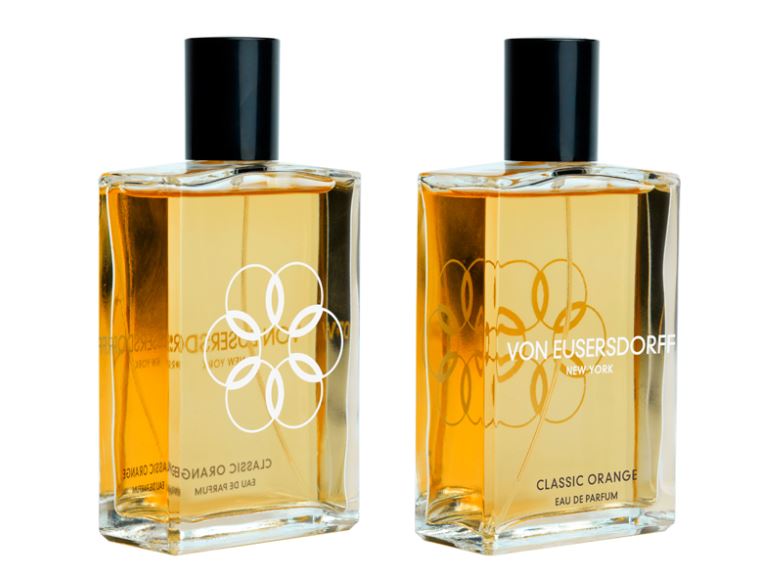
Classic Orange evita los clichés de la mayoría de los perfumes cítricos. No se siente particularmente fresco, sino que refresca con una calidez que recuerda a la de la piel entibiada por el sol.

Estas son noticias excelentes, al menos para mí: una de mis tareas más difíciles en verano es encontrar un aroma que se adecue a la estación, pero que no se sienta demasiado frío.  Por más vitalizantes que sean, excluyo limones y menta y gravito hacia el resplandor dorado de mandarinas o naranjas.

Classic Orange, presentado en 2013, no es hesperidado y prefiere jugar con el fruto entero en lugar de limitarse a la corteza. La pulpa fresca y el jugo de la naranja sanguina se combinan con los tonos verdes, sutilmente florales, del petitgrain. Engañosamente simple al comienzo, muta lentamente en una gamuza suave -acariciadora, casi táctilcon gradaciones más oscuras de . Los matices de damasco, tan característicos del osmanto, brindan dulzura y una textura aterciopelada. Frutas florales y flores afrutadas; la paradoja se  intensifica en una evolución siempre fluida, sin estridencias. El fruto resultante es sensual y cálido, con un fondo almizclado.

La proyección de Classic Orange es moderada y la longevidad, excelente para un cítrico. El resultado general logra animar el espíritu con refinamiento.

Incluso su servidora, amante confesa de perfumes enormes y complejos, se ha rendido ante el encanto de esta joyita naranja.

Caro

Origen de la muestra: muestra cortesía de Von Eusersdorff

foto: Voneusersdorff.com

foto: Voneusersdorff.com

Von Eusersdorff Classic Orange – Paradoxical citrus

Classic Orange avoids the clichés of most citrusy fragrances. It doesn’t feel particularly fresh; instead, it refreshes with a warmth akin to that of sunkissed skin.

This is wonderful news, at least for me: one of my most difficult tasks in Summer is finding a scent that is season-appropriate yet doesn’t feel too chilly. As vivifying as they might be, I rule out lemons and mint and gravitate toward the golden glow of  tangerines and oranges instead.

Classic Orange, launched in 2013, is not hesperidic and prefers to play with the whole fruit rather than limit itself to the rind. The fresh pulp and juice of blood oranges is paired with the verdant, subtly floral tonalities of petitgrain. Deceivingly simple at the beginning, it slowly morphs into soft suede -caressing, almost tactile- with darker hints of tea. The characteristic apricot-like nuances of osmanthus add sweetness and a velvety texture. Floral fruits and fruity flowers; the paradox intensifies along an evolution which is always smooth, without stridencies. The resulting fruit is warm and sensuous, with a musky drydown.

Projection in Classic Orange is moderate and longevity excellent for a citrus fragrance. The overall result is uplifting and refined. Even yours truly, self-confessed lover of big perfumey fragrances, has fallen prey to the charm of this little orange gem.

Origin of sample: Sample courtesy of Von Eusersdorff

foto: Otg.de

foto: Otg.de

Von Eusersdorff Classic Patchouli – Patchouli supremo

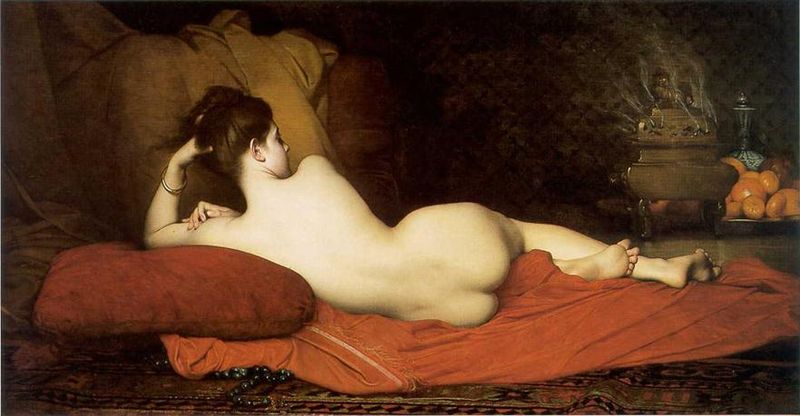
imagen: En.wikipedia.org  artista: Jules Joseph Lefebvre    "Odalisca", 1874

imagen: En.wikipedia.org   artista: Jules Joseph Lefebvre   “Odalisca”, 1874

Tan pronto como recibimos nuestras muestras de Von Eusersdorff, cada una de nosotras –Virginia en California, Caro en Buenos Aires– buscamos primero el mismo perfume: Classic Patchouli. Aunque no somos adoratrices del patchouli, sabíamos que Classic Patchouli es la fragancia insignia de la marca y queríamos comprobar si estaba a la altura del runrún.

El patchouli (pogostemon patchouli) se popularizó en Europa a comienzos del siglo XIX ya que se usaba para perfumar los chales indios que estaban tan de moda en ese entonces. Las hojas de patchouli mantenían alejadas a las polillas y prestaban su aroma a los chales mientras éstos viajaban de India a Europa. El aceite esencial de patchouli es uno de los pocos que mejora con el paso del tiempo; su olor característico es dulce, terroso, almizclado y mohoso.

Las dos pudimos percibir los efluvios de Classic Patchouli al abrir la caja, mientras la botellita estaba aún cerrada. Este es un patchouli que invita a inhalar profundamente, una y otra vez. Su belleza es clásica y depurada y el efecto general, narcótico y adictivo.

En la salida, la bergamota parece explotar mientras prepara el camino para la nota de patchouli; por un breve instante una sutil nube alcanforada evoca la espesura de viejos bosques. Luego, una textura crocante, como hojas secas hechas de chocolate amargo, emerge de la tonka, deliciosamente cumarínica (que también brinda su hermosa cualidad atalcada), realzando la aspereza del patchouli. Durante unos minutos, la terrosidad y el bosque están por todas partes; son la antecámara de la magia cremosa del sándalo. La sensación general es tersa, avainillada, de textura casi mantecosa. La vainilla nunca sofoca y el  sándalo parece actuar como un puente, suavizando la transición de patchouli a vanilla. 

El resultado es muy voluptuoso y un poco exótico. Caro dice que sólo quiere hablar en Italiano  cuando usa Classic Patchouli ya que ningún otro idioma es lo suficientemente sensual para hacerle justicia.

Nos encanta Classic Patchouli en nosotras, pero creemos que en un hombre -¡oh,sí!- sería el equilibrio perfecto entre león rugiente y gatito que ronronea.

Caro y Virginia

Origen de la muestra: Muestra gentileza de Von Eusersdorff

Nota bene: Hemos hablado brevemente acerca de Von Eusersdorff en nuestra reseña de Classic Myrrh

foto: Duoparadigms.com

foto: Duoparadigms.com

Von Eusersdorff Classic Patchouli – Supreme patchouli

As soon as we received our Von Eusersdorff samples, each of us –Virginia in California, Caro in Buenos Aires– reached for the same fragrance first: Classic Patchouli. Although we are not patchouli worshippers, we knew Classic Patchouli was the brand’s flagship fragrance and we wanted to verify whether it would live up to the hype.

Patchouli (pogostemon patchouli) became popular in Europe at the beginning of the XIX century since it was used to scent the Indian shawls which were in vogue at the time. The patchouli leaves would keep moths at bay and lend their aroma to the shawls  while they were transported from India to Europe. Patchouli essential oil is one of the few that improves with age; its characteristic smell is sweet, earthy, musky and musty .

Both of us were able to sniff the emanations of Classic Patchouli as we opened the box, while the tiny bottle was still closed. This is a patchouli that makes one want to inhale deeply, once and again and again. Its beauty is classic and streamlined  and the overall effect, narcotic and addictive.

In the opening bergamot seems to explode as it paves the way for the patchouli note; for a brief moment, a subtle camphorous cloud evokes ancient woods and forests. Then, a crispy texture like dried leaves made of dark chocolate emerges from the deliciously coumarinic tonka (which also lends its beautiful powderiness), highlighting the roughness of patchouli. For a few minutes, earthiness and woods are everywhere; they are the antechamber of the creamy magic of sandalwood. The overall feel is sleek, vanillic, almost buttery in texture. The vanilla never overpowers and  sandalwood seems to act like a bridge, smoothing out the transition from patchouli to vanilla. 

The result is very voluptuous and just a bit exotic. Caro says she only wants to speak in Italian  when she wears Classic Patchouli as no other language would be sensual enough to do it justice.

We love Classic Patchouli on ourselves, but  we think on a man -¡oh, yes!- it would be the perfect balance between roaring lion and purring kitten.

Caro & Virginia

Origin of sample: sample courtesy of Von Eusersdorff

Nota bene: We have talked briefly about Von Eusersdorff on our Classic Myrrh review 

foto: Voneusersdorff.com

foto: Voneusersdorff.com