Entrevista: Daniel Josier – Nuevo clasicismo

foto: Atelierdelperfume.com

foto: Atelierdelperfume.com

Uno de mis descubrimientos más interesantes de este año fue, sin dudas, la línea del nariz español Daniel Josier. Durante una visita relámpago a Madrid pude conocer sus fragancias en Perfumería Nadia, a instancias de la encantadora Alicia. El packaging -sencillo- contiene perfumes clásicos y de belleza inusual (mi preferido es el magnífico Golden Tuberose)

Daniel fue suficientemente amable como para prestar un poco de su tiempo y  responder algunas preguntas.

¿Cómo te iniciaste en la Perfumería?
Me inicié en el mundo de la perfumería en el año 1998, en la compañía alemana de creación de perfumes Haarman & Reimer (actualmente Symrise). Allí trabajé con Jean Claude Ellena, que dirigía el Atelier Olfactif de esta compañía en Grasse, y quien fue mi jefe, maestro (llámalo como quieras) desde el año 1998 al 2004.

¿Cuánto tiempo pasó hasta que te animaste a lanzar tu propia marca?

Mi línea de perfumes salió en 2012, así que estuve 14 años trabajando para la industria hasta que lancé mis propios perfumes (sigo trabajando para la industria hoy).

¿Qué propósitos tenías en mente al lanzar tu propia línea?

La globalización de los mercados y la dimensión de la perfumería comercial hace que las grandes firmas necesiten de perfumes muy comerciales, fáciles de consumir. Cuando te diriges a un mercado de 120 países, por ejemplo, tu primera producción es de 250.000 piezas, gastas millones en publicidad, imagen etc, etc…el perfume tiene que gustar a todo el mundo sí o sí…y por tanto deben ir a productos fáciles, que saben que funcionan en el mercado y dejarse de “inventos raros”.

Por lo tanto desde el punto de vista del creador de la esencia…se convierte en un trabajo más técnico que creativo. Es por eso que muchos perfumistas salieron, salen y saldrán al mercado con sus propias líneas, alejándose de la “rutina” de la perfumería comercial y pudiendo exponer líneas perfumisticas más creativas, más intimas, más raras, para un publico más exigente, más conocedor, y más exclusivo

Esa fue la razón de lanzar la línea Daniel Josier: crear perfumes fuera de la norma del mercado, creaciones más intimas y donde importan más la calidad de la materia prima y el mimo que su desarrollo de marketing

Varios de tus perfumes llevan nombres (Cuero Toscano. Orquídea Negra) que se asemejan bastante a los de otras líneas ¿Cuál es el motivo?

Cuando una marca quiere lanzar un perfume al mercado, llama a varias casas de perfumistas que trabajan el briefing y presentan unas creaciones para esa línea solicitada, entrando en concurso entre ellas. Al final hay un perfume elegido, ganador, que será el que sale al mercado…pero hay otros perfumes que concursaron en ese proyecto y nunca salieron…es la razón por la que algunos de mis perfumes tienen nombres que recuerdan a otros del mercado.

¿Cuál crees que es el sello de tus creaciones?

El sello de mis creaciones…quizás el mimo de la materia prima…no busco una tendencia de mercado, busco el mimo de la materia prima, la selección de la calidad de materia prima es esencial. Por otro lado siempre he admirado mucho la perfumería árabe y sus materias, pero soy de cultura europea y mediterránea…la fusión de estos elementos creo que es lo que más define mis perfumes

¿Cuáles son tus fuentes de inspiración?

La inspiración puede venir por muchos motivos, nunca hay una sola fuente…la inspiración es algo que hace vibrar tu energía interior y te dejas llevar por ella. Es algo que te estimula y si tienes la mente abierta y te dejas guiar llegarás a buen puerto. Son muchas las fuentes de inspiración, desde un nuevo paisaje, a una buena película…a una mirada o una sonrisa… Pero si tuviese que decir una…lo que más me inspira en este mundo es la piel de mi mujer…ella es la mayor fuente de inspiración

¿Qué materias primas son tus preferidas?

Sobre materias primas…ufffff..hay tantas…pero si tuviese que elegir un ramillete…me encantan las flores blancas por su luminosidad, las maderas orientales como el sándalo, vetiver y oud me fascinan, las especias picantes como la pimienta de Szechuan y las materias orientales como el patchouli, ambar o almizcle

De entre todas tus creaciones ¿Cuál te hace sentir más orgulloso?

De mis creaciones…me siento orgulloso de todas y cada una , por que todas representan algo de lo que soy, de lo que siento. Quizás Ambre Tabac, me hace sentir especialmente orgulloso porque pensaba que iba a ser una especie de “incomprendido” por su “rareza” y sin embargo se ha convertido en el buque insignia de la marca. Pero, como creador, la que más orgullo me hace sentir es sin duda la próxima creación…

¿Qué novedades podemos esperar en los próximos meses?

Sobre las novedades…está a punto de salir un perfume del que espero mucho, que me encanta y creo que va a gustar mucho (eso deseo). Se llamara Bois d’Iris y estará disponible a inicios de diciembre ¡Esto es primicia!

Y luego trabajando en muchas ideas de cara a 2015…algunas se quedarán por el camino y algunas saldrán, las que más ilusión me haga mostrar…aún están por definir.

Caro

foto: Danieljosier.com

foto: Danieljosier.com

Interview: Daniel Josier – New classicism

One of my most interesting discoveries this year was, without a doubt, the line created by Spanish nose Daniel Josier. During a fleeting visit to Madrid I was able to sniff his creations at Perfumería Nadia,when the charming Alicia insisted I try them. The uncomplicated packaging contains classic perfumes of a rare beauty (my favorite is the magnificent Golden Tuberose).

Daniel was kind enough to share his precious time and answer a few questions.

What was your start in Perfumery like?
I started out in the world of Perfumery in 1998, at the German fragrance company Haarman & Reimer (now Symrise). There I worked with Jean Claude Ellena, who conducted the Atelier Olfactif of the company in Grasse. He was my boss, my mentor (call it whatever you will) from 1998 to 2004.

How much time elapsed until you decided to launch your own brand?

My fragrance line was launched in 2012, so I had been working for the industry for about 14 years until I launched my perfumes (I still work for the industry today)

What purpose did you have in mind when you launched your line?

Market globalization and the dimension of commercial perfumery makes the big firms require very commercial perfumes which are easy to sell. When you target a market of 120 countries, for instance, your first production is of approximately 250,000 bottles, you spend millions in advertising, image, etc, etc…that fragrance has to be likeable by everyone…so they must be easy products, which the companies know will do well in the market, they forget about “strange inventions”.

So, from the point of view of the creator of the essence…the task becomes much more technical than creative. That’s why many noses come out to the market with their own lines, moving away from the “routine” of commercial perfumery, becoming able to showcase fragrance lines which are more creative, more intimate, stranger perhaps, for a more demanding audience which is usually also more knowledgeable and exclusive.

That was the reason for launching the Daniel Josier line: creating fragrances outside the market norm, more intimate creations where indulgence and the quality of raw materials are more important than marketing development.

A few of your fragrances bear names (Cuero Toscano. Orquídea Negra) which are quite similar to those from other brands. Is there a reason behind this?

When a brand wants to introduce a fragrance into the market, they call several fragrance companies, which then work on a briefing and present a few creations for that line, competing among them. In the end, there’s a chosen perfume, a winner, which will be launched to the market…but there are other fragrances which were involved in that project although they were never launched…that is the reason why some of my creations bear names that might remind of others already in existence.

Which is the hallmark of your creations?

The hallmark…perhaps the indulgence of raw material…I don’t search for a market trend, I search for the indulgence of the raw material and selecting the quality of the raw materials is essential. I have always admired Arabic perfumery and its ingredients, but my heritage is European and Mediterranean…I think it’s the fusion of these elements what describes my  perfumes best.

What are your sources of inspiration?

Inspiration can appear due to a myriad reasons, there never is just one source…inspiration is something that makes your inner energy vibrate and you allow it to lead the way. It is something that stimulates you and if you are open minded and let it guide you, you will succeed. The sources of inspiration are many, from a new landscape, to a good film…to a look or a smile… But if I had to choose just one…what inspires me most in this world is my wife’s skin…she’s the greatest source of inspiration

Which are your favorite raw materials?

When it comes to raw materials…ufffff..so many…but if I had to choose just a bunch…I adore white flowers because of their luminoity, I am fascinated by oriental woods like sandalwood, vetiver and oud, hot spices like Szechuan pepper and oriental raw materials like patchouli, amber or musk

Which one of your creations makes you feel proudest?

I feel proud of each and every one because all of them represent a bit of who I am, of what I feel. Perhaps Ambre Tabac; it makes me feel especially proud because I thought it would be misunderstood because of its strangeness but it now has now become the flagship of the brand. As a creator, I always feel proudest about the next creation…

What news should we expect over the next months?

With regards to the news…we are about to launch a fragrance I expect a lot from, which I love and I think will be very much liked (I hope so). It is called Bois d’Iris and it will be available at the beginning of December (this is a scoop!)

I’m also working on many ideas for 2015…some of them will be abandoned, some of them will see the light, the ones I’ll be most illusioned about…but they still need to be defined.

Caro

Santa Maria Novella Peau d’Espagne – Humo, cuero y terciopelo


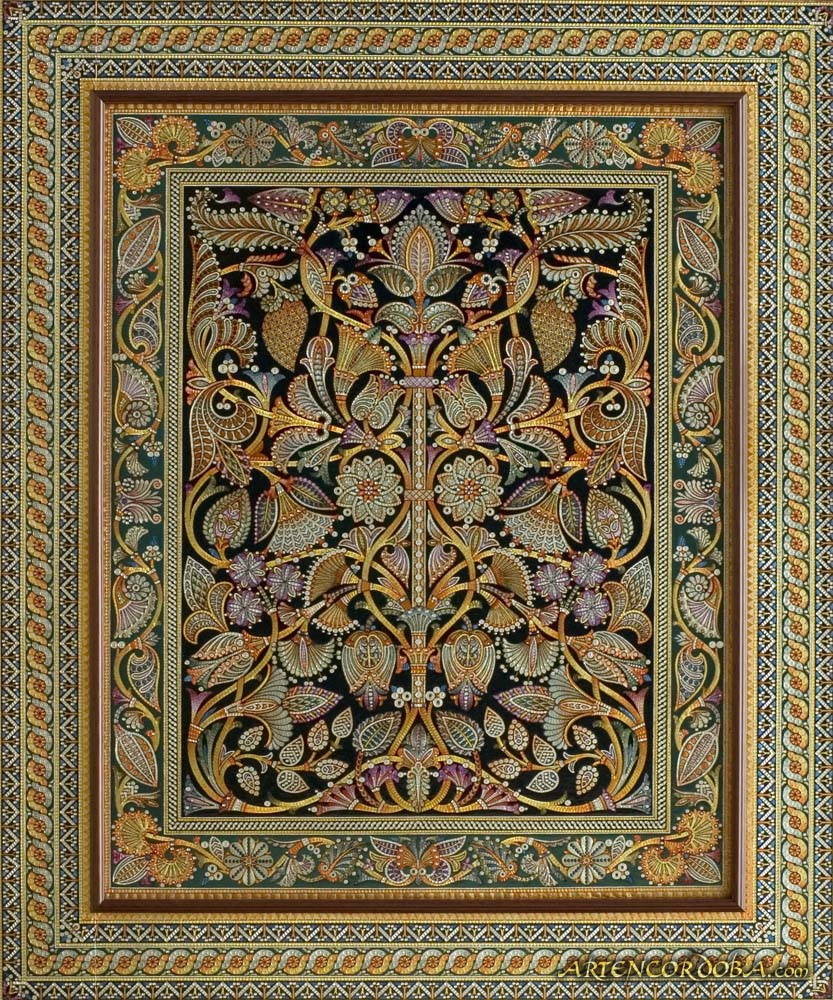
foto: Artencordoba.com  "Arbol de la vida", trabajo realizado en cuero dorado, plateado y policromado por Ramón García Romero

foto: Artencordoba.com     “Arbol de la vida” (trabajo de Ramón García Romero realizado en cuero dorado, plateado, policromado y ferreteado)

Unos años atrás escribí sobre mi visita a una de las perfumerías más bellas del mundo, Officina Profumo Farmaceutica di Santa Maria Novella, en Florencia. Preumiendo de una impresionante historia que abarca más de cuatro siglos, Santa Maria Novella ha logrado permanecer tradicional y también fresca; no sólo ha sobrevivido sino que ha prosperado.los perfumes de la casa florentina son de estilo tan clásico que algunos de ellos nos hacen viajar en el tiempo con tan sólo olerlos; Peau d’Espagne (cuero de España) es una de sus propuestas más sobresalientes.

El cuero de España difiere del ruso, el inglés y el marroquí en el procedimiento que se seguí a para curtir los cueros. En los viejos tiempos Córdoba se volvió tan famosa por sus cueros polícromos repujados que el cordobán -obtenido a partir de la piel de las cabras- debe su nombre a la ciudad. En el caso del cuero de España, los pellejos se sumergían en una mezcla de aceites fragantes, la mayoría de ellos florales, que prestaban un olor característico. Según Havelock Ellis en sus Estudios de la Psicología del Sexo (1897-1827) “consiste en gamuza sumergida en aceites de neroli, rosa, sándalo, lavanda, verbena, bergamota, clavo de olor, y canela, untado a continuación con civet y almizcle” y afirma que los perfumes de Peau d’Espagne son  “a menudo el aroma favorito de las personas sensuales”. En el siglo XIX, el cuero de España se utilizaba también para perfumar papel de escribir.

Detecto notas de abedul y nada de flores en la versión Peau d’Espagne de Santa Maria Novella, lo que quizás la alinearía más con los cueros de Rusia que de España; resulta, de todos modos, magnífica. Me recuerda fuertemente al olor de los muebles del Palacio Nacional de Sintra, en Portugal: maderas preciosas lustradas, antiquísimos cueros labrados, la vegetación agreste de los alrededores entibiada por el sol. Curtido y regio a la vez -casi a la manera de un palacio de verano- este perfume trae consigo un soplo de historia. Santa Maria Novella empezó a comercializar su Peau d’Espagne en 1901; aunque es probable que, a lo largo de más de un siglo, haya sufrido reformulaciones, si éstas han tenido lugar, ciertamente han sido mesuradas.

Luego de una apertura seca y alcanforada, Peau d’Espagne se suaviza considerablemente, su amargor se atenúa y la fragancia adquiere una textura densa, casi aterciopelada. Ahumado y resinoso, es también de carácter sombrío y reflexivo, un cuero que se adapta bien a usuarios introvertidos. Su robustez envolvente se siente como una tranquilizadora presencia animal. Exquisito en un hombre, desafiante en una mujer, Peau d’Espagne se manifiesta fuerte pero nunca estridente; el estratto triplo -la versión que tengo yo- se mantiene, de hecho, cerca de la piel y su relación precio-calidad es excelente.


Caro

Origen de la muestra: Frasco de estratto triplo comprado en Officina Profumo Farmaceutica di Santa Maria Novella, Florencia

Nota bene: Para otros perfumes del tipo “cuero de España”, por favor vean nuestras reseñas de Arquiste Fleur de Louis e Infanta en Flor y Keiko Mecheri Cuir Cordoba.

foto: Smnovella.it

foto: Smnovella.it

Santa Maria Novella Peau d’Espagne – Smoke, leather and velvet

A few years ago I wrote about my visit to one of the most beautiful fragrance shops in the world, Officina Profumo Farmaceutica di Santa Maria Novella, in Florence. Boasting an impressive history that spans more than four centuries, Santa Maria Novella has managed to remain traditional yet fresh; not only it has survived but it thrives. The fragrances from the Florentine house are so classic in style, some of them even make us travel back in time just upon sniffing; Peau d’Espagne (Spanish leather) is one of their most outstanding offerings.

Spanish leather differs from Russian, English  and Morocco leathers in the way the animal skins were tanned. In olden times Córdoba became so famous for its embossed polichrome leathers that the cordován variety -obtained from goat skins- owes its name to the city. In the case of Spanish leather, the animal hides were immersed in a mix of fragrant oils, most of them floral, that would lend a characteristic smell. According to Havelock Ellis in his Studies of the Psychology of Sex (1897-1827) “it consists of wash-leather steeped in ottos of neroli, rose, santal, lavender, verbena, bergamot, cloves, and cinnamon, subsequently smeared with civet and musk” and states Peau d’Espagne perfumes are  “often the favorite scent of sensuous persons”. In the XIXth century, Spanish leather was also used for scenting writing paper.

I get birch notes and no florals from Santa Maria Novella Peau d’Espagne, which would align it closer to Russian than Spanish leathers; it is, nonetheless, magnificent.  It strongly reminds me of the smell of the furniture at the Sintra National Palace, in Portugal: precious polished woods, embossed ancient leathers, the wild plants in the surroundings being warmed up by the sun. Rugged and regal at a time -much like a palace intended for Summertime-  this perfume brings along a whiff of history. Santa Maria Novella started selling its  Peau d’Espagne in 1901; although it is probable that, over more than a century, it has suffered from reformulations, if these have happened, they have certainly been measured.

After a dry camphoraceous opening, Peau d’Espagne softens considerably; its bitterness mellows and the fragrance acquires a dense, almost velvety texture. Smoky and resinous, it is also somber and reflective in character, a leather best suited for introverts. Its enveloping robustness feels like a reassuring animalic presence. Exquisite on a man, defiant on a woman, Peau d’Espagne manifests itself strongly but it’s never loud; the estratto triplo -the version I own- wears in fact quite close to the skin and its price-quality ratio is excellent.

Caro
Origin of sample: Flacon of estratto triplo purchased at Officina Profumo Farmaceutica di Santa Maria Novella, Florence

Nota bene: For other Spanish leather-type fragrances, please see our reviews of Arquiste Fleur de Louis and Infanta en Flor and Keiko Mecheri Cuir Cordoba.

Les Parfums de Rosine Roseberry – Primavera bucólica

foto: All-creatures.org

foto: All-creatures.org

Aunque una sea parcial a los perfumes operáticos y barrocos, gran parte del tiempo la agenda exige algo menos demandante.  De la misma manera en que la mayoría de las ocasiones no requieren de tacos altos, vestido de noche y las joyas de la abuela, los perfumes grandilocuentes a veces quedan fuera de la ecuación. Es el momento exacto en que “agradable” y “bonito” son bienvenidos.

“Bonito” resume con bastante exactitud a Roseberry, un eau de parfum  compuesto por Pierre Bourdon en 1997 para Les Parfums de Rosine. La casa parisina está dedicada a traducir todas las (aparentemente infinitas) facetas de la rosa al perfume. Claramente apasionada por  esta flor, la fundadora –Marie Hélène Rogeon- es la bisnieta de Louis Panafieu, quien solía crear eaux de cologne para el emperador Napoleón III.

Verde, floral y frutado, Roseberry resulta ideal para usar en primavera…o para conjurarla cuando el tiempo aún está frío. Aquí las rosas no conforman un bouquet arreglado primorosamente sino que parecen crecer al azar en un prado, matizadas por el dulzor herbáceo de la manzanilla. Una jugosa nota de  zarzamora endulza la rosa un poco más aún, pero lo frutal no resulta  abrumador. Finalmente prevalece el carácter floral de la composición a la par que una ligera jabonosidad refuerza su sensación de limpieza.

Fresca y aireada, esta fragancia transmite una alegría serena a lo largo de su evolución, que es bastante lineal.  Roseberry se mantiene cerca de la piel y su longevidad es mediana. Aunque menos distintivo que otras propuestas de la casa, resulta tan adorable que no puedo resistirme a su encanto.

Caro

Origen de la muestra: Muestra gentileza de perfumerías Nadia, Madrid


foto: Les-parfums-de-rosine.com

foto: Les-parfums-de-rosine.com

Les Parfums de Rosine Roseberry – Bucolic springtime

While one may be partial to operatic, baroque and statement-making fragrances, most of the time schedule calls for something a bit less demanding.  In the same way  most occasions don’t require high heels, an evening gown and one’s best jewels, big fragrances are some times out of the  equation. It is the exact moment when “nice” and “pretty” are most welcome.
“Pretty” very much sums up what Roseberry is about.  An eau de parfum  composed by Pierre Bourdon for Les Parfums de Rosine in 1997. The Parisian house is devoted to translating all of the (seemingly infinite) facets of  rose into fragrance. Clearly passionate about this flower, founder Marie Hélène Rogeon is the great granddaughter of Louis Panafieu, who used to create eaux de cologne for emperor Napoleon III.

Green, floral and fruity, Roseberry makes an ideal choice for springtime…or to summon up the season when the weather is still cold. The roses here do not form an artfully arranged bouquet; they seem, instead, to grow randomly in the wild, nuanced by the herbaceous sweetness of chamomile. A juicy  blackberry  note sweetens the rose even more but the fruitiness is not overpowering. In the end the floral character of the blend prevails while a faint soapiness reinforces its clean feel.

Fresh and airy, this fragrance conveys a serene joy throughout its (quite linear) evolution. Roseberry wears quite close to the skin and has average longevity. Although less distinctive than other offerings from the house, I find it so adorable I cannot resist its charm.

Caro

Origin of sample: Sample courtesy of Perfumerías Nadia, Madrid


Lorenzo Villoresi Patchouli – Para caballeros curtidos y muñecas de porcelana

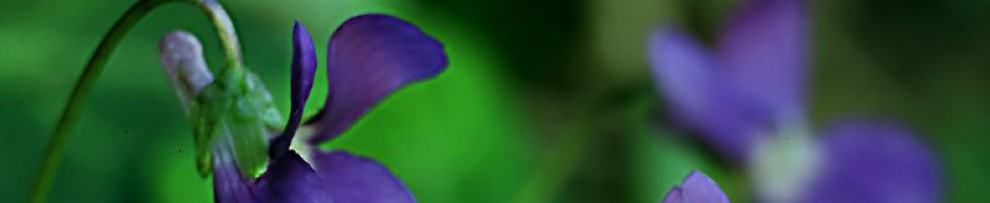
imagen: Payer.de  "Hooker's journal of Botany and Kew Garden Miscellany", 1849

imagen: Payer.de “Hooker’s journal of Botany and Kew Garden Miscellany”, 1849

Una actriz a quien conozco estaba preparándose para una fiesta glamorosa a la que llevaría un delicado vestido de seda blanca. Mientras me ocupaba de su maquillaje, una débil estela de patchouli me tomó por sorpresa. “Qué perfume es?” pregunté; “patchouli” fue su vaga respuesta. La nota -alcanforada y algunas veces acre- olía dulce y singular en ella, un verdadero aroma distintivo.

Una tarde, dos años después, nuestra conversación viró hacia la perfumería y, una vez más, inquirí sobre su patchouli, que resultó ser el de Lorenzo Villoresi. Esta eau de toilette nunca me había impresionado antes como dulzona ni la habría asociado con los rasgos de una belleza de porcelana. De hecho, siempre he pensado que debe adaptarse de maravillas a un caballero.

El patchouli (pogostemon patchouli) –como hemos mencionado en reseñas anteriores– se popularizó en Europa a comienzos del siglo XIX century y se usaba para perfumar los chales indios que estaban de moda en esa época. Las hojas de patchouli mantenían alejadas a las polillas a la vez que prestaban su aroma a los chales mientras eran transportados de India a Europa. Según Robert Tisserand en su excelente El Arte de la Aromaterapia,  las personas se negaban a comprar los chales si éstos no olían a patchouli. Incluso cuando empezaron a producirse en Gran Bretaña, perduró la costumbre de perfumarlos de esta manera. Los chales eventualmente pasaron de moda, pero el patchouli se quedó. Era también un ingrediente clásico en la tinta india ya que ayudaba a fijar el color y aceleraba el tiempo de secado del líquido.

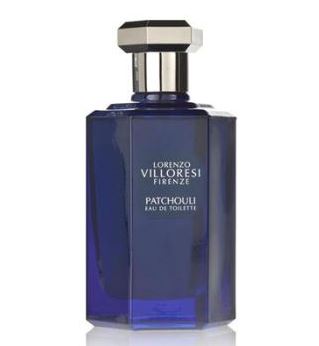
La aproximación de Villoresi al patchouli es honesta y desprovista de adornos; bastante lineal y de estilo clásico. Estoy segura de que no convertirá a aquellos que sienten aversión por el patchouli, pero es una opción excelente y fácil de llevar para quienes apreciamos esta nota. Fresco, ligeramente verde y tan terroso que evoca el suelo húmedo de un bosque, no está endulzado con vainilla o tonka (como Classic Patchouli) ni benjuí (como es el caso de Coromandel). Huele como una versión más aireada y chispeante de un buen aceite esencial de patchouli y resalta las mismas facetas: the el cosquilleo mentolado, la cualidad mohosa, la astringencia, antes de volverse uno con la piel. Casi olvido mencionar que el patchouli ha sido empleado durante siglos como afrodisíaco; quizás debería haber empezado por allí.

Lorenzo Villoresi Patchouli tiene proyección y tenacidad excelentes para un eau de toilette. La casa ofrece esta fragancia también en forma de perfume al aceite.

Caro

Origen de la muestra: Muestra gentileza de Lorenzo Villoresi


foto: Lorenzovilloresi.it

foto: Lorenzovilloresi.it

Lorenzo Villoresi Patchouli – For rugged gents and porcelain dolls

An actress I know was getting ready for a glamorous party in which she would wear a delicate white silk gown. As I was doing her makeup, a faint trail of patchouli caught me by surprise. “What are you wearing?” I asked; “patchouli“was her vague answer. The camphoraceous and sometimes acrid note smelled sweetly unique on her, a true signature scent.

One afternoon some two years later, our conversation switched towards  fragrance and  I inquired again about her patchouli, which turned out to be Lorenzo Villoresi‘s . This eau de toilette had never struck me as sweet before, nor would I have associated it with the features of a porcelain beauty. In fact, I had always thought it would nicely befit a gentleman.

Patchouli (pogostemon patchouli) –as we have mentioned in previous reviews– became popular in Europe at the beginning of the XIX century and was used to scent the Indian shawls which were in vogue at the time. The patchouli leaves would keep moths at bay and lend their aroma to the shawls  while they were transported from India to Europe. According to Robert Tisserand in his excellent The Art of  Aromatherapy,  people wouldn’t buy the shawls if they were not scented with patchouli. Even when they started being woven in Britain, the custom of scenting them in this manner remained. The shawls eventually went out of fashion but patchouli stayed. It was also a classic ingredient in Indian ink as it helped set the color and speed the liquid’s drying time.

Villoresi‘s approach to patchouli is honest and devoid of frills; classic in style and pretty linear. I am quite sure this will not convert  those who have an aversion to patchouli, but it is an excellent and wearable option for those of us who appreciate the note. Fresh, slightly green and so earthy it evokes the damp soil of a forest, it is not sweetened by vanilla and tonka (like Classic Patchouli) or benzoin (like Coromandel). It smells very much like an airier sparklier version of good patchouli essential oil and highlights the same facets: the minty tingle, the mustiness, the astringency, before becoming one with the skin. I almost forgot to mention that patchouli has been used for centuries as an aphrodisiac; perhaps that’s where I should have started.

Lorenzo Villoresi Patchouli has excellent projection and tenacity for an eau de toilette. The house also offers this fragrance in the form of perfume oil.

Caro

Origin of sample: Sample courtesy of Lorenzo Villoresi

Rochas Femme parfum (vintage) – Objeto de deseo

foto: Nymag.com  (Getty Images)

foto: Nymag.com (Getty Images)

La segunda guerra mundial no terminaba aún; era 1943 y Edmond Roudnitska había estado trabajando en un edificio que tenía un basurero a un lado y una fábrica de pintura al otro. En medio de este contexto brutal estaba a punto  de crear una de las obras maestras del siglo: Rochas Femme.

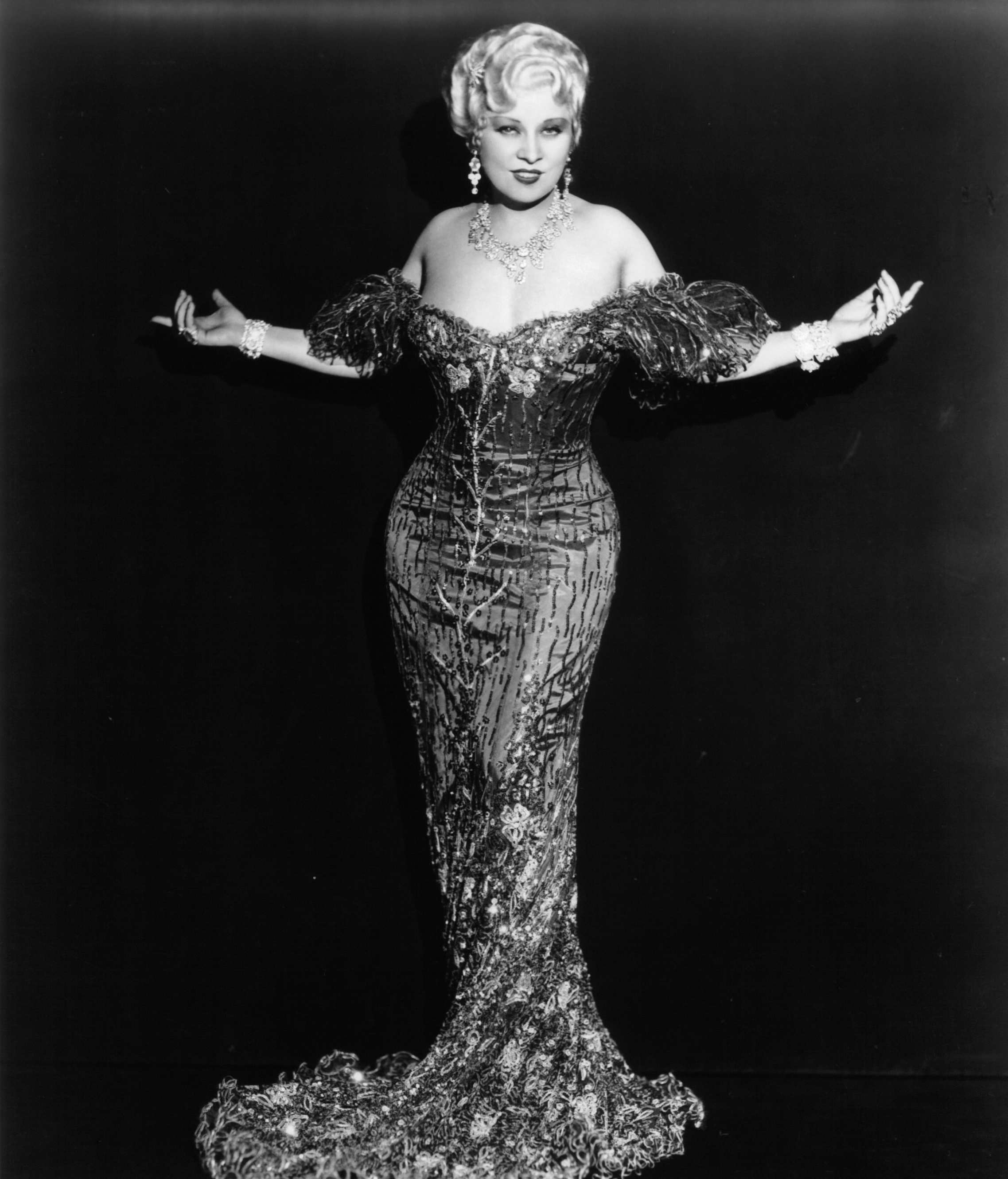
La fragancia había sido encargada por Marcel Rochas como regalo de bodas para su joven esposa Hélène y sería presentada un año más tarde. La botella original -cuyas curvas, dicen, fueron modeladas según las de Mae West fue firmada por Lalique. El motivo de encaje negro, emblemático de Femme, fue también inspirado por la Srta. West.

“Cualquiera puede hacer un rico olor. El truco es crear un perfume que tenga alma” diría el legendario Roudnitska muchos años más tarde, pero su voluptuoso elixir tenía tanto de cuerpo como de alma. Femme resultaría tan trascendente que su influencia puede apreciarse con claridad en perfumes que aparecieron en escena mucho, mucho más tarde  (Balenciaga Quadrille, Shiseido Feminité du Bois, The Party in Manhattan, Amouage Jubilation 25, Vero Profumo Mito).

Un chipre frutado superlativo, evocador de sudor y retozos de alcoba, Femme en versión vintage huele tan íntimo que es capaz de sobresaltar incluso a quien lo lleva. El acorde de fruta demasiado madura, hilo rojo en la obra de Roudnitska, no podía estar ausente en esta creación. Su cualidad frutada es densa y nectárea, como si se tratara de un espeso licor imaginario de ciruela, durazno, rosa, jazmín (indólico) y cuero. Una base animal intensifica la sensación de opulencia, que bordea lo barroco. Resulta inevitable pensar que la mejor manera de lucirlo es entre las sábanas, en buena compañía.

Femme es un perfume que no envejece particularmente bien; si logran encontrar un frasco cuyo contenido esté en buenas condiciones, se sentirán inmensamente recompensados.

Caro

Origen de la muestra: frasco regalo de un familiar

Nota bene: Rochas Parfums es actualmente propiedad de Procter & Gamble. No hemos probado Femme en su formulación actual.

foto: Caro Fernandez

foto: Caro Fernandez

Rochas Femme parfum (vintage) –  Object of desire

WWII was not yet over; it was 1943 and Edmond Roudnitska had been  working in a building that had a rubbish dump on one side and paint factory on the other. Amidst this brutal context he was  about to create one of the masterpieces of the century: Rochas Femme.

The fragrance had been commissioned by Marcel Rochas as a wedding gift for his young wife Hélène and would be launched a year later. The original bottle -whose curves are said to have been modeled after Mae West’s- was signed by Lalique. The emblematic black lace motif was also inspired by Ms. West.

“Anyone can make a nice smell. The trick is to create a fragrance that has a soul” said the legendary Roudnitska many years later, but his voluptuous elixir had as much of a body as it had a soul. Femme would prove so transcendent that its influence shines clear in fragrances that arrived into the scene much, much later (Balenciaga Quadrille, Shiseido Feminité du Bois, The Party in Manhattan, Amouage Jubilation 25, Vero Profumo Mito).

A superlative fruity chypre evocative of sweat and bedroom romps, vintage Femme smells so intimate it might startle even its wearer. An accord of overripe fruit, the red thread in Roudnitska‘s oeuvre, couldn’t be absent from this creation. Its fruitiness is dense and nectarous, like a thick imaginary liquor of plum, peachrose, (indolic) jasmine and leather. An animalic base increases the feel of opulence, which borders on baroque.  One cannot help but think it should be best worn between the sheets, in good company.

Femme is a fragrance that doesn’t age particularly well; if you can find a bottle whose contents are in good condition, you will feel immensely rewarded.

Caro

Origin of sample: bottle gifted by a relative

Nota bene: Rochas Parfums is nowadays owned by Procter & Gamble. We haven’t sniffed Femme in its current formulation.