Tag Archives: benjuí – benzoin

Amouage Fate Woman – Tejido en rayos de sol

imagen: Artseverydayliving.com artista: Caspar David Friedrich "Frau vor der untergehenden Sonne", 1818, Museo Folkwang

imagen: Artseverydayliving.com       artista: Caspar David Friedrich
“Frau vor der untergehenden Sonne”, 1818,   Museo Folkwang

Cuando Sheila, la prolífica escritora tras The Alembicated Genie, se ofreció generosamente a enviarme una muestra de Fate Woman, me sentí eufórica. Mi fetiche con Amouage es un secreto a voces y huelga decir que ansiaba probar el último lanzamiento de la casa omaní.

Como Fate está clasificado bajo la etiqueta de chipre oriental,  esperaba una mezcla oscura, barroca y grandilocuente. Menos operático que otras creaciones de la misma casa y por ende, quizás, con un atractivo más amplio, me impresionó con su levedad. Levedad para los estándares de Amouage, claro. Fate es considerablemente más sustancial y complejo que el 95% de los perfumes que se encuentran actualmente en el mercado.

Fate Woman parece irradiar una luz dorada que hace brillar todo lo que entra en contacto con ella. La salida es dulce y jugosa. Aunque la bergamota está listada entre las notas, me queda una impresión como de naranja dulce. La bergamota/naranja aparece especiada con canela y ají chile, lo que hace la mezcla aún más cálida. Entonces se torna más suave que un suavísimo sweater de cachemira doble. No me impresionó al principio, pero con sucesivos usos, Fate Woman tejió lentamente su red dorada y antes de poder siquiera darme cuenta, ya no logré desenredarme.

El rico corazón floral está entremezclado con incienso y vainillaCuero y castóreo suman una cualidad animal que, lejos de bestial o cruda, resulta tan reconfortante como abrazar a una mascota querida. Fate huele muy clásico y extrañamente familiar pero, al mismo tiempo, innegablemente moderno. Es Romanticismo sin el drama; un parfum de peau al estilo de Amouage.

Este perfume fue compuesto por la talentosa Dorothée Piot (Robertet) -bajo dirección creativa de Christopher Chong– y presentado en 2013. Encuentro su proyección discreta y la longevidad, buena.

Caro

Origen de la muestra: Muestra gentileza de Sheila Eggenberger, The Alembicated Genie
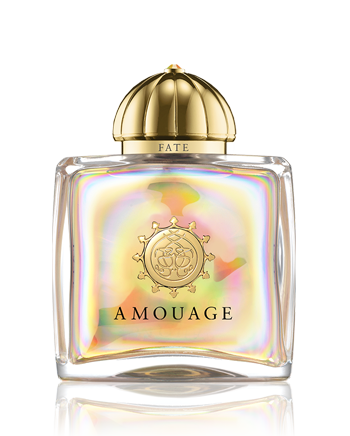
foto: Amouage.com

foto: Amouage.com

Amouage Fate Woman – Woven in sunshine

When Sheila, the prolific writer behind The Alembicated Genie, generously offered to send me a sample of Fate Woman, I was elated. My fetish for  Amouage is no secret and I most certainly wanted to try the latest release from the Omani house.

Since Fate Woman is  classified as an Oriental chypre, I had come to expect a dark and bombastic baroque blend. Less operatic than other creations from the same  house and thus, perhaps, with a wider appeal, it struck me as lightweight. Lightweight by Amouage standards, that is. Fate is considerably more substantial and complex than 95% of the fragrances currently on the market.

Fate Woman seems to radiate a golden light that sets aglow everything that comes in contact with it. The opening is sweet and juicy. Although bergamot is listed among the notes, I am left with an impression of sweet orange. The bergamot/orange is spiced up by cinnamon and chili pepper, what makes the blend even warmer. It then becomes softer than the softest double cashmere sweater. I was unimpressed at first, but with subsequent wearings, Fate Woman slowly wove its golden web around me and before I could even realise it, I was unable to disentangle myself.

The rich floral heart is intermingled with frankincense and vanillaLeather and castoreum add an animalic quality that, far from raw or beastly, is as reassuring as cuddling up with a dear pet. Fate smells very classic and strangely familiar but, at the same time, undeniably modern. It is Romanticism minus the drama; a skin fragrance, Amouage style.

This fragrance was composed by the talented Dorothée Piot (Robertet) -under creative direction of Christopher Chong– and introduced in 2013. I find the projection discreet and its longevity, good.

Caro

Origin of sample: Sample courtesy of Sheila Eggenberger, The Alembicated Genie

LM Parfums Ambre Muscadin – Oscuro terciopelo

imagen: Mesgrainsdesel.canalblog.com

imagen: Mesgrainsdesel.canalblog.com

Con el correr de los años -de la misma manera que sucede con cosméticos y prendas de vestir- desarrollé la capacidad de saber a priori qué perfumes funcionarán sobre mi piel. Las distancias largas son en parte culpables del desarrollo de esta habilidad en la que he logrado un porcentaje de éxitos bastante alto. Ambre Muscadin, una arriesgada compra que hice, pertenece a la última categoría.

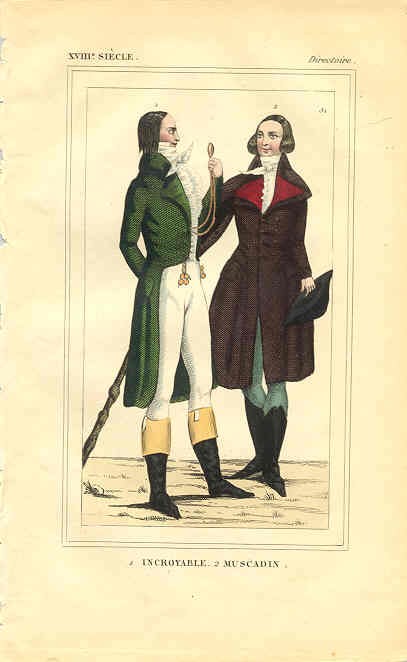
Los perfumes de la línea LM Parfums, fundada por Laurent Mazzone, han sido creados en colaboración con distintos narices. Ambre Muscadin en particular fue compuesto por la tempranamente desaparecida y muy talentosa Mona di Orio. El nombre de esta fragancia alude a los atildadísimos Muscadins, esos jóvenes reaccionarios que se oponían a los excesos del Terror, vestían ropas extravagantes y cuidaban su aspecto personal al extremo.   Se dice que la denominación Muscadins deriva del almizcle (musc) con que estos hombres se perfumaban, aunque el término estaba ya en uso años antes de su aparición en escena.

Ambre Muscadin trae al instante a mi mente otras dos fragancias que adoro: Mona di Orio Ambre y Editions de Parfums Musc Ravageur. Más profundo, más dulce e intenso que cualquiera de ellos dos, resulta también menos abstracto. La salida es puro cedro, opulento y resinoso. Por un momento me pregunto si no debería ser rebautizado como Cèdre Muscadin. Una violeta oscura y aterciopelada asoma brevemente por debajo del verdor conífero. Antes de poder siquiera darme cuenta, me encuentro arrastrada por un torbellino de  miel, ámbar y vainilla. Ambre Muscadin es espeso y dulce, pero la omnipresente nota de cedro corta el dulzor manteniéndolo a raya; como consecuencia la composición nunca se vuelve empalagosa. El fondo es atalcado y almizclado, con matices animales pero no sucio en exceso.

Hay un halo de nostalgia alrededor de Ambre Muscadin, pero el resultado no es anticuado. Nada en él huele sintético y personalmente lo encuentro maravillosamente reconfortante. Su tenaz abrazo avainillado permanece conmigo durante horas.

Caro

Origen de la muestra: botella comprada en Osswald NY

foto: Lmparfums.fr

foto: Lmparfums.fr

LM Parfums Ambre Muscadin – Dark Velvet

Through the years -much as it happens with cosmetics and clothing items- I have developed an ability to know a priori which fragrances will work on me. Let’s say long distances are to blame for the development of said ability. With a quite high success ratio, I’ve had few misses and many hits. Ambre Muscadin, a risky  unsniffed purchase, belongs in the latter category.

The fragrances in the LM Parfums line, founded by Laurent Mazzone have been created in collaboration with several noses. Ambre Muscadin, in particular, was composed by the late and enormously gifted Mona di Orio. The name of this fragrance alludes to the prodigally perfumed Muscadins, those reactionary youths who opposed the excesses of the Terror, wore extravagant clothes and took meticulous care of their personal aspect.   It is said the  denomination Muscadins derives from the musk (musc) with which these men scented themselves, although the term was already in use years before their appearance.

Ambre Muscadin brings instantly to mind two other fragrances that I love: Mona di Orio Ambre and Editions de Parfums Musc Ravageur. Deeper, sweeter and more intense than any of those two, it also smells less abstract.

The opening is all about cedarwood at its most opulent and resinous. For a moment, I wonder whether this should be renamed Cèdre Muscadin. A dark, velvety violet briefly peeks from underneath the coniferous greenness. Before I can even realise it, I am carried away by a whirlwind of honey, amber and vanilla. Ambre Muscadin is thick and sweet but the omnipresent  cedarwood note cuts through the sweetness keeping it at bay; consequently the composition never becomes cloying. The drydown is powdery and musky, slightly animalic but not excessively dirty.

There is an aura of nostalgia about Ambre Muscadin, but the result is not passé. Nothing in it smells synthetic and I find it wondefully comforting. Its tenacious vanillic embrace holds me for hours on end.

Caro

Origin of sample: bottle purchased at Osswald NY

Neela Vermeire Creations Mohur Extrait – ¡Viva la reina!

foto: Roseraie-de-berty.com

foto: Roseraie-de-berty.com

No dudo que la mayoría de los perfumes que  realmente me conmueven han sido creados sin  preocupaciones de marketing ni focus groups detrás. En última instancia, todo el mundo quiere vender y eso es lícito; lo que no está bien es la dilución de identidad o de calidad en el propósito de vender. Existen, por supuesto, muchos bellos perfumes sin alma que se apoyan sólo en su perfección (o corrección) técnica. Son los que elijo para las reuniones de trabajo.

En el otro extremo del abanico, Mohur se cuenta, sin exageración, entre los perfumes más bellos y emotivos que haya olido jamás. Sutilmente matizado, por momentos me resulta delicado en exceso. Suelo olvidar que lo llevo puesto sólo para que me lo recuerde cada tanto el etéreo aroma a rosas que viene y va.  Llamo a Mohur “mi fantasma amigable”.

La semana pasada en Pitti FragranzeNeela Vermeire presentó Ashoka, su fragancia más reciente. Durante 2014, lanzará Mohur Extrait, una versión más concentrada del Mohur original, que se sumará a esta sólida línea. Todas las tonalidades de Mohur aparecen más vívidas en Mohur Extrait; para empezar, la rosa. Esta rosa es tan majestuosa como podría esperarse de un perfume creado como tributo a una poderosa emperatriz. Pienso a Mohur Extrait  como una especie de sistema solar en el que el sol ha sido reemplazado por una rosa y todas las otras notas toman el lugar de los planetas: cardamomo, ambrette, cuero, leche de almendras, oud gravitan alrededor de esta enorme flor. Comparando lado a lado (muñeca a muñeca), Mohur original resulta más seco, su nota de ambrette más pronunciada, mientras que en Mohur Extrait la rosa se agiganta.  El aspecto gourmand lácteo -reminiscente de postres indios- también se intensifica en el extrait aunque no es abrumador; sólo más dulce. Mohur es modoso, casi tímido; Mohur Extrait, regio y enérgico: la reina ha trocado sus sedas rosa pálido por terciopelo recamado.

Caro

Origen de la muestra: Muestra gentileza de Neela Vermeire

Nota Bene: Si quieren leer nuestra reseña de la versión original de Mohur y la emperatriz que lo inspiró, por favor cliqueen sobre el texto iluminado.

foto: Parfumo.de

foto: Parfumo.de

Neela Vermeire Creations Mohur Extrait – Long live the queen!

I am positive most of the fragrances which truly move me have been created without marketing concerns and focus groups behind. Ultimately, everyone wants to sell and that’s alright; what is not ok is the dilution of identity or quality in one’s aim to sell. Of course there are many beautiful soul-less fragrances which rely solely on their technical perfection (or correctness); I wear those to business meetings.

On the other end of the spectrum Mohur is, without exaggeration, one of the most beautiful and moving fragrances I have ever smelled. Subtly nuanced, at times it seems almost a bit too delicate for me. I regularly forget I am wearing it only to be reassured by the few brief, ethereal rosy whiffs I catch every now and then. I call Mohur “my friendly ghost”.

Last week, at Pitti FragranzeNeela Vermeire unveiled Ashoka, her latest fragrance. At some point during 2014 she will launch Mohur Extrait, a more concentrated version of the original Mohur, that will join this solid range. All the hues in Mohur appear to be more vivid in Mohur Extrait. For starters, the rose: this rose is as majestic as one would expect from a fragrance created as a tribute to a powerful empress. I see Mohur Extrait as a sort of solar system where the sun has been replaced by a rose and all the other notes take the place of planets: cardamom, ambrette, leather, almond milk, oud gravitate around this enormous flower. Comparing side by side (wrist to wrist), original Mohur seems drier, its ambrette note more noticeable, while in Mohur Extrait the rose gets magnified. The milky gourmand aspect -reminiscent of Indian  desserts- is also more intense in the extrait; not overwhelming at all, just sweeter. Mohur is well behaved and almost shy; Mohur Extrait, powerful and regal: the queen has traded her pale pink silks for embroidered velvet.

Caro

Origin of sample: Sample courtesy of Neela Vermeire

Nota Bene: If you want to read our review of the original Mohur and the empress who inspired it, please click on the highlighted text.

Hermès Hermessence Ambre Narguilé – Fantasía orientalista

pintura: The-athenaeum.org  artista: Fernand Cormon  "Femme au Narguile", 1878

pintura: The-athenaeum.org    artista: Fernand Cormon    “Femme au Narguile”, 1878

Aún sin ser fan del (larguísimo) período minimalista de Jean Claude Ellena,  entiendo su atractivo. El nariz in-house de Hermès  compone fragancias modernas y ligeras que pueden usarse incluso en los ámbitos más “perfume-fóbicos”. Gracias al cielo, algunas de sus creaciones también logran satisfacernos a los amantes de fragancias más robustas.

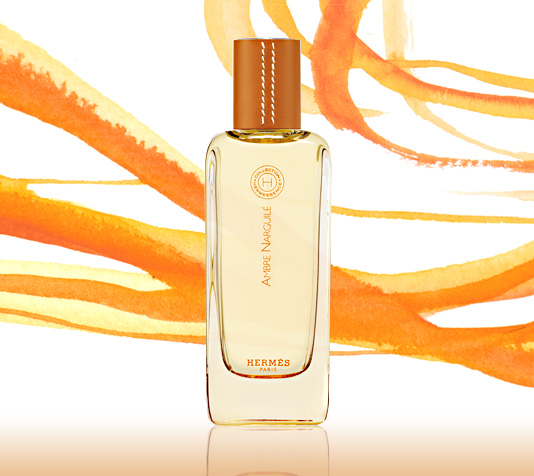
Creado en 2004, Ambre Narguilé se lanzó entre las cuatro primeras eaux de toilette de la colección Hermessence  (Ambre Narguilé, Rose Ikebana, Vetiver Tonka y Poivre Samarcande). Quizás sea, junto con Vetiver Tonka, la estrella más brillante en la línea, por estos días bastante más extensa.

Es aquí donde deslumbra la alquimia de Ellena, ya que logra transformar  tabacoámbar en algo etéreo, como los fantasmas del tabaco y el ámbar. Ambre Narguilé se despoja de su peso, pero a la vez conserva sustancia y profundidad.

El dulce gourmand ambarado se ha vuelto mi perfume de cabecera para los momentos de stress. Este capullo tejido en tabacomiel y frutas puede cobijar y sosegar al alma más inquieta. Cuando necesito confort extra, me consiento y me dejo embriagar por sus efluvios.  Luego de una nota realista -casi fotográfica- de manzana roja, las capas se despliegan lentamente, como volutas de humo, revelando especias, resinas y una pícara nota de semillas de sésamo tostadas, que presta un amargor como de nuez.

Más que un mero perfume, Ambre Narguilé resulta una experiencia sibarita -alternante entre gula y lujuria- que perdura por horas.

Caro

Origen de la muestra: Botella comprada en tienda Hermès, Buenos Aires

foto: France.hermes.com

foto: France.hermes.com

Hermés Hermessence Ambre Narguilé – Orientalist fantasy

While not a fan of Jean Claude Ellena‘s (quite long) minimalistic period, I understand its appeal. The in-house nose for Hermès composes light and modern fragrances that can be worn even in the most perfume-phobic environments. But, thank goodness, some of his creations leave us -lovers of heftier fragrances- content too.

Created in 2004, Ambre Narguilé was released among the first four eaux de toilette of the Hermessence collection (Ambre Narguilé, Rose Ikebana, Vetiver Tonka and Poivre Samarcande). Together with Vetiver Tonka, it is perhaps the brightest star in the now more extense series.

It is here where Ellena‘s alchemy shines: he manages to transform tobacco and amber into something ethereal, like the ghosts of tobacco and amberAmbre Narguilé is stripped from its weight but holds to its depth and substance.

The sweet ambery gourmand has become my go-to comfort fragrance. This coccoon woven in tobacco, honey and fruit can shelter and soothe even the most restless soul. Whenever I feel stressed out, I indulge and let myself become intoxicated by its vapors. After a realistic -almost photographic- apple note, its layers unfurl slowly, like volutes of smoke, revealing spices, resins, and a mischievous  note of grilled sesame seed, which lend a nutty bitterness.

More than just a perfume, Ambre Narguilé is a sybaritic experience that -alternating between lust and gluttony- lasts for hours on end.

Caro

Origin of sample: Bottle purchased at the Hermès store, Buenos Aires

Letras perfumadas – “Correspondencias” de Charles Baudelaire

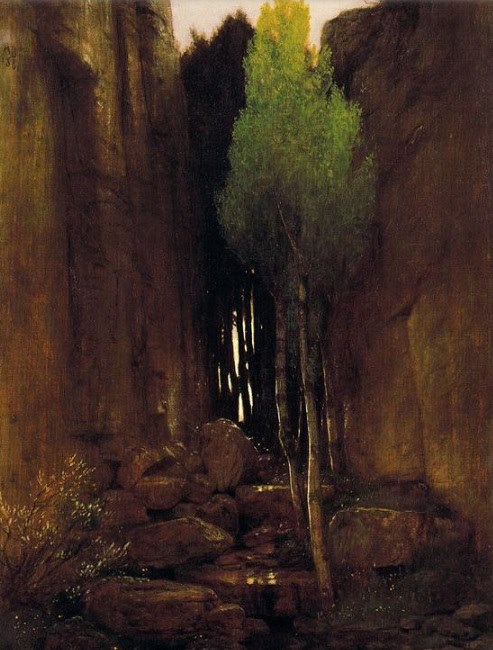
imagen:  "Source between two rock walls", 1881  artista: Arnold Böcklin

imagen: It-is-snowing-in-nakonxipan.blogspot.com  
“Source between two rock walls”, 1881 artista: Arnold Böcklin

Correspondencias

La Naturaleza es un templo cuyos vivientes pilares, dejan a veces escapar confusas palabras. El hombre posa allí a través de bosques de símbolos, que lo observan con miradas familiares.

Como largos ecos que de lejos se confunden en una tenebrosa y profunda unidad —vasta como la noche y como la luz— los perfumes, los colores y los sonidos se responden.

Hay perfumes frescos como carne de niño, dulces como los oboes, verdes como las praderas. Y hay otros corrompidos, ricos y triunfantes, que tienen la expansión de las cosas infinitas, como el ámbar, el almizcle, el benjuí y el incienso, que cantan los transportes del espíritu y los sentidos.

Charles Baudelaire

De “Las flores del mal” – Traducción de Ulyses Petit de Murat. Ediciones DINTEL, 1959. Fuente: http://www.lamaquinadeltiempo.com/Baudelaire/correspo.htm

El lenguaje descriptivo de los perfumes echa mano de la música y de los colores. Notas, composición, armonía, acordes son algunos de los conceptos musicales que la perfumería se ha apropiado. Lo mismo sucede con lo verde, lo ambarado, lo transparente, lo oscuro de un perfume: son los matices e intensidades con los que percibimos el espíritu de un olor.

La pregunta sería: los perfumes, los colores y los sonidos ¿se corresponden porque no tenemos palabras específicas para hablar de los olores? ¿o es que percibimos los olores sinestésicamente, es decir, sentimos los estímulos olfativos determinados por sensaciones propias del sentido auditivo y visual, e incluso el táctil?

Baudelaire encuentra “la expansión de cosas infinitas”, “del espíritu y los sentidos”, en ciertos ingredientes. Aunque osaríamos agregar algunos ítems más a la lista del poeta, coincidimos con los apuntados por él. Especialmente con el benjuí, esa resina sensual, oscura y camaleónica que puede apreciarse sublimemente gourmand y avainillada en Fragonard Fleur de Vanille; radiante y rojo en Sisley Eau de Sisley N3; y dorado sobre el opopanax en Carthusia Ligea.

Perfumes “dulces como los oboes”… cuáles vienen a su mente?

Virginia y Caro

foto: Ov-rothrist.ch

foto: Ov-rothrist.ch

Scented Letters – “Correspondences” by Charles Baudelaire

In Nature’s temple, living pillars rise,
Speaking sometimes in words of abstruse sense;
Man walks through woods of symbols, dark and dense,
Which gaze at him with fond familiar eyes.
Like distant echoes blent in the beyond
In unity, in a deep darksome way,
Vast as black night and vast as splendent day,
Perfumes and sounds and colors correspond.

Some scents are cool as children’s flesh is cool,
Sweet as are oboes, green as meadowlands,
And others rich, corrupt, triumphant, full,
Expanding as infinity expands:
Benzoin or musk or amber that incenses,
Hymning the ecstasy of soul and senses.

Charles Baudelaire

Source: http://fleursdumal.org/poem/103 — Translation by Jacques LeClercq, “Flowers of Evil” (Mt Vernon, NY: Peter Pauper Press, 1958)

The descriptive language of perfumes borrows a lot of words from music and painting. Notescomposition, harmonychords are some of the musical concepts that perfumery has appropiated  to itself. The same happens with the greeness, the amberiness, the transparency, the darkness of a perfume: they’re the hues and intensities with which we perceive the spirit of a smell.

The question is: do perfumes, colors and sounds correspond because we don’t have specific words to talk abou scents? Or is that we perceive scents in a synesthetic way, that is to say, we feel the olfactive stimuli determined by sensations belonging to hearing and sight, even by the sense of touch?

Baudelaire finds “expanding as infinity expands”, “the ecstasy of soul and senses”, in some ingredients. Although we dare to add another items to the poet’s list, we agree with his selection. Especially with benzoin, that sensual, chameleonic and dark resin that can be appreciated in different and sublime ways: gourmand vanilla in Fragonard Fleur de Vanilleradiant and reddish in Sisley Eau de Sisley N3and golden over opopanax in Carthusia Ligea.

As for perfumes “sweet as are oboes”… which ones come to your mind?

Virginia & Caro