Tag Archives: benjuí – benzoin

PK Perfumes Violet Chocolatier – Pétalos de terciopelo

Daria Jabenko, “Cakes and Sweets” – imagen: cortesía de Paul Kiler

Paul Kiler es perfumista y fotógrafo, artista de la vista y del olfato. Se presentó en el LA Artisan Fragrance Salon con toda la línea de su marca PK Perfumes. También presentó una fragancia de edición limitada: Violet Chocolatier. Quién podría resistírsele con ese nombre?

Yo no me resistí y pedí oler el perfume. Ya desde el primer segundo me sentí feliz de no encontrarme con obviedades gourmands. No se trataba de tortas y bizcochos sino de los componentes en sí, del protagonismo de ingredientes con carácter.

En el inicio, el absoluto de cacao acapara por completo nuestra nariz con un simpático juego de matices: primero semiamargo, oscuro y polvoroso pero luego dulzón, blanco y cremoso. Un acorde que evoca a los damascos cubiertos con chocolate -más el toque especiado de la nuez moscada– subraya la dulzura y aporta cierta carnosidad.

La violeta y la rosa parecieran dos caras de la misma moneda: se huelen juntas pero se distinguen una de la otra. La combinación del aspecto empolvado de la violeta y el amielado de la rosa trae a la mente la sensación de pétalos aterciopelados que apenas rozan la piel.

Finalmente, las flores blancas (jazmín, magnolia, gardenia) y el ámbar brindan una base acolchada y confortable que deja sobre la piel un halo limpio y jabonoso en el que las violetas vuelven a florecer por contraste. No hago más que pensar en que si existiera una línea de productos para el cuerpo de Violet Chocolatier sería gloriosa.

Virginia

Origen de la muestra: kit de prensa.
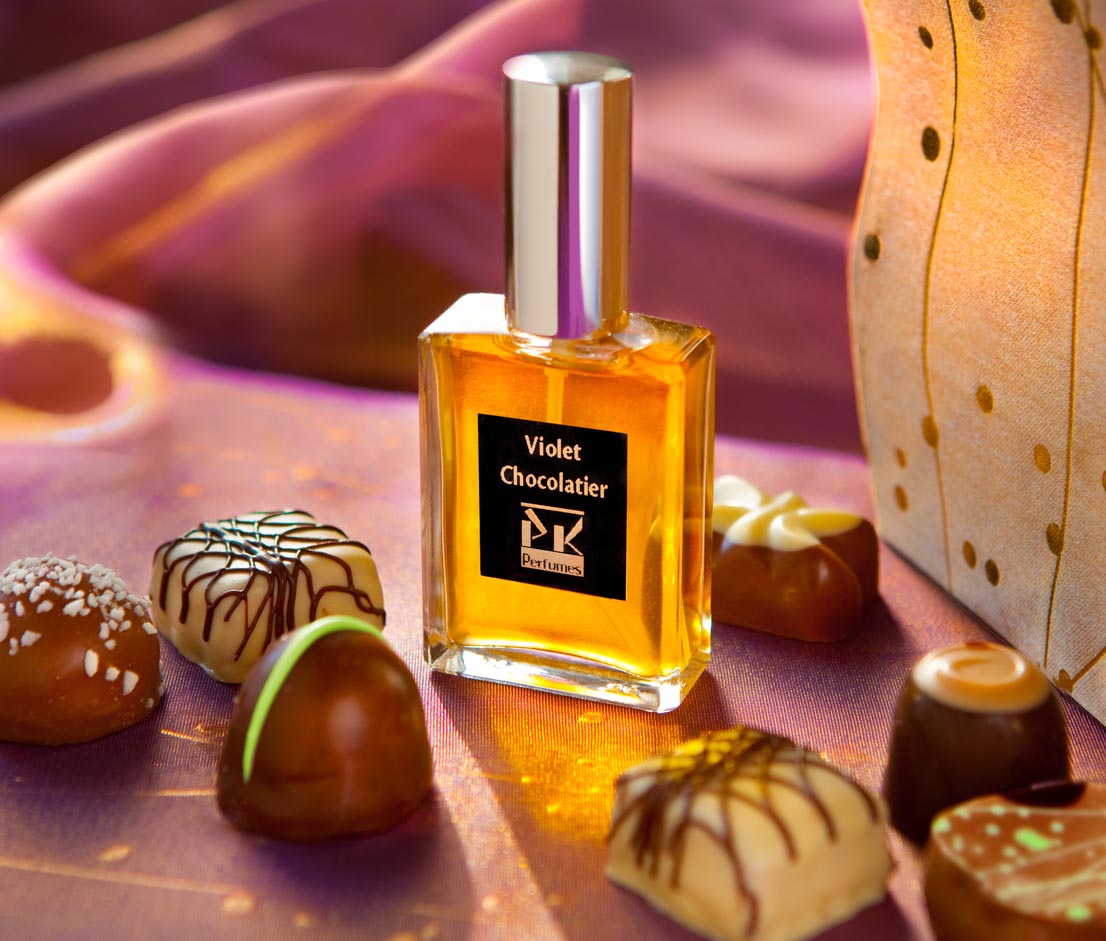
foto: cortesia de Paul Kiler

PK Perfumes Violet Chocolatier – Velvet petals

Paul Kiler is a perfumist and photographer, an artist of sight and smell. He introduced himself and his PK Perfumes brand at LA Artisan Fragrance Salon. He also showed a limited edition fragrance: Violet Chocolatier. Who could resist that name?

I didn’t and had to smell the perfume. From the first second I was happy to meet gourmand that wasn’t literal. It was not about ‘cakes and biscuits’, but about its components, ingredients playing the leading character.

In the beginning, the cocoa absolute completely monopolizes our nose with a funny game of nuances: first a little bitter, dark and dusty but then white, creamy and sweet. A chord reminiscent of chocolate covered apricots -with the spicy touch of nutmeg– emphasizes the sweetness and adds some fleshiness.

Violet and rose seem like two sides of the same coin: they are smelled together but remain separate entities. There is a combination of a dusty aspect of violet with the honeyed hue of rose. This blend brings to mind the feel of velvety petals that barely caressing the skin.

Finally, the white flowers (jasmine, magnolia, gardenia) and amber provide a comfortable softy base and leave a clean soapy halo on the skin, where violets bloom again by contrast. I can’t help but think that if there was a Violet Chocolatier body products line it would be glorious .

Virginia

Origin of sample: Sample of press kit.

Cognoscenti Scent No.16 Tomato Leather – Combustible verde

foto: Selfsufficientish.com

Tuve la oportunidad de conocer a la perfumista Dannielle Sergent en el primer encuentro anual de L.A. Artisan Fragrance Salon. Ella creó en San Francisco a la flamante casa Cognoscenti, la cual se presenta en sociedad con tres eaux de parfum: Scent No1, Scent No19 y Scent No16. Todas me gustaron, pero me sentí particularmente atraída hacia la No16.

En ese primer momento, pude apreciar una apariencia verde, arcillosa y algo dulzona. Se trataba de la apertura de un tímido capullo de flor de tilo envuelto en la rusticidad herbácea de las hojas de tomate y la salvia esclarea.

Hoy, que me detengo a seguir la evolución de esta original composición, me sorprende el fabuloso contraste. Lo que sigue a las notas que yo recordaba es un acorde de cuero que, ensamblado con la madera de Agar negra (oud) y el benjuí, impone un sutil matiz de combustible!

Con apariciones oscilantes de incienso y mirra muy de fondo, el tabaco amargo aporta un velo como de humo de cigarrillo. Varios minutos después, el jovial, moderno y unisex No16 queda cálido en la piel, con reminiscencias a geranio (la flor que guarda el secreto de la combinacion del olor a cuero con el de la hierba).

Virginia

Origen de la muestra: kit de prensa.

foto: Virginia Blanco

Cognoscenti Scent No.16 Tomato Leather – Green Fuel

At the 1st Annual LA Artisan Fragrance Salon I had the chance to meet perfumer Dannielle Sergent. She lives in San Francisco, where she created her fragrance house Cognoscenti. This brand was launched with three eaux de parfum: Scent No1, Scent No19 y Scent No16. I liked all of them, but I felt especially attracted to No16.

At first sniff I appreciated a green, claylike and sweetish quality. It was the opening of a shy linden blossom note wrapped in the grassy rusticity of tomato leaves and clary sage.

Today I can stop calmly and smell this original fragrance paying attention to its evolution. And I am surprised with a fabulous contrast. What follows to the notes I remembered is a leather chord which, assembled with black agarwood and benzoin give as a result a subtle hint of fuel!

While the frankincense and myrrh make oscillating apparitions in the back, a bitter tobacco note adds a veil of cigarette smoke. Several minutes later the jovial modern and unisex Scent No16 turns warm on the skin, with reminiscences of geranium (the flower that keeps the secret of the leather and grass combination).

Virginia

Origin of sample: Sample of press kit

Eau d’Italie Baume du Doge – Oro veneciano

imagen: En.wikipedia.org    artista: Francesco Guardi   “Partenza del Bucintoro per San Nicolò di Lido” , circa 1768

Durante once siglos Venecia existió bajo la forma de una república independiente, la Serenissima Repubblica di Venezia. En una ceremonia anual  su regente, el Dux (Dogo) -embarcado en el Bucentauro- arrojaba un anillo de oro bendecido a las aguas, desposando así simbólicamente a Venecia con el mar. Durante estos años de esplendor, Venecia fue un importante centro de comercio de seda y especias. Especias y seda son precisamente lo que Baume du Doge, de Eau d’Italie, evoca al ser olfateado.

La fragancia abre con una nota de naranja dulce que no se instala en lo frutal, ya que inmediatamente se le suman canela, cardamomo y pimienta negra. La mezcla logra mantener una cualidad aireada mientras la naranja y las especias, lúdicamente, intercambian dulzura y picor. El hinojo brinda su dulzor herbal al incienso, omnipresente en las creaciones de Duchaufour.  Una vez que el incienso toma el escenario, nunca lo deja, aunque luego se le une la  suave combinación de mirra, benjuí y vainilla, que torna la mezcla más reconfortante a la par que mantiene el aura de misterio. Siempre me alegra encontrar este trío dorado en un perfume.

Este elixir es rico y sensual; ahumado y dulce, aunque nunca denso. Casi se puede ver al dorado Bucentauro entrando en el Gran Canal a través de la niebla. A bordo, el Dogo, vestido en brocado, deja caer su anillo de oro en las frías aguas del Adriático.

Baume du Doge resulta un perfume maravilloso a la hora de ir a la cama, especialmente cuando se necesita un poco de ayuda extra para relajarse o… bueno…ya saben…

Caro

Origen de la muestra: Gentileza de Eau d’Italie

foto: Eauditalie.com

Eau d’Italie Baume du Doge – Venetian gold

During eleven centuries, Venice existed as an independent republic, the Serenissima Repubblica di Venezia. Its ruler, the Dux (Doge), symbolically married Venice with the sea through an annual ceremony in which he would throw a blessed gold ring into the waters. During these splendid years Venice was an important trading center for spices and silk. Silk and spices are precisely what Eau d’Italie‘s Baume du Doge evokes when I sniff it. 

The fragrance opens with a note of sweet orange that never settles into fruitiness, as cinnamon, cardamom and black pepper immediately jump in.  The mixture manages to keep an airy quality while the orange and spices  playfully interchange sweetness and tingle. The fennel gives its anisic herbal sweetness to the frankincense, omnipresent in Duchaufour‘s creations. Once the frankincense takes stage, it never leaves, although it is later joined by the smooth combination of myrrh, benzoin and vanilla which makes the blend more comforting while keeping its aura of mystery. I am always happy to find this golden trio in a fragrance.

This brew is rich and sensual, smoky and sweet but never heavy. One can almost envision the golden Bucentaur entering the Grand Canal through the haze. On board, the brocade clad Doge, drops his gold ring in to the cold waters of the Adriatic.

Baume du Doge is an excellent fragrance to wear to bed when one needs some extra help relaxing or…well…you know…

Caro

Origin of sample: Sample courtesy of Eau d’Italie

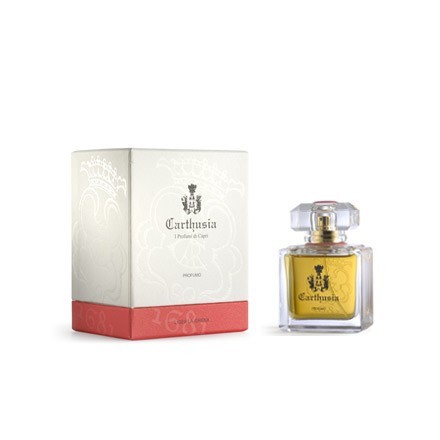
Carthusia Ligea – El canto de las sirenas

imagen: Wikipaintings.org artista: John William Waterhouse “Ulysses and the Sirens”

En la mitología clásica las sirenas eran demonios marinos: mitad mujeres, mitad pájaros. Atraían a los marinos con su encantadora e irresistible música, haciéndolos encallar en las rocas para luego devorarlos. Eran tres: Parténope (quien dio su nombre a la ciudad de Nápoles), Leucosia y Ligea (de quien este perfume toma el nombre).

Al toparme con esta fragancia en la tienda Carthusia en Positano, al instante se convirtió en una de mis favoritas de la línea (las otras dos fueron Mediterraneo y Corallium). En un principio la creí demasiado potente, pero con el correr de las horas fue ganándome poco a poco: la longevidad era fabulosa y su fondo atalcado me hipnotizó. No podía dejar de olerme la muñeca.

Diseñado por la créatrice extraordinaire Laura TonattoLigea es un perfume que parece suspendido en el tiempo. Posee  una riqueza que rara vez se  encuentra (huele?) en estos días. No resulta anticuado en absoluto, sino que su encanto es atemporal.

La salida es hesperidada con mandarinanaranja y bergamota. No es fresca y jugosa, sino seca y ligeramente amarga; más sustancial, como la corteza de estas frutas. Es esta salida la que había juzgado como disonante al olerla por primera vez.  Luego, las notas de Ligea se funden entre sí sin fisuras: patchouli, el maravilloso picor de los clavos de olor (tengo una debilidad por esta nota en perfumería) y una pincelada rosada, probablemente brindada por el geranio. La base, donde la vainilla y el benjuí vuelcan su resplandor dorado sobre el atalcado opopanax, es tan gloriosa que me deja en trance y sin poder pronunciar palabra.

Si bien no tengo objeción hacia los sintéticos (y prácticamente no podría tenerla), me desagradan los perfumes que huelen artificiales. El aroma de Ligea  es increíblemente natural y lo aprecio incluso más por ello. Se convirtió también una de mis fragancias preferidas para la hora de dormir ya que, cada vez que la elijo, me recompensa con dulces sueños.

No puedo resistirme al canto de esta sirena y tampoco quiero hacerlo.

Caro

Nota Bene: Imagino que los amantes de Shalimar que no están felices con la encarnación actual, definitivamente deberían probar suerte con Ligea.

Origen de la muestra: Botella comprada en la boutique Carthusia, Positano

foto: Carthusia.it

Carthusia Ligea – The song of the sirens

In classical mythology sirens were sea demons: half women, half birds. They lured sailors with their enchanting and irresistible music provoking their ships to be wrecked  on the rocky coast. They would then devour the unfortunate men. There were three of them: Parthenope (who gave her name to Naples), Leucosia and Ligea (from whom this perfume borrows its name).

When I tried this fragrance at the Carthusia store in Positano, it instantly became one of my three favourites from the line (the other two were Mediterraneo and Corallium). I thought it a bit too powerful at first, but over the course of hours it won me over: the lasting power was fabulous and its powdery drydown got me hooked. I just couldn’t stop sniffing my wrists.

Designed by créatrice extraordinaire Laura TonattoLigea is a fragrance that seems  suspended in time. It possesses a rich quality that is rarely seen (sniffed?) these days. It is not, however, old fashioned but has a timeless appeal.

The opening is hesperidic with mandarin, orange and bergamot. Not fresh and juicy, but drier and with a hint of bitterness; more substantial, like the rind of these fruits. It was this opening which I had thought dissonant when I first sniffed it.  Afterward, the notes in Ligea blend seamlessly: patchouli, the wonderful spiciness of cloves (I have a soft spot for this note in fragrance) and a rosy hint, most likely provided by geranium. The drydown, where vanilla and benjoin cast their golden glow over powdery opopanax, is so glorious that it leaves me entranced and at a loss for words.

While I don’t (and practically can’t) object to the use of synthetics, I dislike fragrances that overtly reek of them. Ligea smells incredibly natural and I appreciate it even more for it.  It has become one of the fragrances I enjoy wearing to bed as, every time I do so, I am rewarded with sweet dreams.

I cannot resist this siren’s song and I don’t want to.

Caro

Nota Bene: I think lovers of  Shalimar who are not happy with its current incarnation should definitely give Ligea a try.

Origin of sample: Bottle bought at the Carthusia boutique, Positano

Eau d’Italie Paestum Rose – Humo sagrado

imagen: Artrenewal.org      artista: William Reynolds-Stephens     “Summer”

Lo que queda hoy de Paestum (antiguamente Poseidonia, la ciudad de Poseidón) son las ruinas de sus imponentes templos dóricos y la leyenda de sus rosas. Estas rosas -celebradas por Ovidio, Marcial y Virgilio (el último, en sus Geórgicas, menciona “los dos veces florecientes canteros  de rosas de Paestum”)- daban flor dos veces al año y eran renombradas por su belleza.

Paestum Rose – lanzado porEau d’Italie en 2006-parece recrear la experiencia de Paestum completa: las rosas perfumando la brisa, las piedras de los templos calentadas por el sol y las resinas siendo quemadas en honor de los dioses.

Las palabras no alcanzan para describir la belleza de la salida:  me siento como bajo una lluvia de pétalos de rosa -jugosos y mullidos- cuyo aspecto frutado se ve acentuado por una nota de brote de  grosella negra. La profusión de pétalos está sazonada con canela, coriandro y pimientas rosa (nuestro aguaribay) y negra. Desearía que este instante trascendental durara para siempre. La mezcla deviene en en una nube resinosa de incienso, mirra y elemi que luego evoluciona lentamente, casi con languidez, hacia una base aterciopelada por  ámbaralmizcle blanco y opopanax

¿ Y quién mejor que Duchaufour para lograr insuflar una cualidad aireada a esta  mélange tan cargada de especias?  La composición aparenta ser etérea. Paestum Rose es claramente una obra maestra y, por cierto, mi creación preferida de  Duchaufour.

Son las contradicciones las que aumentan la belleza de este perfume:  aterciopelado y áspero; jugoso pero seco; oscuro y luminoso a la vez; terrenal e inmaterial; masculino pero femenino; humano y divino.

A pesar de su intensidad inicial, Paestum Rose es la fragancia más tenaz de Eau d’Italie, pero esto no es un problema: siempre puedo reaplicarlo y oler cómo mis rosas florecen otra vez.

Caro

Origen de la muestra: muestra gentileza de Eau d’Italie

foto: Eauditalie.com

Eau d’Italie Paestum Rose – Humo sagrado

What remains today of Paestum  (originally called Poseidonia, the city of Poseidon) are the ruins of its imponent Doric temples and the legend of its roses. These roses -celebrated by Ovid, Martial and Virgil (the latter mentions in his Georgics “the twice-flowering rose-beds of Paestum“)- bloomed twice a year and were famous for their beauty.

Paestum Rose – launched by Eau d’Italie in 2006– seems to recreate the whole Paestum experience: the roses scenting the breeze, the sun-heated stones of the temples and the resins being burned in honour of the gods.

Words fail me when I try to describe the beauty of its opening:  I feel as if fleshy, juicy  rose petals were raining upon me, their fruity aspect enhanced by a  blackcurrant bud note. This rose-petal rain is seasoned with cinnamon, coriander and both black and pink pepper (our aguaribay).  I wish this trascendental instant lasted forever. The fragrance morphs into a resinous cloud of incense, myrrh and elemi which afterward evolves slowly, almost  languorously, into a base that is velvety with amber, white musk and opopanax

And who else but Duchaufour could succeed at insufflating airiness into such a spice laden mélange?  The composition appears to be weightless. It is certainly a masterpiece and, by far, my favorite Duchaufour

Contradictions are what make this perfume beautiful:  it feels velvety yet coarse; juicy but dry; dark and luminous at the same time; both terrenal and otherwordly; masculine yet feminine; human and divine.

Despite its initial intensity, I don’t find Paestum Rose to be the most tenacious fragrance from Eau d’Italie. That is absolutely no problem:  I can always reapply it and smell my roses bloom again.

Caro

Origin of sample: sample courtesy of Eau d’Italie