Tag Archives: vainilla – vanilla

Téo Cabanel Alahine – Flores de oro

foto: Theanglocatholic.com

foto: Theanglocatholic.com

Para fines del siglo XIX, las esencias y extraits de mouchoirs (perfumes para pañuelo) de Théodore Cabanel ya tenían una clientela leal entre los sectores más elegantes de Argel. En 1908 Cabanel se mudó nuevamente a París donde su reputación continuó creciendo. Unos años más tarde, la casa -ahora bajo la guía de la hija de Cabanel– se convirtió en la preferida de Wallis Simpson.

En 2003, una muy joven Carolina Ilacqua -ahijada de la hija de Théodore Cabanel decidió revivir la casa con la colaboración del nariz Jean-Francois Latty (creador entre otros de Eau Dynamisante, Jazz, Tsar y Drakkar Noir). La marca emplea hoy un alto porcentaje de materias primas naturales a la vez que mantiene sus perfumes dentro de un estilo clásico y muy elegante.

Cuando nuestra amiga bloguera Kafka se ofreció a enviarme una muestra de Alahine, no pude rehusarme.  Mi única aproximación a Téo Cabanel hasta el momento había sido un olisqueo veloz de Oha (un hermoso chipre de rosa) en Farmacia Centrale, en Milán.

Alahine me resultó extrañamente familiar al principio hasta que me di cuenta por qué…me recordaba a Bal a Versailles, sólo que sin la incivilizada nota animal que a veces lo vuelve difícil de usar. Kafka me había dicho que tuviera paciencia con Alahine y le diera tiempo, lo que hice obedientemente. Cada vez que lo usaba, Alahine se volvía más y más irresistible. El que me había parecido un ámbar clásico y monolítico más, empezó a desplegar sus misterios.

Ámbar licoroso con chispeante bergamota en la salida, Alahine es cálido y envolvente, un perfume generoso.  Notas luminosas de azahar, rosa búlgara, jazmín  e ylang ylang brillan como las piedras de una corona, la sensación es como si estas flores flotaran en un líquido dorado y dulzón (el azahar, que suma frescura al atalcado ámbar, es especialmente bello). El fondo aterciopelado, por momentos casi ahumado -donde notas amaderadas de sándalo y patchouli se entremezclan con vainilla y benjuí– es verdaderamente de ensueño.

Caro

Origen de la muestra: Muestra gentileza de nuestra colega bloguera Kafka

foto: Teo-cabanel.com

foto: Teo-cabanel.com

Téo Cabanel Alahine – Gold flowers

By the end of the XIXth century, Théodore Cabanel‘s essences and extraits de mouchoirs (handkerchief’s scents) already had a loyal following among the fashionable set in Algiers. In 1908 Cabanel moved back to Paris where his reputation continued to grow. Some years later the house -now under the guidance of Cabanel‘s daughter- became the favorite of Wallis Simpson.

In 2003, a very young Carolina Ilacqua -goddaughter of Théodore Cabanel‘s daughter- decided to resurrect the house with the collaboration of nose Jean-Francois Latty (creator among others of Eau Dynamisante, Jazz, Tsar and Drakkar Noir). The brand today uses a high percentage of natural raw materials while keeping their fragrances classic in style and very elegant.

When fellow blogger Kafka offered to send me a sample of Alahine a few weeks ago, I couldn’t refuse.  My only approach to Téo Cabanel had, so far, been a brief sniffing of Oha (a beautiful rosy chypre) at Farmacia Centrale in Milan.

Alahine seemed strangely familiar at first until it dawned on me…it reminded me of Bal a Versailles, only lacking the impolite animalic notes that sometimes render BaV so difficult to wear. Kafka had told me to be patient with Alahine it and give it time, which I obediently did. With each successive wearing, Alahine became more and more compelling. What had appeared like yet another classic and monolythic amber started to unfold its mysteries before me.

A boozy amber with sparkling bergamot in the opening, Alahine is warm and enveloping, a generous perfume.  Luminous notes of  orange blossom, Bulgarian rose, jasmine and ylang ylang shine like gems in a crown; it feels as if the flowers floated in a golden sweetish liquid (the orange blossom which adds freshness to the powdery amber is especially beautiful). The velvety  drydown, at times almost smoky -where woody notes of sandalwood and patchouli mingle with vanilla and benzoin– is truly dreamy.

Caro

Origin of sample: Sample courtesy of fellow blogger Kafka

Velvet & Sweet Pea’s Purrfumery Black Cat – Ternura gourmand

foto: Catmoji.com

foto: Catmoji.com

Hay mucha gente a la que no le gustan los gatos negros. A mí me encantan. Nunca podría ver a esas bellas criaturas como algo maligno o de mal agüero. Pero, sinceramente, cuando conocí Black Cat estaba esperando oler un cliché: una fragancia agresiva y literal, con fuertes notas gatunas de, por ejemplo, brotes de grosellero negro. Estaba -afortunadamente – equivocada.

Este tierno eau de parfum dibuja en mi mente exactamente lo que pienso sobre los gatos negros y recrea lo que siento cuando los veo o acaricio. Tiene una nota de cuerpo de cacao aterciopelado, tan suave y tibio como un pelaje. El ylang ylang agrega vigor y estructura sin perder la gracia y la elegancia. La vanilla tahitiana mezclada con árbol (o mirto) de anís  logra una dulzura cremosa pero chispeante, como un ronroneo arrullador. ¿Picardía?¡Claro que sí! La naranja sanguina la aporta con su energía juguetona.

La nariz es la amigable y simpática Laurie Stern. Ella hizo Black Cat para la colección Kittylicious Eau de Parfum. Su original estilo personal y su amor por la naturaleza (¡especialmente por los gatos y las flores!) están presentes en sus creaciones. Lujosos ingredientes botánicos son la base de esta casa californiana de fragancias.

Virginia

Origen de la muestra: gentileza de Velvet Sweet Pea’s Purrfumery.

foto: Proco.lt

foto: Proco.lt

Velvet & Sweet Pea’s Purrfumery Black Cat –  Gourmand tenderness

Many people don’t like black cats. I love them. I could never see those beautiful creatures as something evil or ominous. But sincerely, when I met Black Cat I was expecting to smell a cliché: a literal aggressive fragrance with strong catnip blackcurrant-buds notes, for example. Fortunately I was wrong.

This tender eau de parfum draws in my mind an exactly picture of what I think about black cats and recreates what I feel whenever I see or caress one. It has a body note of velvety cocoa as soft and warm as a fur. The ylang ylang adds strength and structure without compromising elegance and grace. Tahitian vanilla blended with aniseed myrtle achieves a creamy but sparkling sweetness as a lulling purr. Craftiness? Of course! The blood orange gives that with its playful energy.

The nose is the nice and friendly Laurie Stern. She made Black Cat for the Kittylicious Eau de Parfum collection. Her original personal style and love for nature (specially towards cats and flowers!) are present in her creations. Luxurious botanicals ingredients are the base of this Californian fragrance house.

Virginia

Origin of sample: Sample courtesy of Velvet Sweet Pea’s Purrfumery.

foto: Chocolatepath.com

foto: Chocolatepath.com

Grossmith Shem-el-Nessim – Armonía en tonos pastel

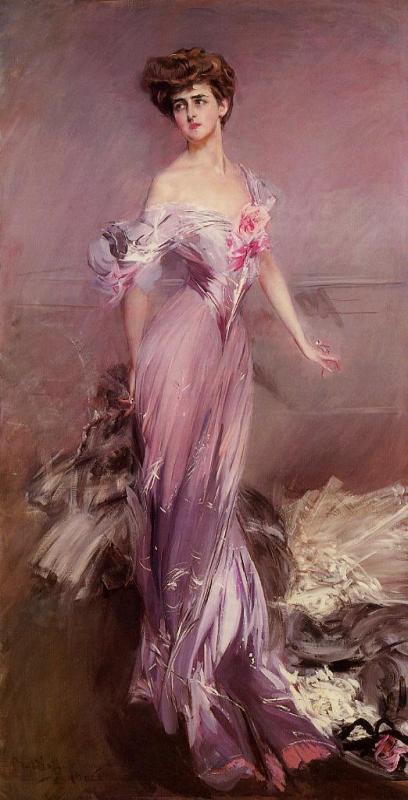
imagen: Jssgallery.org artista: Giovanni Boldini  Retrato de Mrs. Howard Johnston, 1906

imagen: Jssgallery.org     artista: Giovanni Boldini     Retrato de Mrs. Howard Johnston, 1906

Mientras Hasu-no-Hana capitalizó el furor de la moda japonista que influenció el arte y cultura europeos durante los últimos años del siglo XIX, Shem-el-Nessim prefirió un motivo orientalista y debe su nombre a una festividad egipcia que tiene lugar durante la primavera (Shem el Nessim  quiere decir oliendo el céfiro). En la misma manera que Hasu-no-Hana, su perfil se corresponde con una visión occidental idealizada de tierras lejanas. El aroma de este céfiro, sin dudas exquisito, encontraría su lugar apropiado en alcobas o salones de baile eduardianos más que en los alrededores de la Gran Pirámide.

Cuando Simon Brooke decidió revivir Grossmith -la casa de perfumes que alguna vez había pertenecido a su familia- buscó la ayuda de Roja Dove. Juntos reconstruyeron las fragancias, que luego fueron elaboradas por Robertet. Una alianza entre Dove y Robertet podía significar una sola cosa para mí: calidad impoluta. Siendo, además, una nostálgica irredimible de la Belle Époque, hace un par de años decidí correr el riesgo y comprar una botella de Shem el Nessim sin haberlo probado antes.

Shem-el-Nessim, creado originalmente en 1906, le dio alas a mi melancolía. Nostálgico y reconfortante a la vez, me recordó a otro perfume que solía ser bellísimo hasta que la reformulación aniquiló todas sus sutilezas y contradicciones: L’Heure Bleue. Esto no resulta sorprendente, ya que L’Heure Bleue fue creado apenas seis años más tarde que Shem-el-Nessim, así es que ambos encarnan el zeitgeist de la Belle Époque.

Al aplicarlo, Shem-el-Nessim no defrauda.  Me rodea una nube floral y atalcada, que amenaza con permear mis poros.  Una vez que mengua el estallido original, puedo empezar a apreciar sus muchas sutilezas.  La bergamota y el geranio son los responsables del cosquilleo inicial. El perfume cobra luego un carácter decididamente floral, cuando notas melifluas notas de jazmín, rosa e ylang-ylang infunden su sensualidad al blend. Si bien resulta fácil identificar las notas individuales, la transición entre ellas es continua, sin fisuras y la sensación general es de refinamiento. El orris concede su presencia aristocrática, pero se siente inusualmente cálido, casi dorado, al estar en combinación con heliotropo, vainilla, sándalo y almizcle.

Esta delicada belleza empolvada me provoca ganas de llorar y gritar de alegría a la vez (¿gritar?¡cuán impropio!), a diferencia del L’Heure Bleue actual que sólo me causa ganas de llorar. La única desventaja que encuentro es que el eau de parfum de Shem-el-Nessim no tiene demasiada longevidad sobre mi piel.

Soñaré con su magnífica versión parfum hasta tanto pueda comprar una botella.

Caro

Origen de la muestra: Eau de parfum comprada en Perfumería Nadia, Madrid

Cliqueando sobre los links, pueden leer nuestras reseñas de Phul-Nana, Hasu-no-Hana y Betrothal de la misma casa

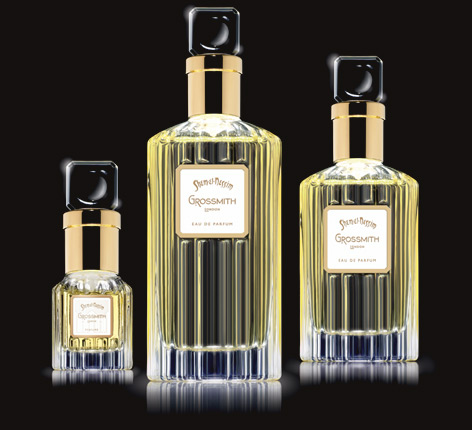
foto: Grossmithlondon.com

foto: Grossmithlondon.com

Grossmith Shem-el-Nessim – A harmony in pastel hues

While Hasu-no-Hana capitalized the Japonist rage that influenced European art and culture during the last years of the XIXth century, Shem-el-Nessim chose an Orientalist motif instead and owes its name to an Egyptian holiday that takes place during Spring (Shem el Nessim means  smelling of the Zephyr). Much like Hasu-no-Hana, its profile corresponds to an idealized Western  vision of distant lands. The scent of this Zephyr, without a doubt exquisite, would perhaps be more at ease in Edwardian alcoves or ballrooms than around the  Great Pyramid of Giza.

When Simon Brooke decided to resurrect Grossmith -the perfume house that once belonged to his family- he sought Roja Dove‘s help. Together, they reconstructed the fragrances, which were later produced by Robertet. A DoveRobertet alliance could only mean one thing to me: flawless quality. And being a hopeless nostalgic for all things Belle Époque, a couple years ago I took the plunge and decided to purchase Shem el Nessim unsniffed.

Shem-el-Nessim, which was originally created in 1906, gave wings to my melancholy. Nostalgic and comforting at the same time, it reminded me of another fragrance that used to be beautiful until reformulation destroyed all of its subtleties and contradictions: L’Heure Bleue. This is not surprising because L’Heure Bleue was created a mere six years after Shem-el-Nessim, so the zeitgeist of the Belle Époque is embodied in both of them.

Upon application, Shem-el-Nessim doesn’t fail to satisfy.  A powdery floral cloud surrounds me, almost threatening to permeate my every pore.  Once the initial blast subsides, I am able to fully appreciate its many subtleties. Bergamot and geranium are responsible for the initial tingle.  The fragrance later acquires a decidedly floral character, when honeyed notes of jasmine, rose and ylang-ylang infuse the blend with their sensuality. While individual notes are easy to identify, the transition between them is seamless, continuous and the overall feel is one of refinement. Orris graces the composition with its aristocratic presence, but feels unusually warm, almost golden, since it is paired with heliotrope, vanilla, sandalwood and musk.

This delicate, powdered beauty makes me want to weep and cry with joy at the same time (cry with joy? how improper!), unlike current L’Heure Bleue which only makes me want to cry. The only drawback I can think of is that Shem-el-Nessim eau de parfum doesn’t have much  longevity on my skin.

I will dream about the magnificent parfum version until I am able to purchase a bottle.

Caro

Origin of sample: Eau de parfum purchased at Perfumería Nadia, Madrid

You can also read our reviews of Phul-Nana, Hasu-no-Hana and Betrothal from the same house

Hermès Hiris – Acuarela en azul

foto: Iride di Augusto Bianco www.biancoiride.it

foto: Iride di Augusto Bianco    www.biancoiride.it

Hiris fue creado por Olivia Giacobetti en 1999, algunos años antes de que Jean-Claude Ellena se convirtiera en el nariz in-house de Hermès.  Podría pasar horas elogiando el talento de la Srta. Giacobetti: sus perfumes son inteligentes y transmiten una sensibilidad inusual. A pesar de estar cargados de poesía, no son difusos sino, por el contrario, muy nítidos.

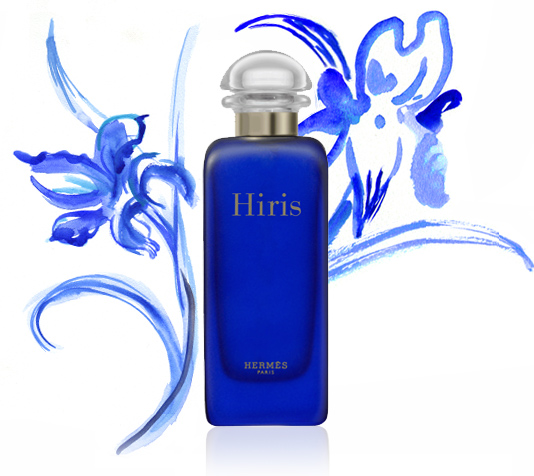
Buen ejemplo del delicado estilo de Giacobetti, Hiris es un retrato de la planta de iris en su totalidad, con rizoma y todo. Este retrato es una acuarela pintada en azules: pasteles, polvorosos y -por supuesto- transparentes. El otro iris de la casa, Iris Ukiyoé, creado por  Jean-Claude Ellena para la serie Hermessence, elige hacer zoom en la flor.

Los perfumes de iris pueden resultar glaciales y crueles (sí, No.19, te estoy hablando a vos) pero Hiris logra equilibrar temperaturas. Luego de una salida fría, cobra un carácter suave y mullido que lo hace parecer cálido incluso cuando no lo es en sentido estricto. Etéreo y limpio, Hiris señala la transición olfativa desde las raíces (ilustradas por zanahoria y ambrette) a la flor (neroli, rosa). Heno miel endulzan la mezcla que, con el paso del tiempo, se torna sutilmente jabonosa y atalcada. Discreto pero definido, resulta un maravilloso perfume para la oficina. Aunque no proyecta demasiado, la longevidad es excelente para un eau de toilette.

Hiris comparte ADN con I Love les Carottes, que Olivia Giacobetti hizo después para la marca orgánica Honoré des Pres usando sólo naturales. Les Carottes resulta más terroso y vegetal. Me gusta pensar que Hiris es una muchacha distinguida y Les Carottes, su prima bohemia.

Hiris ya no se distribuye de manera amplia en Argentina, aunque puede encontrarse por un precio muy razonable en la boutique Hermès de Avenida Alvear.

Nobleza obliga: pese a que los vendedores de Hermès tienen una reputación (a veces merecida) de ser descorteses y snobs, sólo guardo palabras de elogio para Miguel y Lorena en la tienda de Buenos Aires. Son entusiastas y  conocedores sobre perfumería,  lo que hace mucho más placentera la experiencia de comprar.

Caro

Origen de le muestra: Botella comprada en la boutique Hermès, Buenos Aires

foto: Usa.hermes.com

foto: Hermes.com

Hermès Hiris – Watercolor in blue

Hiris was created by Olivia Giacobetti in 1999, some years before Jean-Claude Ellena became Hermès in-house nose. I could praise Ms Giacobetti‘s talent for hours on end: her fragrances are intelligent and convey an unusual sensitivity. Despite being laden with poetry, they are not diffuse but, instead, very nitid.

A fine example of Giacobetti‘s delicate style, Hiris is a portrait of the whole iris plant, rhyzome and all. This portrait is a watercolor painted in shades of blue: pastel, dusty and -of course- transparent. The other iris from the house, Iris Ukiyoé, created by Jean-Claude Ellena for the Hermessence series, chooses to zoom into the flower.

Iris fragrances can seem icy and heartless (yes, No.19, I am talking to you) but Hiris manages to balance temperatures. After a cold opening, it acquires a soft and fluffy character that makes it appear warm, even if it is not so in a strict sense. Ethereal and clean, Hiris makes the olfactory transition from the roots (illustrated by carrot and ambrette) to the flower (neroli, rose). Hay and honey sweeten the blend wich, over the course of time, becomes subtly soapy and powdery. Discreet but with a definite presence, it makes for a wonderful office-fragrance. Although it doesn’t project far, the longevity is excellent for an eau de toilette.

Hiris shares its DNA with I Love les Carottes, which Olivia Giacobetti later did for organic house Honoré des Pres using only naturals. Les Carottes is earthier, more vegetal. I like to think Hiris is a well-bred girl and Les Carottes, her bohemian cousin.

Hiris is not widely distributed any longer in Argentina, but it can be found for a very reasonable price at the Hermès boutique on Avenida Alvear.

Noblesse oblige: while Hermès salespeople have a (sometimes well-deserved) reputation of being rude and snobbish, I only have words of praise for Miguel and Lorena at the Buenos Aires store. They are enthusiastic and knowledgeable about fragrance and that definitely makes for an agreeable shopping experience.

Caro

Origin of sample: Bottle purchased at the Hermès boutique, Buenos Aires

Ramón Monegal Perfumes Ambra di Luna – Cortesana parisina

imagen: Wikipaintings.org  artista: Giovanni Boldini,   Cleo de Merode

imagen: Wikipaintings.org     artista: Giovanni Boldini,    Cléo de Mérode

Ansiosa por probar esta línea luego de mi conversación con el perfumista  Ramón Monegal (clickear aquí para ir a la entrevista), apenas podía esperar a que el cartero trajera mis muestras.

Una vez que el preciado paquete llegó a mis manos, me encontré ante una selección tan amplia que no sabía bien por dónde empezar (la casa ofrece 14 fragrancias más una edición especial para la tienda Neiman Marcus).  Había estado antojada de  ámbar desde los primeros días del otoño, así que Ambra di Luna fue mi elección automática.  Cuando está bien ejecutado, el ámbar resulta sublime en su opulencia dorada. Cuando está plasmado de manera mediocre, corre el riesgo de volverse plano, pesado, aburrido.

Un ámbar animal que -inicialmente- me recordó a Bal a VersaillesAmbra di Luna es más amable aunque igualmente arrebatador. Si Bal a Versailles sugiere encuentros tras pesadas cortinas de brocado, Ambra di Luna  hace sus citas en un lugar más privado. Ambra conjura el tocador de alguna de las grandes horizontales parisinas del siglo XIX: polvos para rostro y cuerpo, algunas  pâtisseries olvidadas en una bandeja, una cama con dosel tallada en maderas nobles, un abrigo de piel y un poco de sudor.

El castóreo y carácter indólico del absoluto de jazmín sazonan esta fragancia con la dosis justa de erotismo; sándalo y vainilla brindan su reconfortante abrazo. Ambra di Luna resplandece serenamente bajo sus íntimas notas atalcadas. No proyecta demasiado y se mantiene cerca de la piel, como un halo dorado.

Me gustaría agregar que quedé positivamente impresionada por la calidad del packaging: los frascos-tintero son tan hermosos como funcionales.

Caro

Origen de la muestra: muestra gentileza de Ramón Monegal Perfumes

foto: Ramonmonegal.com

foto: Ramonmonegal.com

Ramón Monegal Perfumes Ambra di Luna –  Parisian courtesan

Eager to try this line after my conversation with perfumer  Ramón Monegal (click here if you wish to read the interview), I could barely wait for the postman to deliver my samples.

Once the precious parcel was in my hands, I found myself before such a wide selection that I didn’t know very well where to start (the house offers 14 fragrances plus one Neiman Marcus special edition) .  I had been craving  amber since the first days of Autumn, so Ambra di Luna was my automatic choice. When done right, amber can be sublime in its golden opulence. When poorly executed, it runs the risk of becoming flat, heavy, boring.

An animalic amber that -at first sniff- reminded me of Bal a VersaillesAmbra di Luna is more polite but equally ravishing. If Bal a Versailles suggests  encounters behind heavy brocade curtains, Ambra di Luna makes its trysts in a more private place. Ambra conjures the boudoir of one of the  Parisian  grandes horizontales of the late XIX century: face and body powders, a few  pâtisseries left on a tray, a four poster bed carved in noble woods, a fur coat and  just a bit of sweat.

Castoreum and the indolic character of  jasmine absolute spike this fragrance with the right dose of eroticism; sandalwood and vanilla lend their comforting embrace. Ambra di Luna glows quietly underneath its intimate powdery notes. It doesn’t project too far and wears close to the skin, like a golden halo.

I would like to add I am positively impressed by the quality of the packaging: the inkwell bottles are as beautiful as they are functional.

Caro

Origin of sample: sample courtesy of Ramón Monegal Perfumes