Category Archives: Perfumes

Maria Candida Gentile Burlesque – Del escenario al tocador

imagen: Wikiart.org  artista: Erté (Romain de Tirtoff)  "En el teatro -  Trapecio"

imagen: Wikiart.org artista: Erté (Romain de Tirtoff) “En el teatro – Trapecio”

El empleo de un alto porcentaje de naturales y la ubicuidad del incienso son dos rasgos salientes en la obra de Maria Candida Gentile, una suerte de poetisa que escribe con aromas en lugar de palabras.

Su Burlesque -presentado en 2012– alude al consabido género de entretenimiento consistente en manejar de manera juguetona la fascinación de la audiencia. Hacía tiempo que estaba intrigada por este perfume, especialmente después de que Virginia lo llamara “la hermana promiscua de Jardins d’Armide ” y que nuestra colega  Carrie Meredith  me lo describiera como “una cruza entre Mae West y Lili St. Cyr”. Después de muchos, muchos meses finalmente logré conseguir un frasco: Burlesque, mi querido, somos el uno para el otro.

Ambarado y dulzón, Burlesque en seguida me trajo a la mente algunos de los viejos Guerlains, en no poca medida debido a su refinamiento estético y exquisitez de materias primas. Shalimar resuena con insistencia en la salida hesperidada (que aúna naranja sanguina y dos variedades de mandarina) pero es una fuerte dosis de iris -cremoso, denso, casi masticable, con su faceta de lápiz labial sublimada- lo que le hace tomar una dirección menos predecible.  Una dulce nota de incienso baila una y otra vez alrededor del iris antes de desvanecerse sobre un colchón de patchouli indonesio.

Burlesque es atalcado, espeso e increíblemente satisfactorio para quienes gustan de los clásicos vintage. Su cadencia se percibe de forma distinta cada vez, revelando más o menos a su antojo; siempre logra conservar la intriga agregando un elemento de sorpresa. El sillage es amplio y la longevidad, buena.

Caro

Nota bene: Si bien es una fragancia con identidad propia, el aire de familia que comparte con Cinabre y otras creaciones de la Sra. Gentile es notable.

Origen de la muestra: Frasco comprado en Le Secret du Marais, Madrid


foto: Mariacandidagentile.com

foto: Mariacandidagentile.com

Maria Candida Gentile Burlesque – From the stage to the boudoir

The use of a high percentage of naturals and the ubiquity of frankincense are two outstanding traits in the oeuvre of Maria Candida Gentile , a sort of poetess who writes with scents instead of words.

Her Burlesque -introduced in 2012- alludes to the well-known entertainment genre which consists in managing the fascination of an audience in playful manner. I had long been intrigued about this perfume; especially after Virginia called “Jardins d’Armide promiscuous sister” and fellow blogger  Carrie Meredith  described it to me as “Mae West meets Lili St. Cyr”. After many, many months I finally managed to get a bottle: Burlesque, my dear, we are meant for each other.

Ambery and sweetish, Burlesque instantly brought to my mind a few of the old Guerlains, in no small part  due to its aesthetical refinement and exquisiteness of raw materials. Shalimar resonates insistently in the hesperidic opening (which conjoins blood orange and two types of tangerine) but it is a strong dose of iris -creamy, dense, almost chewy, its lipstick-y facet sublimated- what makes it take a less predictable direction.  A sweet note of frankincense dances once and again around the iris before fainting on a bed of Indonesian patchouli.

Burlesque is powdery, thick and incredibly satisfying for those who love vintage classics. Its cadence seems different every time, revealing more or less at will; it always manages to keep the intrigue by adding an element of surprise.  Sillage is ample and longevity, very good.

Caro

Nota bene: Although it is a fragrance with its own defined identity, the family resemblance it shares with Cinabre and other creations of Ms. Gentile is remarkable.

Origin of sample: Bottle purchased at Le Secret du Marais, Madrid


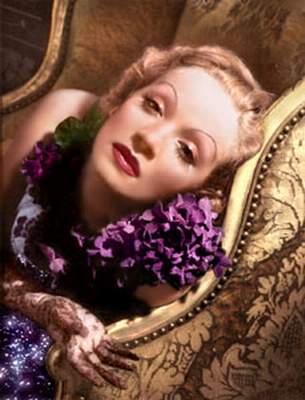
Frau Tonis 37 Veilchen – Violetas para Marlene

foto: Precodecinema.blogspot.com

foto: Precodecinema.blogspot.com

Hace unos meses -como quizás recuerden- hice una parada en boxes en Perfumería Nadia, en Madrid. Entre las muchas bellezas que olisqueé allí, una fragancia de apariencia simple me dejó una impresión profunda: Frau Tonis 37 Veilchen. Tiempo más tarde, aprovechando el viaje de un amigo a Madrid, le pedí si podía procurarme una muestra, a lo que se prestó muy amablemente.

Fundada por Toni Gronewald y su nieta Stefanie Hanssen, la casa Frau Tonis abrió sus puertas en Berlín en 2009. Su violeta -inspirada en el perfume que Marlene Dietrich usaba en la década de 1920-  se comercializa  bajo el nombre 37 Veilchen. El hecho de que se encuentre entre los best sellers de la casa no sorprende: más allá de la influencia de la mística de Dietrich, la fragancia es seductora y singular a la vez que se mantiene accesible en términos olfativos.

Veilchen es una flor afirmada, casi paradójica si tenemos en cuenta que las violetas se han asociado tradicionalmente a la  modestia y la timidez.  Esta violeta no se presenta verde y fotorrealista à la Violetta di Parma ni envuelta en una nube de polvo reminiscente del tocador de una corista.  Compuesta en estilo clásico, logra mantener un interesante equilibrio entre madurez y juventud.

Por unos momentos después de la salida, Veilchen huele casi a humedad. Una nota muy amaderada y algo áspera (cedro) atraviesa la composición diluyendo cualquier azucaramiento posible. Si alguna vez descubrieron un viejo frasco de perfume de violetas -entre pañuelos de seda y bolitas de naftalina- en la cómoda de la abuela, esta instancia puede transportarlos de nuevo a ese momento. Anticuada? Quizás, pero no por eso menos impactante.

Pronto la astringencia se suaviza considerablemente y Veilchen vira hacia la modernidad, aligerándose un poco. Una nota de  frambuesa, más evocadora de licores que de frutas recién cosechadas, se entrelaza con vainilla logrando infundir una cierta informalidad a la mezcla. El dulzor llegará acompañado por un dejo atalcado; ambos se mantendrán moderados a lo largo de la evolución. El sillage es amplio y la longevidad, decente.

Caro

Origen de la muestra:  muestra gentileza de Perfumería Nadia, Madrid

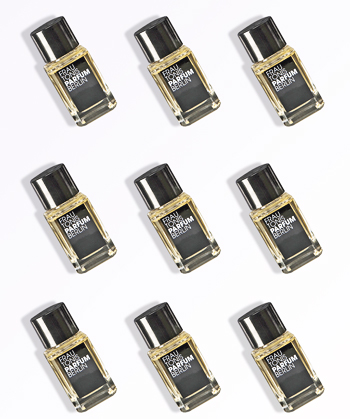
foto: Frau-tonis-parfum.com

foto: Frau-tonis-parfum.com

Frau Tonis 37 Veilchen – Violets for Marlene

A few months ago -as you might remember- I made a pit stop at Perfumería Nadia, in Madrid. Among the many beauties I sniffed there, a seemingly simple fragrance left a marked impression upon me: Frau Tonis 37 Veilchen. Some time later, when a friend had to travel to Madrid, I asked if he could bring a sample for me, which he kindly did.

Founded by Toni Gronewald and her granddaughter Stefanie Hanssen, Frau Tonis opened its doors in Berlin in 2009. Their violet -inspired by the perfume Marlene Dietrich wore in the 1920s- is sold under the name of 37 Veilchen. The fact that it is among the house’s best sellers does not surprise: beyond the influence of the Dietrich mystique, the fragrance is seductive and distinctive enough while still remaining accesible in olfactory terms.

Veilchen is is an assertive flower, almost paradoxical if we bear in mind violets have traditionally been associated with modesty and shyness. This violet does not appear as a greenish photorrealistic blossom à la Violetta di Parma  nor surrounded by a cloud of powder reminiscent of a chorus girl’s boudoir. Classic in style, it achieves an interesting equlibrium between maturity and youth.

For a few moments after the opening Veilchen smells almost musty to my nose. A very woody (cedarwood) note cuts through the composition diluting any possible sugariness. If you have ever discovered an old bottle of violet perfume -amidst silk scarves and mothballs- in your grandmother’s chest of drawers,  this might transport you back to that moment. Old fashioned? Perhaps, but no less striking for it.

Soon the astringency mellows considerably and Veilchen veers towards modernity, becoming somewhat lighter and fresher. A raspberry note, more evocative of fine liqueurs than freshly harvested fruits, intertwines with vanilla managing to infuse a certain informality into the blend. Finally sweetness arrives, accompanied by a hint of powder; both will remain restrained throughout the evolution. Sillage is ample and longevity, decent.

 Caro

Origin of sample: sample courtesy of Perfumería Nadia, Madrid


Antigua esencia de neroli

foto: Romasposa.info

foto: Romasposa.info

El neroli, aceite esencial destilado de las flores frescas del naranjo amargo, toma su nombre de Marie Anne de la Tremoille, Princesa de Nerola (1642-1722). Cuentan que la princesa gustaba tanto del dulce aroma floral que perfumaba sus guantes, ropas y agua de baño  con copiosas cantidades.

Este aceite esencial tiene reputación de afrodisíaco, sedante y antidepresivo. Curiosamente, el aroma que hoy asociamos con las novias y la pureza era antaño llevado por las prostitutas de Madrid, de manera tal que sus clientes podían identificarlas por el olor.

En un viejo libro (Encyclopedia Of Practical Receipts And Processes, de William B. Dick, Dick and Fitzgerald, Publishers, Nueva York, 1872 ) encontramos una receta muy simple para preparar esencia de neroli.

Disolver 1/2 onza (14,2g) de neroli puro en 570ml de alcohol etílico tridestilado.
Suele agregarse 1 onza (28,5g) de esencia de jazmín, junquillo o violetas. Un perfume delicado y delicioso.

Caro

imagen: En.wikipedia.org artista: Juan Serra Marie Anne de la Tremoille, Princesa de los Ursinos (Princesa de Nerola)

imagen: En.wikipedia.org     artista: Juan Serra
Marie Anne de la Tremoille, Princesa de los Ursinos (Princesa de Nerola)

Old essence of neroli

Neroli, the essential oil distilled from the fresh flowers of the bitter orange tree
is called after Marie Anne de la Tremoille, Princess of Nerola (1642-1722). The princess, we are told, fancied so much the sweet floral scent she would douse her gloves, clothes and bath water with copious amounts of it.

This essential oil is considered to have afrodisiac, sedative and antidepressant properties. Funnily enough, the scent we associate today with brides and purity was in olden times worn by the prostitutes of Madrid, so that their clients could identify them by the smell.
In an old book (Encyclopedia Of Practical Receipts And Processes, by William B. Dick, Dick and Fitzgerald, Publishers, New York, 1872) we found a very simple recipe for essence of neroli.

Dissolve 1/2 ounce avoirdupois pure neroli in rectified spirit, 1 Imperial pint.
An ounce of essence of jasmine, jonquil or violets, is often added. A delicate and delicious perfume.

Caro


Entrevista: Daniel Josier – Nuevo clasicismo

foto: Atelierdelperfume.com

foto: Atelierdelperfume.com

Uno de mis descubrimientos más interesantes de este año fue, sin dudas, la línea del nariz español Daniel Josier. Durante una visita relámpago a Madrid pude conocer sus fragancias en Perfumería Nadia, a instancias de la encantadora Alicia. El packaging -sencillo- contiene perfumes clásicos y de belleza inusual (mi preferido es el magnífico Golden Tuberose)

Daniel fue suficientemente amable como para prestar un poco de su tiempo y  responder algunas preguntas.

¿Cómo te iniciaste en la Perfumería?
Me inicié en el mundo de la perfumería en el año 1998, en la compañía alemana de creación de perfumes Haarman & Reimer (actualmente Symrise). Allí trabajé con Jean Claude Ellena, que dirigía el Atelier Olfactif de esta compañía en Grasse, y quien fue mi jefe, maestro (llámalo como quieras) desde el año 1998 al 2004.

¿Cuánto tiempo pasó hasta que te animaste a lanzar tu propia marca?

Mi línea de perfumes salió en 2012, así que estuve 14 años trabajando para la industria hasta que lancé mis propios perfumes (sigo trabajando para la industria hoy).

¿Qué propósitos tenías en mente al lanzar tu propia línea?

La globalización de los mercados y la dimensión de la perfumería comercial hace que las grandes firmas necesiten de perfumes muy comerciales, fáciles de consumir. Cuando te diriges a un mercado de 120 países, por ejemplo, tu primera producción es de 250.000 piezas, gastas millones en publicidad, imagen etc, etc…el perfume tiene que gustar a todo el mundo sí o sí…y por tanto deben ir a productos fáciles, que saben que funcionan en el mercado y dejarse de “inventos raros”.

Por lo tanto desde el punto de vista del creador de la esencia…se convierte en un trabajo más técnico que creativo. Es por eso que muchos perfumistas salieron, salen y saldrán al mercado con sus propias líneas, alejándose de la “rutina” de la perfumería comercial y pudiendo exponer líneas perfumisticas más creativas, más intimas, más raras, para un publico más exigente, más conocedor, y más exclusivo

Esa fue la razón de lanzar la línea Daniel Josier: crear perfumes fuera de la norma del mercado, creaciones más intimas y donde importan más la calidad de la materia prima y el mimo que su desarrollo de marketing

Varios de tus perfumes llevan nombres (Cuero Toscano. Orquídea Negra) que se asemejan bastante a los de otras líneas ¿Cuál es el motivo?

Cuando una marca quiere lanzar un perfume al mercado, llama a varias casas de perfumistas que trabajan el briefing y presentan unas creaciones para esa línea solicitada, entrando en concurso entre ellas. Al final hay un perfume elegido, ganador, que será el que sale al mercado…pero hay otros perfumes que concursaron en ese proyecto y nunca salieron…es la razón por la que algunos de mis perfumes tienen nombres que recuerdan a otros del mercado.

¿Cuál crees que es el sello de tus creaciones?

El sello de mis creaciones…quizás el mimo de la materia prima…no busco una tendencia de mercado, busco el mimo de la materia prima, la selección de la calidad de materia prima es esencial. Por otro lado siempre he admirado mucho la perfumería árabe y sus materias, pero soy de cultura europea y mediterránea…la fusión de estos elementos creo que es lo que más define mis perfumes

¿Cuáles son tus fuentes de inspiración?

La inspiración puede venir por muchos motivos, nunca hay una sola fuente…la inspiración es algo que hace vibrar tu energía interior y te dejas llevar por ella. Es algo que te estimula y si tienes la mente abierta y te dejas guiar llegarás a buen puerto. Son muchas las fuentes de inspiración, desde un nuevo paisaje, a una buena película…a una mirada o una sonrisa… Pero si tuviese que decir una…lo que más me inspira en este mundo es la piel de mi mujer…ella es la mayor fuente de inspiración

¿Qué materias primas son tus preferidas?

Sobre materias primas…ufffff..hay tantas…pero si tuviese que elegir un ramillete…me encantan las flores blancas por su luminosidad, las maderas orientales como el sándalo, vetiver y oud me fascinan, las especias picantes como la pimienta de Szechuan y las materias orientales como el patchouli, ambar o almizcle

De entre todas tus creaciones ¿Cuál te hace sentir más orgulloso?

De mis creaciones…me siento orgulloso de todas y cada una , por que todas representan algo de lo que soy, de lo que siento. Quizás Ambre Tabac, me hace sentir especialmente orgulloso porque pensaba que iba a ser una especie de “incomprendido” por su “rareza” y sin embargo se ha convertido en el buque insignia de la marca. Pero, como creador, la que más orgullo me hace sentir es sin duda la próxima creación…

¿Qué novedades podemos esperar en los próximos meses?

Sobre las novedades…está a punto de salir un perfume del que espero mucho, que me encanta y creo que va a gustar mucho (eso deseo). Se llamara Bois d’Iris y estará disponible a inicios de diciembre ¡Esto es primicia!

Y luego trabajando en muchas ideas de cara a 2015…algunas se quedarán por el camino y algunas saldrán, las que más ilusión me haga mostrar…aún están por definir.

Caro

foto: Danieljosier.com

foto: Danieljosier.com

Interview: Daniel Josier – New classicism

One of my most interesting discoveries this year was, without a doubt, the line created by Spanish nose Daniel Josier. During a fleeting visit to Madrid I was able to sniff his creations at Perfumería Nadia,when the charming Alicia insisted I try them. The uncomplicated packaging contains classic perfumes of a rare beauty (my favorite is the magnificent Golden Tuberose).

Daniel was kind enough to share his precious time and answer a few questions.

What was your start in Perfumery like?
I started out in the world of Perfumery in 1998, at the German fragrance company Haarman & Reimer (now Symrise). There I worked with Jean Claude Ellena, who conducted the Atelier Olfactif of the company in Grasse. He was my boss, my mentor (call it whatever you will) from 1998 to 2004.

How much time elapsed until you decided to launch your own brand?

My fragrance line was launched in 2012, so I had been working for the industry for about 14 years until I launched my perfumes (I still work for the industry today)

What purpose did you have in mind when you launched your line?

Market globalization and the dimension of commercial perfumery makes the big firms require very commercial perfumes which are easy to sell. When you target a market of 120 countries, for instance, your first production is of approximately 250,000 bottles, you spend millions in advertising, image, etc, etc…that fragrance has to be likeable by everyone…so they must be easy products, which the companies know will do well in the market, they forget about “strange inventions”.

So, from the point of view of the creator of the essence…the task becomes much more technical than creative. That’s why many noses come out to the market with their own lines, moving away from the “routine” of commercial perfumery, becoming able to showcase fragrance lines which are more creative, more intimate, stranger perhaps, for a more demanding audience which is usually also more knowledgeable and exclusive.

That was the reason for launching the Daniel Josier line: creating fragrances outside the market norm, more intimate creations where indulgence and the quality of raw materials are more important than marketing development.

A few of your fragrances bear names (Cuero Toscano. Orquídea Negra) which are quite similar to those from other brands. Is there a reason behind this?

When a brand wants to introduce a fragrance into the market, they call several fragrance companies, which then work on a briefing and present a few creations for that line, competing among them. In the end, there’s a chosen perfume, a winner, which will be launched to the market…but there are other fragrances which were involved in that project although they were never launched…that is the reason why some of my creations bear names that might remind of others already in existence.

Which is the hallmark of your creations?

The hallmark…perhaps the indulgence of raw material…I don’t search for a market trend, I search for the indulgence of the raw material and selecting the quality of the raw materials is essential. I have always admired Arabic perfumery and its ingredients, but my heritage is European and Mediterranean…I think it’s the fusion of these elements what describes my  perfumes best.

What are your sources of inspiration?

Inspiration can appear due to a myriad reasons, there never is just one source…inspiration is something that makes your inner energy vibrate and you allow it to lead the way. It is something that stimulates you and if you are open minded and let it guide you, you will succeed. The sources of inspiration are many, from a new landscape, to a good film…to a look or a smile… But if I had to choose just one…what inspires me most in this world is my wife’s skin…she’s the greatest source of inspiration

Which are your favorite raw materials?

When it comes to raw materials…ufffff..so many…but if I had to choose just a bunch…I adore white flowers because of their luminoity, I am fascinated by oriental woods like sandalwood, vetiver and oud, hot spices like Szechuan pepper and oriental raw materials like patchouli, amber or musk

Which one of your creations makes you feel proudest?

I feel proud of each and every one because all of them represent a bit of who I am, of what I feel. Perhaps Ambre Tabac; it makes me feel especially proud because I thought it would be misunderstood because of its strangeness but it now has now become the flagship of the brand. As a creator, I always feel proudest about the next creation…

What news should we expect over the next months?

With regards to the news…we are about to launch a fragrance I expect a lot from, which I love and I think will be very much liked (I hope so). It is called Bois d’Iris and it will be available at the beginning of December (this is a scoop!)

I’m also working on many ideas for 2015…some of them will be abandoned, some of them will see the light, the ones I’ll be most illusioned about…but they still need to be defined.

Caro

Santa Maria Novella Peau d’Espagne – Humo, cuero y terciopelo


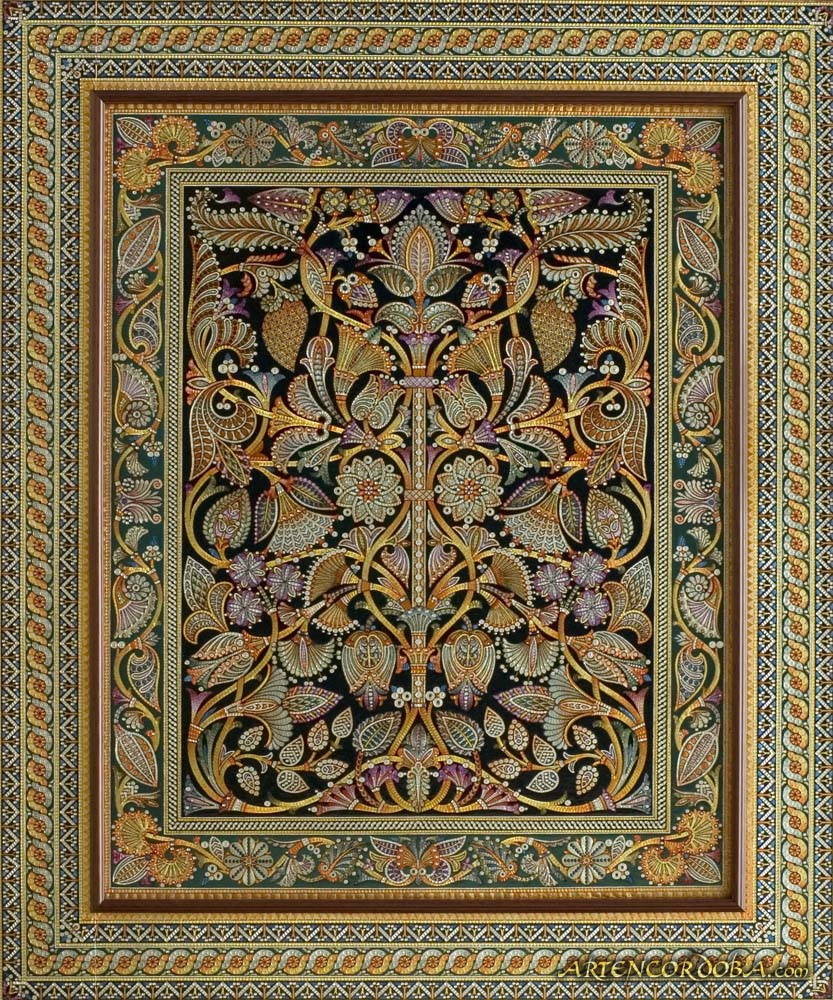
foto: Artencordoba.com  "Arbol de la vida", trabajo realizado en cuero dorado, plateado y policromado por Ramón García Romero

foto: Artencordoba.com     “Arbol de la vida” (trabajo de Ramón García Romero realizado en cuero dorado, plateado, policromado y ferreteado)

Unos años atrás escribí sobre mi visita a una de las perfumerías más bellas del mundo, Officina Profumo Farmaceutica di Santa Maria Novella, en Florencia. Preumiendo de una impresionante historia que abarca más de cuatro siglos, Santa Maria Novella ha logrado permanecer tradicional y también fresca; no sólo ha sobrevivido sino que ha prosperado.los perfumes de la casa florentina son de estilo tan clásico que algunos de ellos nos hacen viajar en el tiempo con tan sólo olerlos; Peau d’Espagne (cuero de España) es una de sus propuestas más sobresalientes.

El cuero de España difiere del ruso, el inglés y el marroquí en el procedimiento que se seguí a para curtir los cueros. En los viejos tiempos Córdoba se volvió tan famosa por sus cueros polícromos repujados que el cordobán -obtenido a partir de la piel de las cabras- debe su nombre a la ciudad. En el caso del cuero de España, los pellejos se sumergían en una mezcla de aceites fragantes, la mayoría de ellos florales, que prestaban un olor característico. Según Havelock Ellis en sus Estudios de la Psicología del Sexo (1897-1827) “consiste en gamuza sumergida en aceites de neroli, rosa, sándalo, lavanda, verbena, bergamota, clavo de olor, y canela, untado a continuación con civet y almizcle” y afirma que los perfumes de Peau d’Espagne son  “a menudo el aroma favorito de las personas sensuales”. En el siglo XIX, el cuero de España se utilizaba también para perfumar papel de escribir.

Detecto notas de abedul y nada de flores en la versión Peau d’Espagne de Santa Maria Novella, lo que quizás la alinearía más con los cueros de Rusia que de España; resulta, de todos modos, magnífica. Me recuerda fuertemente al olor de los muebles del Palacio Nacional de Sintra, en Portugal: maderas preciosas lustradas, antiquísimos cueros labrados, la vegetación agreste de los alrededores entibiada por el sol. Curtido y regio a la vez -casi a la manera de un palacio de verano- este perfume trae consigo un soplo de historia. Santa Maria Novella empezó a comercializar su Peau d’Espagne en 1901; aunque es probable que, a lo largo de más de un siglo, haya sufrido reformulaciones, si éstas han tenido lugar, ciertamente han sido mesuradas.

Luego de una apertura seca y alcanforada, Peau d’Espagne se suaviza considerablemente, su amargor se atenúa y la fragancia adquiere una textura densa, casi aterciopelada. Ahumado y resinoso, es también de carácter sombrío y reflexivo, un cuero que se adapta bien a usuarios introvertidos. Su robustez envolvente se siente como una tranquilizadora presencia animal. Exquisito en un hombre, desafiante en una mujer, Peau d’Espagne se manifiesta fuerte pero nunca estridente; el estratto triplo -la versión que tengo yo- se mantiene, de hecho, cerca de la piel y su relación precio-calidad es excelente.


Caro

Origen de la muestra: Frasco de estratto triplo comprado en Officina Profumo Farmaceutica di Santa Maria Novella, Florencia

Nota bene: Para otros perfumes del tipo “cuero de España”, por favor vean nuestras reseñas de Arquiste Fleur de Louis e Infanta en Flor y Keiko Mecheri Cuir Cordoba.

foto: Smnovella.it

foto: Smnovella.it

Santa Maria Novella Peau d’Espagne – Smoke, leather and velvet

A few years ago I wrote about my visit to one of the most beautiful fragrance shops in the world, Officina Profumo Farmaceutica di Santa Maria Novella, in Florence. Boasting an impressive history that spans more than four centuries, Santa Maria Novella has managed to remain traditional yet fresh; not only it has survived but it thrives. The fragrances from the Florentine house are so classic in style, some of them even make us travel back in time just upon sniffing; Peau d’Espagne (Spanish leather) is one of their most outstanding offerings.

Spanish leather differs from Russian, English  and Morocco leathers in the way the animal skins were tanned. In olden times Córdoba became so famous for its embossed polichrome leathers that the cordován variety -obtained from goat skins- owes its name to the city. In the case of Spanish leather, the animal hides were immersed in a mix of fragrant oils, most of them floral, that would lend a characteristic smell. According to Havelock Ellis in his Studies of the Psychology of Sex (1897-1827) “it consists of wash-leather steeped in ottos of neroli, rose, santal, lavender, verbena, bergamot, cloves, and cinnamon, subsequently smeared with civet and musk” and states Peau d’Espagne perfumes are  “often the favorite scent of sensuous persons”. In the XIXth century, Spanish leather was also used for scenting writing paper.

I get birch notes and no florals from Santa Maria Novella Peau d’Espagne, which would align it closer to Russian than Spanish leathers; it is, nonetheless, magnificent.  It strongly reminds me of the smell of the furniture at the Sintra National Palace, in Portugal: precious polished woods, embossed ancient leathers, the wild plants in the surroundings being warmed up by the sun. Rugged and regal at a time -much like a palace intended for Summertime-  this perfume brings along a whiff of history. Santa Maria Novella started selling its  Peau d’Espagne in 1901; although it is probable that, over more than a century, it has suffered from reformulations, if these have happened, they have certainly been measured.

After a dry camphoraceous opening, Peau d’Espagne softens considerably; its bitterness mellows and the fragrance acquires a dense, almost velvety texture. Smoky and resinous, it is also somber and reflective in character, a leather best suited for introverts. Its enveloping robustness feels like a reassuring animalic presence. Exquisite on a man, defiant on a woman, Peau d’Espagne manifests itself strongly but it’s never loud; the estratto triplo -the version I own- wears in fact quite close to the skin and its price-quality ratio is excellent.

Caro
Origin of sample: Flacon of estratto triplo purchased at Officina Profumo Farmaceutica di Santa Maria Novella, Florence

Nota bene: For other Spanish leather-type fragrances, please see our reviews of Arquiste Fleur de Louis and Infanta en Flor and Keiko Mecheri Cuir Cordoba.