Category Archives: Reseñas – Reviews

Eau d’Italie Eau d’Italie – Mirando al Mediterráneo

foto: Acrossrome.com

foto: Acrossrome.com

Quienes me conocen saben bien que Italia es uno de mis destinos de viaje preferidos….está bien, no voy a tratar de mentirles: ES absolutamente mi destino preferido, sin lugar a dudas ni discusiones.  Sicilia  representa el paraíso en la tierra y la sola mención de Roma me acelera el corazón. Los aromas de Italia me han impresionado con la misma fuerza que sus sabores, su arte y la belleza de sus habitantes. Eau d’Italie, como tal vez recuerden, rinde tributo a la geografía, historia y flora de la península.

Fundada por Marina Sersale -cuya familia es propietaria del hotel Le Sirenuse, en Positano– y Sebastián Álvarez Murena la marca ha recorrido un largo camino desde que lanzara su primera fragancia, hace más de diez años.
Eau d’Italie (el perfume) fue compuesto por Bertrand Duchaufour en ocasión del aniversario número 50 de Le Sirenuse. Su éxito fue tan resonante que derivó en el subsecuente lanzamiento de otras doce creaciones. Apenas dos meses atrás, Eau d’Italie abrió las puertas de una nueva boutique en Via dei Coronari, en Rome. Pequeña y encantadora, la tienda alberga el espectro completo de productos en una atmósfera mediterránea que remite a Le Sirenuse.

Volviendo a la creación originaria, Sersale y Álvarez Murena decidieron que no querían que fuera un cliché, por ese motivo evitaron la sobredosis de cítricos frecuente en las eaux de toilette italianas. Recién una década más tarde accederían a lanzar una fragancia cítrica teñida de menta (Acqua Decima). Mi percepción de Eau d’Italie es como si mirara al sol a través de una hoja de higuera; aunque la hoja de higuera no está listada entre las notas oficiales, siento el mismo ligero dulzor amaderado y  una luminosidad intensa que asoma por detrás…como un vitral hecho por la naturaleza. Eau d’Italie chispea con serenidad: notas de bergamota y flores blancas se intercalan con frescos destellos de verde sobre la sequedad que brindan el incienso y un magistral “acorde de arcilla“, evocador del olor de las baldosas de terracotta de Positano cuando calienta el sol (este acorde mineral seco “inspiraría” más tarde a otras marcas).El blend se agría ligeramente, como una insinuación de salmuera,con brotes de grosella y patchouli; esta característica  se presenta en la mayoría de las primeras creaciones de la casa. La longevidad es muy buena, no sólo en el eau de toilette sino también en los demás productos de la línea de extensión. Casual, pero discreto y refinado, se consagra como clásico moderno y una de las propuestas más sólidas de la marca.

Caro

Origen de la muestra: gentileza de Eau d’Italie

foto: Eauditalie.com

foto: Eauditalie.com

Eau d’Italie Eau d’Italie –  Looking onto the Mediterranean

Those acquainted with me know that Italy is one of my favorite  travel destinations….oh, ok, I will not try to fool you: it IS my absolute favorite destination ever.  Sicily  represents heaven on earth and the sole mention of Rome makes my heart beat faster. The scents of Italy have impressed me as strongly as its flavors, its art and the beauty of its people. Eau d’Italie, as you might remember, pays tribute to peninsular geography, flora and history with its fragrances.

Founded by Marina Sersale -whose family owns the hotel Le Sirenuse, in Positano– and Sebastián Álvarez Murena the brand has come a long way since they launched their first fragrance, more than ten years ago.
Eau d’Italie (the fragrance) was composed by Bertrand Duchaufour on the occasion of  Le Sirenuse‘s 50th anniversary. Its success was so resounding that it derived in the subsequent launching of other eleven creations. Barely two months ago, Eau d’Italie opened the doors of a new boutique on Via dei Coronari, in Rome. Small and charming, the store houses the entire range of products in a Mediterranean setting, evocative of Le Sirenuse.

Back to the original fragrance, Sersale and Álvarez Murena accorded that they didn’t want it to become a cliché, thus they avoided the citrus overdose so common in Italian eaux de toilette. They would only agree to launch a mint-tinged citrusy fragrance a decade later (Acqua Decima). My perception of Eau d’Italie is a bit like looking at the sun through a fig leaf; although fig leaf is not listed among the official notes, I get the same mild woody sweetness from it and an intense luminosity that peeks from behind…like a vitrail made by nature. Eau d’Italie sparkles quietly: notes of bergamot and white flowers are interspersed with fresh glints of green over a dryness given by incense and a masterful “clay accord” which intentionally evokes the sun-warmed terracotta tiles of Positano (this dry mineral accord would later “inspire”other brands. The blend appears slightly soured, like a hint of brine, with the presence of blackcurrant bud and patchouli; this characteristic is present in most of the house’s earlier creations. The longevity is very good, not only in the eau de toilette but also in the ancillary products. Relaxed yet discreet and refined, it is already established as a modern classic and as one of the brand’s most solid offerings.

Caro

Origin of sample: courtesy of Eau d’Italie

foto: gentileza de Eau d'Italie

foto: gentileza de Eau d’Italie        Boutique de la marca en Roma


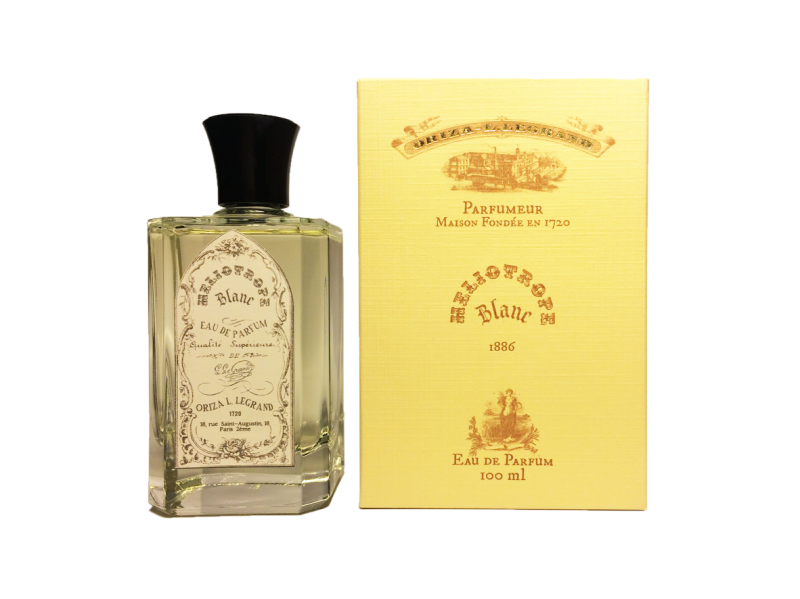
Oriza L. Legrand Hèliotrope Blanc – Dulce compañía

imagen: Weshare.hk  De La Mode Illustrée

imagen: Weshare.hk     de La Mode Illustrée

Luego de los sucesos de las últimas semanas, sentí la necesidad de escribir sobre un perfume que transmitiera una sensación de paz y pureza, el de hoy es especialmente significativo porque proviene de una casa parisina varias veces centenaria. Oriza L. Legrand vio la luz del día por primera vez durante el reinado de Luis XV y brilló con especial intensidad durante la segunda mitad del siglo XIX (los artículos y menciones sobre la casa abundan en las publicaciones de la época). Cerrada durante la década de 1930, fue puesta nuevamente en marcha por los messieurs Hugo Lambert y Franck Belaiche.

Hèliotrope Blanc es la reorquestación de una fragancia que Oriza L. Legrand lanzó por primera vez en 1886. En el mismo tono que otras creaciones de la casa, resulta atractiva al gusto moderno a la vez que permite un vistazo al pasado para nosotros los nostálgicos. En la segunda mitad del siglo XIX los soliflorales delicados eran los perfumes que las mujeres respetables preferían.  Los florales intensos y las notas animales como almizcle y civeta se asociaban con mujeres de baja moral, pero los tímidos pimpollos no dejaban lugar a malentendidos : heliotropo, violeta, muguet, reseda causaban furor. Así y todo, las damas ni soñaban en aplicarse el perfume sobre la piel; lo usaban, sí, para perfumar pañuelos, encaje y cintas para el cabello.

Las diminutas flores del heliotropo -en caso de que no estén muy familiarizados con ellas- están agrupadas en racimos; exhalan un olor ligeramente avainillado  y almendrado, dado en parte por su contenido natural de benzaldehído (el benzaldehído también se da de manera natural en el aceite de almendras amargas y suele emplearse en perfumería para recrear el olor de las almendras).

¿Es posible lograr calidez y frescura a la vez?  Sí, y Hèliotrope Blanc lo consigue. Acuarela floral con alusiones gourmand, es tan limpio y puro que roza lo virginal (creo, en efecto, que sería maravilloso en una novia). Mitad crema a la almendra, mitad tierno abrazo, se siente más como una presencia etérea y tranquilizadora que como un perfume.  Mimosa, violeta, iris (la flor, no la raíz) y, por supuesto, heliotropo se agrupan en armonía; la única nota que por momentos suena en otro registro es la almendra, que parece entretejerse por dentro y fuera de la composición tratando de encontrar su lugar definitivo. Una cualidad láctea que recuerda la madera de sándalo ancla las notas florales. No obstante  su ligereza, Hèliotrope es tenaz: a la mañana siguiente, un tenue aroma de almendras y violetas persiste en la ropa.

Caro

Origen de la muestra: Gentileza de Oriza L. Legrand

foto: Orizaparfums.com

foto: Orizaparfums.com

Oriza L. Legrand Hèliotrope Blanc –  Sweet companion

After the events of the past few weeks, I felt the need to write about a  fragrance that conveyed a feel of peace and purity, the parfum du jour is especially meaningful because it comes from a several times centenary Parisian house. Oriza L. Legrand first saw the light of day during the reign of Louis XV and shone with particular intensity during the second half of the XIXth century (articles and mentions to the house abound in newspapers from the epoch). Closed down  during the 1930s, it was resurrected a few years ago by messieurs Hugo Lambert and Franck Belaiche.

Hèliotrope Blanc is the reorchestration of a fragrance which Oriza L. Legrand launched for the first time in 1886. In the same vein as other creations from the house, it appeals to modern tastes while still providing us nostalgics with a glimpse of the past. In the second half of the XIX century respectable women preferred delicate soliflores. Strong florals and animal notes like musk and civet were associated with women of low morals but demure blossoms  left no place for misunderstandings: heliotrope, violet, muguet, mignonette were all the rage. Still, ladies wouldn’t even dream of applying fragrance to their skin, using it instead to scent handkerchiefs, lace and hair ribbons.

The tiny heliotrope flowers -in case you are not too familiar with them- are grouped in clusters; they exhale a lightly vanillic and almondy odor, given partly by their natural benzaldehyde content (benzaldehyde also occurs naturally in bitter almond oil and is generally used in perfumery to recreate the smell of almonds).

Is it possible to attain warmth and freshness at the same time? Yes, and  Hèliotrope Blanc succeeds at this. A floral watercolour with gourmand allusions, it is so clean and pure it verges on virginal (I think, in fact, it would work wonders on a bride). Part almond flavored cream, part tender embrace, it feels more like a reassuring ethereal presence than like perfume. Mimosa, violet, iris (the flower, not the root) and, of course, heliotrope are harmoniously arranged together; the only note that plays slightly louder is almond, which seems to weave in and out of the composition, trying to find its definive place. A milkiness that reminds of sandalwood anchors the floral notes. Notwithstanding its lightness, Hèliotrope is tenacious: the following morning, the muted scent of almond and violets lingers on clothes.

Caro

Origin of sample: courtesy of Oriza L. Legrand

foto: Commons.wikimedia.org fotógrafo: Cody Hough

foto: Commons.wikimedia.org fotógrafo: Cody Hough

Phaedon Dzhari – Viento del desierto


imagen: Plantillustrations.org autor: Pierre Jean Francois Turpin  en Flore Mèdicale, de Francois-Pierre Chaumeton (1830)

imagen: Plantillustrations.org      autor: Pierre Jean Francois Turpin (en Flore Mèdicale, de Francois-Pierre Chaumeton, 1830)

El tiempo caluroso parece traer el mismo desafío una y otra vez: la búsqueda perpetua de perfumes que puedan usarse durante los días más tórridos. Como no soy muy afín a usar notas cítricas o marinas, mis opciones se reducen considerablemente. Eaux de toilette de una cualidad seca, mineral, pueden ser un bienvenido escape a la omnipresencia de los hesperidios.

Dzhari fue lanzado por Phaedon – una de las marcas de Pierre Guillaume– en 2011 y lleva el nombre de un viento que sopla en el desierto del Sahara. Es cálido, seco y muy ligero; el concepto aparece ejecutado con éxito. Tengamos en mente que si bien el talento artístico es apreciado -y está bien que así sea- el perfume siempre debe conservar su propósito original y su funcionalidad; esto es algo en lo que las creaciones firmadas por el Sr. Guillaume destacan.

Dzhari está dominado por un acorde de terracotta que recuerda al que se distingue brillantemente en la fragancia epónima de Eau d’Italie. A medida que  evoluciona, este acorde se siente cada vez más seco, como la tierra cuando empieza a resquebrajarse bajo el calor del sol. Su carácter austero y minimalista se ve apenas matizado por una nectarina nota de dátil, pero el toque magistral es brindado por la adición de una lograda nota de vino de Málaga -dulce, robusto, generoso- que no va en detrimento de la ligereza imperante. Los dátiles y el vino dotan a la sequedad de una delicada cualidad almizclada que impregna el blend y lo vuelve más afín con la piel del usuario.

La longevidad está en concordancia con su concentración (eau de toilette).

Caro

Origen de la muestra: Muestra gentileza de Perfumería Nadia, Madrid 

imagen: Phaedonparis.com

imagen: Phaedonparis.com

Phaedon Dzhari –  Desert wind

Hot weather seems to bring the same challenge again and again: a perpetual  quest for fragrances that can be worn during the dog days of Summer. Since I’m not especially fond of wearing citrusy or marine notes, my options are considerably reduced. Eaux de toilette of a dry, mineral quality can be a welcome escape from the hesperidic omnipresence.

Dzhari was launched by Phaedon -one of Pierre Guillaume‘s brands- in 2011 and bears the name of a wind that blows in the Sahara desert. It is warm, dry and very light; the concept appears  successfully executed. Let’s keep in mind that while artistry is -and should be- appreciated, fragrance  must always stick to its original purpose and maintain its functionality; this is something the creations signed by Mr. Guillaume excel at.

Dzhari is dominated by a terracotta accord, reminiscent of the one that shines so bright in Eau d’Italie’s eponymous fragrance. Throughout the evolution, this accord feels increasingly drier, like earth that begins to crack under the heat of the sun. Its minimalistic austere character is barely nuanced by a nectarous date note, but the master’s touch is given by the addition of an accomplished Malaga wine note -sweet, robust, generous- that doesn’t detract from its overall lightness. The dates and wine endow the dryness with a delicate muskiness that pervades the blend and makes it more compatible with the wearer’s skin.
Longevity is in accordance with the concentration (eau de toilette).

Caro

Origin of sample: Sample courtesy of Perfumería Nadia, Madrid 

Maria Candida Gentile Burlesque – Del escenario al tocador

imagen: Wikiart.org  artista: Erté (Romain de Tirtoff)  "En el teatro -  Trapecio"

imagen: Wikiart.org artista: Erté (Romain de Tirtoff) “En el teatro – Trapecio”

El empleo de un alto porcentaje de naturales y la ubicuidad del incienso son dos rasgos salientes en la obra de Maria Candida Gentile, una suerte de poetisa que escribe con aromas en lugar de palabras.

Su Burlesque -presentado en 2012– alude al consabido género de entretenimiento consistente en manejar de manera juguetona la fascinación de la audiencia. Hacía tiempo que estaba intrigada por este perfume, especialmente después de que Virginia lo llamara “la hermana promiscua de Jardins d’Armide ” y que nuestra colega  Carrie Meredith  me lo describiera como “una cruza entre Mae West y Lili St. Cyr”. Después de muchos, muchos meses finalmente logré conseguir un frasco: Burlesque, mi querido, somos el uno para el otro.

Ambarado y dulzón, Burlesque en seguida me trajo a la mente algunos de los viejos Guerlains, en no poca medida debido a su refinamiento estético y exquisitez de materias primas. Shalimar resuena con insistencia en la salida hesperidada (que aúna naranja sanguina y dos variedades de mandarina) pero es una fuerte dosis de iris -cremoso, denso, casi masticable, con su faceta de lápiz labial sublimada- lo que le hace tomar una dirección menos predecible.  Una dulce nota de incienso baila una y otra vez alrededor del iris antes de desvanecerse sobre un colchón de patchouli indonesio.

Burlesque es atalcado, espeso e increíblemente satisfactorio para quienes gustan de los clásicos vintage. Su cadencia se percibe de forma distinta cada vez, revelando más o menos a su antojo; siempre logra conservar la intriga agregando un elemento de sorpresa. El sillage es amplio y la longevidad, buena.

Caro

Nota bene: Si bien es una fragancia con identidad propia, el aire de familia que comparte con Cinabre y otras creaciones de la Sra. Gentile es notable.

Origen de la muestra: Frasco comprado en Le Secret du Marais, Madrid


foto: Mariacandidagentile.com

foto: Mariacandidagentile.com

Maria Candida Gentile Burlesque – From the stage to the boudoir

The use of a high percentage of naturals and the ubiquity of frankincense are two outstanding traits in the oeuvre of Maria Candida Gentile , a sort of poetess who writes with scents instead of words.

Her Burlesque -introduced in 2012- alludes to the well-known entertainment genre which consists in managing the fascination of an audience in playful manner. I had long been intrigued about this perfume; especially after Virginia called “Jardins d’Armide promiscuous sister” and fellow blogger  Carrie Meredith  described it to me as “Mae West meets Lili St. Cyr”. After many, many months I finally managed to get a bottle: Burlesque, my dear, we are meant for each other.

Ambery and sweetish, Burlesque instantly brought to my mind a few of the old Guerlains, in no small part  due to its aesthetical refinement and exquisiteness of raw materials. Shalimar resonates insistently in the hesperidic opening (which conjoins blood orange and two types of tangerine) but it is a strong dose of iris -creamy, dense, almost chewy, its lipstick-y facet sublimated- what makes it take a less predictable direction.  A sweet note of frankincense dances once and again around the iris before fainting on a bed of Indonesian patchouli.

Burlesque is powdery, thick and incredibly satisfying for those who love vintage classics. Its cadence seems different every time, revealing more or less at will; it always manages to keep the intrigue by adding an element of surprise.  Sillage is ample and longevity, very good.

Caro

Nota bene: Although it is a fragrance with its own defined identity, the family resemblance it shares with Cinabre and other creations of Ms. Gentile is remarkable.

Origin of sample: Bottle purchased at Le Secret du Marais, Madrid


Frau Tonis 37 Veilchen – Violetas para Marlene

foto: Precodecinema.blogspot.com

foto: Precodecinema.blogspot.com

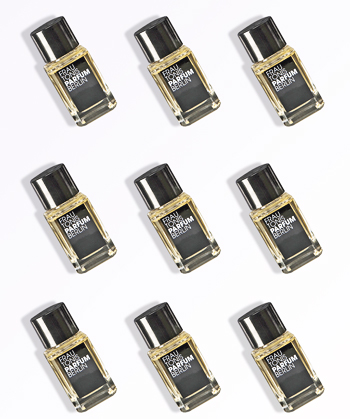
Hace unos meses -como quizás recuerden- hice una parada en boxes en Perfumería Nadia, en Madrid. Entre las muchas bellezas que olisqueé allí, una fragancia de apariencia simple me dejó una impresión profunda: Frau Tonis 37 Veilchen. Tiempo más tarde, aprovechando el viaje de un amigo a Madrid, le pedí si podía procurarme una muestra, a lo que se prestó muy amablemente.

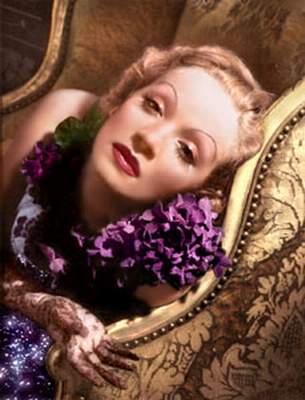
Fundada por Toni Gronewald y su nieta Stefanie Hanssen, la casa Frau Tonis abrió sus puertas en Berlín en 2009. Su violeta -inspirada en el perfume que Marlene Dietrich usaba en la década de 1920-  se comercializa  bajo el nombre 37 Veilchen. El hecho de que se encuentre entre los best sellers de la casa no sorprende: más allá de la influencia de la mística de Dietrich, la fragancia es seductora y singular a la vez que se mantiene accesible en términos olfativos.

Veilchen es una flor afirmada, casi paradójica si tenemos en cuenta que las violetas se han asociado tradicionalmente a la  modestia y la timidez.  Esta violeta no se presenta verde y fotorrealista à la Violetta di Parma ni envuelta en una nube de polvo reminiscente del tocador de una corista.  Compuesta en estilo clásico, logra mantener un interesante equilibrio entre madurez y juventud.

Por unos momentos después de la salida, Veilchen huele casi a humedad. Una nota muy amaderada y algo áspera (cedro) atraviesa la composición diluyendo cualquier azucaramiento posible. Si alguna vez descubrieron un viejo frasco de perfume de violetas -entre pañuelos de seda y bolitas de naftalina- en la cómoda de la abuela, esta instancia puede transportarlos de nuevo a ese momento. Anticuada? Quizás, pero no por eso menos impactante.

Pronto la astringencia se suaviza considerablemente y Veilchen vira hacia la modernidad, aligerándose un poco. Una nota de  frambuesa, más evocadora de licores que de frutas recién cosechadas, se entrelaza con vainilla logrando infundir una cierta informalidad a la mezcla. El dulzor llegará acompañado por un dejo atalcado; ambos se mantendrán moderados a lo largo de la evolución. El sillage es amplio y la longevidad, decente.

Caro

Origen de la muestra:  muestra gentileza de Perfumería Nadia, Madrid

foto: Frau-tonis-parfum.com

foto: Frau-tonis-parfum.com

Frau Tonis 37 Veilchen – Violets for Marlene

A few months ago -as you might remember- I made a pit stop at Perfumería Nadia, in Madrid. Among the many beauties I sniffed there, a seemingly simple fragrance left a marked impression upon me: Frau Tonis 37 Veilchen. Some time later, when a friend had to travel to Madrid, I asked if he could bring a sample for me, which he kindly did.

Founded by Toni Gronewald and her granddaughter Stefanie Hanssen, Frau Tonis opened its doors in Berlin in 2009. Their violet -inspired by the perfume Marlene Dietrich wore in the 1920s- is sold under the name of 37 Veilchen. The fact that it is among the house’s best sellers does not surprise: beyond the influence of the Dietrich mystique, the fragrance is seductive and distinctive enough while still remaining accesible in olfactory terms.

Veilchen is is an assertive flower, almost paradoxical if we bear in mind violets have traditionally been associated with modesty and shyness. This violet does not appear as a greenish photorrealistic blossom à la Violetta di Parma  nor surrounded by a cloud of powder reminiscent of a chorus girl’s boudoir. Classic in style, it achieves an interesting equlibrium between maturity and youth.

For a few moments after the opening Veilchen smells almost musty to my nose. A very woody (cedarwood) note cuts through the composition diluting any possible sugariness. If you have ever discovered an old bottle of violet perfume -amidst silk scarves and mothballs- in your grandmother’s chest of drawers,  this might transport you back to that moment. Old fashioned? Perhaps, but no less striking for it.

Soon the astringency mellows considerably and Veilchen veers towards modernity, becoming somewhat lighter and fresher. A raspberry note, more evocative of fine liqueurs than freshly harvested fruits, intertwines with vanilla managing to infuse a certain informality into the blend. Finally sweetness arrives, accompanied by a hint of powder; both will remain restrained throughout the evolution. Sillage is ample and longevity, decent.

 Caro

Origin of sample: sample courtesy of Perfumería Nadia, Madrid