Ramón Monegal Kiss my Name – Bomba de sol y tuberosa

foto: Botanus.com

foto: Botanus.com

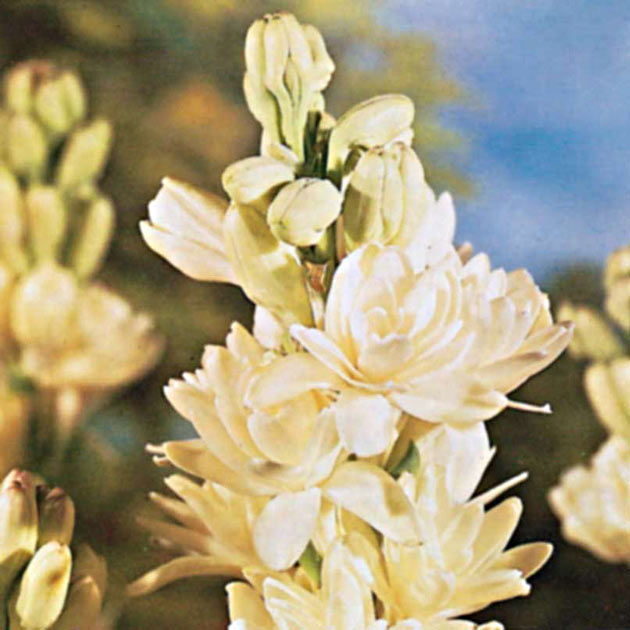
No apta para tímidas, Kiss my Name es una tuberosa enorme que podrá recordar a más de uno el perfume original de Carolina Herrera. Resueltamente más moderno y depurado que cualquier fragancia de los ’80s -aunque igualmente extrovertida- esta creación de Ramón Monegal irradia energía.

Kiss my Name no retrata a la tuberosa de manera hiperrealista ni ubica a la flor en un escenario natural. Monegal nos brinda una visión contemporánea y urbana donde la flor se halla más a gusto en una gran metrópolis -entre cristales y metal- que en el campo. Aunque este perfume me hace pensar en nardos frescos, acomodados con cuidado en un florero de acero lustroso, la condición citadina no va en detrimento de su carácter soleado.

La salida -un poco metálica, un poco frutal-  es vibrante y algo estridente. Luego de unos minutos, el volumen se atenúa y la mezcla se torna mucho más suave, cálida y balsámica. Hipnotizada por el aroma narcótico de la tuberosa, al usarlo me cuesta alejar la nariz de las muñecas.

No puedo identificar aquí las notas con demasiada claridad, excepto por la tuberosa, neroli y el almizcle blanco presente en la base de la mayoría de las creaciones de Ramón Monegal. La marca menciona también absoluto de jazmín egipcio, iris y bálsamo de Tolu.

El luminoso Kiss my Name resulta tanto un perfume de bienestar como una declaración de alegría. Su longevidad es excelente y el aroma persiste en la ropa por varios días. Uno de mis favoritos de esta casa, junto con Ambra di Luna y Cuirelle.

Caro

Origen de la muestra: Gentileza de Ramón Monegal Perfumes

foto: Ramonmonegal.com

foto: Ramonmonegal.com

Ramón Monegal Kiss my Name – Sunny tuberose bomb

Not for the shy, Kiss my Name is a big tuberose that may remind some of the original Carolina Herrera perfume. Resolutely more modern and streamlined than any fragrance from the ’80s -although no less extroverted- this Ramón Monegal creation radiates energy.

Kiss my Name is not an hyperrealistic rendition of tuberose  and does not place the flower in a natural setting. Monegal gives us a contemporary, urban take where the flower seems more at ease in a big metropoli -among glass and metal- than in the countryside. Although this fragrance makes me think of freshly cut tuberoses carefully arranged in a polished steel vase, the big city character doesn’t detract from its sunniness.

The opening -a bit metallic, a bit fruity-  is bright and somewhat strident. After a few minutes, any possible loudness subsides and the blend becomes much softer, warm and balsamic. Entranced by the narcotic scent of tuberose, when I wear it I have a hard time keeping my nose away from my wrists,

I cannot pick apart the notes very clearly here except for tuberose, neroli and the white musks  present in the base of most Ramón Monegal fragrances. The brand also lists Egyptian jasmine absolute, iris and Tolu balsam.

The luminous Kiss my Name is both a feel-good fragrance and a declaration of joy.  Its longevity is excellent and the scent still pervades clothes many days after wearing. One of my favorites from this house alongside Ambra di Luna and Cuirelle.

Caro

Origin of sample: Courtesy of Ramón Monegal Perfumes

Agua de miel – Receta de una seductora

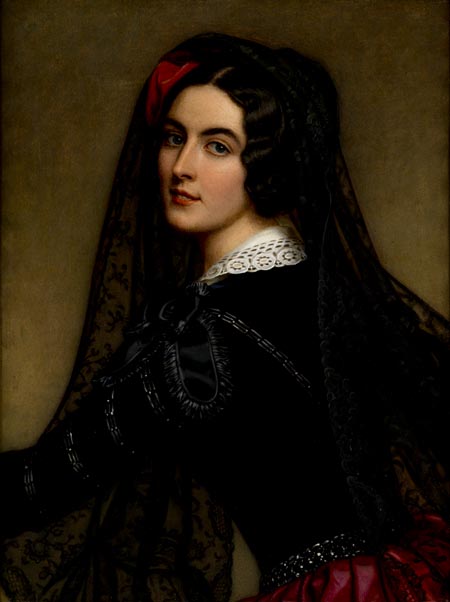
imagen: Portrait.gov.au  artista: Friedrich Durck,  Lola Montes  1848

imagen: Portrait.gov.au artista: Friedrich Durck, Lola Montes 1848

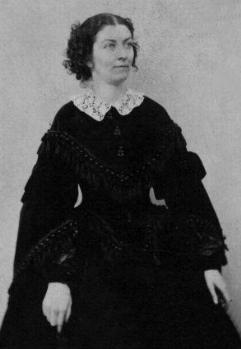
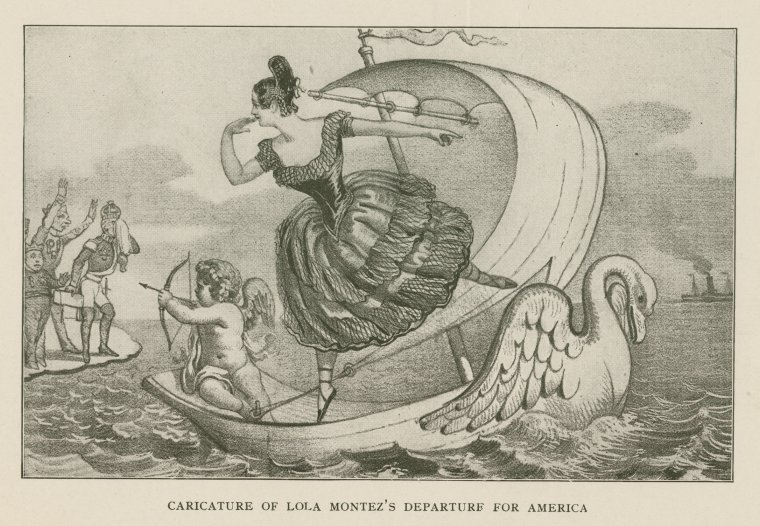
La bailarina “española” Lola Montez (1821-1861), neé Eliza Gilbert, embrujó por completo al rey Luis I de Baviera quien, al verla en un escenario de Munich, la tomó como amante y colmó de joyas y honores.

Más famosa por su belleza y temperamento que por su arte, Lola influyó de manera creciente sobre las decisiones políticas del soberano hasta que éste cayó en desgracia y se vio forzado a abdicar.

Lola huyó de Munich y, años más tarde, decidió mudarse a los Estados Unidos donde ofreció algunos shows y conferencias. Allí también publicó su autobiografía y un libro –“El Arte de la Belleza”con recetas y consejos.

Entre esas recetas encontramos este enjuague para embellecer y perfumar el cabello. Curiosamente, a pesar de su nombre, la miel no se cuenta entre los ingredientes.

Esencia de ambargris……………………1,75g

Esencia de almizcle………………………1,75g

Esencia de bergamota…………………..3,50g

Aceite de oliva…………………………….15 gotas

Agua de azahar……………………………120g

Espíritu de vino (alcohol etílico)……150g

Agua destilada…………………………….120g

Se mezclan todos los ingredientes. Se deja reposar el líquido obtenido unos 14 días, se filtra a través de un papel poroso y se embotella para poder usarse cuando sea necesario.

¡Les deseamos un buen fin de semana!

Caro y Virginia

Hemos encontrado dos versiones de esta receta: una que requiere el uso de aceite de oliva y otra que usa aceite de clavo de olor. Elegimos la primera por razones de seguridad.

foto: Beadinggem.com

foto: Beadinggem.com

Honey water – Recipe from a seductress

“Spanish” dancer Lola Montez (1821-1861) , neé Eliza Gilbert, bewitched King Ludwig I of Bavaria who, upon seeing her onstage in Munich, took her as a mistress and lavished her with jewels and honors.

More famed for her beauty and temper than for her art, Lola increasingly influenced the king’s political decisions until the ensuing scandal ended with the sovereign’s abdication.

Lola had to flee Munich and, in later years, decided to move to the United States where she gave some shows and lectures. There, she also published her autobiography and a book –The Arts of Beauty– with recipes and advice.

Among those recipes we found this wash, meant to beautify and scent the hair. Despite its name, honey is not among the ingredients.

Essence of ambergris……………………1 dram

Essence of musk…………………………..1 dram

Essence of bergamot…………………..2 dram

Olive oil…………………………………….15 drops

Orange flower water…………………….4 oz

Spirits of wine (ethyl alcohol)……….5 oz

Distilled water…………………………….4 0z

All the ingredients should be mixed together and left to rest for some 14 days. Then the whole must be filtered through porous paper and bottled for use.

We wish you a lovely weekend!

Caro & Virginia

We have found two versions of this recipe: one of them calls for the use of olive oil, the other uses clove oil. Due to safety concerns, we have chosen the first option.

imagen: En.wikipedia.org

imagen: En.wikipedia.org

L’Artisan Parfumeur Thé Pour Un Été – Un acorde veraniego

imagen: Jacobgallery.com  Summer heat  artista: Vidan

imagen: Jacobgallery.com      Summer heat            artista: Vidan

La maison francesa de perfumes L’Artisan Parfumeur fue una de las primeras casas de nicho. Fundada en 1976 por Jean Laporte, llega hasta hoy con una tradición intachable. La reputación que han logrado no fue a fuerza de campañas publicitarias, sino de la perfecta combinación entre clasicismo, vanguardia, calidad y exclusividad.

Allá por el año 1996,  una talentosa, bella y delicada Olivia Giacobetti trajo a nuestras narices este eau de toilette. De nombre muy sugestivo, Thé Pour Un Été, incursiona en esas aguas con las que anhelamos perfumarnos los días de calor agobiante. Se trata de una fragancia mediterránea de fórmula ligera, que puede tener cierta reminiscencia al Eau Parfumée au Thé Vert de Bvlgari (1992).

Lo que atrapa es su sencillez. Al comienzo es cítrico, pero no de forma energizante sino reconfortante. Es una frescura que relaja porque se percibe maderosa. El cedro aplaca lo chispeante del limón y a la vez le da más cuerpo y permanencia. Lo verde viene después; es astringente, esa sensación seca que parece sentirse en el paladar.

Tersura de almizcle y dulzor de flor blanca coronan esta fragancia cítrica floral, que es casi un acorde veraniego. Suave frescura, dulce y etérea.

Virginia

Origen de la muestra: obsequio de un familiar.

Nota: la versión original de esta reseña fue publicada en el blog Notas & Acordes el 19/10/11.

foto: Bcnperfum.com

foto: Bcnperfum.com

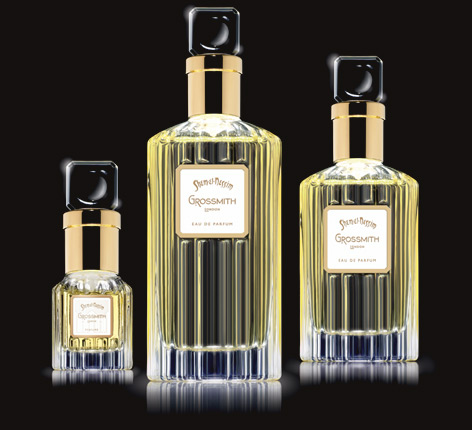
Grossmith Shem-el-Nessim – Armonía en tonos pastel

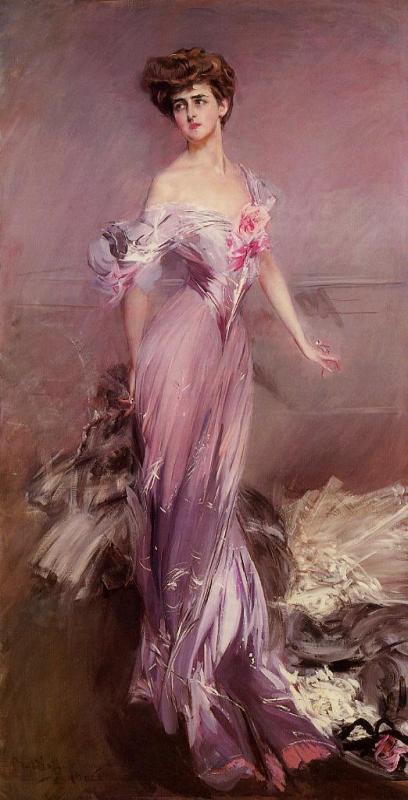
imagen: Jssgallery.org artista: Giovanni Boldini  Retrato de Mrs. Howard Johnston, 1906

imagen: Jssgallery.org     artista: Giovanni Boldini     Retrato de Mrs. Howard Johnston, 1906

Mientras Hasu-no-Hana capitalizó el furor de la moda japonista que influenció el arte y cultura europeos durante los últimos años del siglo XIX, Shem-el-Nessim prefirió un motivo orientalista y debe su nombre a una festividad egipcia que tiene lugar durante la primavera (Shem el Nessim  quiere decir oliendo el céfiro). En la misma manera que Hasu-no-Hana, su perfil se corresponde con una visión occidental idealizada de tierras lejanas. El aroma de este céfiro, sin dudas exquisito, encontraría su lugar apropiado en alcobas o salones de baile eduardianos más que en los alrededores de la Gran Pirámide.

Cuando Simon Brooke decidió revivir Grossmith -la casa de perfumes que alguna vez había pertenecido a su familia- buscó la ayuda de Roja Dove. Juntos reconstruyeron las fragancias, que luego fueron elaboradas por Robertet. Una alianza entre Dove y Robertet podía significar una sola cosa para mí: calidad impoluta. Siendo, además, una nostálgica irredimible de la Belle Époque, hace un par de años decidí correr el riesgo y comprar una botella de Shem el Nessim sin haberlo probado antes.

Shem-el-Nessim, creado originalmente en 1906, le dio alas a mi melancolía. Nostálgico y reconfortante a la vez, me recordó a otro perfume que solía ser bellísimo hasta que la reformulación aniquiló todas sus sutilezas y contradicciones: L’Heure Bleue. Esto no resulta sorprendente, ya que L’Heure Bleue fue creado apenas seis años más tarde que Shem-el-Nessim, así es que ambos encarnan el zeitgeist de la Belle Époque.

Al aplicarlo, Shem-el-Nessim no defrauda.  Me rodea una nube floral y atalcada, que amenaza con permear mis poros.  Una vez que mengua el estallido original, puedo empezar a apreciar sus muchas sutilezas.  La bergamota y el geranio son los responsables del cosquilleo inicial. El perfume cobra luego un carácter decididamente floral, cuando notas melifluas notas de jazmín, rosa e ylang-ylang infunden su sensualidad al blend. Si bien resulta fácil identificar las notas individuales, la transición entre ellas es continua, sin fisuras y la sensación general es de refinamiento. El orris concede su presencia aristocrática, pero se siente inusualmente cálido, casi dorado, al estar en combinación con heliotropo, vainilla, sándalo y almizcle.

Esta delicada belleza empolvada me provoca ganas de llorar y gritar de alegría a la vez (¿gritar?¡cuán impropio!), a diferencia del L’Heure Bleue actual que sólo me causa ganas de llorar. La única desventaja que encuentro es que el eau de parfum de Shem-el-Nessim no tiene demasiada longevidad sobre mi piel.

Soñaré con su magnífica versión parfum hasta tanto pueda comprar una botella.

Caro

Origen de la muestra: Eau de parfum comprada en Perfumería Nadia, Madrid

Cliqueando sobre los links, pueden leer nuestras reseñas de Phul-Nana, Hasu-no-Hana y Betrothal de la misma casa

foto: Grossmithlondon.com

foto: Grossmithlondon.com

Grossmith Shem-el-Nessim – A harmony in pastel hues

While Hasu-no-Hana capitalized the Japonist rage that influenced European art and culture during the last years of the XIXth century, Shem-el-Nessim chose an Orientalist motif instead and owes its name to an Egyptian holiday that takes place during Spring (Shem el Nessim means  smelling of the Zephyr). Much like Hasu-no-Hana, its profile corresponds to an idealized Western  vision of distant lands. The scent of this Zephyr, without a doubt exquisite, would perhaps be more at ease in Edwardian alcoves or ballrooms than around the  Great Pyramid of Giza.

When Simon Brooke decided to resurrect Grossmith -the perfume house that once belonged to his family- he sought Roja Dove‘s help. Together, they reconstructed the fragrances, which were later produced by Robertet. A DoveRobertet alliance could only mean one thing to me: flawless quality. And being a hopeless nostalgic for all things Belle Époque, a couple years ago I took the plunge and decided to purchase Shem el Nessim unsniffed.

Shem-el-Nessim, which was originally created in 1906, gave wings to my melancholy. Nostalgic and comforting at the same time, it reminded me of another fragrance that used to be beautiful until reformulation destroyed all of its subtleties and contradictions: L’Heure Bleue. This is not surprising because L’Heure Bleue was created a mere six years after Shem-el-Nessim, so the zeitgeist of the Belle Époque is embodied in both of them.

Upon application, Shem-el-Nessim doesn’t fail to satisfy.  A powdery floral cloud surrounds me, almost threatening to permeate my every pore.  Once the initial blast subsides, I am able to fully appreciate its many subtleties. Bergamot and geranium are responsible for the initial tingle.  The fragrance later acquires a decidedly floral character, when honeyed notes of jasmine, rose and ylang-ylang infuse the blend with their sensuality. While individual notes are easy to identify, the transition between them is seamless, continuous and the overall feel is one of refinement. Orris graces the composition with its aristocratic presence, but feels unusually warm, almost golden, since it is paired with heliotrope, vanilla, sandalwood and musk.

This delicate, powdered beauty makes me want to weep and cry with joy at the same time (cry with joy? how improper!), unlike current L’Heure Bleue which only makes me want to cry. The only drawback I can think of is that Shem-el-Nessim eau de parfum doesn’t have much  longevity on my skin.

I will dream about the magnificent parfum version until I am able to purchase a bottle.

Caro

Origin of sample: Eau de parfum purchased at Perfumería Nadia, Madrid

You can also read our reviews of Phul-Nana, Hasu-no-Hana and Betrothal from the same house

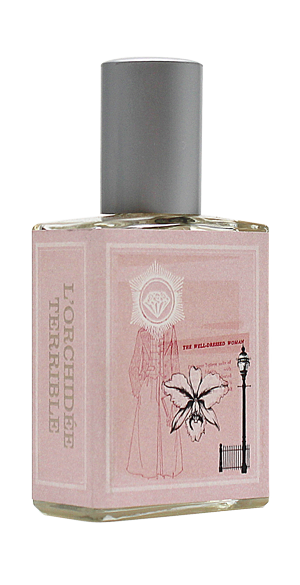
Imaginary Authors L’Orchidée Terrible – El aroma del satén

imagen: Conchigliadivenere.wordpress.com      Nu sur satin rose  artista: Felipe Santamans (1951)

imagen: Conchigliadivenere.wordpress.com               Nu sur satin rose                              artista: Felipe Santamans, 1951

¿Cuántos géneros textiles pueden reconocer por su aroma? Si yo tuviera que identificarlos solamente por su olor -sin mirar y sin tocar- creo que ellos serían el satén, la seda y tal vez algodón. En el caso específico del satén hay un doble patrón ambivalente: frío pero tibio, seco pero húmedo.

Alrededor de un suave bouquet de lirio del valle y orquídeas, el joven perfumista Josh Meyer ha reconstruido la experiencia de oler el satén y sentirlo al tacto. El inicio fresco de aldehídos corresponde perfectamente a ese primer contacto del frío satén con la piel. Sin embargo, debido a la nota de miel que lentamente rebalsa la composición, L’Orchidée Terrible se vuelve más y más acogedora.

Tal como el nombre lo sugiere, este no es un perfume inocente. El blend sensual de orquídea, miel y almizcle blanco es luminoso pero carnal. Es una experiencia sensorial artísica de la femineidad, como la pintura de la desnudez de una mujer de piel de alabastro (¿Audrey Blavot, tal vez?).

Cuando conocí Imaginary Authors en una exhibición de perfumes en San Francisco, Josh expresó que él vive la perfumería como un arte y que todos los ingredientes deberían ser utilizados en esa dirección: crear una obra de arte. En mi opinión, esta fragancia ofrece un perfecto ejemplo de esa declaración.

Virginia

Origen de la fragancia: muestra gentileza de Imaginary Authors.

foto: Courtesy of Imaginary Authors

foto: Courtesy of Imaginary Authors

Imaginary Authors L’Orchidée Terrible – Scent of satin

How many fabrics can you recognize by their smell? If I were to identify them only by its scent -no see, no touch- I think that they would be satin, silk and maybe cotton. In the specific case of satin there is an ambivalent double pattern: cold but warm, dry but humid.

Around a soft bouquet of lily of the valley and orchid, young perfumer Josh Meyer has rebuilt the experience of smelling and feelling the touch of satin. The fresh initial blast of aldehydes perfectly corresponds with that first contact of cold satin on the skin. However, due to the fact that a honey note slowly overflows the composition, L’Orchidée Terrible becomes more and more cozy.

As the name suggests, this is not an innocent perfume. The sensual blend of orchid, honey and white musk is luminous but carnal. It’s an artistic sensorial experience of femininity, like a nude painting of a woman with alabaster skin (Audrey Blavot, maybe?).

When I met Imaginary Authors in a fragrance exhibition in San Francisco, Josh expressed that he lives perfumery as an art and all ingredients should be used in that direction: to create a work of art. In my opinion, this fragrance offers a perfect example of that statement.

Virginia

Origin of sample: Sample courtesy of Imaginary Authors.