Tag Archives: cistus

Vero Profumo Mito (voile d’extrait) – Curvas peligrosas

imagen: Commons.wikimedia.org artista: Willem van Aelst  "Naturaleza muerta con ratón", 1674

imagen: Commons.wikimedia.org    artista: Willem van Aelst    “Naturaleza muerta con ratón”, 1674

En 2013, la perfumista suiza Vero Kern lanzó una nueva concentración para sus cuatro fragancias (Kiki, Rubj, Onda y Mito): voile d’extrait, equivalente en potencia a un eau de parfum. La fórmula es en este caso  similar a la de sus extractos.  Debe notarse que las eaux de parfum de la línea Vero Profumo consisten en una fórmula diferente y la mayoría de ellas presenta una nota característica de  fruta de la pasión (maracuyá).

Los voiles d’extrait resultan ideales para quienes encuentran engorroso el ritual de aplicar su perfume con la tapita del frasco. Me complace reportar que la concentración más ligera no va en detrimento de su sustancialidad: los voiles se sienten menos compactos pero aun así potentes. Debido a esta menor densidad resulta mucho más fácil apreciar las distintas notas en ellos que en los extraits.

Mito voile d’extrait vuelve a trabajar el motivo de los jardines de la Villa d’Este y mantiene el burbujeo del eau de parfum original. Luego de la salida -alimonada, jugosa- se nutre de una abundante dosis de tuberosa y durazno (aquí pueden apreciarse con facilidad los aspectos gomosos de un absoluto de tuberosa excepcional). El verdor musgoso ofrece un fondo de terciopelo oscuro para las flores y frutas. En consecuencia, aunque  tan umbrío como su predecesor, se vuelve mucho más carnoso, curvilíneo. Si Mito EdP podía apagar la sed con su amargor efervescente, Mito VdE, en cambio, abre el apetito e invita a morder. La fragancia hace un guiño a los magníficos chipres de antaño a través de la cualidad chispeante de Cristalle, la madurez de Femme (vintage) y la oscuridad de Mitsouko, pero tiene su propia identidad. La sensación atemporal y el erotismo presentes en todas las creaciones de la Srta. Kern brillan en esta joyita.

Caro

Origen de la muestra: Muestra gentileza de Campomarzio 70

Pueden leer nuestra reseña de Mito eau de parfum aquí

foto: Bloomperfume.co.uk

foto: Bloomperfume.co.uk

Vero Profumo Mito (voile d’extrait) –  Dangerous curves

In 2013 Swiss nose Vero Kern launched a new concentration for her four fragrances (Kiki, Rubj, Onda and Mito): voile d’extrait, equivalent in strength to eau de parfum. The formula, in this case, is similar to that of her extraits.  One must note that the eaux de parfum in the Vero Profumo range consist of a different formula  and most of them boast a characteristic  passionfruit note.

The voiles d’extrait are  ideal for those who are not too fond of the ritual of dabbing. I am happy to report that the lighter concentration doesn’t detract from their substantiality: the voiles feel less compact though still potent. Due to this lesser density, it becomes much easier to appreciate the different notes in them than in the extraits.

Mito voile d’extrait reworks the motif of the Villa d’Este gardens and retains the bubbliness of the original eau de parfum. After the opening –  lemony, juicy it is fed a generous dose of tuberose and peach (the rubbery aspects of an outstanding tuberose absolute can be easily appreciated here). The mossy greenness provides a dark velvety backdrop for the fruits and flowers. In consequence, and although it remains as shady as its predecessor, it becomes much fleshier, curvier. If Mito EdP could quench one’s thirst with its effervescent bitterness, Mito VdE  whets one’s appetite and invites to take a bite. The fragrance nods at the magnificent chypres of yore through the sparkling quality of Cristalle, the ripeness of (vintage) Femme and the darkness of Mitsouko, but it has its own identity. The timeless feel and eroticism present in all of Ms. Kern‘s creations shine in this jewel of a fragrance.

Caro

Origin of sample: Sample courtesy of Campomarzio 70

You may read our thoughts on Mito eau de parfum here

imagen: Commons.wikimedia.org artista: Willem van Aelst  "Naturaleza muerta con canasto de frutos en un estante de mármol", 1650

imagen: Commons.wikimedia.org       artista: Willem van Aelst      “Naturaleza muerta con canasto de frutos en un estante de mármol”, 1650

Oliver & Co. Resina – Bálsamo hipnótico

imagen: Bookworkschicago.blogspot.com

imagen: Bookworkschicago.blogspot.com

Entiendo los perfumes de Oliver Valverde no como meras fragancias sino también como creadores o potenciadores de estados de ánimo y clima. El joven nariz español ha ganado mi respeto con sus creaciones de autor, que resultan tan originales como fáciles de llevar.

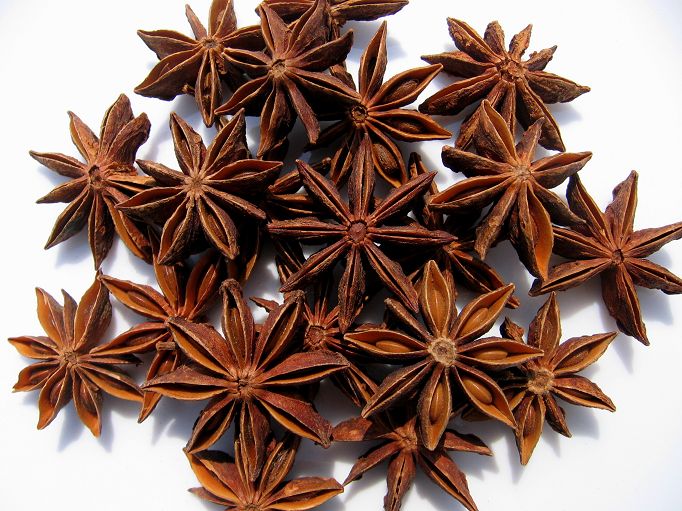
Resina es ambarado y balsámico, pero no denso. La salida se siente tan picante que la nariz puede arder si se inhala desde muy cerca: nuez moscada, anís estrellado jengibre  parecen envueltas en una cáscara gomosa, con reminiscencias de látex. Luego de unos pocos minutos los bordes filosos se suavizan, la mezcla se dulcifica y adquiere matices otoñales que me recuerdan un poco al extraordinario Vetiverus de Oliver & Co.. Extrañamente hipnótica, la frialdad plateada del incienso pinta trazos contrastantes sobre un fondo cálido y mullido de bálsamo de Tolu, benjuí y opopanax. Acogedor, envolvente y aun así liviano, Resina tiene una persistencia notable.

A pesar de haberlo probado en varias ocasiones, no me he formado una opinión cabal del elusivo Resina –es posible que prefiera al más terso Vetiverus– pero esconde algo atractivo, algo que me hace oler las muñecas una y  otra vez, y otra vez más. Horas más tarde, a lo largo del día, sigo detectando un olorcillo especiado y carnal que parece jugar a las escondidas.

Puede que no sea tan necesario definir mi opinión sobre Resina después de todo. Su aura de misterio y su condición esquiva constituyen la fascinación más grande.

Caro

Origen de la muestra: Muestra gentileza de Oliver & Co.

foto: Oliverandco.es

foto: Oliverandco.es

Oliver & Co. Resina – Hypnotic balsam

I understand Oliver Valverde‘s fragrances not as mere perfumes but also as mood and atmosphere creators or enhancers. The young Spanish nose has earned my respect with his auteur creations, which are as original as they are wearable.

Resina is ambery and balsamic but not dense. The opening feels so spicy that nostrils may burn if inhaled from too short a distance: nutmeg, star anise and ginger seem enveloped in a rubbery wrapping, reminiscent of latex. After a few minutes, the sharp edges become smoother,the blend turns sweeter and acquires autumnal hues that remind me of Oliver & Co.‘s extraordinary Vetiverus. Strangely hypnotic, the silvery coldness of frankincense paints contrasting brushstrokes on a warm, plush background of tolu, benzoin and opopanax. Cozy, cocooning but still lightweight has outstanding tenacity.

Despite having road-tested it several times, I have not fully made up my mind about the elusive Resina –I might prefer the smoother Vetiverus– but there’s something compelling about it, something that makes me smell my wrists again and again and yet again. Hours later, into the day, I keep catching these mysterious whiffs, spicy and carnal at a time, that seem to play hide and seek. There might be no need to make my mind about Resina after all. Its aura of mystery and its evasive condition constitute its greater fascination.

Caro

Origin of sample: Sample courtesy of Oliver & Co.

foto: Meridianbotanicals.com

foto: Meridianbotanicals.com

Tableau de Parfums Loretta – Enigmática tuberosa

foto: Atlantidezine.it

foto: Atlantidezine.it

Mientras Andy Tauer está a punto de lanzar Ingrid -la fragancia más nueva del proyecto Tableau de Parfums – me encuentro revisitando a Loretta,  presentada en 2012. Tableau de Parfums es una colaboración entre Tauer y el cineasta Brian Pera, en la que cada perfume se corresponde con un cortometraje que lleva el nombre de su personaje principal.

Loretta no es una criatura común, pero si una está dispuesta a atravesar su exterior en apariencia inaccesible, podrá dar lo mejor de sí más tarde.   Al obtener mi muestra prácticamente la ignoré en favor de la impecable  Miriam y la impactante Une Rose Chyprée. Un año después, sentí que era el momento de familiarizarme más con mi Loretta, que había estado languideciendo en el fondo de un cajón.

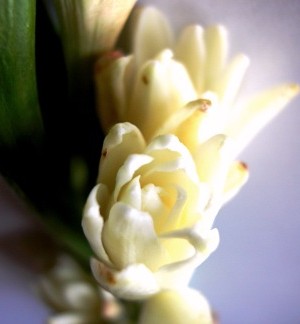
Loretta abre con una bergamota ácida, el verdor astringente del petitgrain y un dulzor frutal que me recuerda al sabor sintético de uva que se utiliza habitualmente en golosinas y refrescos. Por un instante casi parece un perfume pop, equivalente a la versión líquida de una serigrafía de Andy Warhol. Fue este efecto el que me había alejado de Loretta la primera vez, ya que no lograba pasar de esta etapa. Pero las cosas buenas les llegan a quienes tienen paciencia: la impresión de jugo de uva pronto amaina y la fragancia adquiere un carácter más oscuro y enérgico.  El corazón pulsa con la calidez soleada de la flor de naranjo y la tuberosa (Tauer declara haber usado 2%  de absoluto de flor de naranjo y otro tanto de absoluto de tuberosa en la mezcla). Esta tuberosa parece estar envuelta en un cuero aciruelado y espolvoreada con clavo y canela. Vainilla, patchouli y la exaltación del aspecto de cuero del cistus recubren a Loretta con la pátina del tiempo.

La artista pop serigrafiada en  colores neón se ha convertido ahora en una heroína de film noir.

Caro

Origen de la muestra: Muestra gentileza de Andy Tauer

foto: Luckyscent.com

foto: Luckyscent.com

Tableau de Parfums Loretta –  Enigmatic tuberose

As Andy Tauer is about to release Ingrid -the latest fragrance in the Tableau de Parfums project- I find myself revisiting Loretta, launched in 2012.Tableau de Parfums is a collaboration between Tauer and  filmmaker Brian Pera in which every fragrance corresponds with a short film, named after its main character.

Loretta is no common creature, but if one’s willing to get past her seemingly inaccesible exterior, she will give her best later.   When I got my sample I practically disregarded it in favor of the soigné  Miriam and the stunning Une Rose Chyprée. One year later, I felt it was time to become more acquainted with my Loretta, who had been languishing in the back of a drawer.

Loretta opens with acidic bergamot, the astringent verdancy of petitgrain and a fruity sweetness that reminds me of the synthetic grape flavor commonly used in candy and soft drinks. For a brief moment it almost seems  like a pop fragrance, akin to a liquid version of an Andy Warhol silkscreen. It was this effect what had put me off Loretta the first time as I  was unable to get past this stage. But good things come to those who wait: the grape juice impression soon subsides and the fragrance acquires a darker, more assertive character.  The heart pulsates with the sunny warmth of orange blossom and tuberose (Tauer states he used 2% absolute of each orange blossom and tuberose in the blend). This tuberose seems to be wrapped in plummy leather and sprinkled with cloves and cinnamon. Vanilla, patchouli and the exalted leathery aspect of cistus cover Loretta with the patina of time.

The neon-colored pop artist in the silkscreen has now become a film noir heroine.

Caro

Origin of sample: Sample courtesy of Andy Tauer

foto: Tauerperfumes.com/blog

foto: Tauerperfumes.com/blog

Von Eusersdorff Classic Myrrh – Humo blanco

foto: Lahistoriadelasemana.blogspot.com  Catedral de Santiago de Compostela

foto: Lahistoriadelasemana.blogspot.com      Catedral de Santiago de Compostela

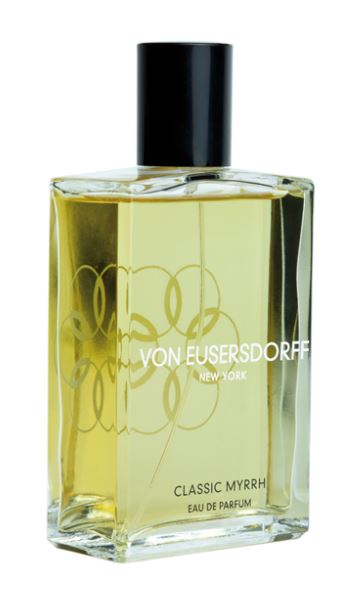
Durante los últimos meses me sentí tan intrigada sobre esta casa que un amigo muy amable se compadeció de mí y ofreció traerme una botella de París. Luego de deliberar qué perfume necesitaba probar primero, opté por Classic Myrrh (el novísimo Classic Orange será el próximo en la lista de perfumes a probar).

La marca Von Eusersdorff fue fundada por Camille Henfling, un ex hombre de negocios cuya familia solía dedicarse a la Farmacia. Las fragancias, clásicas y sin adornos -cualidades que se dejan adivinar desde el simple packaging– son manufacturadas en Grasse.

Classic Myrrh da una impresión de limpieza cálida -equivalente a usar una camisa blanca recién planchada- incluso cuando poco tiene que ver con lo que normalmente llamamos “perfume limpio”en los que abundan las notas jabonosas, acuáticas o almizcles blancos. Esta limpieza no es aséptica,sino que tiene más que ver con la pureza, incluso con una cierta aridez.

El petitgrain vibra con nitidez en la salida, pero se atenúa ante la llegada una violeta amaderada. Esta violeta es ligeramente atalcada, pero no aparece dulce ni excesivamente femenina y se funde a las mil maravillas con el sándalo que  domina el corazón de la fragancia.  El guayaco (palo santo) añade su carácter ahumado a la mezcla -que para este entonces se asemeja a un incienso cálido y acogedor- dándole así más robustez. Con cada uso el foco parece cambiar de una nota a otra: algunos días es el chispeante petitgrain; otros, la violeta brumosa; el oscuro palo santo o el patchouli que acecha en la base. El perfume es depurado, moderno y sin embargo toca una cuerda de nostalgia.

Classic Myrrh huele elegante y despojado de connotaciones de género.  La sensación general es muy natural y su longevidad es excelente: uno o dos toques de vaporizador duran todo el día hasta entrada la noche.

Caro

Origen de la muestra: Botella comprada en Jovoy Paris

foto: Voneusersdorff.com

foto: Voneusersdorff.com

Von Eusersdorff Classic Myrrh – White smoke

Over the last couple of months I became so intrigued about this house that a kind friend pitied me and volunteered to bring a bottle from Paris. After some deliberation regarding which fragrance I needed to try first, I opted for Classic Myrrh (the brand new Classic Orange comes next on the must-try list).

The Von Eusersdorff brand was founded by Camille Henfling, a former businessman whose family used to run an apothecary. The classic and  unadorned fragrances -qualities that can be guessed by just looking at the simple packaging- are manufactured in Grasse.

Classic Myrrh gives an impression of warm cleanliness  -much like wearing a freshly pressed white shirt- even though it is not what usually goes by the moniker of “clean scent”, those fragrances which generally abound in soapy or aquatic notes and white musks.  This cleanliness is not aseptic but has more to do with purity, even a certain dryness.

Petitgrain vibrates nitidly in the opening but it becomes more muted as it is  joined by a woody violet. This violet is slightly powdery but does not appear sweet or overly feminine and fuses wonderfully with the sandalwood that dominates the heart of this fragrance. Guaiac wood adds its smokiness to the blend -which by now resembles a warm cozy incense- giving it a more robust character. With every wearing, the focus seems to shift from note to note: some days it is the sparkling petitgrain, others the hazy violet,the dark guaiac or the patchouli that lurks in the base. The fragrance is streamlined, modern and yet touches a chord of nostalgia.

Classic Myrrh smells elegant and devoid of gender connotations. The overall feel is very natural and its longevity is excellent: one or two spritzes will last through the day and well into the night.

Caro

Origin of sample: Bottle purchased at Jovoy Paris

Amouage Fate Woman – Tejido en rayos de sol

imagen: Artseverydayliving.com artista: Caspar David Friedrich "Frau vor der untergehenden Sonne", 1818, Museo Folkwang

imagen: Artseverydayliving.com       artista: Caspar David Friedrich
“Frau vor der untergehenden Sonne”, 1818,   Museo Folkwang

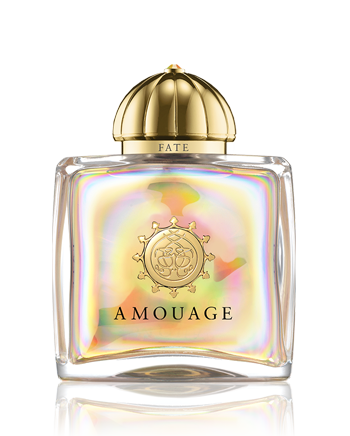
Cuando Sheila, la prolífica escritora tras The Alembicated Genie, se ofreció generosamente a enviarme una muestra de Fate Woman, me sentí eufórica. Mi fetiche con Amouage es un secreto a voces y huelga decir que ansiaba probar el último lanzamiento de la casa omaní.

Como Fate está clasificado bajo la etiqueta de chipre oriental,  esperaba una mezcla oscura, barroca y grandilocuente. Menos operático que otras creaciones de la misma casa y por ende, quizás, con un atractivo más amplio, me impresionó con su levedad. Levedad para los estándares de Amouage, claro. Fate es considerablemente más sustancial y complejo que el 95% de los perfumes que se encuentran actualmente en el mercado.

Fate Woman parece irradiar una luz dorada que hace brillar todo lo que entra en contacto con ella. La salida es dulce y jugosa. Aunque la bergamota está listada entre las notas, me queda una impresión como de naranja dulce. La bergamota/naranja aparece especiada con canela y ají chile, lo que hace la mezcla aún más cálida. Entonces se torna más suave que un suavísimo sweater de cachemira doble. No me impresionó al principio, pero con sucesivos usos, Fate Woman tejió lentamente su red dorada y antes de poder siquiera darme cuenta, ya no logré desenredarme.

El rico corazón floral está entremezclado con incienso y vainillaCuero y castóreo suman una cualidad animal que, lejos de bestial o cruda, resulta tan reconfortante como abrazar a una mascota querida. Fate huele muy clásico y extrañamente familiar pero, al mismo tiempo, innegablemente moderno. Es Romanticismo sin el drama; un parfum de peau al estilo de Amouage.

Este perfume fue compuesto por la talentosa Dorothée Piot (Robertet) -bajo dirección creativa de Christopher Chong– y presentado en 2013. Encuentro su proyección discreta y la longevidad, buena.

Caro

Origen de la muestra: Muestra gentileza de Sheila Eggenberger, The Alembicated Genie

foto: Amouage.com

foto: Amouage.com

Amouage Fate Woman – Woven in sunshine

When Sheila, the prolific writer behind The Alembicated Genie, generously offered to send me a sample of Fate Woman, I was elated. My fetish for  Amouage is no secret and I most certainly wanted to try the latest release from the Omani house.

Since Fate Woman is  classified as an Oriental chypre, I had come to expect a dark and bombastic baroque blend. Less operatic than other creations from the same  house and thus, perhaps, with a wider appeal, it struck me as lightweight. Lightweight by Amouage standards, that is. Fate is considerably more substantial and complex than 95% of the fragrances currently on the market.

Fate Woman seems to radiate a golden light that sets aglow everything that comes in contact with it. The opening is sweet and juicy. Although bergamot is listed among the notes, I am left with an impression of sweet orange. The bergamot/orange is spiced up by cinnamon and chili pepper, what makes the blend even warmer. It then becomes softer than the softest double cashmere sweater. I was unimpressed at first, but with subsequent wearings, Fate Woman slowly wove its golden web around me and before I could even realise it, I was unable to disentangle myself.

The rich floral heart is intermingled with frankincense and vanillaLeather and castoreum add an animalic quality that, far from raw or beastly, is as reassuring as cuddling up with a dear pet. Fate smells very classic and strangely familiar but, at the same time, undeniably modern. It is Romanticism minus the drama; a skin fragrance, Amouage style.

This fragrance was composed by the talented Dorothée Piot (Robertet) -under creative direction of Christopher Chong– and introduced in 2013. I find the projection discreet and its longevity, good.

Caro

Origin of sample: Sample courtesy of Sheila Eggenberger, The Alembicated Genie