
Tag Archives: grosella – currant

Calé Fulgor – La calma antes de la tormenta

foto: Thefabweb.com

Al probar mis muestras de Calé, me encontré gratamente sorprendida por la ternura de Dolce Riso y la indiscutible belleza de Brezza di Seta, pero el inusual Fulgor, con su ensamble de narciso y notas minerales, fue el que más me impactó. Estoy acostumbrada al narciso como integrante de bouquets clásicos – como Chamade o Grand Amour- pero esta combinación me resultaba desconcertante. De una buena manera.

Casi me olvidé de Fulgor y mis muestras hasta que, unos días más tarde,una querida amiga trajo a colación anécdotas de un viaje que había hecho al  Valle de la Muerte muchos años atrás. Describió cómo se había sentido hipnotizada por la extraña flora del lugar y por el hecho de que, a lo largo de la eterna carretera, exactamente la mitad del cielo se veía azul profundo mientras que la otra mitad era densa y negra, a punto de estallar en una tormenta eléctrica.

En medio de nuestra conversación, recordé a Fulgor y mi charla con Silvio Levi , en la que él había mencionado que se había inspirado en un viaje a Nevada para crear esta fragancia. No bien volví a casa busqué mi muestra, la abrí e inhalé. Todo estaba dentro del diminuto frasco…el verde intenso de la vegetación, la tierra sequísima, el olor del aire que anticipa la lluvia, la carga eléctrica de la atmósfera simbolizada por la tensión entre notas florales y minerales…pude percibir vívidamente ese lugar en el que nunca había estado.  Un fondo cálido y ambarado suaviza la composición y la vuelve tan reconfortante como las gotas de lluvia que caen sobre la tierra sedienta.

La longevidad es excelente, pero lo que más celebro de este eau de parfum es su originalidad y la capacidad de transmitir emoción.

Caro

Origen de la muestra: Muestra cortesía de Calé Fragranze d’Autore
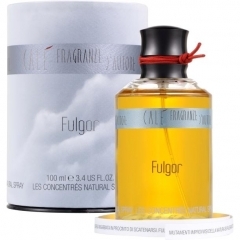
foto: Parfumo.de

Calé Fulgor – The calm before the storm

Upon testing my Calé samples, I found myself pleasantly surprised by the tenderness of Dolce Riso and the undeniable beauty of Brezza di Seta, but the unusual Fulgor, with its pairing of narcissus and mineral notes, impacted me the most. I am used to narcissus as part of  classical bouquets – as in Chamade or Grand Amour- but this combination was puzzling. In a good way.

I almost forgot about Fulgor and my samples until, a few days later, a dear friend brought up the subject of a trip she had  taken to the Death Valley many years ago. She described how she had been mesmerized by the strange flora and by the fact that, along the seemingly endless road, exactly half of the sky looked deep blue, and the other half was dense and black, about to burst into an electrical storm.

Amidst our conversation,  I remembered Fulgor and my talk with  Silvio Levi, in which he  had mentioned this fragrance had been inspired by a trip to Nevada. As soon as I got back home I took my sample, opened it and inhaled. It was all within my tiny vial…the intense green  of the vegetation, the dry earth, the smell of the air that anticipates rain, the electric charge in the atmosphere symbolised by the tension between floral and mineral notes…I was able to vividly perceive that place where I had never been. A warm, ambery drydown smooths the composition and turns it as comforting as the drops of rain that fall on the thirsty earth.

Its longevity is excellent, but what I celebrate most about this eau de parfum is its originality and ability to convey emotion.

Caro

Origin of sample: Sample courtesy of Calé Fragranze d’Autore

Knize Belle Époque – Viaje a los ’90s (1890s, claro)

imagen: En.wikipedia.org     artista: Wilhelm Gause     “Hofball in Wien”

Una de las cosas que más me gustan del perfume es cómo, a través de su poder de evocación, puede transportarme a otras épocas y lugares.

Cuando viajo, no sólo soy feliz haciendo una exhaustiva exploración de las perfumerías de la zona, sino que también me gusta comprar algún perfume que luego me recuerde al lugar que he visitado: Edimburgo huele a aire fresco y a malta tostada, Siracusa es hierbas con hojas de higuera y  cítricos y  Viena es flores frescas, pasteles dulces y mermelada de damasco, todo esto salpicado con café y chocolate.

Caminando a lo largo del Graben,  la calle comercial más elegante de Viena, encontré Knize. Este Mode-Atelier tradicional -proveedor de la Corte Vienesa -existe desde el año 1858 y aún hoy confecciona impecables trajes a medida.

Había oído acerca del famoso Knize Ten y estaba particularmente ansiosa por probarlo. La versión regular no estaba disponible al momento de mi visita, pero olisquee Golden Edition y su suavidad de cuero ahumado me hizo temblar las rodillas. Lamentablemente no logré retener el nombre de la vendedora que me asistió, pero fue la persona más sonriente y bien predispuesta que encontré en la ciudad. Dentro de las fragancias para damas, fue Belle Epoque la que atrapó mi corazón.

Este delicado eau de toilette abre con notas dulces: damasco y grosellas, pero también ananá y mango. Estos últimos de inmediato evocan los invernaderos del Jugendstil, construídos para cultivar árboles y flores exóticas. Rosas, violetas y orquídeas, componen un encantador bouquet, redondeado, aunque nunca denso. Heliotropo almendrado, vainilla y cacao emergen más tarde y hacen un pequeño guiño a la deliciosa pastelería vienesa. A pesar de estas notas confiteras, el perfume nunca se convierte en gourmand.

El equilibrio entre frutas y flores es maravilloso; la fragancia nunca cae exclusivamente en una u otra categoría. Belle Époque se siente perfectamente calibrado a lo largo de toda su evolución. Es suave, cálido y envolvente y rezuma una elegancia de otra era. No puedo evitar sentirme transportada al rociarlo.

Caro

Origen de la muestra: Botella adquirida en Knize, Viena.

foto. Parfumdreams.de

Knize Belle Epoque –  Back to the ’90s (1890s, that is)

One of the things I like best about fragrance is how, through its power of evocation, it can take me to other places and times. 
When I travel, not only I am happy doing an exhaustive perfume-store scouting of the area but I also like to buy fragrances which will remind me later of the  place I have visited: Edinburgh smells like crisp cold air and toasted malt, Syracuse is all herbs, fig and citrus leaves and Vienna is fresh flowers, sweet pastries and apricot jam, all this tinged with coffee and chocolate.

Walking along the Graben, Vienna‘s most elegant commercial street, I found Knize. This traditional Mode-Atelier -supplier to the Viennese Court – has been in existence since 1858 and still produces beautiful bespoke suits.

I had heard about the famous Knize Ten and was especially eager to try it. The regular version wasn’t available at the time of my visit, but I sniffed Golden Edition and its smoky, leathery smoothness made me weak in the knees. I unfortunately cannot recall the name of the saleslady who helped me, but she was the most patient and smiling person in the whole city. Among the ladies’ fragrances, Belle Époque was the one that captured my heart.

It opens with sweet notes: apricot and currants, but also pineapple and mango which instantly evoke the Jugendstil greenhouses built  for growing exotic trees and flowers. Roses, violets and orchids compose a lovely bouquet which is rounded but never heavy. Almondy heliotrope, vanilla and cacao emerge later in order to give the slightest nod to the delicious Viennese pastries. Despite this confectionery-related notes, the fragrance never morphs into a gourmand.

The balance between the flowers and fruits is wonderful; the fragrance never falls exclusively into one category or the other. Belle Epoque feels perfectly calibrated throughout  its evolution. It is soft, warm and enveloping and reeks of an elegance that belongs to another era. I cannot help but feel transported every time I spray it.

Caro

Origin of sample: Bottle purchased at Knize, Vienna

Eau d’Italie Paestum Rose – Humo sagrado

imagen: Artrenewal.org      artista: William Reynolds-Stephens     “Summer”

Lo que queda hoy de Paestum (antiguamente Poseidonia, la ciudad de Poseidón) son las ruinas de sus imponentes templos dóricos y la leyenda de sus rosas. Estas rosas -celebradas por Ovidio, Marcial y Virgilio (el último, en sus Geórgicas, menciona “los dos veces florecientes canteros  de rosas de Paestum”)- daban flor dos veces al año y eran renombradas por su belleza.

Paestum Rose – lanzado porEau d’Italie en 2006-parece recrear la experiencia de Paestum completa: las rosas perfumando la brisa, las piedras de los templos calentadas por el sol y las resinas siendo quemadas en honor de los dioses.

Las palabras no alcanzan para describir la belleza de la salida:  me siento como bajo una lluvia de pétalos de rosa -jugosos y mullidos- cuyo aspecto frutado se ve acentuado por una nota de brote de  grosella negra. La profusión de pétalos está sazonada con canela, coriandro y pimientas rosa (nuestro aguaribay) y negra. Desearía que este instante trascendental durara para siempre. La mezcla deviene en en una nube resinosa de incienso, mirra y elemi que luego evoluciona lentamente, casi con languidez, hacia una base aterciopelada por  ámbaralmizcle blanco y opopanax

¿ Y quién mejor que Duchaufour para lograr insuflar una cualidad aireada a esta  mélange tan cargada de especias?  La composición aparenta ser etérea. Paestum Rose es claramente una obra maestra y, por cierto, mi creación preferida de  Duchaufour.

Son las contradicciones las que aumentan la belleza de este perfume:  aterciopelado y áspero; jugoso pero seco; oscuro y luminoso a la vez; terrenal e inmaterial; masculino pero femenino; humano y divino.

A pesar de su intensidad inicial, Paestum Rose es la fragancia más tenaz de Eau d’Italie, pero esto no es un problema: siempre puedo reaplicarlo y oler cómo mis rosas florecen otra vez.

Caro

Origen de la muestra: muestra gentileza de Eau d’Italie

foto: Eauditalie.com

Eau d’Italie Paestum Rose – Humo sagrado

What remains today of Paestum  (originally called Poseidonia, the city of Poseidon) are the ruins of its imponent Doric temples and the legend of its roses. These roses -celebrated by Ovid, Martial and Virgil (the latter mentions in his Georgics “the twice-flowering rose-beds of Paestum“)- bloomed twice a year and were famous for their beauty.

Paestum Rose – launched by Eau d’Italie in 2006– seems to recreate the whole Paestum experience: the roses scenting the breeze, the sun-heated stones of the temples and the resins being burned in honour of the gods.

Words fail me when I try to describe the beauty of its opening:  I feel as if fleshy, juicy  rose petals were raining upon me, their fruity aspect enhanced by a  blackcurrant bud note. This rose-petal rain is seasoned with cinnamon, coriander and both black and pink pepper (our aguaribay).  I wish this trascendental instant lasted forever. The fragrance morphs into a resinous cloud of incense, myrrh and elemi which afterward evolves slowly, almost  languorously, into a base that is velvety with amber, white musk and opopanax

And who else but Duchaufour could succeed at insufflating airiness into such a spice laden mélange?  The composition appears to be weightless. It is certainly a masterpiece and, by far, my favorite Duchaufour

Contradictions are what make this perfume beautiful:  it feels velvety yet coarse; juicy but dry; dark and luminous at the same time; both terrenal and otherwordly; masculine yet feminine; human and divine.

Despite its initial intensity, I don’t find Paestum Rose to be the most tenacious fragrance from Eau d’Italie. That is absolutely no problem:  I can always reapply it and smell my roses bloom again.

Caro

Origin of sample: sample courtesy of Eau d’Italie


Fueguia 1833 Malena – Un tango diurno

imagen: Barriada.com.ar           artista: Néstor Santamaría        “Conventillo”

Al oír el nombre Malena a los porteños de ley les resulta casi inevitable   tararear la letra de Homero Manzi: “Malena canta el tango como ninguna y en cada verso pone su corazón”. El laboratorio Fueguia 1833, que denomina a sus perfumes con nombres enraizados en la cultura y geografía argentinas, bautizó así una de sus creaciones.

La fragancia está alejada de los clichés del tango nocturno. Fresca y limpia, aquí la canción es cantada a plena luz del día mientras Malena -quizás- lava ropa en el patio del conventillo y la tiende, inmaculada, a secar al sol.

La salida -verde y chispeante- se enriquece con la adición de grosella negra  (cassis). Esta nota elusiva parece bailar, entrando y saliendo de la composición, donde reinan supremas las flores de magnolia exhalando su discreto aliento alimonado. Un  fondo de almizcle blanco –con las usuales connotaciones jabonosas- entra en escena luego de un rato, suavizando la mezcla  y emulando  la sensación  placentera de vestir ropa secada al sol.

Malena logra seducir lentamente con su presencia delicada y tenue, aunque sostenida. “Yo no sé si tu voz es la flor de una pena, sólo se que al rumor de tus tangos, Malena, te siento más buena, más buena que yo”.

Si bien no la contaría dentro de las opciones más complejas de la línea, estoy segura que es una de las más elegidas, ya que plasma a la perfección el gusto de las porteñas, asumidas amantes de los perfumes frescos y los florales blancos. 

Sólo he probado Malena en concentración eau de parfum, pero estoy particularmente entusiasmada con los extraits de Fueguia 1833 (ideales para superponer lúdicamente entre sí) y espero poder olfatear pronto esa versión. 

Origen de la muestra: muestra obtenida en el local de Fueguia 1833, Buenos Aires

Caro

Letra de tango extraída de www.planet-tango.com

foto: Arbolesyarbustos.com

Fueguia 1833 Malena – A daytime tango

Upon hearing the name Malena rightful porteñosfind it hard not to hum the Homero Manzi lyrics: “Malena sings the tango like no one else and in every single verse she pours her heart”. Laboratory Fueguia 1833, which assigns names rooted in Argentinian culture and geography to its creations, named one of its perfumes after that emblematic song.

The fragrance couldn’t be farther from the clichés of nighttime tango. Clean and fresh, this song is sung in broad daylight while Malena  is -perhaps- doing the laundry by hand in the patio of the conventillo and hanging the immaculate clothes to dry under the sun.

The opening -green and sparkly- is enriched by the addition of blackcurrant. This elusive note seems to dance around the composition, where magnolia flower reigns supreme exhaling its discreet lemony breath. A base of white musk –with the usual soapy connotations- enters the scene after a while, softening the blend  and replicating the pleasurable sensation of wearing sun dried clothes.

Malena seduces slowly with its delicate and subtle but sustained  presence. “I don’t know if your voice is the bloom of a sadness; all I know that in the muttering of your tangos, Malena, I sense you are better, much better than me”.

While I wouldn’t count it among the more complex offerings of the house, I am sure it is one of the most popular since it manages to capture perfectly the taste of the porteñas, self confessed lovers of fresh fragrances and white florals. 

So far I have only sampled Malena in its eau de parfum concentration, but I am particularly enthused over the Fueguia 1833  extraits  (which work especially well when layered) and hope I can sniff that version soon. 

Caro

Origin of sample: sample obtained at the Fueguia 1833 store, Buenos Aires

Tango lyrics extracted from www.planet-tango.com