Tag Archives: iris

Oriza L. Legrand Hèliotrope Blanc – Dulce compañía

imagen: Weshare.hk  De La Mode Illustrée

imagen: Weshare.hk     de La Mode Illustrée

Luego de los sucesos de las últimas semanas, sentí la necesidad de escribir sobre un perfume que transmitiera una sensación de paz y pureza, el de hoy es especialmente significativo porque proviene de una casa parisina varias veces centenaria. Oriza L. Legrand vio la luz del día por primera vez durante el reinado de Luis XV y brilló con especial intensidad durante la segunda mitad del siglo XIX (los artículos y menciones sobre la casa abundan en las publicaciones de la época). Cerrada durante la década de 1930, fue puesta nuevamente en marcha por los messieurs Hugo Lambert y Franck Belaiche.

Hèliotrope Blanc es la reorquestación de una fragancia que Oriza L. Legrand lanzó por primera vez en 1886. En el mismo tono que otras creaciones de la casa, resulta atractiva al gusto moderno a la vez que permite un vistazo al pasado para nosotros los nostálgicos. En la segunda mitad del siglo XIX los soliflorales delicados eran los perfumes que las mujeres respetables preferían.  Los florales intensos y las notas animales como almizcle y civeta se asociaban con mujeres de baja moral, pero los tímidos pimpollos no dejaban lugar a malentendidos : heliotropo, violeta, muguet, reseda causaban furor. Así y todo, las damas ni soñaban en aplicarse el perfume sobre la piel; lo usaban, sí, para perfumar pañuelos, encaje y cintas para el cabello.

Las diminutas flores del heliotropo -en caso de que no estén muy familiarizados con ellas- están agrupadas en racimos; exhalan un olor ligeramente avainillado  y almendrado, dado en parte por su contenido natural de benzaldehído (el benzaldehído también se da de manera natural en el aceite de almendras amargas y suele emplearse en perfumería para recrear el olor de las almendras).

¿Es posible lograr calidez y frescura a la vez?  Sí, y Hèliotrope Blanc lo consigue. Acuarela floral con alusiones gourmand, es tan limpio y puro que roza lo virginal (creo, en efecto, que sería maravilloso en una novia). Mitad crema a la almendra, mitad tierno abrazo, se siente más como una presencia etérea y tranquilizadora que como un perfume.  Mimosa, violeta, iris (la flor, no la raíz) y, por supuesto, heliotropo se agrupan en armonía; la única nota que por momentos suena en otro registro es la almendra, que parece entretejerse por dentro y fuera de la composición tratando de encontrar su lugar definitivo. Una cualidad láctea que recuerda la madera de sándalo ancla las notas florales. No obstante  su ligereza, Hèliotrope es tenaz: a la mañana siguiente, un tenue aroma de almendras y violetas persiste en la ropa.

Caro

Origen de la muestra: Gentileza de Oriza L. Legrand
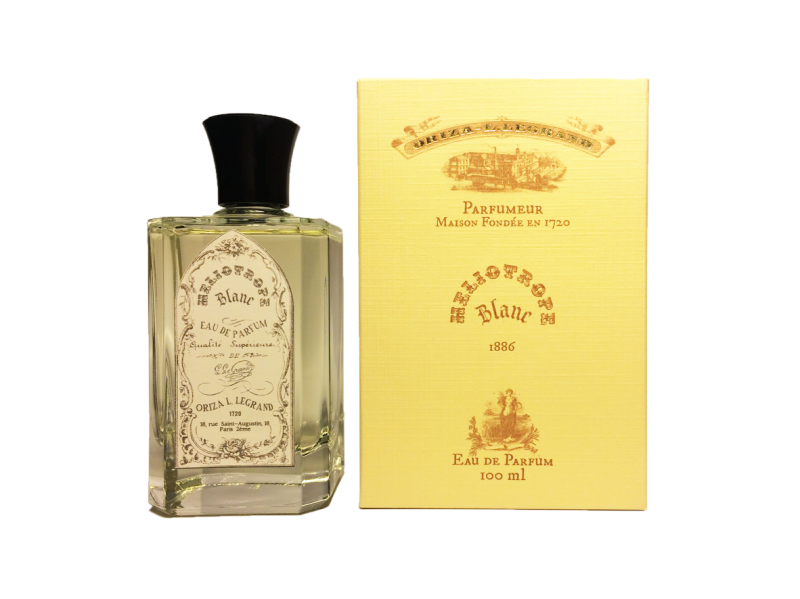
foto: Orizaparfums.com

foto: Orizaparfums.com

Oriza L. Legrand Hèliotrope Blanc –  Sweet companion

After the events of the past few weeks, I felt the need to write about a  fragrance that conveyed a feel of peace and purity, the parfum du jour is especially meaningful because it comes from a several times centenary Parisian house. Oriza L. Legrand first saw the light of day during the reign of Louis XV and shone with particular intensity during the second half of the XIXth century (articles and mentions to the house abound in newspapers from the epoch). Closed down  during the 1930s, it was resurrected a few years ago by messieurs Hugo Lambert and Franck Belaiche.

Hèliotrope Blanc is the reorchestration of a fragrance which Oriza L. Legrand launched for the first time in 1886. In the same vein as other creations from the house, it appeals to modern tastes while still providing us nostalgics with a glimpse of the past. In the second half of the XIX century respectable women preferred delicate soliflores. Strong florals and animal notes like musk and civet were associated with women of low morals but demure blossoms  left no place for misunderstandings: heliotrope, violet, muguet, mignonette were all the rage. Still, ladies wouldn’t even dream of applying fragrance to their skin, using it instead to scent handkerchiefs, lace and hair ribbons.

The tiny heliotrope flowers -in case you are not too familiar with them- are grouped in clusters; they exhale a lightly vanillic and almondy odor, given partly by their natural benzaldehyde content (benzaldehyde also occurs naturally in bitter almond oil and is generally used in perfumery to recreate the smell of almonds).

Is it possible to attain warmth and freshness at the same time? Yes, and  Hèliotrope Blanc succeeds at this. A floral watercolour with gourmand allusions, it is so clean and pure it verges on virginal (I think, in fact, it would work wonders on a bride). Part almond flavored cream, part tender embrace, it feels more like a reassuring ethereal presence than like perfume. Mimosa, violet, iris (the flower, not the root) and, of course, heliotrope are harmoniously arranged together; the only note that plays slightly louder is almond, which seems to weave in and out of the composition, trying to find its definive place. A milkiness that reminds of sandalwood anchors the floral notes. Notwithstanding its lightness, Hèliotrope is tenacious: the following morning, the muted scent of almond and violets lingers on clothes.

Caro

Origin of sample: courtesy of Oriza L. Legrand

foto: Commons.wikimedia.org fotógrafo: Cody Hough

foto: Commons.wikimedia.org fotógrafo: Cody Hough

Maria Candida Gentile Burlesque – Del escenario al tocador

imagen: Wikiart.org  artista: Erté (Romain de Tirtoff)  "En el teatro -  Trapecio"

imagen: Wikiart.org artista: Erté (Romain de Tirtoff) “En el teatro – Trapecio”

El empleo de un alto porcentaje de naturales y la ubicuidad del incienso son dos rasgos salientes en la obra de Maria Candida Gentile, una suerte de poetisa que escribe con aromas en lugar de palabras.

Su Burlesque -presentado en 2012– alude al consabido género de entretenimiento consistente en manejar de manera juguetona la fascinación de la audiencia. Hacía tiempo que estaba intrigada por este perfume, especialmente después de que Virginia lo llamara “la hermana promiscua de Jardins d’Armide ” y que nuestra colega  Carrie Meredith  me lo describiera como “una cruza entre Mae West y Lili St. Cyr”. Después de muchos, muchos meses finalmente logré conseguir un frasco: Burlesque, mi querido, somos el uno para el otro.

Ambarado y dulzón, Burlesque en seguida me trajo a la mente algunos de los viejos Guerlains, en no poca medida debido a su refinamiento estético y exquisitez de materias primas. Shalimar resuena con insistencia en la salida hesperidada (que aúna naranja sanguina y dos variedades de mandarina) pero es una fuerte dosis de iris -cremoso, denso, casi masticable, con su faceta de lápiz labial sublimada- lo que le hace tomar una dirección menos predecible.  Una dulce nota de incienso baila una y otra vez alrededor del iris antes de desvanecerse sobre un colchón de patchouli indonesio.

Burlesque es atalcado, espeso e increíblemente satisfactorio para quienes gustan de los clásicos vintage. Su cadencia se percibe de forma distinta cada vez, revelando más o menos a su antojo; siempre logra conservar la intriga agregando un elemento de sorpresa. El sillage es amplio y la longevidad, buena.

Caro

Nota bene: Si bien es una fragancia con identidad propia, el aire de familia que comparte con Cinabre y otras creaciones de la Sra. Gentile es notable.

Origen de la muestra: Frasco comprado en Le Secret du Marais, Madrid


foto: Mariacandidagentile.com

foto: Mariacandidagentile.com

Maria Candida Gentile Burlesque – From the stage to the boudoir

The use of a high percentage of naturals and the ubiquity of frankincense are two outstanding traits in the oeuvre of Maria Candida Gentile , a sort of poetess who writes with scents instead of words.

Her Burlesque -introduced in 2012- alludes to the well-known entertainment genre which consists in managing the fascination of an audience in playful manner. I had long been intrigued about this perfume; especially after Virginia called “Jardins d’Armide promiscuous sister” and fellow blogger  Carrie Meredith  described it to me as “Mae West meets Lili St. Cyr”. After many, many months I finally managed to get a bottle: Burlesque, my dear, we are meant for each other.

Ambery and sweetish, Burlesque instantly brought to my mind a few of the old Guerlains, in no small part  due to its aesthetical refinement and exquisiteness of raw materials. Shalimar resonates insistently in the hesperidic opening (which conjoins blood orange and two types of tangerine) but it is a strong dose of iris -creamy, dense, almost chewy, its lipstick-y facet sublimated- what makes it take a less predictable direction.  A sweet note of frankincense dances once and again around the iris before fainting on a bed of Indonesian patchouli.

Burlesque is powdery, thick and incredibly satisfying for those who love vintage classics. Its cadence seems different every time, revealing more or less at will; it always manages to keep the intrigue by adding an element of surprise.  Sillage is ample and longevity, very good.

Caro

Nota bene: Although it is a fragrance with its own defined identity, the family resemblance it shares with Cinabre and other creations of Ms. Gentile is remarkable.

Origin of sample: Bottle purchased at Le Secret du Marais, Madrid


Les Parfums de Rosine Roseberry – Primavera bucólica

foto: All-creatures.org

foto: All-creatures.org

Aunque una sea parcial a los perfumes operáticos y barrocos, gran parte del tiempo la agenda exige algo menos demandante.  De la misma manera en que la mayoría de las ocasiones no requieren de tacos altos, vestido de noche y las joyas de la abuela, los perfumes grandilocuentes a veces quedan fuera de la ecuación. Es el momento exacto en que “agradable” y “bonito” son bienvenidos.

“Bonito” resume con bastante exactitud a Roseberry, un eau de parfum  compuesto por Pierre Bourdon en 1997 para Les Parfums de Rosine. La casa parisina está dedicada a traducir todas las (aparentemente infinitas) facetas de la rosa al perfume. Claramente apasionada por  esta flor, la fundadora –Marie Hélène Rogeon- es la bisnieta de Louis Panafieu, quien solía crear eaux de cologne para el emperador Napoleón III.

Verde, floral y frutado, Roseberry resulta ideal para usar en primavera…o para conjurarla cuando el tiempo aún está frío. Aquí las rosas no conforman un bouquet arreglado primorosamente sino que parecen crecer al azar en un prado, matizadas por el dulzor herbáceo de la manzanilla. Una jugosa nota de  zarzamora endulza la rosa un poco más aún, pero lo frutal no resulta  abrumador. Finalmente prevalece el carácter floral de la composición a la par que una ligera jabonosidad refuerza su sensación de limpieza.

Fresca y aireada, esta fragancia transmite una alegría serena a lo largo de su evolución, que es bastante lineal.  Roseberry se mantiene cerca de la piel y su longevidad es mediana. Aunque menos distintivo que otras propuestas de la casa, resulta tan adorable que no puedo resistirme a su encanto.

Caro

Origen de la muestra: Muestra gentileza de perfumerías Nadia, Madrid


foto: Les-parfums-de-rosine.com

foto: Les-parfums-de-rosine.com

Les Parfums de Rosine Roseberry – Bucolic springtime

While one may be partial to operatic, baroque and statement-making fragrances, most of the time schedule calls for something a bit less demanding.  In the same way  most occasions don’t require high heels, an evening gown and one’s best jewels, big fragrances are some times out of the  equation. It is the exact moment when “nice” and “pretty” are most welcome.
“Pretty” very much sums up what Roseberry is about.  An eau de parfum  composed by Pierre Bourdon for Les Parfums de Rosine in 1997. The Parisian house is devoted to translating all of the (seemingly infinite) facets of  rose into fragrance. Clearly passionate about this flower, founder Marie Hélène Rogeon is the great granddaughter of Louis Panafieu, who used to create eaux de cologne for emperor Napoleon III.

Green, floral and fruity, Roseberry makes an ideal choice for springtime…or to summon up the season when the weather is still cold. The roses here do not form an artfully arranged bouquet; they seem, instead, to grow randomly in the wild, nuanced by the herbaceous sweetness of chamomile. A juicy  blackberry  note sweetens the rose even more but the fruitiness is not overpowering. In the end the floral character of the blend prevails while a faint soapiness reinforces its clean feel.

Fresh and airy, this fragrance conveys a serene joy throughout its (quite linear) evolution. Roseberry wears quite close to the skin and has average longevity. Although less distinctive than other offerings from the house, I find it so adorable I cannot resist its charm.

Caro

Origin of sample: Sample courtesy of Perfumerías Nadia, Madrid


Mikmoi Element Of Escape – Naturaleza en estado sólido

5elements

En el último SF Artisan Fragrance Salon, advertí un marcado retorno de los perfumes sólidos. El reverdecer de este formato puede verse en muchas marcas, especialmente en las artesanales (aquellas “hechas a mano”, que se ocupan de todo el proceso de producción) e indies (quienes tercerizan la producción en laboratorios, pero no pertenecen a grandes firmas).

En el nicho de lo artesanal se encuentra la marca Mikmoi, con una perspectiva multicultural pero radicada en San Francisco. Michael Coyle –su creador y perfumista- celebró el primer aniversario de la casa con una línea compuesta por 5 cologne sticks que recrean olfativamente a los elementos y es “inspirada por artistas del graffiti, temerarios y ninjas.”

Metal -金 (KIN): inicia con una dulzura casi frutal pero poco a poco se hace menos jugoso, hasta convertirse en una textura seca y fría. Sus notas son petitgrain, ron, azafrán y almizcle mineral.

Wood – 木 (KI): se abre con la imagen de un frondoso bosque ante nuestras narices. Una sensación alcanforada, verde y profunda es seguida por el picor casi pelusiento del aroma de la madera recién salida de un aserradero. Tiene palo rosa, álamo, pino y un refuerzo de acorde de madera.

Water – 水 (SUI): este perfume rebate la definición del agua como inodora. el agua sí tiene un olor y ese dependerá de muchos factores ambientales. El Agua de Mikmoi es transparente, veraniega y casi tropical. Nos sumerge en una límpida piscina con la combinación de yuzu, iris, vapor y ámbargris.

Fire – 火 (KA): con una intensidad ahumada pocas veces desplegada en la perfumería, el calor y la energía del fuego toman formas diversas: leña crepitando en la chimenea, un fósforo recién encendido o brasas ardientes. Esta fogosidad se debe al té Lapsang Souchong, pimienta rosa, sequoia y fósforo.

Earth – 土 (DO): es un suelo fértil y húmedo; huele a verduras, a frutas y a materia orgánica. Es como estar recostado sobre un césped salpicado de rocío y sentir que la tierra blanda nos toca la piel, nos embarra. Esta fría oscuridad está moldeada con damasco, ciruela, opoponax, heno y cúrcuma.

Una curiosidad: Como una de las inspiraciones para esta línea fueron los ninjas, hice la prueba de ver un clásico del género – 5 Element Ninja (1982) de Cheh Chang– y en cada batalla contra los elementos, oler el perfume correspondiente. El resultado fue una experiencia en 4D maravillosa.

Virginia

Origen de las muestras: Gentileza de la marca.

foto: http://codexapocrypha.blogspot.com Escena de la batalla contra el agua de "5 Element Ninja" (1982)

foto: http://codexapocrypha.blogspot.com Escena de la batalla contra el agua de “5 Element Ninja” (1982)

Mikmoi Element Of Escape – Nature in solid state

In the latest SF Artisan Fragrance Salon, I noticed a marked return toward solid perfumes. The blooming of this format can be appreciated in many brands, especially artisanal ones (those “handmade”, which are involved throughout the whole process of production) and indies (which might outsource production in labs, but do not belong to large firms) .

Mikmoi is an artisan niche brand, based in San Francisco but with a multicultural perspective. Michael Coyle –its creator and perfumer- celebrated the first anniversary of the house with a collection which consists of 5 cologne sticks that recreate the scent of the elements and is “inspired by Graffiti Artists, Daredevils & Ninjas.”

Metal -金 (KIN): it begins with a fruity sweetness but gradually becomes less juicy and acquire a dry, cool texture. Its notes are petitgrain, rhum, saffron and mineral musk.

Wood – 木 (KI): it opens with the landscape of a lush forest under our noses. A camphoraceus, green and deep feel is followed by the itchy almost fuzzy aroma of fresh sawmill dust. It has notes of bois de rose (rosewood), poplar, pine and a timber accord that acts as a reinforcement.

Water – 水 (SUI): this perfume disputes the definition of water as odorless. Water actually does have a smell and that will depend on many environmental factors. This Mikmoi Water is transparent, summery and almost tropical. It submerges us into a limpid pool with a combination of yuzu, iris, vapor and ambergris notes.

Fire – 火 (KA): with a smoky intensity rarely displayed in perfumery, the heat and energy of fire take many forms: wood sizzling in the fireplace, a freshly lit match or burning embers. This is due to the impetuosity of Lapsang Souchong tea, pink pepper, redwood and phosphorus.

Earth – 土 (DO): it is a fertile, moist soil that smells like vegetables, fruits and organic matter. It’s like lying down on a dew sprinkled lawn and feeling the soft ground touching our skin; making us muddy. This cold darkness is molded with peach, plum, opoponax, hay and turmeric.

A curiosity: As ninjas were one of the inspirations for this collection, I experimented a bit by watching a classic of the genre – 5 Element Ninja (1982) by Cheh Chang and smelling the corresponding cologne during each battle against a natural element. The result was a wonderful 4D experience.

Virginia

Origin of samples: Courtesy of Mikmoi.

foto: Mikmoi.com

foto: Mikmoi.com

Parfum d’Empire Cuir Ottoman – Exuberancia y equilibrio

imagen: Ottomanhistorypodcast.com Osman Hamdi Bey, At the Mosque Door, 1891, Oil on canvas, 203 x 123.5 cm, University of Pennsylvania Museum of  Archaeology and Anthropology

imagen: Ottomanhistorypodcast.com  “En la puerta de la mezquita”, 1891 artista: Osman Hamdi Bey

Desde tiempos antiguos (2000-1200 A.C.) el arte de la curtiduría ha sido desarrollado por los Hititas en la AnatoliaTurquía. El trabajo del cuero conllevaba un gran peso simbólico en las comunidades turcas: un sentido de lo sagrado y de los valores. Pero además, el cuero tenía también un importante valor económico: se le llamaba“teri” y “tirik”, un impuesto que los antiguos clanes del lugar le pagaban al Khan.

Marc-Antoine Corticchiato -perfumista y alma mater de Parfum d’Empire– creció entre Córcega y Marruecos. Él demuestra ese particular mix cultural creando Cuir Ottoman como un tributo al tradicional trabajo del cuero de Anatolia. Es el exotismo de lo oriental en el imaginario occidental; un lujo exuberante moldeado con equilibrio y moderación.

Las breves impresiones iniciales sobre la piel remiten a un blend de whiskytabaco y cuero. Este último acorde es una cálida dulzura de benjuí que suaviza los matices más combustibles del styrax; y el cistus le ofrece una frescura casi verdosa. Una tersa nota de iris fluctúa, elegante y delicada, entre un acabado cremoso y uno apolvado.

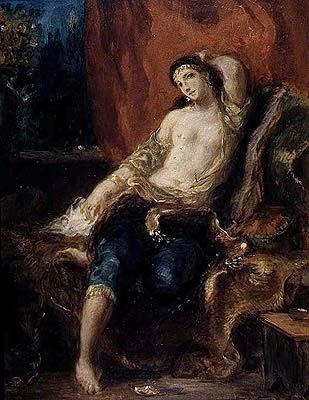
El exotismo aparece con remotos toques de incienso que se entrelazan con una cadencia ambarada de tonkavainilla y bálsamo de Tolú: esta mélange es dulce pero a veces amarga y oscura. No obstante, el gran secreto de esta sensual composición es el jazmín egipcio, una delicia floral blanca que se transforma en un imaginario fruto de azúcar. Como dijo el perfumista: “tan blanco y opulento como las odaliscas pintadas por DelacroixIngres y Matisse“.

A pesas de que hemos incluído a Cuir Ottoman en un Top 5 (muy) masculino, creo que -además- este eau de parfum florece de una forma delicada sobre la piel femenina.

Virginia

Origen de la muestra: Regalo por compra en Luckyscent.

imagen: Artble.com "Odalisque", artista: Eugene Delacroix

imagen: Artble.com “Odalisque”, 1857   artista: Eugene Delacroix

Parfum d’Empire Cuir Ottoman – A balanced exuberance

The art of tannery was developed by the Hittites in Anatolia, Turkey, Since the very old times (2000-1200 B.C). In Turkish communities, leatherwork carried holy and symbolic meanings and values. But leather also had an important economic value: it was called “teri” and “tirik”, a tax paid to Khan in old Turkish clans.

Marc-Antoine Corticchiato -perfumer and alma mater of Parfum d’Empire– grew up between Corsica and Morocco. He displays that particular cultural mix creating Cuir Ottoman as a tribute to the traditional Anatolian leatherwork . It is Eastern exoticism set in a Western imaginary; an exuberant luxury shaped with balance and moderation.

The brief initial impression on the skin is a blend of whisky, tobacco and leather. This last accord is a warm sweetness of benzoin which smooths the fuel hues of styrax; and cistus brings a greenish freshness. A soft iris note fluctuates, elegant and delicate, between a creamy and a powdery finish.

The exoticism appears with distant touches of frankincense that interlaces with an ambery cadence of tonka, vanilla and Tolu Balsam: this mélange is sweet but at times bitter and dark. However the big secret of this sensual composition is Egyptian jasmine, a white floral delight that becomes in an imaginary fruit of sugar. As the perfumer said:“as white-fleshed and opulent as the odalisques painted by Delacroix, Ingres and Matisse.

Despite of our having included Cuir Ottoman in a (very) masculine top 5, I think this eau de parfum also flourishes delicately on feminine skin.

Virginia

Origin of sample: Gift with purchase from Luckyscent.

foto: Parfumdempire.fr