Category Archives: Perfumes

Cognoscenti Scent No. 8 Aldehydic Oakmoss- Matices de un solo ambarado

foto: Martinbillerviolins.com

foto: Martinbillerviolins.com

El sonido del cello es vibrante, grave pero capaz de lograr trazos agudos. Su intensidad es fluída y envolvente; su espíritu, equilibrado y clásico. Los matices más sublimes que puede ofrecer este instrumento solo -sin ningún otro que lo acompañe- se  experimentan en piezas como la tan bella y afamada Suite No.1 para Cello en Sol Mayor de Johann Sebastian Bach.

Si el sonido de esta suite tuviera una traducción al plano olfativo, sería muy similar a Scent No.8 Aldehydic Oakmoss de Cognoscenti. El cello en sí mismo serían los aldehídos, con su impronta atemporal pero formal que va de lo chispeante hasta lo apolvado. Las variaciones de armonía y las diversas tonalidades ejecutadas serían los demás ingredientes, que ofrecen un contrapunto en segundo plano, insuflando matices sin robar protagonismo al “instrumento”.

El inicio es verde y chirriante: la bergamota pareciera agregarle chispas que cosquillean. Luego un color ambarado crece rápidamente cubriendo por completo la composición, derramando un translúcido velo dorado y tibio sobre el aldehído (C-12 Láurico). Se da lugar entonces a una animada danza floral, dulce y cremosa entre el ylang ylang, el haba tonka y el cacao.

La Suite No.1 siempre queda resonando por un buen rato en la cabeza, especialmente las partes más ásperas de la melodía. Del mismo modo, sobre la piel persiste durante horas una textura aldehídica combinada con la rusticidad del acorde de cuero, la oscuridad del vetiver y del musgo de roble y los resabios amaderados que dejó a su paso la nota de cedro Atlas.

Tal como su creadora Dannielle Sergent nos había adelantado en una entrevista, esta fragancia es la más nueva de la colección y fue lanzada en noviembre del 2013.

Virginia

Origen de la muestra: cortesía de la marca.

Image

Cognoscenti Scent No. 8 Aldehydic Oakmoss- Hues of an ambery solo

The sound of a cello is vibrant, bass but able to get sharp strokes. Its intensity is fluid and enveloping; its spirit, balanced and classic. The most sublime nuances that this instrument can give on its own -without any other accompanying – are experienced through pieces so beautiful and famous as the Cello Suite No.1 in G Major by Johann Sebastian Bach.

If the sound of this suite had an olfactory translation, it would be very similar to Scent No.8 Aldehydic Oakmoss by Cognoscenti. The cello itself would be represented by the aldehydes, with their timeless yet formal trademark that goes from scintillating to powdery facets. The variations in harmony and diversely executed tonalities would be portrayed by the other ingredients, which offer a counterpoint in the background, insulating hues without stealing the limelight from the “instrument”.

The beginning is green and squeaky: bergamot seems to add sparks that tickle. Then an amber accord grows and quickly covers the whole composition by placing a translucent veil, golden and warm, on the aldehyde (C -12 Lauric). Then a lively floral, sweet and creamy dance occurs between ylang ylang, tonka bean and cocoa.

The Suite No.1 keeps ringing for a while on the head, especially the rougher parts of the melody. In a similar way, the aldehydic texture persists on the skin for hours combined with the rusticity of a leather accord, the darkness of vetiver and oakmoss, and the woody aftertaste that is left behind the Atlas Cedarwood note.

As its creator Dannielle Sergent had told us in an interview, this is the newest fragrance of the collection and it was released in November 2013.

Virginia

Origin of sample: vial courtesy of the brand.

foto: Orgs.usd.edu

foto: Orgs.usd.edu

Letras Perfumadas – “Oda a la jardinera” de Pablo Neruda

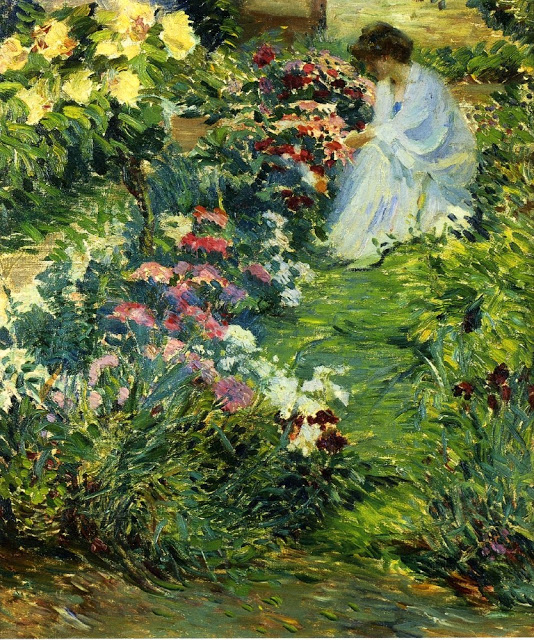
imagen: Bjws.blogspot.com Woman in a Garden  artista: John Leslie Breck (1860-1899)

imagen: Bjws.blogspot.com   Woman in a Garden   artista: John Leslie Breck (1860-1899)

Sí, yo sabía que tus manos eran
el alhelí florido, la azucena
de plata;
algo que ver tenías
con el suelo,
con el florecimiento de la tierra,
pero
cuando
te vi cavar, cavar,
apartar piedrecitas
y manejar raíces
supe de pronto,
agricultora mía,
que
no sólo
tus manos,
sino tu corazón
eran de tierra,
que allí
estabas
haciendo
cosas tuyas,
tocando
puertas
húmedas
por donde
circulan
las
semillas.

Así, pues,
de una a otra
planta
recién
plantada,
con el rostro
manchado
por un beso
del barro,
ibas
y regresabas
floreciendo,
ibas
y de tu mano
el tallo
de la astromelia
elevó su elegancia solitaria,
el jazmín
aderezó
la niebla de tu frente
con estrellas de aroma y de rocío.
Todo
de ti crecía
penetrando
en la tierra
y haciéndose
inmediata
luz verde,
follaje y poderío.
Tú le comunicabas
tus semillas,
amada mía,
jardinera roja.
Tu mano
se tuteaba
con la tierra
y era instantáneo
el claro crecimiento.

Amor, así también
tu mano
de agua,
tu corazón de tierra,
dieron
fertilidad
y fuerza a mis canciones.

Tocas
mi pecho
mientras duermo
y los árboles brotan
de mi sueño.
Despierto, abro los ojos,
y has plantado
dentro de mí
asombradas estrellas
que suben con mi canto.

Es así, jardinera:
nuestro amor
es
terrestre:
tu boca es planta de la luz, corola,
mi corazón trabaja en las raíces.

Pablo Neruda 

Tercer libro de las odas Buenos Aires, Losada, 1957.

La Modernidad nos ha quitado -entre otras cosas- la costumbre del contacto cotidiano con la tierra: su olor, su textura, su humedad, su temperatura. Hemos nacido en un momento histórico y en una sociedad en el que tierra se asocia con la suciedad (valga la cacofonía) y, por lo tanto, conlleva cierta carga negativa.

Sin embargo, el desarrollo de la jardinería se ha vuelto cada vez más común, especialmente en el mundo de la perfumería artesanal. Mesha Munyan, Roxana Villa o Maggie Mahboubian son sólo algunas de las perfumistas que suelen aplicar en sus fórmulas esencias provenientes de cosechas sus propios jardines.

Una oda a una jardinera no es poca cosa y mucho menos si viene de parte de Pablo Neruda. Con ojo atento, corazón apasionado y pluma prodigiosa comparó el trabajo de la tierra y sus imágenes sensoriales con el amor. Sin dudas, ambos implican tiempo, sentimientos, dedicación y (¿por qué no?) cierto talento.

Virginia

foto: Florespedia.com  Alhelíes

foto: Florespedia.com Alhelíes

Scented Letters – “Ode to a woman gardening” by Pablo Neruda

Yes, I knew that your hands were
a budding sprout, a lily
of silver:
you had something to do
with the soil,
with the flowering of the earth,
but
when
I saw you digging, digging,
pushing pebbles apart
and guiding roots
I knew at once,
my farming woman,
that
not only
your hands
but your heart
were of earth,
that there
you were
making
your things,
touching
moist
doorways
through which
the
seeds
circulate.

So in this way
from one plant
to the other
recently
planted one,
with your face
spotted
with a kiss
from the clay,
you went
and came back
flowering,
you went
and from your hand
the stem
of the astromeria
raised its solitary elegance,
the jasmine
adorned
the mist on your brow
with stars of dew and fragrance.

Everything
grew from you
penetrating
into the earth
and becoming
green light,
foliage and power
you communicated
your seeds to it,
my beloved,
red gardening woman:
your hand
on familiar terms
with the earth
and the bright growing
was instantaneous.
Love, thus also
your hand
of water,
your heart of earth,
gave
fertility
and strength to my songs
you touch
my chest
while I sleep
and trees blossom
from my dreaming.
I wake up, open my eyes,
and you have
inside me
stars in the shadows
which will rise and shine
in my song.

That’s how it is, gardening woman:
our love
is
earthly:
your mouth is a plant of light, a corolla,
my heart works among the roots.

Pablo Neruda

From “Tercer libro de las odas“, 1956. Translated by Jodey Bateman. Source: http://spanishpoems.blogspot.com

Modernity has taken from us -among other things- the habit of daily contact with the ground; its smell, texture, moisture, temperature. We were born in a historical time and within a society in which soil is associated with dirt and, therefore, carries certain negative connotations.

Notwithstanding, the development of gardening has become increasingly common, especially in the world of artisanal perfumery. Mesha Munyan, Roxana Villa or Maggie Mahboubian are just some of the perfumers that typically employ essences harvested from their own gardens in their formulas .

An ode to a gardener is no small matter, much less if it comes from Pablo Neruda. With a watchful eye, prodigious pen and a passionate heart he compared the work of the land and its sensory images with love. Without a doubt, both involve time, feelings, dedication, and (why not?) some talent.

Virginia

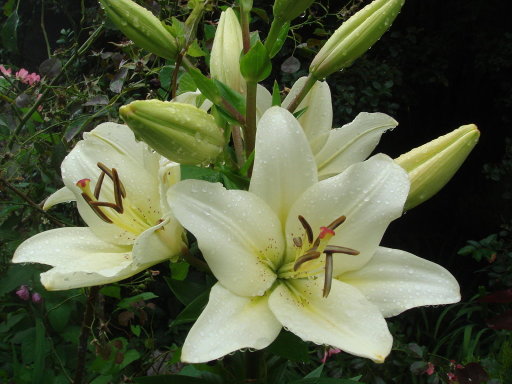
foto: Plantas.facilisimo.com Azucenas

foto: Plantas.facilisimo.com    Azucenas

foto: Commons.wikimedia.org  Alstroemeria

foto: Commons.wikimedia.org   Alstroemeria

foto: Florespedia.com  Jazmines

foto: Florespedia.com      Jazmines

foto: Proyectolomas.weebly.com   Amancae

foto: Proyectolomas.weebly.com     Amancae

Lorenzo Villoresi Musk – ¡Hola, guapo!

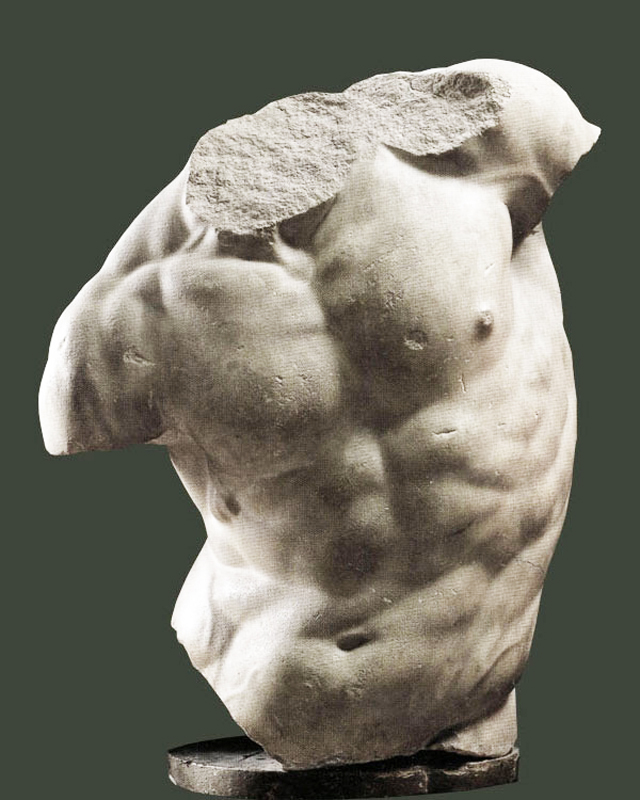
foto: Uffiziflorencia.com  Torso de Gaddi, Galería Uffizi, Florencia

foto: Uffiziflorencia.com Torso de Gaddi, Galería Uffizi, Florencia

Aunque solemos dar por sentado que la perfumería francesa es el súmmum en este arte fragante, tendemos a olvidar que fueron los italianos quienes ayudaron a introducir el refinamiento en Francia.  Cuando la formidable Catalina de Médicis viajó a Francia desde su Florencia natal en 1533 con el propósito de desposar a Enrique II (en ese entonces Duque de Orléans) llevó consigo bordadoras, cocineros -quienes también resultarían influyentes en la cultura francesa-, a su astrólogo y también a su perfumista personal Renato Bianco, también conocido como René le Florentin. Aunque no era hermosa según los cánones de belleza de la época, Catalina tenía elegancia, gran inteligencia y un gusto exquisito. Los nobles franceses y sus esposas se dejaron fascinar por el trabajo de René y su arte se volvió muy solicitado. Catalina puso en boga los guantes perfumados que Galimard producía en Grasse, que en ese momento eran toda una novedad.

Dando un salto de casi cinco siglos, la perfumería italiana encuentra uno de sus mejores embajadores en el nariz florentino Lorenzo Villoresi, pionero de la perfumería de nicho desde mucho antes  de que ésta fuera tendencia.

Disfruto y admiro la perfumería italiana tanto como a su contraparte francesa; de hecho, uso creaciones de este origen cotidianamente ya que -generalización grosera- me siento más cómoda en ellas (me pregunto si llevaremos estas preferencias en nuestro ADN y son mis raíces italianas las que llaman). Dentro de los perfumes itálicos, tengo una afición especial por los almizcles italianos, que se sienten y huelen como una segunda piel: despreocupados,muy sexys y fáciles de llevar por hombres o mujeres. Usualmente no proyectan muy lejos y sólo pueden percibirse al aproximarse un poco demasiado al usuario. Los almizcles italianos caminan con soltura la cuerda floja entre esos almizcles blancos que recuerdan al suavizante para ropa (demasiado frecuentes en la perfumería mainstream, lo que no sorprende en las empresas que comercializan a la par eaux de toilette y detergentes) y los aromas que evocan partes animales sudorosas con demasiada precisión.

Lorenzo Villoresi Musk no anuncia su presencia a los gritos y resulta ni muy limpio ni muy sucio, encontrando un equilibrio perfecto entre  suave dulzor y carácter animal. Esta interpretación abstracta ostenta notas de cedro, sándalorosa y -por supuesto- almizcle (encuentro ligeramente más prominentes el cedro y la rosa). Las notas aparecen urdidas apretadamente, con densidad. Su cualidad floral -cálida y atalcada- se sublima con la temperatura corporal y es el olor de la piel el que parece florecer.  Musk, clásico y atemporal, esquiva rótulos como “moderno” o “anticuado”. Su elegancia simple hace que se adapte con facilidad a un uso casual o más formal y posee una longevidad excelente, incluso en versión eau de toilette.

Caro

Origen de la muestra: muestra gentileza de Lorenzo Villoresi 

Nota bene: Hace muchos años (no logro recordar ni encontrar el artículo) Brad Pitt mencionó en una entrevista que este era su perfume favorito ¡Excelente gusto, Sr. Pitt!

musk


Lorenzo Villoresi Musk – Hello, Gorgeous!

Although we usually assume fine French perfumery to be the summum of this fragrant art, we tend to forget it was the Italians who, after the Renaissance  helped introduce refinement into France. When the formidable Catherine de Medici traveled to France from her natal Florence in 1533 in order to wed Henry II (then Duke of Orléans) she brought along embroiderers, cooks -who would also become influential in French culture-, her astrologer and also her personal perfumer Renato Bianco, also known as René le Florentin. Although not beautiful by then current beauty standards,  Catherine was elegant, highly intelligent and had exquisite taste. French noblemen and their wives became entranced by René‘s work and his art was much solicited. Catherine also made fashionable the scented leather  gloves produced in Grasse by Galimard, which were then a novelty.

Fast forward almost five centuries, Italian perfumery finds one of its best ambassadors in Florentine nose Lorenzo Villoresi, who pioneered niche perfumery long before it became a trend.

I enjoy and admire Italian perfumery as much as its French counterpart; in fact, I wear creations of this origin on a day to day basis as -gross generalisation- I feel more comfortable in them (I wonder if we carry these preferences in our DNA and my Italian roots are singing to me). Among Italian fragrances, I am especially fond of Italian musks, which smell and feel like a second skin: carefree,very sexy and easy to wear by either gender. They usually don’t project far and can only be perceived when one approaches a bit too closely to the wearer. Italian musks walk the tightrope  between those white musks redolent of fabric softener (too frequent in mainstream perfumery, not surprisingly in companies that market both perfumes and dish cleaning liquids) and the aromas that evoke sweaty animal private parts, sometimes with too much precision.

Lorenzo Villoresi Musk does not shout and appears neither too clean or too dirty finding the perfect balance between sweet nothing and animalic. This abstract rendition boasts notes of cedarwood, sandalwoodrose and -of course- musk (I find cedarwood and rose slightly more noticeable). The notes seem tightly interwoven, even dense. Its warm powdery floralcy is easily enhanced by body temperature and the smell of skin seems to bloom. Musk, classic and timeless, avoids labels such as “modern” or “old fashioned”. Its simple elegance makes it easy to adapt to casual or evening wear and the longevity is excellent, even in eau de toilette version.

Caro

Origin of sample: sample courtesy of Lorenzo Villoresi

Nota bene: Many  years ago (I am unable to remember or find the precise article) Brad Pitt mentioned in an interview that this was his fragrance of choice. Excellent taste, Mr. Pitt!

Eau d’Italie Graine de Joie – Presentación en sociedad

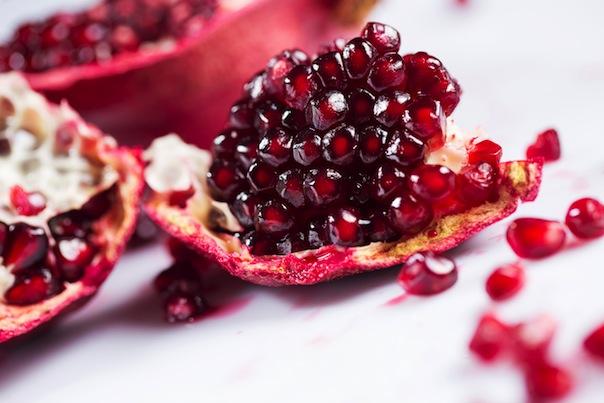
foto: Cleveland.com

foto: Cleveland.com

Hacía tiempo que nos preguntábamos por el inminente nuevo lanzamiento de Eau d’Italie; por suerte la espera llegó a su fin: Graine de Joie, undécima fragancia de la colección, hizo su debut esta semana en Esxence en Milán.

La creación, un luminoso floral frutado que busca celebrar el amor, fue compuesta por Daphne Bugey, de FirmenichFrutas rojasgranada y praliné juguetean con fresia y almizcles en una apetitosa mezcla.

Conversamos con Sebastián Alvarez Murena, quien -junto a su mujer Marina Sersale- es la mente detrás de una marca conocida por su elegancia relajada.

-Al comparar algunos de los primeros perfumes de la casa (Sienne l’Hiver, Paestum Rose, Bois d’Ombrie) y con los tres últimos lanzamientos (Un Bateau pour Capri,  Acqua Decima, Graine de Joie) me parece adivinar un giro en favor de fragancias más despreocupadas ¿Hay algo de esto?

Despreocupadas, interesante, no se me había ocurrido. Sí, entiendo lo que querés decir, aunque en realidad yo diría que más bien, con el pasar de los años, puede ser que inconscientemente busquemos menos el crear efectos “dramáticos”. Pero esto tampoco sería un concepto absoluto, porque en realidad no excluyo que en en el futuro podamos trabajar en perfumes más extremos. Creo que ya he dicho esto en el pasado, pero lo repito porque ilustra bien nuestra manera de trabajar: en general tenemos siempre varias ideas en las cuales pensamos y trabajamos al mismo tiempo. Y lo que suele pasar es que una de ellas cobra vida y empieza a moverse con una especial soltura, una razón de ser. Y a partir de ahí el camino suele ser bastante claro.

-¿Qué suma Graine de Joie a una colección ya numerosa?

Contestación corta que no quiere ser una provocación: algo que sentíamos que faltaba. Elaborando, la idea de un frutado luminoso con un fondo almizclado es algo muy tentador, que nos interesaba mucho. De hecho, nuestra idea era la de trabajar sobre esas notas que son irresistibles. Esas notas que parecen pasar por debajo de la guardia de la razón, y seducirnos,  ¡sin que lo podamos evitar!

-¿Qué creés que diferencia a Graine de Joie de otros florales frutados que inundan el mercado?

La verdad es que olemos muy poco de lo que se lanza. Esto no es por arrogancia, ni nada parecido, sino por el simple hecho de que, con más de 1200 lanzamientos por año, sería una proceso que no aportaría más que caos. O sea que no sabría bien cual es la diferencia, porque de hecho no nos comparamos. Trabajamos de una manera muy reservada, y nunca comparando, ni tratando de emular. Para nosotros lo importante, lo esencial, es que lo que lanzamos sea, en nuestra opinión, lo más cercano a nuestra idea de perfección.

-Si bien su aroma es delicioso, la granada no es una nota demasiado frecuente en perfumería ¿Cuál fue el motivo de su elección?

Por lo que decíamos antes: la idea de trabajar alrededor de notas irresistibles. La granada, sea en su substancia, sea en su aspecto, sea en su simbología (aunque este último punto no hace parte de  nuestra manera de trabajar), conyuga los elementos que buscábamos.

– ¿Por qué motivo Graine de Joie fue formulado como eau de parfum y no eau de toilette?

Lo decidió Graine de Joie por sí misma: da lo mejor de sí como eau de parfum. Si hubiese funcionado mejor como eau de toilette, hubiese sido eau de toilette. O concentración extrema, llegado el caso. Pero en este caso, eau de parfum permitía el mejor resultado.

-Es la primera vez que un perfume de la marca es compuesto por una mujer ¿Se trasluce la sensibilidad femenina de alguna manera?

Aah, buena pregunta… Sería tentador decir que sí, pero creo que no sería correcto, porque hay perfumeros muy sensibles también. Más que sensibilidad femenina en general, yo diría que trasluce la sensibilidad de Daphne Bugey.

– ¿Cómo definirías Graine de Joie en pocas palabras?

Un perfume frutado, luminoso, almizclado. ¡Irresistible!

Caro

foto: gentileza de Eau d'Italie

foto: gentileza de Eau d’Italie

Eau d’Italie Graine de Joie – An introduction into society

We had long been wondering about Eau d’Italie‘s impending new release; thankfully the wait is over now: Graine de Joie, the eleventh fragrance in the collection, made its debut this week at Esxence in Milan.

The newly born creation, a luminous fruity floral meant to celebrate love, was composed by Firmenich‘s Daphne Bugey. Notes of red berries, pomegranate and praline frolic together with freesia and musks in this mouthwatering blend.

We talked to Sebastián Alvarez Murena who -along with wife Marina Sersale– is the mind behind a brand known for its relaxed elegance.

-When I compare some of the first creations from the House (Sienne l’Hiver, Paestum Rose, Bois d’Ombrie) with the most recent releases (Un Bateau pour Capri,  Acqua Decima, Graine de Joie) I seem to guess a turn in favor of  more easygoing fragrances. Is there something of this element?

Easygoing, interesting, I hadn’t thought about it. Yes, I understand what you mean, although I would say that, over the course of years, we unconsciously aim for less ‘dramatic’ effects. But this wouldn’t be an absolute concept because, to tell the truth, I don’t exclude the possibility of working on more ‘extreme’ fragrances in the near future. I think I have already mentioned this before, but I repeat it because it illustrates properly the way we work: in general, we have several ideas on which we think and work at the same time. And what usually happens is that one of them comes to life and begins to move with special ease, a reason of being. And from that point on, the way seems to be quite clear.

-What does Graine de Joie add to an already numerous collection?

Short answer that doesn’t intend to be a provocation: something we felt was missing. The idea of a luminous fruity fragrance with a musky base is something very tempting, that interested us very much. In fact, we wanted to work on those irresistible notes; the notes that seem to go undetected by reason and seduce us without us being able to help it.

-What sets apart Graine de Joie from other fruity florals that seem to be flooding the market?

Truth is we smell very few releases. This is not out of arrogance, but due to the simple fact that, with more than 1200 releases per year, this process would only add chaos. So I don’t know what the difference is because we do not compare ourselves to others. We work in a very reserved way, never comparing or trying to emulate. What’s important to us, the most essential thing, is that everything we launch comes, in our opinion, as close  as possible to our idea of perfection.

-Although its scent is delightful, pomegranate is not a common note in perfumery. What was the reason for this choice?

Because of what I mentioned before: we wanted to work around irresistible notes. In substance, in appearance and symbology (although this last part doesn’t have much to do with the way we work), pomegranate conjugates all the elements we were looking for.

– Why was Graine de Joie formulated as eau de parfum instead of eau de toilette?

That was decided by Graine de Joie itself: it performs best as eau de parfum. Had it worked better as eau de toilette, it would have been an eau de toilette. Or even an intense concentration, given the case. But in this case, an eau de parfum allowed for better results.

-This is the first Eau d’Italie fragrance composed by a woman. Does feminine sensibility shine through it in a way or another?

Aah, good question… It would be tempting to say yes, but I think it wouldn’t be fair, because there are very sensitive male noses too. More than feminine sensibility in general, I would say it’s Daphne Bugey’s sensibility that shines through.

– How would you define Graine de Joie in few words?

A fruity, luminous musky fragrance. Irresistible!

Caro


Parfums de Nicolaï Juste un Rêve – Sueño exótico

imagen:

imagen: gentileza de Henriette hackenberg  artista: Henriette Hackenberg,  “Sacred pool”, Holylands series   Henriette-hackenberg.nl

Hoy en tenemos una colaboración de Esperanza van der Zon. Hija de madre española y padre holandés, atesora en su memoria los aromas de Málaga: jazmines, azahares y el tomillo de las montañas. Quizás por ese motivo eligió reseñar un floral blanco para Té de Violetas. Esperanza vive en Amsterdam y escribe su propio blog sobre perfumes. En un país donde las flores son algo así como un tesoro nacional, ella cultiva hierbas (¡7 clases de menta!) y tuberosas en su propio jardín.

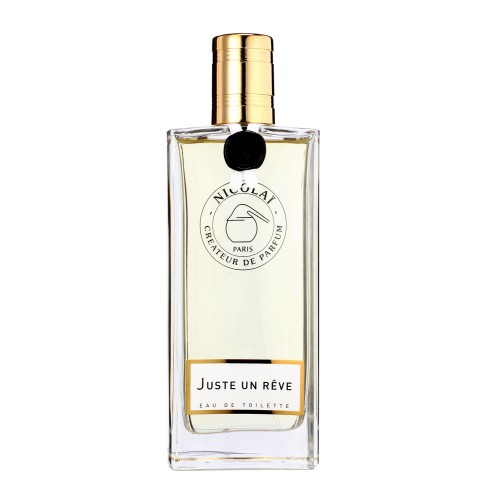
Para mi primer guest post en Té de Violetas quise escribir sobre un perfume que está muy cercano a mi corazón, Juste un Rêve. Juste un Rêve fue creado en 1996 por la perfumista francesa Patricia de Nicolaï. Su nombre quiere decir “sólo un sueño”. Aunque todavía se encuentra disponible online, Juste un Rêve está siendo discontinuado por Parfums de Nicolaï. Esta podría ser una buena razón para probar el perfume y comprar una botella mientras aún sea posible.

Luego de haber probado el abanico completo de fragancias femeninas de Parfums de Nicolaï, encontré que Juste un Rêve era uno de los pocos que podía usar. Patricia de Nicolaï utiliza en la mayoría de sus perfumes femeninos una nota excesivamente dulce, como de caramelo o azúcar quemada que no me gusta y se vuelve agria en contacto con mi piel.  Los perfumes que no llevan esta nota son los excelentes Number One, Juste un Rêve, Rose Oud, Colognes y las fragancias que ella compuso para MDCI: Un Coeur en Mai y Le Rivage des Syrtes. Supongo que esta nota de azúcar quemado es el sello de la maestra perfumista, pero a mí me distrae.  Por fortuna, esta característica no está presente en sus magníficas fragancias para la casa.

Juste un Rêve es un eau de toilette floral tropical. No resulta carnal ni indólico y tampoco recuerda a un aceite bronceador con aroma a coco; me da una impresión relajada:  madura, clásica y serena. Todos los ingredientes están muy bien mezclados, creando una textura como de suave manteca de maní. Esta mezcla tersa,sin fisuras, por momentos dificulta la detección de las notas individuales, al menos para mí.

Casi inmediatamente después de aplicar, Juste un Rêve me recuerda al spray para el pelo que mi madre usaba cuando se preparaba para salir; lo que puede ser una de las razones por las que me gusta tanto. Apenas luego, un cremoso jazmín y tuberosa aparecen alternadas con el aroma de un suculento durazno. El monoï (pétalos de gardenia tahitiana macerados en aceite de coco) y la tuberosa aparecen y se superponen con suaves rosas. ¿Hay una pizca de aldehídos también? Luego de media hora, lo que queda en mi piel es un suave aroma a monoï con un toque atalcado que le da a Juste un Rêve una sensación ligeramente retro.

Al comparar Juste un Rêve con MDCI Péché Cardinal, otro hermoso perfume de coco/tuberosa/fruta (durazno), Péché Cardinal resulta mucho más frutado, más verde, más fresco, joven y coqueto.

Cuando lo uso, Juste un Rêve me hace sentir más relajada, centrada y despreocupada. Es un poco como estar en un centro de vacaciones de lujo en una isla exótica con increíbles playas de arena blanca.

No consideraría a  Juste un Rêve entre las obras maestras de Patricia de Nicolaï, pero es una fragancia muy bien hecha y una buena elección para los momentos en que uno quiere un perfume que no sea complicado. Su belleza reside en esta aparente simpleza.

La longevidad es muy moderada (por momentos no más de 2 horas) y suele ser necesario reaplicar durante el día.  Juste un Rêve se mantiene muy cerca de la piel.  Noté que funciona especialmente bien en tiempo cálido ya que su sillage se ve reforzado por el calor de mi piel; por este motivo lo usé con mucha frecuencia el verano pasado.

Notas oficiales según el sitio web de Parfums de Nicolaï :

Notas de salida: damasco y coco

Notas medias: jazmín, tuberosa, ylang ylang

Base : maderas, vainilla

Esperanza

Origen de la muestra: botella comprada en The Perfume Lounge en Amsterdam

foto: Esperanza van der Zon

foto: Esperanza van der Zon

Parfums de Nicolaï Juste un Rêve – Exotic dream

Today we have a guest post by Esperanza van der Zon. Daughter of a Spanish mother and Dutch father, she treasures in her memory the scents of Málaga: jasmine, orange blossom and the thyme that grows in the mountains. Perhaps that’s why she chose to review a white floral for Té de Violetas.  Esperanza lives in Amsterdam and writes her own lovely fragrance blog. In a country where flowers are considered a sort of national treasure she grows herbs (7 varieties of mint!)and tuberoses in her own garden.

For my first guest blog on Té de Violetas I wanted to write about a perfume which is very close to my heart, Juste un Rêve. Juste un Rêve was created in 1996 by French perfumer Patricia de Nicolaï. It means ‘just a dream’. Although still widely available online, Juste un Rêve will be discontinued by Parfums de Nicolaï. This might be a good reason to try the fragrance and buy a bottle while you still can.

After having tested the whole range of feminine Parfums de Nicolaï fragrances, I found Juste un Rêve to be one of the only few I can wear. Patricia de Nicolaï uses in most of her feminine fragrances an overly sweet note like burnt sugar/caramel which I do not like and believe to turn sour on my skin.  Fragrances without this note are the prizewinning Number One, Juste un Rêve, Rose Oud, Colognes and the perfumes she made for MDCI: Un Coeur en Mai and Le Rivage des Syrtes. I assume this burnt sugar note is meant to portray the signature of the master perfumer but to me it is merely distracting.  Fortunately her magnificent home fragrances do not contain this note.

Juste un Rêve is a tropical floral eau de toilette. It is neither carnal nor indolic nor does it remind of sun tan coconut oil, giving me an effortless, toned down, mature and classic impression.  All ingredients are very well blended creating a texture like smooth peanut butter. This seamless blending makes it hard at some moments to detect its individual notes, at least for me.

Almost immediately after applying,  Juste un Rêve reminds me of my mother’s hair spray when she used to prepare to go out which might be one of the reasons I like it so much. Shortly afterwards creamy jasmine and tuberose appear to be alternated by whiffs of luscious peach. Monoï (Tahitian gardenia petals infused in coconut oil) and tuberose appear and are alternated by soft roses. Do I get a pinch of aldehyde? After half an hour what remains on my skin is a smooth monoï scent with a powdery touch which gives  Juste un Rêve a slightly  retro feel.

When I compare Juste un Rêve to MDCI Péché Cardinal, another beautiful coconut/tuberose/fruit (peach) fragrance,  Péché Cardinal is much fruitier, greener, fresher, younger and flirtier.

Wearing Juste un Rêve makes me feel more relaxed, centered, easy going and laid back. It is like being on a tropical luxurious resort holiday at an exotic island with beautiful white beaches.

I would not call  Juste un Rêve one of Patricia de Nicolaï masterpieces, but it is very well made and a good choice at those moments when you want to wear an uncomplicated perfume. Its beauty lies in its seemingly simplicity.

Longevity is very moderate (at some moments no more than 2 hours) so do apply again during the day.  It wears very close to my skin. I found  Juste un Rêve to be especially well suited to hot weather as its sillage is boosted by the warmth of my skin. This is one of the reasons why I wore it frequently last Summer.

Official notes according to the official Parfums de Nicolaï website:

Top note : apricot and coconut

Heart : jasmine, tuberose, ylang ylang

Base : woody, vanilla

Esperanza

Origin of sample: bottle  bought at The Perfume Lounge in Amsterdam

foto: Pnicolai.com

foto: Pnicolai.com