Tableau de Parfums Loretta – Enigmática tuberosa

foto: Atlantidezine.it

foto: Atlantidezine.it

Mientras Andy Tauer está a punto de lanzar Ingrid -la fragancia más nueva del proyecto Tableau de Parfums – me encuentro revisitando a Loretta,  presentada en 2012. Tableau de Parfums es una colaboración entre Tauer y el cineasta Brian Pera, en la que cada perfume se corresponde con un cortometraje que lleva el nombre de su personaje principal.

Loretta no es una criatura común, pero si una está dispuesta a atravesar su exterior en apariencia inaccesible, podrá dar lo mejor de sí más tarde.   Al obtener mi muestra prácticamente la ignoré en favor de la impecable  Miriam y la impactante Une Rose Chyprée. Un año después, sentí que era el momento de familiarizarme más con mi Loretta, que había estado languideciendo en el fondo de un cajón.

Loretta abre con una bergamota ácida, el verdor astringente del petitgrain y un dulzor frutal que me recuerda al sabor sintético de uva que se utiliza habitualmente en golosinas y refrescos. Por un instante casi parece un perfume pop, equivalente a la versión líquida de una serigrafía de Andy Warhol. Fue este efecto el que me había alejado de Loretta la primera vez, ya que no lograba pasar de esta etapa. Pero las cosas buenas les llegan a quienes tienen paciencia: la impresión de jugo de uva pronto amaina y la fragancia adquiere un carácter más oscuro y enérgico.  El corazón pulsa con la calidez soleada de la flor de naranjo y la tuberosa (Tauer declara haber usado 2%  de absoluto de flor de naranjo y otro tanto de absoluto de tuberosa en la mezcla). Esta tuberosa parece estar envuelta en un cuero aciruelado y espolvoreada con clavo y canela. Vainilla, patchouli y la exaltación del aspecto de cuero del cistus recubren a Loretta con la pátina del tiempo.

La artista pop serigrafiada en  colores neón se ha convertido ahora en una heroína de film noir.

Caro

Origen de la muestra: Muestra gentileza de Andy Tauer

foto: Luckyscent.com

foto: Luckyscent.com

Tableau de Parfums Loretta –  Enigmatic tuberose

As Andy Tauer is about to release Ingrid -the latest fragrance in the Tableau de Parfums project- I find myself revisiting Loretta, launched in 2012.Tableau de Parfums is a collaboration between Tauer and  filmmaker Brian Pera in which every fragrance corresponds with a short film, named after its main character.

Loretta is no common creature, but if one’s willing to get past her seemingly inaccesible exterior, she will give her best later.   When I got my sample I practically disregarded it in favor of the soigné  Miriam and the stunning Une Rose Chyprée. One year later, I felt it was time to become more acquainted with my Loretta, who had been languishing in the back of a drawer.

Loretta opens with acidic bergamot, the astringent verdancy of petitgrain and a fruity sweetness that reminds me of the synthetic grape flavor commonly used in candy and soft drinks. For a brief moment it almost seems  like a pop fragrance, akin to a liquid version of an Andy Warhol silkscreen. It was this effect what had put me off Loretta the first time as I  was unable to get past this stage. But good things come to those who wait: the grape juice impression soon subsides and the fragrance acquires a darker, more assertive character.  The heart pulsates with the sunny warmth of orange blossom and tuberose (Tauer states he used 2% absolute of each orange blossom and tuberose in the blend). This tuberose seems to be wrapped in plummy leather and sprinkled with cloves and cinnamon. Vanilla, patchouli and the exalted leathery aspect of cistus cover Loretta with the patina of time.

The neon-colored pop artist in the silkscreen has now become a film noir heroine.

Caro

Origin of sample: Sample courtesy of Andy Tauer

foto: Tauerperfumes.com/blog

foto: Tauerperfumes.com/blog

Razón y sensibilidad – Entrevista a Dannielle Sergent

ds b-w rev

Nunca olvidaré aquella sonrisa. Cuando conocí a Dannielle -hace poco más de un año- se la veía fresca y orgullosa de las creaciones que integraban a su flamante marca. Era esa mezcla de certeza y entusiasmo que uno tiene cuando sabe que los resultados obtenidos son aquellos que estaba buscando. Y uno está feliz de mostrárselos al mundo.

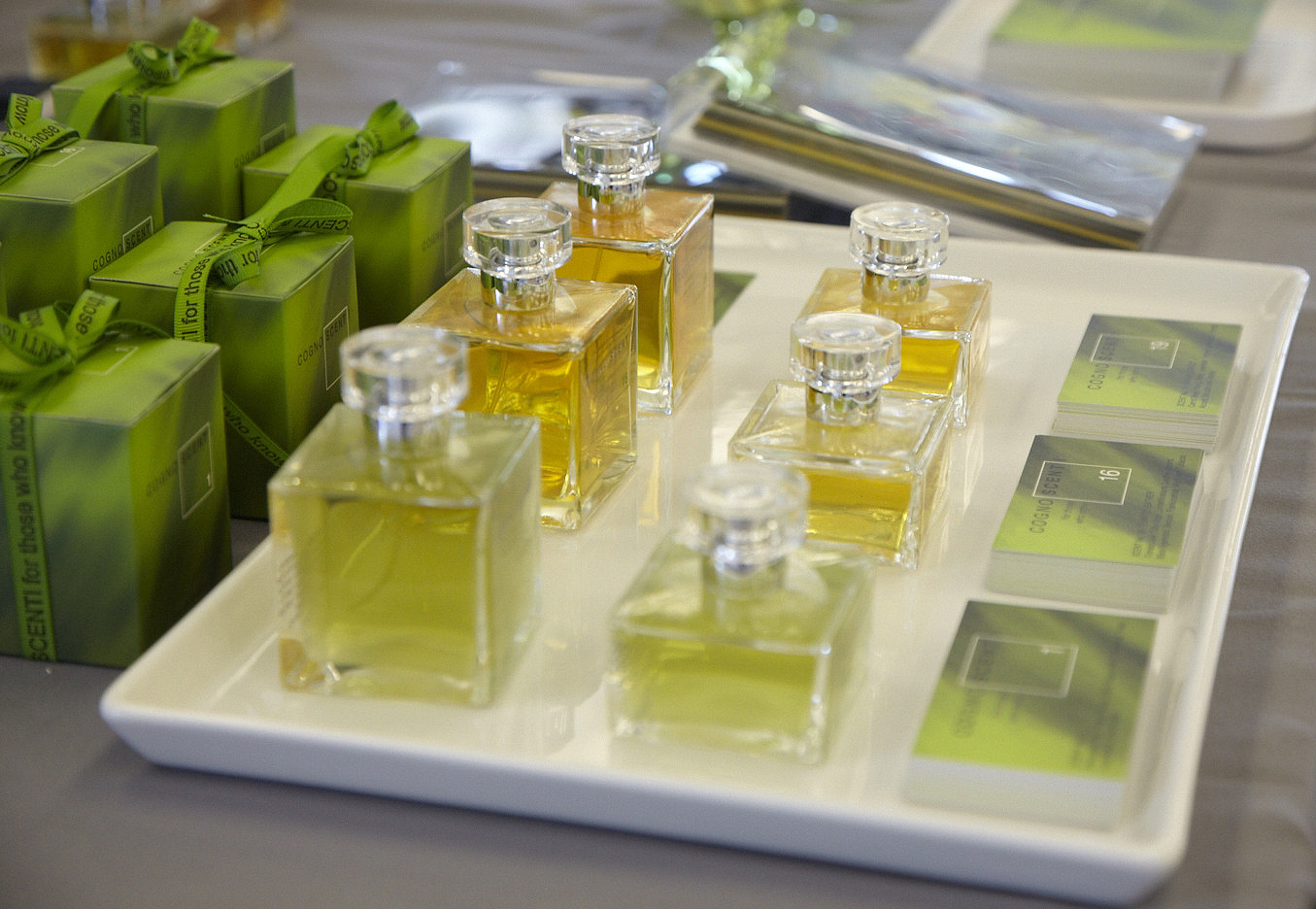
Y así era: sus fragancias resultaron ser bellas y originales. En Cognoscenti, las destrezas perfumísticas son ejecutadas por Dannielle Sergent con una perfecta combinación de lógica y emociones. Hoy ella comparte con nosotros un poco de su historia personal y cómo vino a existir el lanzamiento que tiene a las  puertas.

¿Cuándo y cómo comenzó tu interés por la perfumería?

Siempre estuve interesada en los perfumes, pero creo que fue cuando tenía 12 años que se convirtió en una búsqueda definitiva. Fue una pasión con dos vertientes, diseño y fragancias. Mi familia ha coleccionado piezas artísticas de vidrio por generaciones. Mi madre, mi abuela y bisabuela tenían colecciones interesantes.Yo coleccionaba botellas de perfume. Al principio, estaba más interesada en las botellas pero hubo un frasco Art Déco de vidrio rosa recortado que recibí cuando tenía 13 años en cuyo interior había un aroma seductor. Almizclado, apolvado y con una nítida frescura. Me evocó imágenes de una elegancia discreta y enérgica a la vez. Me encantó cómo una simple fragancia podía representar dos lados distintos de un mismo espectro. Continúo sin saber qué era, pero aquello despertó inmensamente mi interés. Al mismo tiempo, también empecé a usar perfumes, creaba los míos propios con aceites de The Body Shop en Berkeley (ahora Body Time) y después me ponía  Babe, y Cristalle de Chanel. Usé Cristalle por casi 20 años pero mezclado con un montón de fragancias masculinas.

Como persona creativa, siempre he querido hacer perfumes pero no fue sino hasta julio del 2010 que me desperté y decidí que era el momento. A la mañana siguiente tomé una clase en el estudio de Yosh y fuí realmente inspirada por su pasión, el proceso y especialmente los ingredientes. Ese día nació COGNOSCENTI.

¿Cómo definirías tu relación con la dimensión olfativa del mundo?

Siempre he tenido una nariz sensitiva. Cuando era joven no comprendía por qué los demás no se percataban de ciertos olores, buenos o malos. Todo tenía olor y parecía que sólo yo me daba cuenta. Aquello me confundió y me sorprendió al mismo tiempo.

Mi carrera siempre ha estado enfocada en mi agudeza visual: dibujo, pintura y diseño; pero el olfato era parte de mí también. No fue sino hasta que me enfoqué conscientemente en este sentido que mi relación con la dimensión olfativa comenzó a desarrollarse.

Los recuerdos están ligados a los aromas para la mayoría de la gente pero para mí son también espaciales. Tengo un banco de aromas en mi cabeza y cuando veo ciertos lugares puedo olerlos. La TV y las películas toman una nueva dimensión. Y cuando sigo aprendiendo más sobre fragancias, el banco crece. Es como aprender un idioma nuevo y un día te encontrás soñando en ese idioma. Encuentro fascinante este universo.

Además de diseñadora y pintora, sos también arquitecta. ¿Cómo impacta todo eso en tu estilo creativo?

Crear cualquier cosa envuelve innovación y ejecución. Si lo nuevo proviene de un solo individuo ésto requiere un cerebro fuerte en los dos hemisferios. Tengo la suerte de tener la capacidad y la pasión por ambos lados del proceso creativo y la mentalidad necesaria para conseguirlo.

Estilísticamente, siempre me atrajo el contraste entre lo duro y lo suave, lo natural y lo hecho por el hombre, lo moderno y lo histórico. Si observás mis pinturas, las flores son sostenidas por clavijas y cables; mis edificios son una composición de nueva tecnología y materiales simples; y mis fragancias son agudas y suaves. Los términos medios no me interesan.

En tus perfumes trabajás tanto con materiales naturales como con sintéticos. ¿Qué es lo que valorás más de cada grupo? ¿Cómo se complementan los unos a los otros en una armonía?

Me encantan los ingredientes naturales por su complejidad, su singularidad basada en lo regional, lo estacional y de procesamiento, y por su capacidad de transformación con el tiempo. Al principio comencé sólo con naturales pero sentí que no obtenía todos los “colores” que necesitaba para “pintar”.

Inicialmente, era un problema conseguir sintéticos porque no sabía cómo obtenerlos en pequeñas cantidades. Una vez resuelto eso, descubrí cómo una simple molécula podía brindar un eje para la danza de los ingredientes naturales en una mezcla. Eso amplió el rango de aromas que podía diseñar. También aprecio la claridad de los sintéticos. Los isolatos naturales aportan claridad también, pero la simplicidad racional de las moléculas y algunos de los acabados más extraños que se logran con los ingredientes sintéticos me resultan muy atrayentes.

Desde que muchos de nuestros ingredientes naturales ahora son no sostenibles o están prohibidos por las normas de la fabricación de perfumes, encontrar sustitutos realistas y compatibles de algunos de mis materiales favoritos resulta más sencillo con los sintéticos. Me gustan ambos tipos de ingredientes y disfruto trabajando con todos los “colores” disponibles.

Tus fragancias son unisex y eso elimina una importante barrera al momento de crear. Con esa total libertad de composición ¿cuáles son los criterios por los cuales te guiás?

Pienso que crear una verdadera fragancia unisex es mucho más difícil que la elección de tener que optar por los extremos masculinos o femeninos del espectro. Trabajo mucho en cada perfume para apelar a ambos sexos por igual, creando para el individuo y no para el género. Considero que he logrado mi objetivo cuando la gente no puede definir si un perfume es específicamente para hombre o para mujer. Creo fragancias para individuos interesados e interesantes y espero que COGNOSCENTI les resulte atrayente. A veces se requiere una mujer más osada para adoptar un Leather (No.16) o un hombre refinado para entender un suave Ambers and Vanilla (No.19). Constantemente me sorprendo por la manera en que cada composición es llevada por un rango tan amplio de personas.

Sabemos que muy pronto estarás incorporando una nueva fragancia a la línea. ¿Qué podés contarnos al respecto?

No.8 – Aldehydic Oakmoss será lanzado a mediados de noviembre de este año, apenas en un par de semanas. El punto de partida fue un chipre sencillo: bergamota, cedro y musgo de roble. Amo el musgo de roble y quería ponerle mucho al blend.

Todas las variaciones de No.8 fueron extremadamente diferentes. Después de casi un año, éste emergió como mi favorito. Palma de areca, tonka y cacao se añadieron para acentuar y balancear al musgo de roble. El deseo de lograr una “chispa” especial en la salida me hizo probar con los aldehídos. Las notas altas que definen al perfume son el Aldehído C-12 Laurico, pimienta rosa y cedro Atlas.

Es muy diferente y difícil de describir. Estoy ansiosa por saber cómo lo van a definir los demás. En conjunto, es al mismo tiempo especiado y suave. Un veloz latigazo que te toca… no muy fuerte pero brinda un estremecimiento delicioso seguido de una tranquila suavidad. Ha sido un favorito de mis testeadores beta y fue bien recibido en los Artisan Fragrance Salon International Awards, así que espero que a los demás también les guste.

Virginia

foto: Annabelle Breakey

foto: Annabelle Breakey

Reason and sensitivity –  An interview with Dannielle Sergent

I’ll never forget that smile. When I met Dannielle -almost a year ago- she looked fresh and proud of her brand-new creations. It was that kind of certainty mixed with excitement you have when you know your results are what you were looking for. You’re happy to show them to the world.

And she was right: her fragrances are beautiful and original. In Cognoscenti, perfumery skills are executed by Dannielle Sergent with a perfect combination of logic and emotions. Today she shares with us a little of her personal history and how her upcoming release was born.

When and how did your interest in perfumery start?

I have always been interested in perfume, but I think it was when I was 12 that it really became a definitive pursuit. It was a two pronged passion, design and scent. My family has collected Art Glass for generations. My mother, grandmother and great grandmother all had interesting collections. I collected perfume bottles. I was initially more interested in the bottles but there was an Art Deco pink cut glass flacon that I received when I was 13 that had an alluring scent inside. Musky, powdery and a sharp freshness. It conjured images of quiet elegance and spirit at the same time. I loved how a single fragrance could represent two sides of a spectrum. I still don’t know what it is but it piqued my interest immensely. I also started wearing fragrance at that time, mixing my own from oils at The Body Shop in Berkeley (now Body Time) and then wearing Babe, and Chanel – Cristalle. I wore Cristalle for over 20 years but mixed it with a lot of men’s fragrances.

As a creative person I always wanted to make perfume but it wasn’t until July 2010 that I woke up and decided it was time. I took a class at Yosh’s studio the next morning and was truly inspired by her passion, the process and especially the ingredients. That day COGNOSCENTI was born.

How would you define your relationship with the world’s olfactory dimension?

I have always had a sensitive nose. When I was young I didn’t understand why others weren’t aware of certain odors, the good or the bad. Everything was scented and I just seemed to notice it more. This confused and inspired me at the same time.

My career had always focused on my visual acuity: drawing, painting and design; but the nose was part of me too. It wasn’t until I consciously focused on it did my relationship with the olfactory dimension grow.

Memories are tied to scent for most people but they become spatial for me. I have this scent bank in my head and when I see certain places I can smell them. TV and movies take on a new dimension. And as I continue to learn more about fragrance the scent bank grows. Its like learning a new language and then finding one day you are dreaming in that language. I find this infinity fascinating.

You are also an architect, designer and painter. How does it impact on your creative style?

Creating anything involves innovation and execution. If the new thing comes from a single individual it requires a strong left and right brain. I am lucky to have a capacity and a passion for both sides of the creative process and the fully developed brain to pursue them.

Stylistically I have always been drawn to the play of hard and soft, natural and man made, modern and historic. If you look at my paintings, flowers are held by pins and wires, my buildings are a composition of new technology and simple materials, and my fragrances are both sharp and soft. The middle doesn’t interest me.

You work with naturals as well as synthetics. What do you value most of each group? How do they complement each other in a harmony?

I love natural ingredients for their complexity, their uniqueness based on regional, seasonal and processing variations, and for their ability to morph over time. I have stated before that I started with only naturals but felt that I wasn’t given all of the “colors” I needed to “paint’ with.

Synthetics were initially a sourcing problem because I didn’t know where to get them in small quantities. Once acquired, I found that a single molecule could provide a fixed point for the dance of the naturals in a mix. It opened up the range of scents I could design. I also appreciate the clarity of synthetics. Natural Isolates also provide clarity but the rational simplicity of molecules and some of the weirder components available with synthetics appeal to me.

Since many of our natural ingredients are now either unsustainable or outlawed by perfume standards, finding realistic and compliant replacements for some of my favorite ingredients is made easier with synthetics. I love them both and enjoy working with all the “colors” available.

Your fragrances are unisex and that eliminates an important restriction at creation time. With that total freedom in composition, which are your guiding standards?

I think that creating a true uni-sex fragrance is much harder than choosing to go to either end of the male or female spectrum. I work really hard on each scent to appeal to both sexes equally, creating for the individual not their gender. I am successful when people can’t define it as specific for a man or woman. I create fragrances for interesting and interested individuals and hope that COGNOSCENTI appeals to them. Sometimes it calls for a more daring female to embrace a Leather (No.16) or a refined man to understand soft Ambers and Vanilla (No.19). I am constantly surprised by how each scent is worn by such a broad range of people.

We know that you will be incorporating a new fragrance to the line very soon. What can you tell us about it?

No.8 – Aldehydic Oakmoss will be released mid November of this year, just a few weeks away.  The starting point was a simple Chypre: Bergamot, Cedarwood and Oakmoss. I love Oakmoss and wanted to saturate it in a blend.

All the variations on No.8 were extremely different. After about a year this one emerged as my favorite. Betel Leaf, Tonka Bean and Cocoa were added to accent and balance the Oakmoss. The desire for a special “zing” at the front had me testing Aldehydes. The Aldehydic top note blend that defines the scent is Aldehyde C-12 Lauric, Pink Pepper, and Atlas Cedarwood,

It’s very different and hard to describe. Looking forward to hearing how others define it. Overall it’s spicy and soft at the same time. A quick whip that flicks you… not too hard but leaves a delightful tingle and then a quiet softness. It’s been a favorite of my beta testers for a while and was well received in the Artisan Fragrance Salon International Awards so hopefully others will like it too.

Virginia

foto: Annabelle Breakey

foto: Annabelle Breakey

Aroma de nardos – 10 caras de la tuberosa

foto: Poetschke.de

foto: Poetschke.de

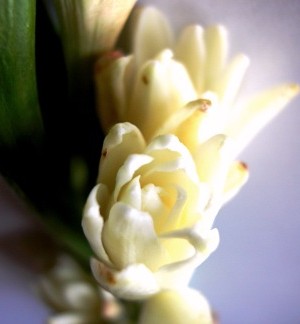
La palabra “nardo” designa a dos plantas muy distintas: la tuberosa (Polianthes Tuberosa) y el espicanardo (Nardostachis Jatamansi), que es el nardo que se menciona en la Biblia. El perfil olfativo de ambas plantas no podría ser más distinto. La tuberosa -con la que estamos familiarizados- prodiga un aroma floral, soleado y persistente; éste presenta matices alcanforados antes de volverse dulce y narcótico. El espicanardo, en cambio, es especiado, almizclado y terroso. Hoy ponemos el foco en la tuberosa, planta originaria de América y que los primeros habitantes de lo que hoy es México ya cultivaban.

En mi búsqueda de la tuberosa perfecta encontré perfumes que subliman la flor de distintas maneras. Están las que pertenecen al salón de baile y las flores ofrecidas por vendedores callejeros; algunas dibujan una modernidad depurada mientras  otras exaltan su carácter tropical.

El texto iluminado corresponde a aquellos perfumes que ya hemos reseñado.

Piguet Fracas La tuberosa de referencia fue creada por Germaine Cellier en 1948 y se mantiene vigente sesenta y tantos años más tarde. Recomiendo con énfasis la versión parfum -que es más opulenta y suave- en lugar del más atalcado eau de parfum.

Serge Lutens Tubereuse Criminelle Arte y alquimia en uno: una salida mentolada,casi siniestra da paso a una bella tuberosa. Funciona a las mil maravillas en quien sea suficientemente femme fatale para llevarlo.

Roja Parfums Scandal Pour Femme Este enorme floral no tiene que ver con la innovación, sino con la belleza y calidad. Si Fracas y Fantasia de Fleurs tuvieran una criatura angelical, le enseñaran modales impecables y lo enviaran a los mejores colegios, sería así.

Honoré des Pres Vamp a NY Un dulce perfume tropical compuesto exclusivamente con materias primas de origen orgánico. La nariz Olivia Giacobetti sumó notas de ron y vainilla que prestan a la tuberosa un aire coqueto y despreocupado.

Arquiste Flor y Canto Esta interpretación es tan realista que casi pueden sentirse una docena de varas de tuberosa ante uno. Aquí el tagetes y el copal blanco añaden frescura a la tuberosa. Su longevidad es un poco débil, pero es la única desventaja que encuentro en una fragancia absolutamente hermosa.

Amouage Honour Woman Ligeramente acuoso y casi liviano, Honour es como un haiku escrito a la manera de Amouage.

Bruno Acampora Blu Este aceite de color azul logra representar la voluptuosidad de la flor sin el dulzor que usualmente se asocia con ella.

Ramón Monegal Perfumes Kiss my Name Una tuberosa enorme y moderna, tan lustrosa como un edificio construido en acero y cristal.

Mona di Orio Tubereuse Una interpretación tan delicada que susurra: verde, lechosa y casi opalescente; una tuberosa por la mañana.

Tableau de Parfums Loretta Andy Tauer ha creado una tuberosa enigmática condimentada con canela, clavo de olor, cuero y patchouli que resulta perfecta para una heroína de film noir.

No incluí en la lista al admirado Editions de Parfums Carnal Flower simplemente porque no es uno de mis favoritos. Creo, de todas maneras, que los amantes de la tuberosa deberían probarlo.

Caro

foto: Aromatherapy-essentials.com

foto: Aromatherapy-essentials.com

Scent of tuberoses – 10 faces of the flower

In Spanish the word “nardo” designates two very different plants: tuberose(Polianthes Tuberosa) and spikenard (Nardostachis Jatamansi), which is the nardo mentioned on the Bible. The olfactory profile of both plants couldn’t be more different.Tuberose -which we are more acquainted with- gives out a sunny, floral, persistent scent; sweet and narcotic with camphorated   undertones. Spikenard, in turn, is spicy, musky and earthy. Today we focus on tuberose, a plant native to America which was already cultivated by the early inhabitants of Mexico.

In my quest for the perfect  tuberose I found fragrances which sublimate the flower in a myriad ways. There are those which belong in the ballroom and the flowers offered by Street vendors; some of them draw a streamlined modernity while others exalt their tropical character.

The highlighted text corresponds to fragrances we have already reviewed.

Piguet Fracas The reference tuberose was created by Germaine Cellier in 1948 and still going strong sixty-something years later. I emphatically recommend  the parfum version -which is richer and smoother- instead of the more powdery eau de parfum.

Serge Lutens Tubereuse Criminelle Art and alchemy in one: a mentholated, almost sinister opening gives way to a beautiful tuberose. It works like a charm on those who are enough of a femme fatale to wear it.

Roja Parfums Scandal Pour Femme This big floral is not about innovation but  beauty and quality. If Fracas and Fantasia de Fleurs had an angelic child, taught it impeccable manners and sent it to the best schools, this would be it.

Honoré des Pres Vamp a NY A sweet tropical fragrance  made exclusively with raw materials of organic origin. Nose Olivia Giacobetti added notes of rum and vanilla which lend the tuberose a flirty and nochalant air.

Arquiste Flor y Canto A rendition so realistic one can almost feel a dozen tuberose stems before her. Here, marigold and white copal add freshness to tuberose. Its longevity might be a bit weak but it is the only drawback I find in an absolutely beautiful fragrance.

Amouage Honour Woman Slightly watery and almost lightweight, Honour is like a haiku written in the style of Amouage.

Bruno Acampora Blu This blue colored oil manages to represent  the voluptuousness of the flower without the sweetness usually associated with it

Ramón Monegal Perfumes Kiss my Name A big, modern tuberose, as sleek as a building made of steel and glass.

Mona di Orio Tubereuse A rendition so delicate it whispers: green, milky and  almost opalescent; a tuberose in the morning.

Tableau de Parfums Loretta Andy Tauer has created an enigmatic tuberose, spiced up with cinnamon, cloves, leather and patchouli which seems perfect for a film noir heroine.

I have not included the much admired Editions de Parfums Carnal Flower simply because it’s not a personal favorite. However, I think it is a must-sample for tuberose lovers.

Caro

Tour olfativo constante – Las olas y el viento

San Simeon, California - foto: Virginia Blanco

San Simeon, California – foto: Virginia Blanco

“…Y el frío del mar (shala lala lala)”*.

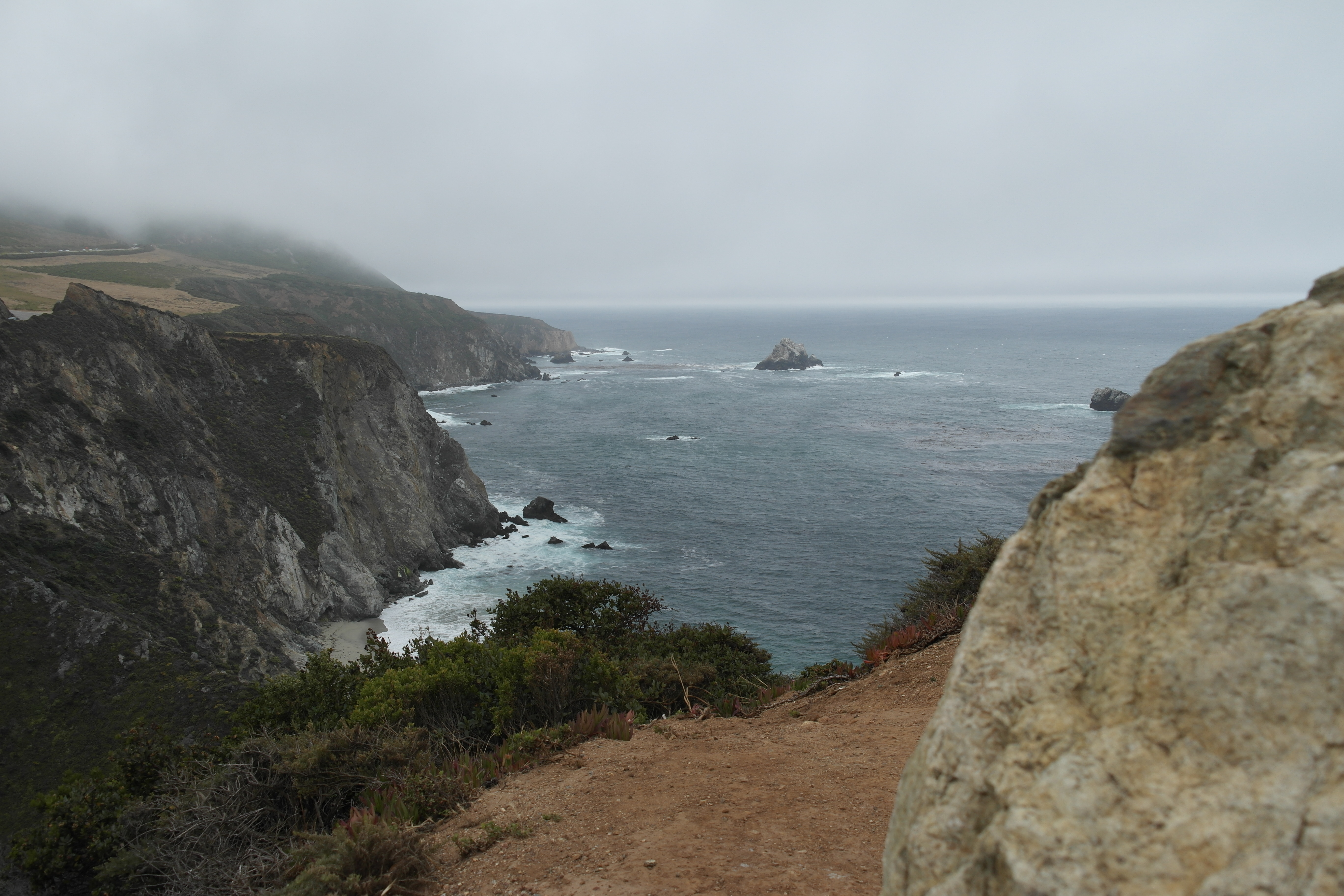
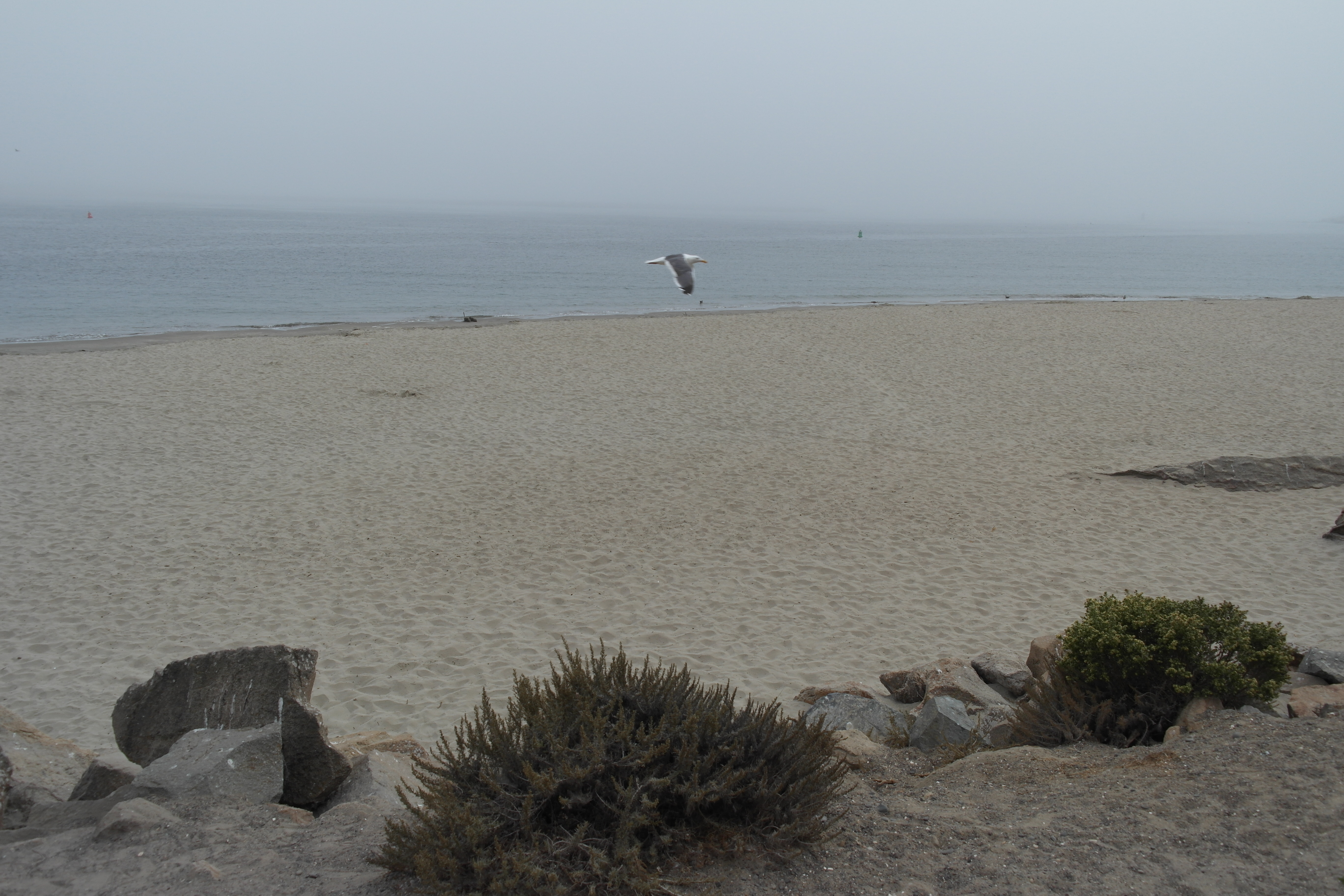
Mayormente asociamos a la playa con el verano y las altas temperaturas. Sin embargo, existe otra faceta cuando el otoño comienza. Dar una caminata por la orilla -envueltos en un abrigo calentito-, contemplar el atardecer, sentir y escuchar la fuerza de las olas, inspirar profundamente el frío aire salado, todo eso nos inspira a ponernos reflexivos, o incluso melancólicos. Pero también -y en especial si estamos acompañados por el amor de nuestra vida- puede ser romántico.

Cualquiera sea de esas opciones, encontramos una pequeña reminiscencia de esa helada experiencia oceánica en las siguientes fragrancias: el vigorizante  Lorenzo Villoresi Aura Maris; el femenino y controversial  Thierry Mugler Womanity; el casi-masculino Mikmoi Aldwych; y el fresco ventoso Heeley Menthe Fraîche.

Definitivamente, prefiero la playa cuando hace frío.

Virginia

(*)El título de este post es la primera línea de una canción popular argentina de los 60’s: Tiritando de Donald Mc Cluskey. Comienza así: “Las olas y el viento. Y el frío del mar (shala lala lala)”

Malibu, California - foto: Virginia Blanco

Malibu, California – foto: Virginia Blanco

Continuous olfactory tour – The waves and the wind

“… And the cold of the sea (shala lala lala)”*.

We mostly associate the beach with Summer and hot weather, although there is another face of it when Autumn begins. Taking a walk along the shores  -wrapped in a cozy wool coat-, watching the sunset, feeling and listening the force of the waves, taking a deep breathe of salty cool air, invites us to become reflexive, or even melancholic. But it can also be romantic -especially if we are accompanied by our “better half” .

Anyhow, we find  reminiscences of that freezing oceanic experience in the following fragrances: the invigorating Lorenzo Villoresi Aura Maris; the feminine and controversial Thierry Mugler Womanity; the almost-masculine Mikmoi Aldwych; and the breezy-cool Heeley Menthe Fraîche.

I definitely enjoy the beach best when it’s cold outside.

Virginia

(*)The above title is the first line of an Argentinian 60’s oldie: Tiritando by Donald Mc Cluskey. The song begins like this: “Las olas y el viento. Y el frío del mar (shala lala lala)”

Pacifica, California - foto: Virginia Blanco

Pacifica, California – foto: Virginia Blanco

Pacifica, California - foto: Virginia Blanco

Pacifica, California – foto: Virginia Blanco

Malibu, California - foto: Virginia Blanco

Malibu, California – foto: Virginia Blanco

foto: Virginia Blanco

foto: Virginia Blanco

Carmel, California - foto: Virginia Blanco

Carmel, California – foto: Virginia Blanco

Carmel, California - foto: Virginia Blanco

Carmel, California – foto: Virginia Blanco

Morro Bay, California - foto: Virginia Blanco

Morro Bay, California – foto: Virginia Blanco

Carmel, California - foto: Virginia Blanco

Carmel, California – foto: Virginia Blanco

Pinamar, Buenos Aires, Argentina - foto: Virginia Blanco

Pinamar, Buenos Aires, Argentina – foto: Virginia Blanco

Carmel, California - foto: Virginia Blanco

Carmel, California – foto: Virginia Blanco

Guerlain Chamade (vintage) – Romántica primavera

foto: Bulbsonline.com.au

foto: Bulbsonline.com.au

Entre las perfumadas leyendas vivientes (aunque algunas se ven un poco moribundas en estos días) que Guerlain  nos dio, Chamade es mi favorito indiscutido. Comparte un aura de romanticismo con L’Heure Bleue, Shalimar y Nahéma, otros hitos de la misma casa, pero puedo usarlo con más comodidad. La bella melancolía de L’Heure Bleue parece permearme la mayoría de las veces, Shalimar vintage huele anticuado (el nuevo no me parece digno del nombre) y el colorido y tridimensional Nahéma me abruma.

Chamade fue creado por Jean-Paul Guerlain y toma su nombre de la novela “La Chamade”, escrita por Françoise Sagan en 1965. El filme epónimo  protagonizado por Catherine Deneuve  (quien más tarde inspiraría la creación de Nahéma) fue estrenado en 1968,un año antes de que Chamade viera la luz.

El término chamade alude al son de tambor que ordenaba retirada durante los tiempos napoleónicos, por extensión, al latido del corazón que se rinde ante la intensidad del amor.

Chamade abre con la snotas verdes que estaban tan en boga en el momento de su creación (No.19, Cristalle y Diorella aparecerían en la escena pocos años más tarde). La verde intensidad del gálbano se adorna con el característico olor fresco-frutado-urinoso del brote de grosella negra (cassis). La impresión inicial es de una nube de polen tan vívida que los estornudos no parecerían una posibilidad remota. Una vez que nuestra nube de polen se disipa un poco, el usuario se encuentra cara a cara con un corazón floral dominado por el jacinto, en el que la rosa y el jazmín tienen también una marcada presencia. El ylang-ylang se presta al juego con su sensualidad indolente y lánguida. Luego de una montaña rusa de sensaciones olfativas, Chamade se establece en un fondo sereno donde el sándalo se une con vainilla y atalcada tonka.

Otros dos perfumes que me recuerdan a Chamade son Annick Goutal Grand Amour, con su bouquet ambarado de jacintos y Puredistance Antonia, cuya aguda salida verde abre paso a un corazón cálido.

Mis botellas (parfum y eau de toilette) datan de la década de 1970. La longevidad y sillage de ambas versiones es irreprochable. No he olido la reformulación actual, que se corresponde con el frasco de la ilustración.

Caro

Origen de la muestra: frascos adquiridos en Perfumería Togat’s, Buenos Aires

foto: Guerlain.com

foto: Guerlain.com

Guerlain Chamade (vintage) – Romantic Spring

Among the fragrant living legends (although some of them look quite moribund these days) Guerlain  gave us, Chamade is my undisputed favorite. It shares an aura of romanticism with L’Heure Bleue, Shalimar and Nahéma, other milestones from the same house, but I can wear it with more ease. The beautiful melancholy of L’Heure Bleue seems to permeate me most of the time, vintage Shalimar smells dated (I don’t find the current one worthy of the name) and the tridimensional colourful Nahéma overpowers me.

Chamade was created by Jean-Paul Guerlain and takes its name from the novel “La Chamade”, written by Françoise Sagan in 1965. The eponymous film starring Catherine Deneuve  (who would later inspire the creation of Nahéma) was released in 1968,one year before Chamade saw the light of day.

The  term chamade alludes to the drumbeat that signalled retreat during Napoleonic times and, by extension, to the beating of the heart that surrenders before  the intensity of love.

Chamade opens with the green notes that were so in vogue at the time of its creation (No.19, Cristalle and Diorella would appear on the scene a few years later). The green intensity of galbanum is embellished with the characteristic fresh-fruity-urinous smell of  blackcurrant bud. The initial  impression is that of a pollen cloud so vivid that sneezes wouldn’t be a remote possibility. Once the pollen cloud dissipates a bit, the wearer  faces a floral heart dominated by hyacinth, but where rose and jasmine also have marked presence. Ylang-ylang joins the game with its indolent and languorous sensuality. After an olfactory rollercoaster of sensations, Chamade settles into a serene drydown in which sandalwood meets vanilla and powdery tonka.

Two other fragrances that remind me of Chamade are Annick Goutal Grand Amour, with its ambery hyacinth bouquet and Puredistance Antonia, whose sharp green opening gives way to a warm heart.

My bottles (parfum and eau de toilette) date from the 1970s. The longevity and sillage of both versions is beyond reproach. I haven’t smelled the current formulation, which corresponds with the flacon in the illustration.

Caro

Origin of sample: bottles purchased at Perfumería Togat’s, Buenos Aires