
Tag Archives: Artisan Fragrance Salon

Razón y sensibilidad – Entrevista a Dannielle Sergent

ds b-w rev

Nunca olvidaré aquella sonrisa. Cuando conocí a Dannielle -hace poco más de un año- se la veía fresca y orgullosa de las creaciones que integraban a su flamante marca. Era esa mezcla de certeza y entusiasmo que uno tiene cuando sabe que los resultados obtenidos son aquellos que estaba buscando. Y uno está feliz de mostrárselos al mundo.

Y así era: sus fragancias resultaron ser bellas y originales. En Cognoscenti, las destrezas perfumísticas son ejecutadas por Dannielle Sergent con una perfecta combinación de lógica y emociones. Hoy ella comparte con nosotros un poco de su historia personal y cómo vino a existir el lanzamiento que tiene a las  puertas.

¿Cuándo y cómo comenzó tu interés por la perfumería?

Siempre estuve interesada en los perfumes, pero creo que fue cuando tenía 12 años que se convirtió en una búsqueda definitiva. Fue una pasión con dos vertientes, diseño y fragancias. Mi familia ha coleccionado piezas artísticas de vidrio por generaciones. Mi madre, mi abuela y bisabuela tenían colecciones interesantes.Yo coleccionaba botellas de perfume. Al principio, estaba más interesada en las botellas pero hubo un frasco Art Déco de vidrio rosa recortado que recibí cuando tenía 13 años en cuyo interior había un aroma seductor. Almizclado, apolvado y con una nítida frescura. Me evocó imágenes de una elegancia discreta y enérgica a la vez. Me encantó cómo una simple fragancia podía representar dos lados distintos de un mismo espectro. Continúo sin saber qué era, pero aquello despertó inmensamente mi interés. Al mismo tiempo, también empecé a usar perfumes, creaba los míos propios con aceites de The Body Shop en Berkeley (ahora Body Time) y después me ponía  Babe, y Cristalle de Chanel. Usé Cristalle por casi 20 años pero mezclado con un montón de fragancias masculinas.

Como persona creativa, siempre he querido hacer perfumes pero no fue sino hasta julio del 2010 que me desperté y decidí que era el momento. A la mañana siguiente tomé una clase en el estudio de Yosh y fuí realmente inspirada por su pasión, el proceso y especialmente los ingredientes. Ese día nació COGNOSCENTI.

¿Cómo definirías tu relación con la dimensión olfativa del mundo?

Siempre he tenido una nariz sensitiva. Cuando era joven no comprendía por qué los demás no se percataban de ciertos olores, buenos o malos. Todo tenía olor y parecía que sólo yo me daba cuenta. Aquello me confundió y me sorprendió al mismo tiempo.

Mi carrera siempre ha estado enfocada en mi agudeza visual: dibujo, pintura y diseño; pero el olfato era parte de mí también. No fue sino hasta que me enfoqué conscientemente en este sentido que mi relación con la dimensión olfativa comenzó a desarrollarse.

Los recuerdos están ligados a los aromas para la mayoría de la gente pero para mí son también espaciales. Tengo un banco de aromas en mi cabeza y cuando veo ciertos lugares puedo olerlos. La TV y las películas toman una nueva dimensión. Y cuando sigo aprendiendo más sobre fragancias, el banco crece. Es como aprender un idioma nuevo y un día te encontrás soñando en ese idioma. Encuentro fascinante este universo.

Además de diseñadora y pintora, sos también arquitecta. ¿Cómo impacta todo eso en tu estilo creativo?

Crear cualquier cosa envuelve innovación y ejecución. Si lo nuevo proviene de un solo individuo ésto requiere un cerebro fuerte en los dos hemisferios. Tengo la suerte de tener la capacidad y la pasión por ambos lados del proceso creativo y la mentalidad necesaria para conseguirlo.

Estilísticamente, siempre me atrajo el contraste entre lo duro y lo suave, lo natural y lo hecho por el hombre, lo moderno y lo histórico. Si observás mis pinturas, las flores son sostenidas por clavijas y cables; mis edificios son una composición de nueva tecnología y materiales simples; y mis fragancias son agudas y suaves. Los términos medios no me interesan.

En tus perfumes trabajás tanto con materiales naturales como con sintéticos. ¿Qué es lo que valorás más de cada grupo? ¿Cómo se complementan los unos a los otros en una armonía?

Me encantan los ingredientes naturales por su complejidad, su singularidad basada en lo regional, lo estacional y de procesamiento, y por su capacidad de transformación con el tiempo. Al principio comencé sólo con naturales pero sentí que no obtenía todos los “colores” que necesitaba para “pintar”.

Inicialmente, era un problema conseguir sintéticos porque no sabía cómo obtenerlos en pequeñas cantidades. Una vez resuelto eso, descubrí cómo una simple molécula podía brindar un eje para la danza de los ingredientes naturales en una mezcla. Eso amplió el rango de aromas que podía diseñar. También aprecio la claridad de los sintéticos. Los isolatos naturales aportan claridad también, pero la simplicidad racional de las moléculas y algunos de los acabados más extraños que se logran con los ingredientes sintéticos me resultan muy atrayentes.

Desde que muchos de nuestros ingredientes naturales ahora son no sostenibles o están prohibidos por las normas de la fabricación de perfumes, encontrar sustitutos realistas y compatibles de algunos de mis materiales favoritos resulta más sencillo con los sintéticos. Me gustan ambos tipos de ingredientes y disfruto trabajando con todos los “colores” disponibles.

Tus fragancias son unisex y eso elimina una importante barrera al momento de crear. Con esa total libertad de composición ¿cuáles son los criterios por los cuales te guiás?

Pienso que crear una verdadera fragancia unisex es mucho más difícil que la elección de tener que optar por los extremos masculinos o femeninos del espectro. Trabajo mucho en cada perfume para apelar a ambos sexos por igual, creando para el individuo y no para el género. Considero que he logrado mi objetivo cuando la gente no puede definir si un perfume es específicamente para hombre o para mujer. Creo fragancias para individuos interesados e interesantes y espero que COGNOSCENTI les resulte atrayente. A veces se requiere una mujer más osada para adoptar un Leather (No.16) o un hombre refinado para entender un suave Ambers and Vanilla (No.19). Constantemente me sorprendo por la manera en que cada composición es llevada por un rango tan amplio de personas.

Sabemos que muy pronto estarás incorporando una nueva fragancia a la línea. ¿Qué podés contarnos al respecto?

No.8 – Aldehydic Oakmoss será lanzado a mediados de noviembre de este año, apenas en un par de semanas. El punto de partida fue un chipre sencillo: bergamota, cedro y musgo de roble. Amo el musgo de roble y quería ponerle mucho al blend.

Todas las variaciones de No.8 fueron extremadamente diferentes. Después de casi un año, éste emergió como mi favorito. Palma de areca, tonka y cacao se añadieron para acentuar y balancear al musgo de roble. El deseo de lograr una “chispa” especial en la salida me hizo probar con los aldehídos. Las notas altas que definen al perfume son el Aldehído C-12 Laurico, pimienta rosa y cedro Atlas.

Es muy diferente y difícil de describir. Estoy ansiosa por saber cómo lo van a definir los demás. En conjunto, es al mismo tiempo especiado y suave. Un veloz latigazo que te toca… no muy fuerte pero brinda un estremecimiento delicioso seguido de una tranquila suavidad. Ha sido un favorito de mis testeadores beta y fue bien recibido en los Artisan Fragrance Salon International Awards, así que espero que a los demás también les guste.

Virginia

foto: Annabelle Breakey

foto: Annabelle Breakey

Reason and sensitivity –  An interview with Dannielle Sergent

I’ll never forget that smile. When I met Dannielle -almost a year ago- she looked fresh and proud of her brand-new creations. It was that kind of certainty mixed with excitement you have when you know your results are what you were looking for. You’re happy to show them to the world.

And she was right: her fragrances are beautiful and original. In Cognoscenti, perfumery skills are executed by Dannielle Sergent with a perfect combination of logic and emotions. Today she shares with us a little of her personal history and how her upcoming release was born.

When and how did your interest in perfumery start?

I have always been interested in perfume, but I think it was when I was 12 that it really became a definitive pursuit. It was a two pronged passion, design and scent. My family has collected Art Glass for generations. My mother, grandmother and great grandmother all had interesting collections. I collected perfume bottles. I was initially more interested in the bottles but there was an Art Deco pink cut glass flacon that I received when I was 13 that had an alluring scent inside. Musky, powdery and a sharp freshness. It conjured images of quiet elegance and spirit at the same time. I loved how a single fragrance could represent two sides of a spectrum. I still don’t know what it is but it piqued my interest immensely. I also started wearing fragrance at that time, mixing my own from oils at The Body Shop in Berkeley (now Body Time) and then wearing Babe, and Chanel – Cristalle. I wore Cristalle for over 20 years but mixed it with a lot of men’s fragrances.

As a creative person I always wanted to make perfume but it wasn’t until July 2010 that I woke up and decided it was time. I took a class at Yosh’s studio the next morning and was truly inspired by her passion, the process and especially the ingredients. That day COGNOSCENTI was born.

How would you define your relationship with the world’s olfactory dimension?

I have always had a sensitive nose. When I was young I didn’t understand why others weren’t aware of certain odors, the good or the bad. Everything was scented and I just seemed to notice it more. This confused and inspired me at the same time.

My career had always focused on my visual acuity: drawing, painting and design; but the nose was part of me too. It wasn’t until I consciously focused on it did my relationship with the olfactory dimension grow.

Memories are tied to scent for most people but they become spatial for me. I have this scent bank in my head and when I see certain places I can smell them. TV and movies take on a new dimension. And as I continue to learn more about fragrance the scent bank grows. Its like learning a new language and then finding one day you are dreaming in that language. I find this infinity fascinating.

You are also an architect, designer and painter. How does it impact on your creative style?

Creating anything involves innovation and execution. If the new thing comes from a single individual it requires a strong left and right brain. I am lucky to have a capacity and a passion for both sides of the creative process and the fully developed brain to pursue them.

Stylistically I have always been drawn to the play of hard and soft, natural and man made, modern and historic. If you look at my paintings, flowers are held by pins and wires, my buildings are a composition of new technology and simple materials, and my fragrances are both sharp and soft. The middle doesn’t interest me.

You work with naturals as well as synthetics. What do you value most of each group? How do they complement each other in a harmony?

I love natural ingredients for their complexity, their uniqueness based on regional, seasonal and processing variations, and for their ability to morph over time. I have stated before that I started with only naturals but felt that I wasn’t given all of the “colors” I needed to “paint’ with.

Synthetics were initially a sourcing problem because I didn’t know where to get them in small quantities. Once acquired, I found that a single molecule could provide a fixed point for the dance of the naturals in a mix. It opened up the range of scents I could design. I also appreciate the clarity of synthetics. Natural Isolates also provide clarity but the rational simplicity of molecules and some of the weirder components available with synthetics appeal to me.

Since many of our natural ingredients are now either unsustainable or outlawed by perfume standards, finding realistic and compliant replacements for some of my favorite ingredients is made easier with synthetics. I love them both and enjoy working with all the “colors” available.

Your fragrances are unisex and that eliminates an important restriction at creation time. With that total freedom in composition, which are your guiding standards?

I think that creating a true uni-sex fragrance is much harder than choosing to go to either end of the male or female spectrum. I work really hard on each scent to appeal to both sexes equally, creating for the individual not their gender. I am successful when people can’t define it as specific for a man or woman. I create fragrances for interesting and interested individuals and hope that COGNOSCENTI appeals to them. Sometimes it calls for a more daring female to embrace a Leather (No.16) or a refined man to understand soft Ambers and Vanilla (No.19). I am constantly surprised by how each scent is worn by such a broad range of people.

We know that you will be incorporating a new fragrance to the line very soon. What can you tell us about it?

No.8 – Aldehydic Oakmoss will be released mid November of this year, just a few weeks away.  The starting point was a simple Chypre: Bergamot, Cedarwood and Oakmoss. I love Oakmoss and wanted to saturate it in a blend.

All the variations on No.8 were extremely different. After about a year this one emerged as my favorite. Betel Leaf, Tonka Bean and Cocoa were added to accent and balance the Oakmoss. The desire for a special “zing” at the front had me testing Aldehydes. The Aldehydic top note blend that defines the scent is Aldehyde C-12 Lauric, Pink Pepper, and Atlas Cedarwood,

It’s very different and hard to describe. Looking forward to hearing how others define it. Overall it’s spicy and soft at the same time. A quick whip that flicks you… not too hard but leaves a delightful tingle and then a quiet softness. It’s been a favorite of my beta testers for a while and was well received in the Artisan Fragrance Salon International Awards so hopefully others will like it too.

Virginia
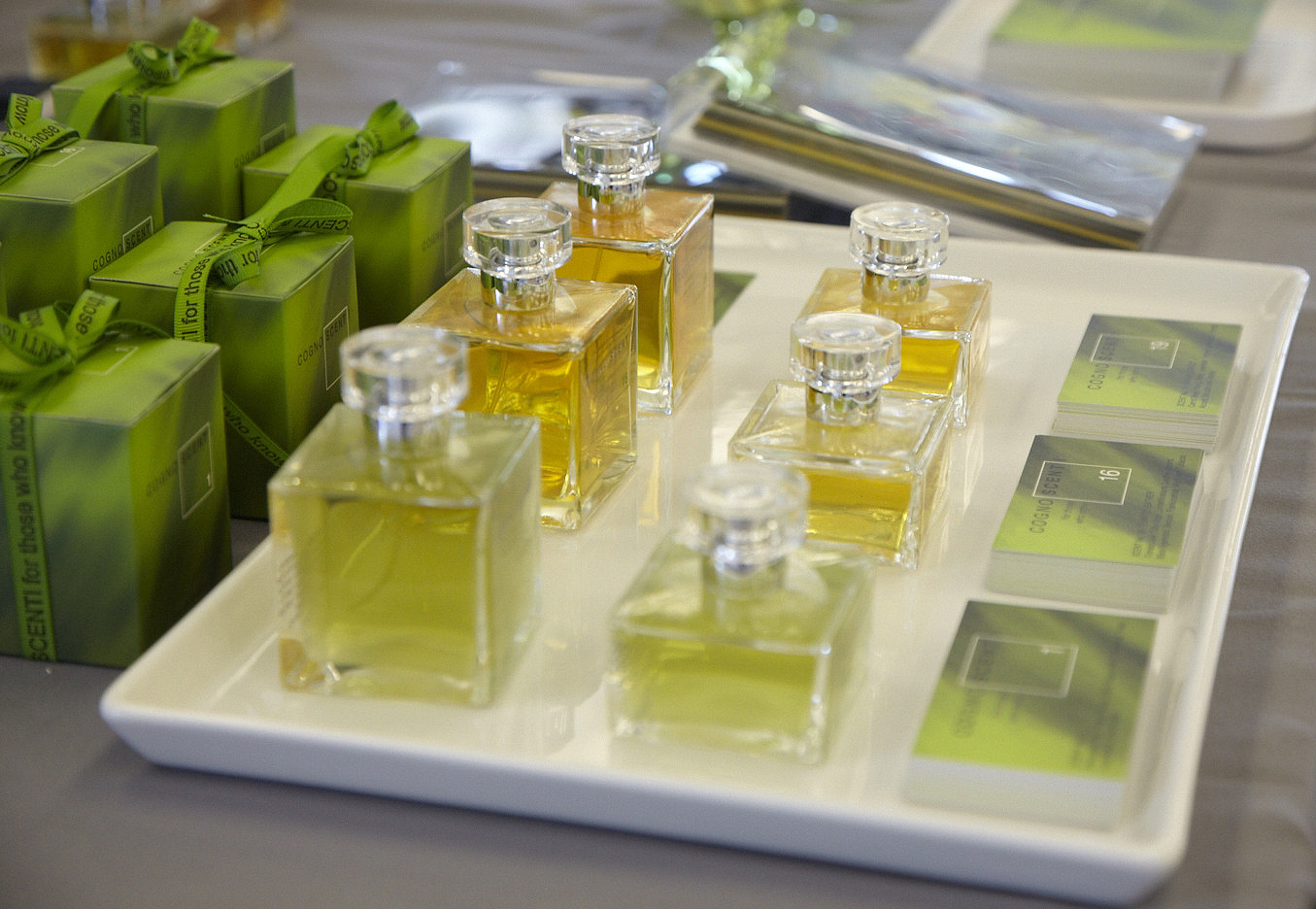
foto: Annabelle Breakey

foto: Annabelle Breakey

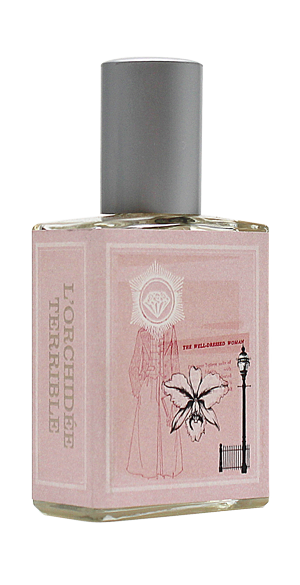
Imaginary Authors L’Orchidée Terrible – El aroma del satén

imagen: Conchigliadivenere.wordpress.com      Nu sur satin rose  artista: Felipe Santamans (1951)

imagen: Conchigliadivenere.wordpress.com               Nu sur satin rose                              artista: Felipe Santamans, 1951

¿Cuántos géneros textiles pueden reconocer por su aroma? Si yo tuviera que identificarlos solamente por su olor -sin mirar y sin tocar- creo que ellos serían el satén, la seda y tal vez algodón. En el caso específico del satén hay un doble patrón ambivalente: frío pero tibio, seco pero húmedo.

Alrededor de un suave bouquet de lirio del valle y orquídeas, el joven perfumista Josh Meyer ha reconstruido la experiencia de oler el satén y sentirlo al tacto. El inicio fresco de aldehídos corresponde perfectamente a ese primer contacto del frío satén con la piel. Sin embargo, debido a la nota de miel que lentamente rebalsa la composición, L’Orchidée Terrible se vuelve más y más acogedora.

Tal como el nombre lo sugiere, este no es un perfume inocente. El blend sensual de orquídea, miel y almizcle blanco es luminoso pero carnal. Es una experiencia sensorial artísica de la femineidad, como la pintura de la desnudez de una mujer de piel de alabastro (¿Audrey Blavot, tal vez?).

Cuando conocí Imaginary Authors en una exhibición de perfumes en San Francisco, Josh expresó que él vive la perfumería como un arte y que todos los ingredientes deberían ser utilizados en esa dirección: crear una obra de arte. En mi opinión, esta fragancia ofrece un perfecto ejemplo de esa declaración.

Virginia

Origen de la fragancia: muestra gentileza de Imaginary Authors.

foto: Courtesy of Imaginary Authors

foto: Courtesy of Imaginary Authors

Imaginary Authors L’Orchidée Terrible – Scent of satin

How many fabrics can you recognize by their smell? If I were to identify them only by its scent -no see, no touch- I think that they would be satin, silk and maybe cotton. In the specific case of satin there is an ambivalent double pattern: cold but warm, dry but humid.

Around a soft bouquet of lily of the valley and orchid, young perfumer Josh Meyer has rebuilt the experience of smelling and feelling the touch of satin. The fresh initial blast of aldehydes perfectly corresponds with that first contact of cold satin on the skin. However, due to the fact that a honey note slowly overflows the composition, L’Orchidée Terrible becomes more and more cozy.

As the name suggests, this is not an innocent perfume. The sensual blend of orchid, honey and white musk is luminous but carnal. It’s an artistic sensorial experience of femininity, like a nude painting of a woman with alabaster skin (Audrey Blavot, maybe?).

When I met Imaginary Authors in a fragrance exhibition in San Francisco, Josh expressed that he lives perfumery as an art and all ingredients should be used in that direction: to create a work of art. In my opinion, this fragrance offers a perfect example of that statement.

Virginia

Origin of sample: Sample courtesy of Imaginary Authors.

Roxana Illuminated Perfume Figure 1: Noir – Matices de oscuridad

foto: Skipwall.com

foto: Skipwall.com

Roxana Villa es la creadora y perfumista de Roxana Illuminated PerfumeElla nació en Argentina pero vive en los Estados Unidos desde su infancia. Tuve el placer de conocerla en el L.A. Artisan Fragrance Salonsin embargo pudimos charlar un poco más en la última edición llevada a cabo en San Francisco.

Me mostró allí su última creación -en ese momento aún en desarrollo- Figure 1: Noir. Mientras yo olfateaba el blotter humedecido con esa áspera, audaz y oscura poción, Roxana me contó el interesante desafío que se puso a sí misma:

“Estoy creando patchouli sin patchouli“. Le dije: “¿De verdad? Pero ¡huele realmente a patchouli!”. “Sí” -agregó- “pero si olés Figure 1: Noir y patchouli a la vez vas a percibir las diferencias y vas a decir: Hey ¡esto no es patchouli!”. Y le contesté: “Entonces vos estás trabajando con mis memorias de/sobre el patchouli. Es evocativo”. “¡Exactamente!” exclamó.

Esta fragancia es poderosa y profunda como la tierra negra. Tiene un comienzo resinoso y licoroso, una mezcla de cognac y davana. Después huelo una suerte de musgo húmedo, creo que se debe al vetiver y a la raíz de valeriana. También hay un acento de hierba medicinal de hoja de buchu, bastante similar al boldo. Las pinceladas de madera humus en las notas base son un suntuoso blend de orris y sándalo.

Pero no se termina todo ahí: en el fondo cumínico almizclado huelo a veces una nota de cuero, otras tabaco negro ¡e incluso una nota de chocolate amargo!

Bien, lo confieso: estuve tratado esforzadamente de no decir “patchouli” en la descripción. Sin embargo, en la percepción completa del perfume -con sus matices herbales, amaderados, licorosos y terrosos- mis memorias evocativas me dicen que sí lo es.

Figure 1: Noir está disponible tanto en la versión líquida como en la sólida.

Virginia

Origen de la muestra: gentileza de Roxana Illuminated Perfume.

foto: gentileza de Roxana Illuminated Perfume

foto: gentileza de Roxana Illuminated Perfume

Roxana Illuminated Perfume Figure 1: Noir – Hues of darkness

Roxana Villa is the creator and the perfumer of Roxana Illuminated Perfume. She was born in Argentina but has been living in the U.S. since her childhood. I had the pleasure to meet her in the L.A. Artisan Fragrance Salon but we could only chat a little more in the latest San Francisco edition.

There she showed me her latest -then developing- creation, Figure 1: Noir. While I was sniffing the blotter wetted with that roughly, bold and dark potion, Roxana told me the interesting challenge she puts herself through:

“I’m creating patchouli without patchouli. I said: “Really? But it actually smells like patchouli!”“Yes” -she added- “but if you smell Figure 1: Noir and patchouli at the same time you will perceive the differences and say: Hey, this is not patchouli!”. Then I told her: “So you are working with my memories of/about patchouli. It’s evocative”. “Exactly!” she exclaimed.

This fragrance is powerful and as deep as dark soil. It has a resinous and licorice start, a mix of cognac and davana. Then I smell a sort of wet moss, I think that is because of vetiver and valerian root. There is also a medicinal herb accent of buchu leaf, quite similar to boldo. The hints of wood and soil in the base notes is a sumptuous blend of orris and sandalwood.

But it doesn’t end there: in the musky cuminic drydown I sometimes smell leather, sometimes dark tobacco and also a dark chocolate note!

OK, I confess: I was effortfully trying not to say “patchouli” in my description. But as a whole perception of the perfume -with its herbal, woody, licorice and earthy hues- my evocative memories tell me it is.

Figure 1: Noir is available in liquid as well as solid version.

Virginia

Origin of sample: Sample courtesy of Roxana Illuminated Perfume.

foto: gentileza de Roxana Illuminated Perfume

foto: gentileza de Roxana Illuminated Perfume

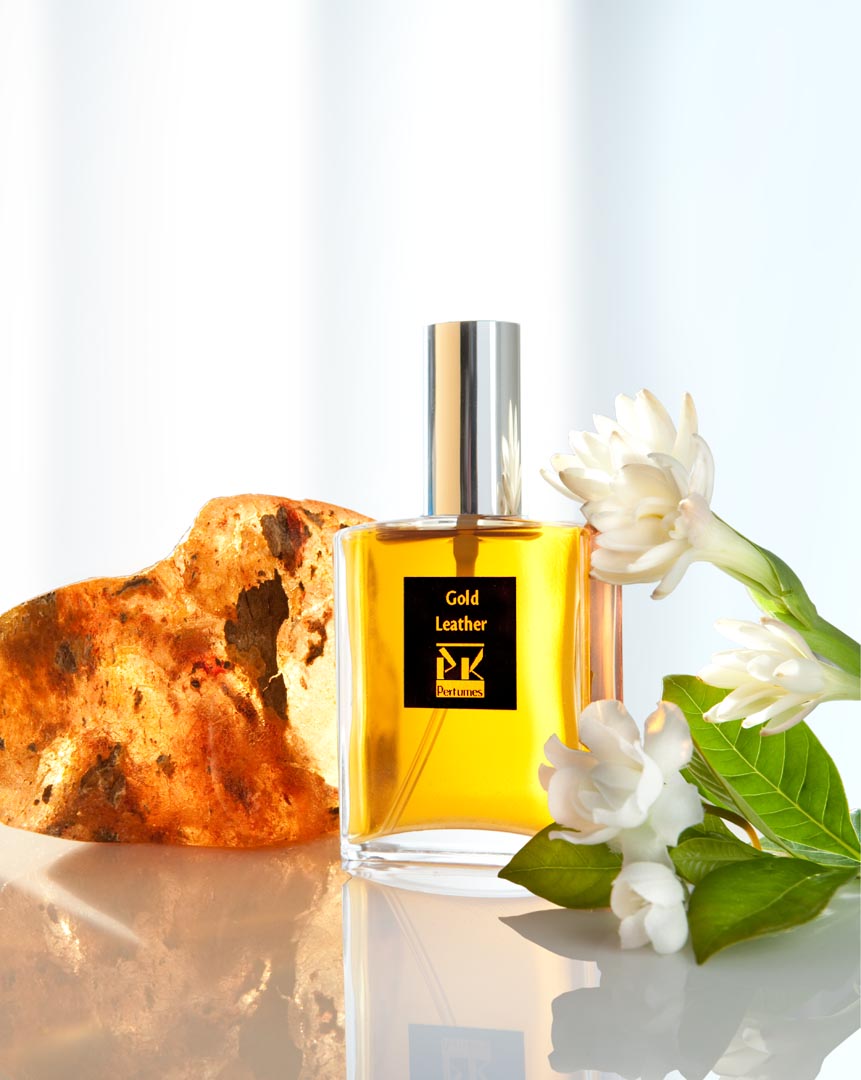
PK Perfumes Gold Leather – El aroma de la luz

foto: Virginia Blanco

foto: Virginia Blanco

¿Existe algo en este mundo que sea más difícil que imaginar el aroma de la luz? ¿Cómo olería? Creo que cada uno propondrá diferentes “notas” pero que todos acordarán con la siguiente descripción: brillante, amigable, envolvente y energizante.

Si a eso le agregamos un poco de destellos metálicos, brillo frío y dulzura tal vez lo que estemos oliendo sea Gold Leather. Se trata de la nueva creación de Paul Kiler, el perfumista natural detrás de PK Perfumes. La fragancia fue lanzada en marzo, en la última edición del Artisan Fragrance Salon de San Francisco, California.

Este feliz pero sobrio perfume pertenece a la colección en desarrollo llamada Colored Leathers. El primero de sus integrantes fue Red Leather, y ya se encuentran en camino tanto Black Leather como White Leather.

Siguiendo su propio estilo, Kiler ha utilizado varios ingredientes inusuales los cuales nunca antes he olido (¿guayaba Satsuma, ámbar fosilizado y árbol del humo?) y me da la sensación de no encontrar las palabras más precisas para describirlos. Esa es la razón por la cual mi descripción parece un poco desconectada de la lista oficial de notas.

La apertura es fresca como chispas de manzana roja, una combinación de matices almendrados con pinceladas frutales y acuosas. En las notas medias siento una mezcla de jarabe y texturas metálicas. Y varios minutos después de haberlo aplicado sobre mi piel, huelo una dulzura húmeda como la de las hojas secas en otoño, o los líquenes sobre la corteza de un árbol, o las hojas de un libro viejo.

El ingrediente principal es la tuberosa, pero es “coloreada” por la madreselva, la retama, el ylang ylang, la mandarina roja y la bergamota. He identificado notas de tabaco, haba tonka, benjuí y musgo de roble. También hay civeta y estoraque (aunque casi imperceptibles pues son más poderosos los acentos almizclados y ambarados).

Bueno… fue complejo escribir sobre exóticas materias primas que nunca había olido antes. Pero ¿quién dijo que describir el aroma de la luz iba a ser algo sencillo?

Virginia

Origen de la muestra: gentileza de Paul Kiler.

foto: gentileza de Paul Kiler

foto: gentileza de Paul Kiler

PK Perfumes Gold Leather – The scent of light

Is there anything in this world  more difficult than imaging the scent of the light? How would its smell be? I think that everyone would suggest different “notes” but everybody will agree with the following description: bright, friendly, surrounding and energizing.

If we add to it a little bit of metallic hints, cold radiance and sweetness perhaps what we are smelling Gold Leather. This is the new creation of Paul Kiler, the natural perfumer behind PK Perfumes. He released it in March, at the latest Artisan Fragrance Salon in San Francisco, California.

This happy but sober-minded perfume belongs to the developing Colored Leathers Series. The first one was Red Leather; Black Leather and White Leather are on their way.

Following his own style, Kiler has used several unusual ingredients that I’ve never smell before (Satsuma guava, fossilized amber and Smoke Tree!) and I feel like I don’t have the most precise words to describe it. That is the reason my description might seem a little disconnected from the official notes list.

The opening is fresh, like sparks of red apple, a combination of almond hues and fruity watery hints. In he middle notes I feel a mix of syrupy and metallic textures. And several minutes after I spritz it on my skin I detect a musty sweetness like dried leaves or lichen or the scent of the pages of an old book.

The main ingredient is tuberose but it is “colored” with honeysuckle, broom flowers, ylang yang, red mandarin and bergamot. I’ve also identified tobacco, tonka, benzoin and oakmoss notes. There are also civet and styrax  but they are almost imperceptible because the musky and ambered accents overpower them.

Well… it was tricky writing about exotic materials that I have never smelt before. But who said that describing the scent of the light would be easy?

Virginia

Origin of sample: Sample courtesy of Paul Kiler.

Ineke Perfumer Hothouse Flower – Una dulzura diferente

foto: Fotografia101.com

foto: Fotografia101.com

Ineke Rühland es una perfumista que se ha nutrido en diferentes países y de diversas fuentes. Nació en Canadá pero después se mudó a Europa para estudiar perfumería. Varios años después ella funda su propia marca en Estados Unidos (en San Francisco, California): Ineke Perfumer.

He tenido el placer de conocerla tanto a ella como a sus fragancias en el último Artisan Fragrance Salon. Así que me ofreció un blotter perfumado con su más reciente creación: Hothouse Flower (2012).

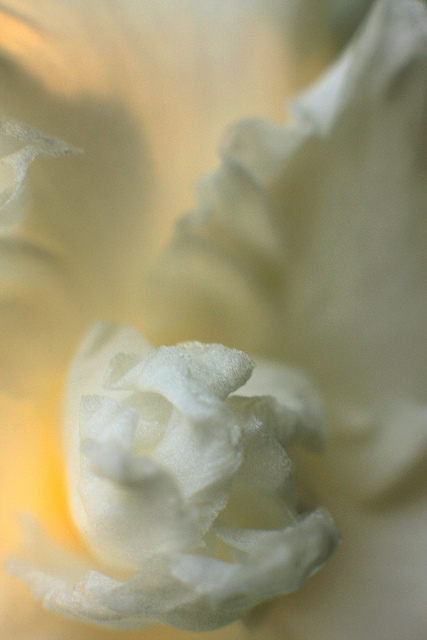
Se trata de un solifloral de gardenia con una apertura de hojas verdes, fresca, chispeante y transparente. Una nota de earl grey agrega un matiz astringente y tibio. Ciertos destellos de ajenjo hacen que vengan a mi mente ciertas reminiscencias de una humeante taza de té, específicamente de un blend floral.

En el medio de este eau de parfum hay una particular y empalagosa dulzura de higo mezclado con el áspero acento de arveja fresca del gálbano. Entonces arriba una diferente clase de dulzura: la nota de barbas de choclo (corn silk). No sé si se trata del nombre del ingrediente real o es sólo el descriptor, pero brinda una fabulosa transición hacia la perdurable base de guayaco almizclado.

Hothouse Flower es fresco pero intenso, un floral blanco sin ninguna conexión con jazmines ni tuberosas. Tiene tanta proyección (y sillage) como (invita a la)  introspección, y goza de una excelente fijación en la piel.

Virginia

Origen de la muestra: gentileza de Ineke Perfumer. 

foto: Bgfons.com

foto: Bgfons.com

Ineke Perfumer Hothouse Flower – A different kind of sweetness

Ineke Rühland is a perfumer who has taken nourishment from different sources and different countries. She was born and educated in Canada but then she moved to Europe to study perfumery. Several years later she founded her own brand in the U.S. (San Francisco, California): Ineke Perfumer.

I’ve had the pleasure of meeting her and sniffing her fragrances at the latest Artisan Fragrance Salon. It was there that she offered me a paper strip scented with her last creation, Hothouse Flower (2012).

It’s all about a gardenia soliflore with a fresh sparkling and translucent opening of green leaves. An earl grey tea note adds an astringent and warm hue. Hints of absinthe help to lead my mind toward memories of a steaming cup of some floral blend tea.

In the middle of this eau de parfum there is a particular cloying sweetness of fig mixed with the rough green pea accent of galbanum. And then arrives a different kind of sweetness: corn silk note. I don’t know if it is the real ingredient or just a descriptor word, but it brings a fabulous transition to a lasting musky- guaiac base.

Hothouse Flower is fresh but intense, a white floral without any jasmine or tuberose connections. It has as much projection (and sillage) as (it invites to) introspection and it has excellent longevity on the skin.

Virginia

Origin of sample: courtesy of Ineke Perfumer.

foto: Ineke.com

foto: Ineke.com