Tag Archives: tabaco – tobacco

Fueguia 1833 Cándido López – Dulce humo oscuro

imagen: Arteargentino.educ.ar artista: Cándido López  "Vista interior de Curuzú (mirada aguas arriba norte a sur, el 20 de septiembre de 1866)" , 1891

imagen: Arteargentino.educ.ar     artista: Cándido López      “Vista interior de Curuzú (mirada aguas arriba norte a sur, el 20 de septiembre de 1866)” , 1891

Cándido López, pintor y soldado argentino, vivió entre los años  1840 y 1902. Aunque inició su carrera artística como fotógrafo de daguerrotipos, durante la Guerra del Paraguay (18641870) López registró las batallas en sus pinturas, la mayoría de las cuales son característicamente apaisadas. Al perder su brazo derecho en combate (Curupaytí), aprendió a pintar con la mano izquierda. Muchas de sus obras fueron realizadas años después de la guerra, basadas en sus recuerdos.

Cándido López lleva por nombre la que es, quizás, mi creación preferida de  Fueguia 1833: una composicion amaderada, robusta y sólida que conjuga palo santo, rosa y tabaco. Lineal, incluso monolítica, Cándido López es toda oscuridad y humo de batalla. Yataytí Corá -una pintura al óleo que representa el combate homónimo- parece brindar el fondo perfecto para esta fragancia.

El perfume está orquestado alrededor del guayaco o guayacán (palo santo), un árbol nativo de la región de la frontera entre Argentina y Paraguay cuya preciada madera se usa tradicionalmente en tallas. Las astillas de la madera del  palo santo también se queman a modo de incienso, el humo del cual produce un olor dulzón que recuerda a las rosas. Aquí la faceta rosada del guayacán se ve exaltada con la adición de una meliflua rosa búlgara y redondeada por el aroma cumarínico de las hojas de tabaco. Con su carácter oscuro y excelente fijación, Cándido López resulta una opción interesante para los amantes de los amaderados intensos.

Caro

Origen de la muestra: Botella de absolu comprada en Fueguia, Buenos Aires

foto: gentileza de Fueguia 1833

foto: gentileza de Fueguia 1833

Fueguia 1833 Cándido López – Sweet dark smoke

Cándido López, an Argentinian painter and soldier, lived between the years 1840 and 1902. Although he initiated his artistic career as a daguerrotype photographer, during the Paraguayan War (18641870) López recorded the battles in his paintings, most of which are characteristically horizontal. When he lost his right arm in battle (Curupaytí), he learned to paint with his left hand. Many of his works were executed years after the war, based on his memories.

Cándido López is also the name of what is, perhaps, my favorite creation from  Fueguia 1833: a robust, solid, woody composition  that blends guaiac, rose and tobacco. Linear, even monolythic, Cándido López is all about the darkness and smoke of the fight. Yataytí Corá -an oil painting  depicting the homonymous battle- seems to provide the perfect background for this fragrance.

The perfume is orchestrated around  guaiac (palo santo), a tree native to the region of the ArgentinaParaguay border and whose  precious wood is traditionally used for carving. Chips of  palo santo wood are also burned as incense, the smoke of which produces a sweetish rosy smell. Here the rosy facet of guaiac is exalted by the addition of honeyed Bulgarian rose and rounded by the coumarinic aroma of tobacco leaves. With its dark character and excellent longevity, Cándido López proves an interesting option for lovers of intense woody fragrances.

Caro

Origin of sample: Bottle of absolu purchased at Fueguia, Buenos Aires

imagen: Commons.wikimedia.org  artista: Cándido López "Yataytí Corá, 2 de julio de 1866"

imagen: Commons.wikimedia.org    artista: Cándido López     “Yataytí Corá, 2 de julio de 1866”

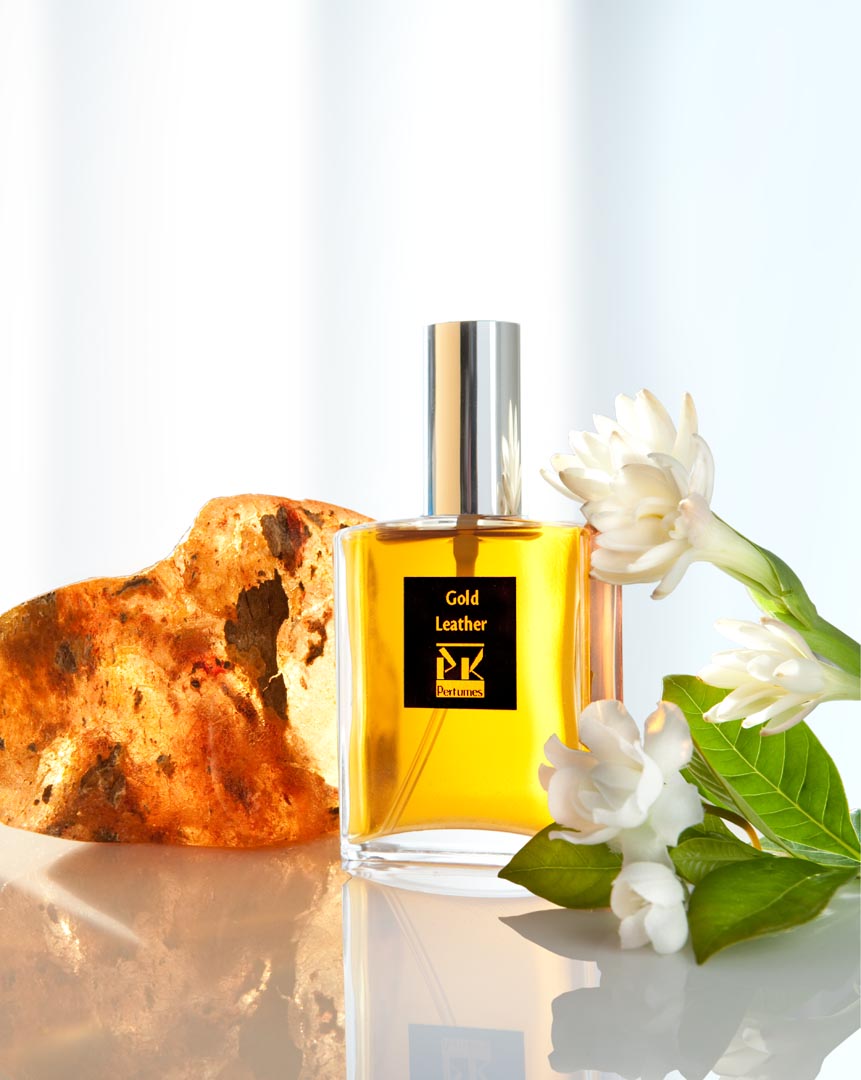
PK Perfumes Gold Leather – El aroma de la luz

foto: Virginia Blanco

foto: Virginia Blanco

¿Existe algo en este mundo que sea más difícil que imaginar el aroma de la luz? ¿Cómo olería? Creo que cada uno propondrá diferentes “notas” pero que todos acordarán con la siguiente descripción: brillante, amigable, envolvente y energizante.

Si a eso le agregamos un poco de destellos metálicos, brillo frío y dulzura tal vez lo que estemos oliendo sea Gold Leather. Se trata de la nueva creación de Paul Kiler, el perfumista natural detrás de PK Perfumes. La fragancia fue lanzada en marzo, en la última edición del Artisan Fragrance Salon de San Francisco, California.

Este feliz pero sobrio perfume pertenece a la colección en desarrollo llamada Colored Leathers. El primero de sus integrantes fue Red Leather, y ya se encuentran en camino tanto Black Leather como White Leather.

Siguiendo su propio estilo, Kiler ha utilizado varios ingredientes inusuales los cuales nunca antes he olido (¿guayaba Satsuma, ámbar fosilizado y árbol del humo?) y me da la sensación de no encontrar las palabras más precisas para describirlos. Esa es la razón por la cual mi descripción parece un poco desconectada de la lista oficial de notas.

La apertura es fresca como chispas de manzana roja, una combinación de matices almendrados con pinceladas frutales y acuosas. En las notas medias siento una mezcla de jarabe y texturas metálicas. Y varios minutos después de haberlo aplicado sobre mi piel, huelo una dulzura húmeda como la de las hojas secas en otoño, o los líquenes sobre la corteza de un árbol, o las hojas de un libro viejo.

El ingrediente principal es la tuberosa, pero es “coloreada” por la madreselva, la retama, el ylang ylang, la mandarina roja y la bergamota. He identificado notas de tabaco, haba tonka, benjuí y musgo de roble. También hay civeta y estoraque (aunque casi imperceptibles pues son más poderosos los acentos almizclados y ambarados).

Bueno… fue complejo escribir sobre exóticas materias primas que nunca había olido antes. Pero ¿quién dijo que describir el aroma de la luz iba a ser algo sencillo?

Virginia

Origen de la muestra: gentileza de Paul Kiler.

foto: gentileza de Paul Kiler

foto: gentileza de Paul Kiler

PK Perfumes Gold Leather – The scent of light

Is there anything in this world  more difficult than imaging the scent of the light? How would its smell be? I think that everyone would suggest different “notes” but everybody will agree with the following description: bright, friendly, surrounding and energizing.

If we add to it a little bit of metallic hints, cold radiance and sweetness perhaps what we are smelling Gold Leather. This is the new creation of Paul Kiler, the natural perfumer behind PK Perfumes. He released it in March, at the latest Artisan Fragrance Salon in San Francisco, California.

This happy but sober-minded perfume belongs to the developing Colored Leathers Series. The first one was Red Leather; Black Leather and White Leather are on their way.

Following his own style, Kiler has used several unusual ingredients that I’ve never smell before (Satsuma guava, fossilized amber and Smoke Tree!) and I feel like I don’t have the most precise words to describe it. That is the reason my description might seem a little disconnected from the official notes list.

The opening is fresh, like sparks of red apple, a combination of almond hues and fruity watery hints. In he middle notes I feel a mix of syrupy and metallic textures. And several minutes after I spritz it on my skin I detect a musty sweetness like dried leaves or lichen or the scent of the pages of an old book.

The main ingredient is tuberose but it is “colored” with honeysuckle, broom flowers, ylang yang, red mandarin and bergamot. I’ve also identified tobacco, tonka, benzoin and oakmoss notes. There are also civet and styrax  but they are almost imperceptible because the musky and ambered accents overpower them.

Well… it was tricky writing about exotic materials that I have never smelt before. But who said that describing the scent of the light would be easy?

Virginia

Origin of sample: Sample courtesy of Paul Kiler.

Un poco de historia – Botellitas de snuff

imagen: Wikipedia.org artista: Angélica Kauffmann, "El monje de Calais", 1780

El Pastor Yorick intercambiando snuffboxes con el Padre Lorenzo                               imagen: Wikipedia.org       artista: Angélica Kauffmann, “El monje de Calais”, 1780

Hace un tiempo les había contado en este post sobre mi visita al Asian Art Museum of San Francisco. En aquella oportunidad comprobé la evidente inspiración que obtuvo Pierre Dinand de los inros japoneses para el diseño del frasco de Opium de YSL. Pero también me encontré con otra ineludible conexión entre el mundo de la perfumería y las antiguas culturas del Lejano Oriente.

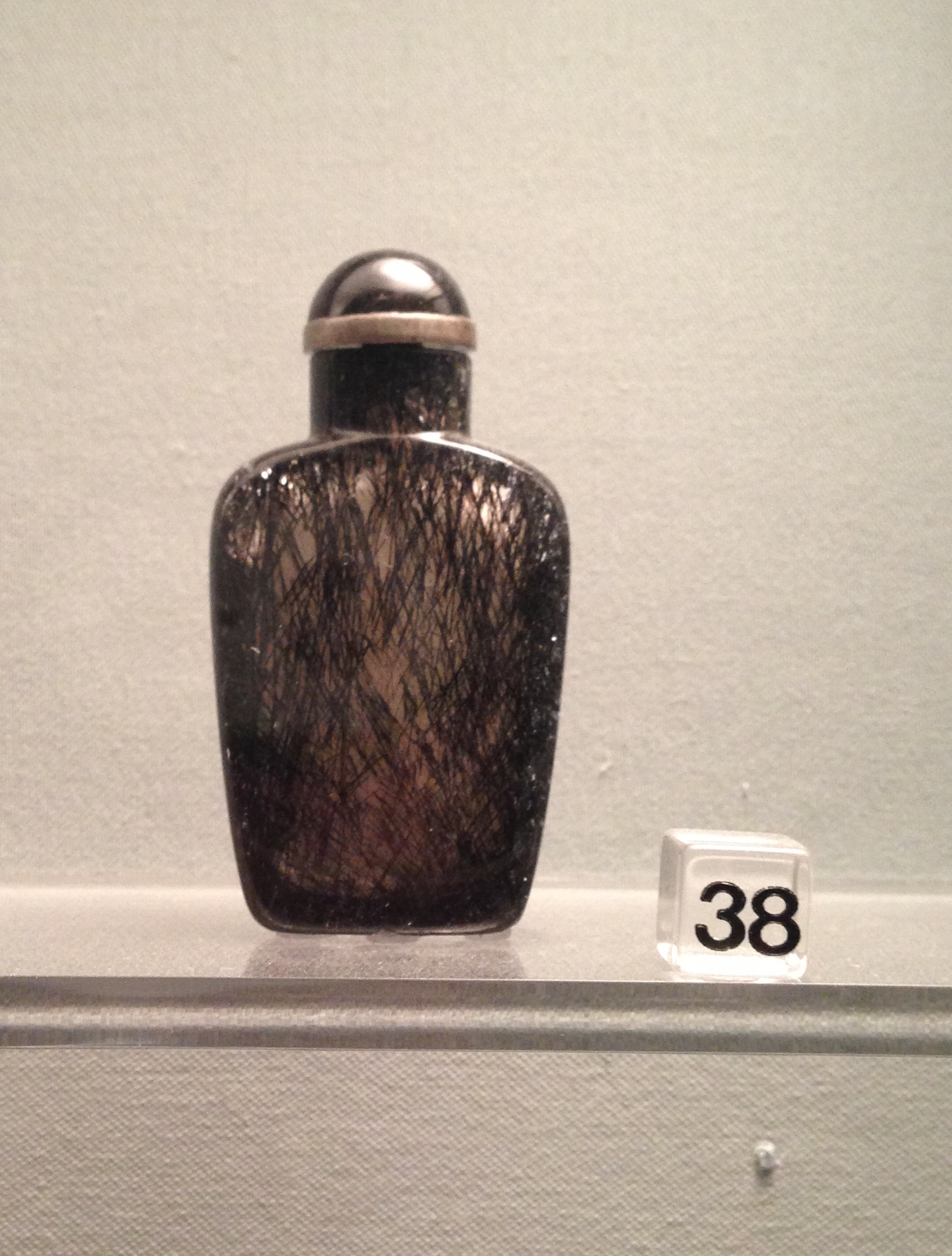
En el pabellón chino del museo se exponen delicadas botellitas artesanales, pintadas o talladas en detalle, diseñadas para contener snuff. ¿De qué estamos hablando? De tabaco pulverizado, pero no para fumar sino para aspirar con fines medicinales (Catalina de Médicis lo usaba para tratar la migraña) y más conocido en español como rapé.

Lo curioso es que este hábito (que continúa hasta el día de hoy) es originario de las Américas. Con la conquista fue adoptado por los colonizadores y para mediados del siglo XVII ya era parte de la cultura de China.

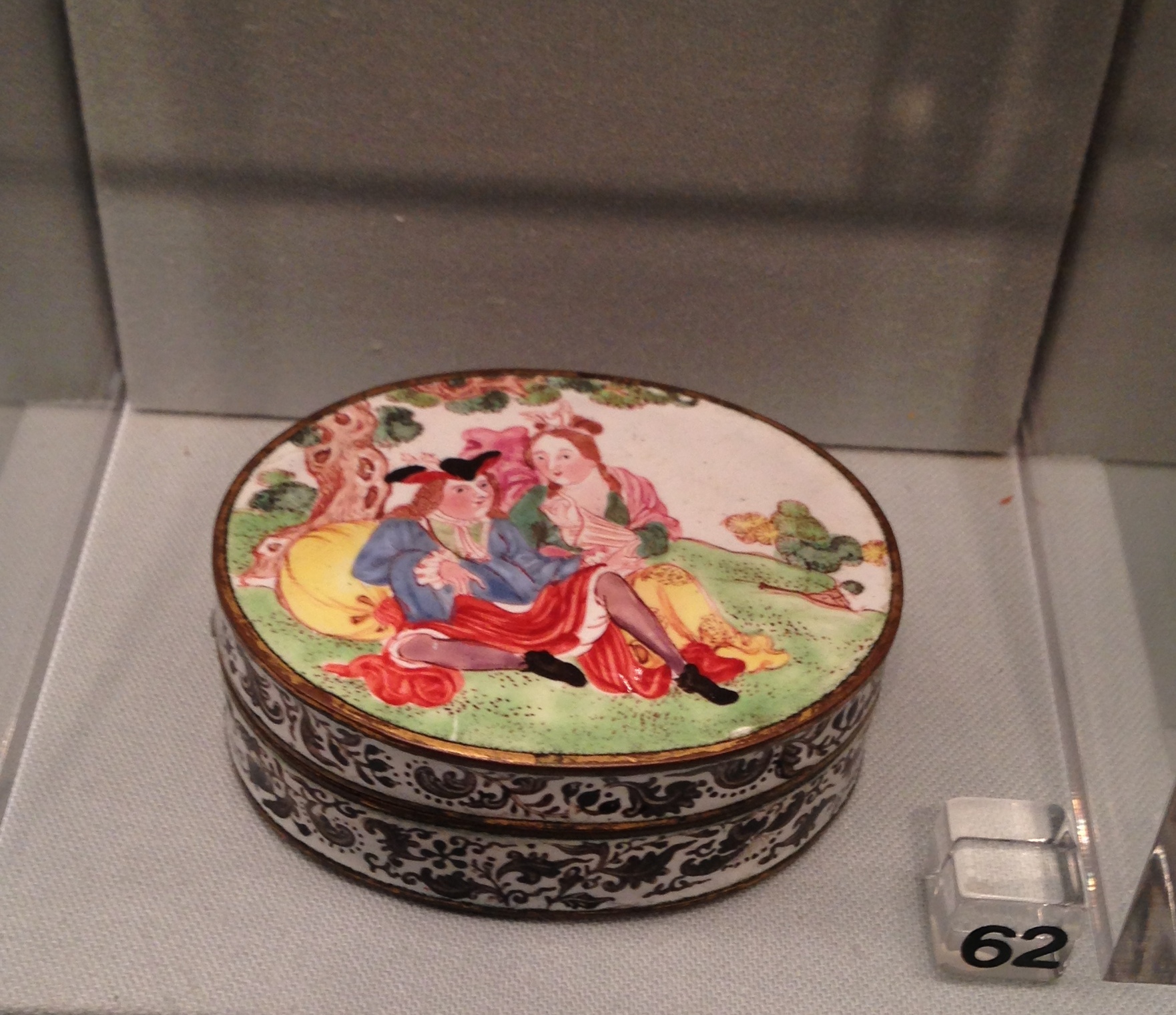
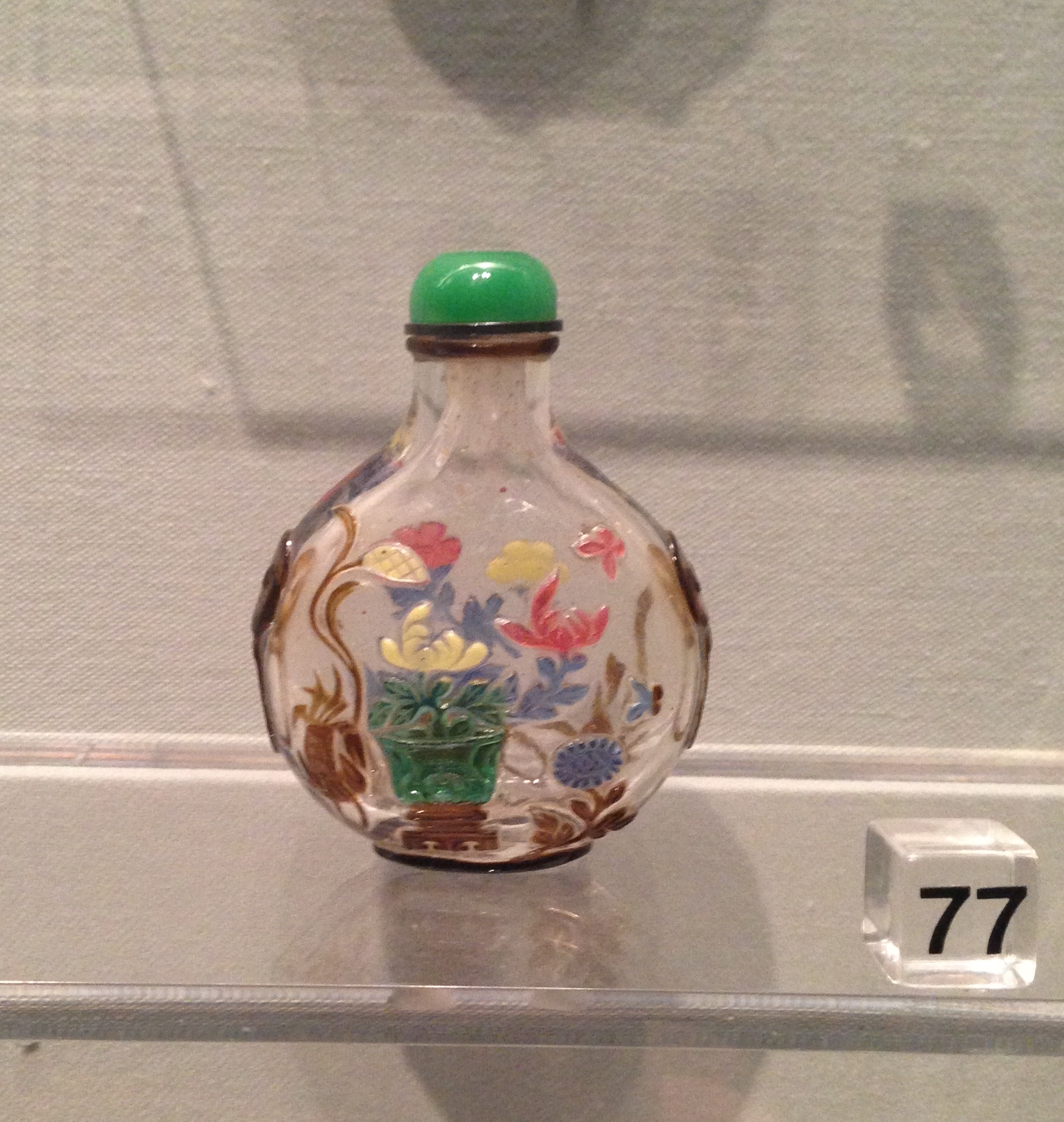
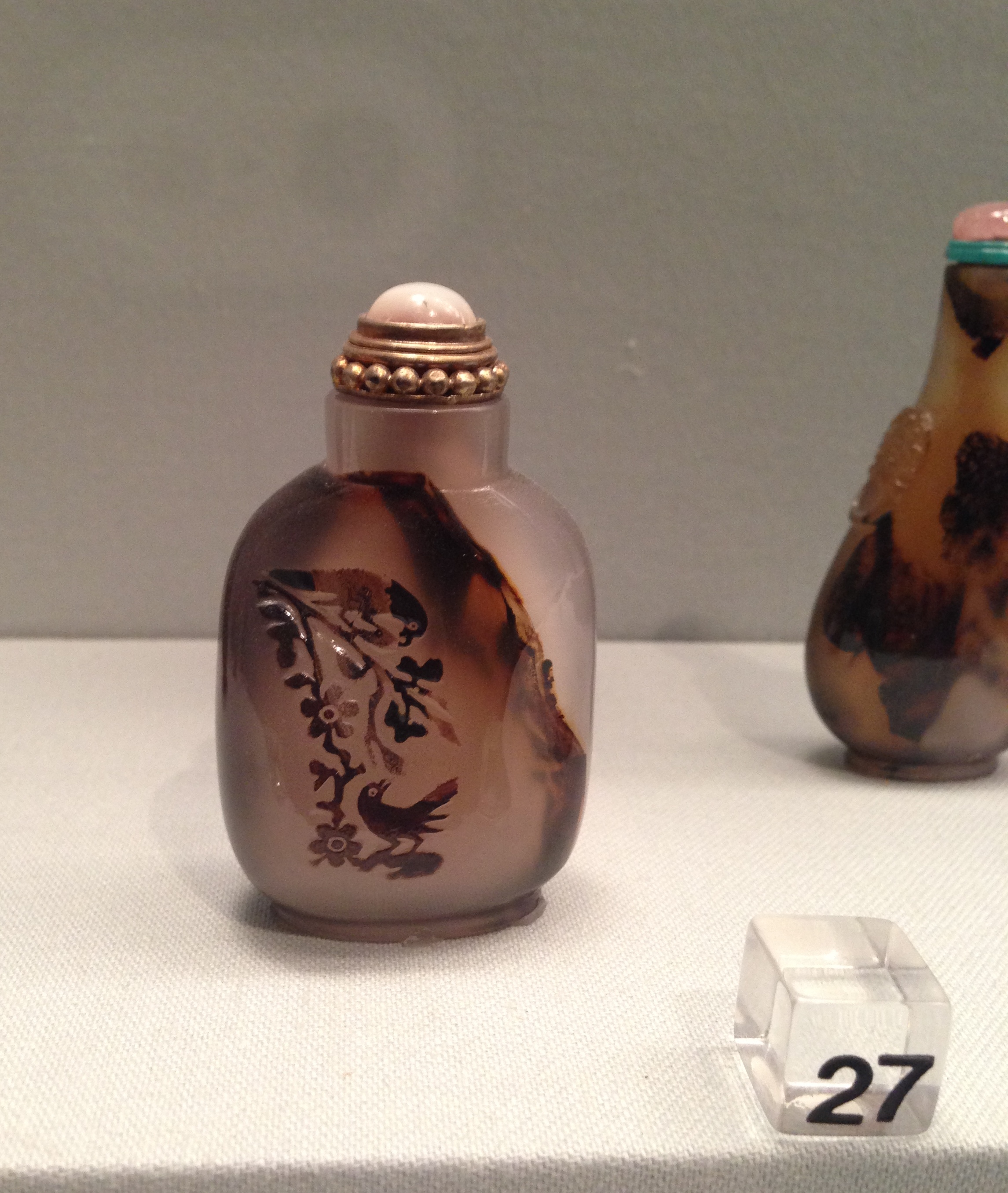
Sin duda alguna, sería muy apasionante profundizar en las razones históricas y culturales de por qué se dificulta distinguir a simple vista entre una tabaquera de snuff y un frasco de perfume. Mientras tanto, les dejo las imágenes que me provocan este interrogante.

Virginia

foto: Virginia Blanco

Copia china de una snuffbox oval europea, 1700-1800    foto: Virginia Blanco

A bit of History – Little snuff bottles

Some time ago I wrote about my visit to the Asian Art Museum of San Francisco in this post . At that time I checked the obvious inspiration that Pierre Dinand took from Japanese inros for the design of YSL Opium bottle. But I also found another inevitable connection between the world of perfumery and the ancient cultures of the Far East.

In the Chinese pavilion the museum exhibits delicately crafted bottles, painted or carved in detail, designed to contain snuff. What are we talking about? Snuff is tobacco powder, not for smoking but to inhale for medicinal purposes. For example, Catherine de Medici used it to treat migraine.

The funny thing is that this habit (which continues to this day) is native of the Americas. With the conquest it was adopted by the colonizers and by the middle of the 17th century it was already part of Chinese culture.

No doubt, it would be very exciting to delve deeper into the historical and cultural reasons that explain why it is difficult to visually distinguish between a snuffbox and a perfume bottle. Meanwhile, I would like to share the images that motivated this question.

Virginia

foto: Virginia Blanco

Botella imitando piedra dorada, China, 1800-1900     foto: Virginia Blanco

foto: Virginia Blanco

Botella con superposición de cinco colores, China, 1850-1900   foto: Virginia Blanco

foto: Virginia Blanco

Botella con niños jugando, China, 1880-1911      foto: Virginia Blanco

foto: Virginia Blanco

Botella con urracas en un ciruelo, China, dinastía Qing (1644-1911)  foto: Virginia Blanco

foto: Virginia Blanco

Botella decorada con tinta sobre cristal y tapón de jadeíta     artista: Su Fengyi (2005)   foto: Virginia Blanco

foto: Virginia Blanco

Botella de quarzo con turmalina, China, 1775-1850      foto: Virginia Blanco

foto: Virginia Blanco

Botella con granadas pintadas desde el interior   artista: Ye Shuying (1958)    foto: Virginia Blanco

foto: Virginia Blanco

foto: Virginia Blanco

Thierry Mugler Angel Sunessence – Porte masculino con cadencia femenina

Milla Jovovich  foto: Fundykes.cl

foto: Fundykes.cl      Milla Jovovich por Bob Richardson para Vogue Italia (noviembre 1997)

Alguien alto y delgado camina hacia nosotros. Viste un tapado largo de paño color gris oscuro. Grandes hombreras y solapas al viento. El rostro, escondido bajo la sombra del ala de un sombrero de tweed. Cigarrillo en mano. Cabello corto, oscuro y enmarañado. Tiene un porte masculino, pero su cadencia nos hace dudar… cuando vemos de cerca su rostro femenino queda develada la incógnita (o no).

Ese juego ambivalente de la androginia es el que más le gusta jugar a Thierry Mugler con su amplia gama de “Angels”. En el caso del Angel Sunessence Eau de Toilette Légère baja un poco los decibeles con el algodón de azúcar y la intensidad “chocolatosa” del original. Sin embargo, esa ligereza -curiosamente- hace una salida más masculina.

Dispara una primera nota de bergamota con hibisco y miel. La cumarina -con su dejo de coco y tabaco– perfila notas dulces pero masculinas con el patchouli. Al correr los minutos, el calor de la piel deja salir al acorde gourmand y más femenino. Un aroma a caramelo y a vainilla pareciera macerar la intermitente acidez de los frutos del bosque, la cual le da el toque alegre a toda la composición.

Esta fragancia fue una edición limitada del año 2009, pero aún hoy siguen dando vuelta algunos ejemplares por el mundo.

Virginia

Origen de la muestra: regalo de un familiar.

Nota: la versión original de esta reseña fue publicada en el blog Notas & Acordes el  13/03/12.

foto: Fragrantica.com

foto: Fragrantica.com

House of Matriarch Ambre Vie – Atardecer de otoño

foto: All-hd-wallpapers.com

foto: All-hd-wallpapers.com

La primera oportunidad que tuve de oler Ambre Vieen el L.A. Artisan Fragrance Salon– sentí como si un rayo de sol, entre cálido y frío, cayera sobre mí. No se trataba de una luz blanca enceguecedora sino de una especie de atmósfera dorada, tal como una dorada puesta de sol en una fresca tarde otoñal. Al cabo de pocos minutos me sentía en una especie de arrobamiento que me detuvo de seguir oliendo otras fragancias.

La nariz de House of Matriarch, la encantadora y talentosa Christi Meshell, mantiene el secreto de la fórmula. Y eso ¡sólo puede alimentar la mística de este perfume! Por supuesto, hay listados algunos de sus ingredientes para guiar a nuestra imaginación a través de nuestro sentido del olfato. Sin embargo, la experiencia de perfumarse con Ambre Vie no puede explicarse totalmente sólo con palabras.

El matiz resinoso de la sangre de dragón es el amargo y translúcido vidrio por el cual percibo al resto de la composición. Las notas de mimosa y davana son la floral entrada principal. Luego un resplandeciente bouquet de retamas empieza a brillar sutilmente. Es justo allí donde el perfume se convierte en un néctar, oscilante entre seco y cremoso. Tiene similitudes con las hojas secas de tabaco perfumadas con vainilla y miel. Creo que ese delicioso aspecto se debe a las notas de ambreine.

Hay muchas razones para elegir a Ambre Vie ( un perfume vegano y 100% natural) como uno de mis favoritos de esta casa de perfumes establecida en Seattle, Washington. No es para nada empalagoso y, sin embargo, coquetea con vestirse de gourmand. Su aura es muy duradera. Ella pinta en mi mente un atardecer de otoño ideal. Y… ¡sí! Soy amante de los perfumes ambarados y de los atardeceres, y el otoño es mi estación preferida del año.

Otro de mis perfumes predilectos de House of Matriarch es oM, pero ya se los había contado aquí.

Virginia

Origen de la muestra: cortesía de House of Matriarch.

foto: Cortesía de Christi Meshell

foto: Cortesía de Christi Meshell

House of Matriarch Ambre Vie – Autumnal sunset

The first time that I sniffed Ambre Vie -at the L.A. Artisan Fragrance Salon– I felt a warm-cold ray of sunlight over me. It was not a shocking white and bright light but a kind of golden atmosphere, like an ambery sunset in a cool autumn’s afternoon.  In a few minutes I was in a dreamy rapture which prevented me for a while to continue smelling other fragrances.

The nose of House of Matriarch, the charming and talented Christi Meshell, keeps the formula secret.  This can only increase the mystique ! Of course, she has listed a few ingredients to guide our imagination by our sense of smell, but the experience of wearing Ambre Vie can’t be completely explained just by words.

The resinous hue of dragon’s blood is the bittersweet and translucid glass through which I perceive all the composition. Mimosa and davana notes are like a floral main entrance and then a glowy bouquet of golden broom subtly starts to shine. Right there the perfume becomes a nectar, oscillating from creamy to dry. It has similarities with dried tobacco leaves scented with vanilla and honey. I think that delicious aspect is thanks to ambreine notes.

There are a lot of reasons to choose Ambre Vie (a vegan and 100% natural fragrance) as one of my favorites of this Seattle, Washington home-based perfume house. It is not cloying at all but flirts with the idea of wearing a gourmand custome. Its aura is very long lasting. It draws an ideal autumn sunset on my mind. And… Yes! I’m a lover of ambery perfumes, of sunsets and autumn is my preferred season of the year.

Another of my House of Matriarch favorites is oM but I already have told you about it here.

Virginia

Origin of sample: sample courtesy of House of Matriarch.

foto: Wallpapersmaster.com

foto: Wallpapersmaster.com