Category Archives: Reseñas – Reviews

Eau d’Italie Paestum Rose – Humo sagrado

imagen: Artrenewal.org      artista: William Reynolds-Stephens     “Summer”

Lo que queda hoy de Paestum (antiguamente Poseidonia, la ciudad de Poseidón) son las ruinas de sus imponentes templos dóricos y la leyenda de sus rosas. Estas rosas -celebradas por Ovidio, Marcial y Virgilio (el último, en sus Geórgicas, menciona “los dos veces florecientes canteros  de rosas de Paestum”)- daban flor dos veces al año y eran renombradas por su belleza.

Paestum Rose – lanzado porEau d’Italie en 2006-parece recrear la experiencia de Paestum completa: las rosas perfumando la brisa, las piedras de los templos calentadas por el sol y las resinas siendo quemadas en honor de los dioses.

Las palabras no alcanzan para describir la belleza de la salida:  me siento como bajo una lluvia de pétalos de rosa -jugosos y mullidos- cuyo aspecto frutado se ve acentuado por una nota de brote de  grosella negra. La profusión de pétalos está sazonada con canela, coriandro y pimientas rosa (nuestro aguaribay) y negra. Desearía que este instante trascendental durara para siempre. La mezcla deviene en en una nube resinosa de incienso, mirra y elemi que luego evoluciona lentamente, casi con languidez, hacia una base aterciopelada por  ámbaralmizcle blanco y opopanax

¿ Y quién mejor que Duchaufour para lograr insuflar una cualidad aireada a esta  mélange tan cargada de especias?  La composición aparenta ser etérea. Paestum Rose es claramente una obra maestra y, por cierto, mi creación preferida de  Duchaufour.

Son las contradicciones las que aumentan la belleza de este perfume:  aterciopelado y áspero; jugoso pero seco; oscuro y luminoso a la vez; terrenal e inmaterial; masculino pero femenino; humano y divino.

A pesar de su intensidad inicial, Paestum Rose es la fragancia más tenaz de Eau d’Italie, pero esto no es un problema: siempre puedo reaplicarlo y oler cómo mis rosas florecen otra vez.

Caro

Origen de la muestra: muestra gentileza de Eau d’Italie

foto: Eauditalie.com

Eau d’Italie Paestum Rose – Humo sagrado

What remains today of Paestum  (originally called Poseidonia, the city of Poseidon) are the ruins of its imponent Doric temples and the legend of its roses. These roses -celebrated by Ovid, Martial and Virgil (the latter mentions in his Georgics “the twice-flowering rose-beds of Paestum“)- bloomed twice a year and were famous for their beauty.

Paestum Rose – launched by Eau d’Italie in 2006– seems to recreate the whole Paestum experience: the roses scenting the breeze, the sun-heated stones of the temples and the resins being burned in honour of the gods.

Words fail me when I try to describe the beauty of its opening:  I feel as if fleshy, juicy  rose petals were raining upon me, their fruity aspect enhanced by a  blackcurrant bud note. This rose-petal rain is seasoned with cinnamon, coriander and both black and pink pepper (our aguaribay).  I wish this trascendental instant lasted forever. The fragrance morphs into a resinous cloud of incense, myrrh and elemi which afterward evolves slowly, almost  languorously, into a base that is velvety with amber, white musk and opopanax

And who else but Duchaufour could succeed at insufflating airiness into such a spice laden mélange?  The composition appears to be weightless. It is certainly a masterpiece and, by far, my favorite Duchaufour

Contradictions are what make this perfume beautiful:  it feels velvety yet coarse; juicy but dry; dark and luminous at the same time; both terrenal and otherwordly; masculine yet feminine; human and divine.

Despite its initial intensity, I don’t find Paestum Rose to be the most tenacious fragrance from Eau d’Italie. That is absolutely no problem:  I can always reapply it and smell my roses bloom again.

Caro

Origin of sample: sample courtesy of Eau d’Italie


Penhaligon’s Artemisia – Sólo cosas bonitas

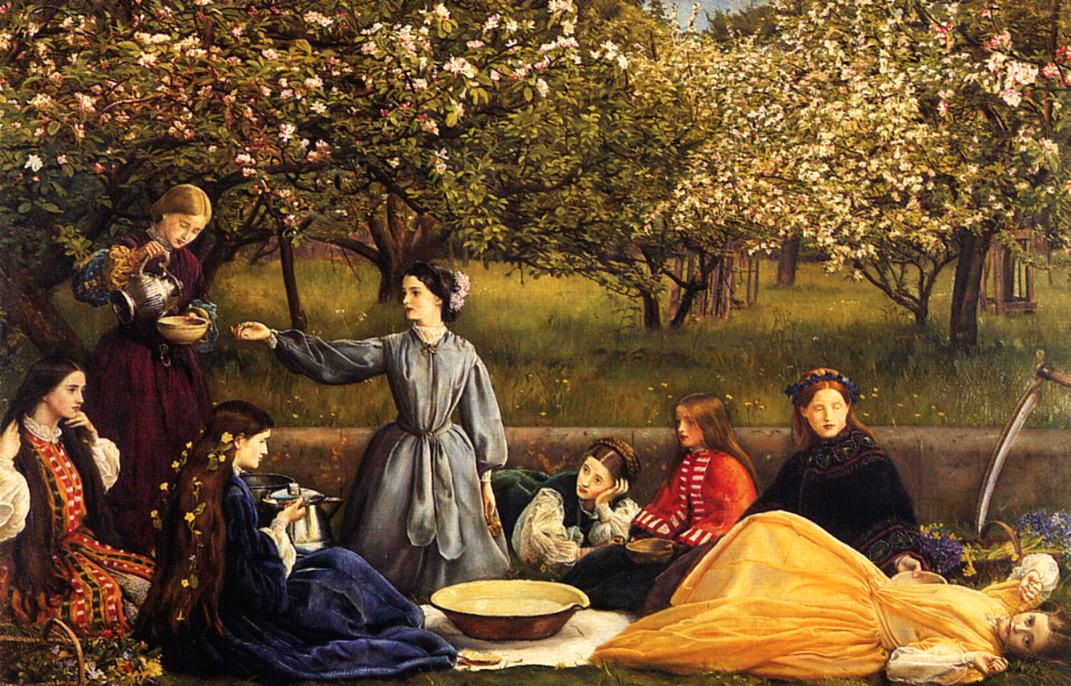
imagen: Wikipaintings.org    artista: John Everett Millais       “Apple Blossoms”

Cuando de perfumes se trata, me inclino ante lo inusual, lo conceptual, lo revolucionario y lo complejo. Me encanta encontrar los golpes de genialidad que elevan a un perfume de lo meramente bello a lo legendario (el durazno dorado de Mitsouko, el comino en Rochas Femme, la sobredosis de aldehídos en No.22).

Algunas veces -sin embargo- necesito un descanso de todos esos perfumes intrincados y revolucionarios de la misma manera en que podría necesitar un día lejos del trabajo, preferentemente al aire libre y en un lugar encantador. Entra Penhaligon’s Artemisia.

Artemisia, creado 2002, no rompe con las convenciones ni necesita hacerlo. Es una fragancia bonita y despreocupada y ciertos días me siento perfectamente satisfecha con eso. Lejos de los florales frutados – frecuentemente chillones o empalagosos- tan abundantes en los tiempos que corren, es sutil y maravillosamente equilibrado.

Este cálido floral frutado abre con notas de dulce  nectarina y una manzana verde fugaz y transparente, que pronto son seguidas por un corazón ligerísimo de lirio del valle y té de jazmín. La base – una aterciopelada mélange de sándalo, almizcle, vainilla y ámbar– es suavemente  sensual e irradia una calidez que recuerda a la piel entibiada por el sol. La vainilla tiene una presencia fuerte sin ser invasiva ni gourmand.

Esta fragancia no proyecta demasiado, convirtiéndose en un íntimo parfum de peau. La encuentro verdaderamente adictiva y ya la he sumado a mi lista de futuras compras.

Artemisia, amén de hacerme sentir feliz y relajada, evoca todo lo bonito de este mundo. Eso, queridos míos, no tiene precio.

Caro

Origen de la muestra: muestra obtenida en Olfattorio, Roma

foto: Penhaligons.com

Penhaligon’s Artemisia – Everything nice

When it comes to fragrance I bow to the unusual, the conceptual, the revolutionary and the complex. I love to find  the strokes of genius that elevate a fragrance from merely pretty to legendary (the golden peach in Mitsouko, the cumin in Rochas Femme, the overdose of aldehydes in No.22).

Sometimes, though, I want a rest from all those intricate and revolutionary fragrances in the same way I might need a day off work, preferably spent outdoors in a charming setting. Enter Penhaligon’s Artemisia.

Artemisia, created in 2002, is not groundbreaking and it needn’t be. It’s pretty and carefree and some days I am perfectly satisfied with that. Far from the oftentimes screechy or cloying fruity floral blends, so overabundant these days, this is subtle and wonderfully balanced.

This warm fruity floral opens with notes of sweet nectarine and a fleeting and transparent green apple,which are soon followed by an apparently  weightless  heart of lily of the valley and jasmine tea. The base – a velvety mélange of sandalwood, musk, vanilla and amber– is softly sensual and radiates a warmth that makes me think of sunkissed skin. The vanilla has a strong presence but it is neither overpowering nor foody.

This fragrance doesn’t project too far, becoming more of an intimate skin scent. I find it truly addictive and have already added it to my list of future purchases.

Artemisia, besides making me feel happy and relaxed, reminds me of all things pretty. That, my darlings, is definitely priceless.

Caro

Origin of sample: sample of Eau de Parfum obtained at Olfattorio, Roma

Fueguia 1833 El Otro Tigre – Soñando una fiera

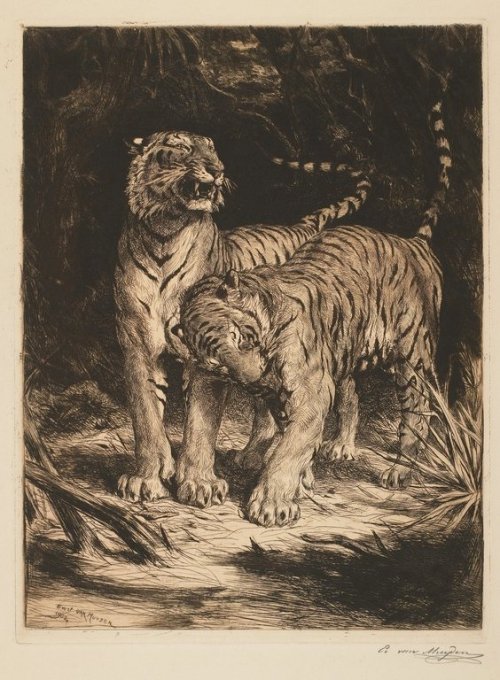
imagen: Artsconnected.org          artista: Evert van Muyden         “Two Tigers”

Me encontraba al acecho del perfume más animal que pudiera encontrar;  si traspasaba la línea del Fauvismo, mejor aún.  Mi propósito era superponerlo con ciertos soliflorales a fin de tornarlos sucios, viciados, no tan virginales.

Casi segura de que sería el lugar donde hallar a mi fiera, me encaminé a la boutique de Fueguia 1833 . Una vez ahí, mi curiosidad giró alrededor de El Otro Tigre, un perfume  bautizado en honor al poema de Jorge Luis Borges que puede leerse más abajo. 

La amable vendedora me advirtió acerca de su carácter fuerte y masculino, pero generalmente hago caso omiso de las divisiones de género (y, para ser honesta, de la mayor parte de los consejos) cuando de perfumes se trata. No encontré la fragancia particularmente masculina; tampoco femenina, para el caso. Ni femme, ni homme: este líquido era bestial y peligroso. 

La salida, agresiva y punzante con ambrette, es de una cualidad indecente que remite al olor de los felinos grandes.  Muscone and muscenone -compuestos sintéticos que sustituyen el almizcle natural-  juegan un papel clave emulando el poder de atracción sexual de esta secreción  (por razones de índole ética el uso del almizcle natural está practicamente desterrado). Luego de unos momentos, la fragancia se torna más suave y vibrante con la irrupción de una nota de tuberosa. Esta tuberosa no es abiertamente floral  sino que prefiere exaltar su aspecto alcanforado. La adición de oud lleva al extremo el aspecto salvaje de la mezcla.

A pesar de su intensa animalidad, El Otro Tigre retiene cierta frescura que aparece, desaparece y arroja luces sobre una composición sombría, pintando un retrato del tigre y el follaje a su alrededor.  El  sándalo y la  vainilla de Madagascar  doman a la fiera y tornan la base cálida y dulzona. Ahora el animal es dócil, apenas un reflejo del tigre sediento de sangre que encontré en un principio.

Relativamente compacto en estructura, El Otro Tigre se superpone maravillosamente bien con el bouquet de rosas de Fueguia 1833 Juan Manuel. Combinado con el suave y dulce Ballena de la Pampa, es un sueño almizclado. 

Prefiero el extrait para superponer con otros perfumes y el absolu –aplicado ligerísimamente- si voy a disfrutarlo solo. Esta esencia, poderosa en todas sus encarnaciones, funciona mejor en cantidades muy moderadas.

Caro

Origen de la muestra: botellas compradas en Fueguia 1833, Buenos Aires

El Otro Tigre

Pienso en un tigre. La penumbra exalta
la vasta Biblioteca laboriosa
y parece alejar los anaqueles;
fuerte, inocente, ensangrentado y nuevo,
él irá por su selva y su mañana
y marcará su rastro en la limosa
margen de un río cuyo nombre ignora
(en su mundo no hay nombres ni pasado
ni porvenir, sólo un instante cierto.)
Y salvará las bárbaras distancias
y husmeará en el trenzado laberinto
de los olores el olor del alba
y el olor deleitable del venado.
Entre las rayas del bambú descifro
sus rayas y presiento la osatura
bajo la piel espléndida que vibra.
En vano se interponen los convexos
mares y los desiertos del planeta;
desde esta casa de un remoto puerto
de América del Sur, te sigo y sueño,
oh tigre de las márgenes del Ganges.


Cunde la tarde en mi alma y reflexiono
que el tigre vocativo de mi verso
es un tigre de símbolos y sombras,
una serie de tropos literarios
y de memorias de la enciclopedia
y no el tigre fatal, la aciaga joya
que, bajo el sol o la diversa luna,
va cumpliendo en Sumatra o en Bengala
su rutina de amor, de ocio y de muerte.
Al tigre de los símbolos he opuesto
el verdadero, el de caliente sangre,
el que diezma la tribu de los búfalos
y hoy, 3 de agosto del 59,
alarga en la pradera una pausada
sombra, pero ya el hecho de nombrarlo
y de conjeturar su circunstancia
lo hace ficción del arte y no criatura
viviente de las que andan por la tierra.

Un tercer tigre buscaremos. Éste
será como los otros una forma de mi sueño, 
un sistema de palabras
humanas y no el tigre vertebrado
que, más allá de las mitologías,
pisa la tierra. Bien lo sé, pero algo
me impone esta aventura indefinida,
insensata y antigua, y persevero
en buscar por el tiempo de la tarde
el otro tigre, el que no está en el verso.

Jorge Luis Borges, 1960
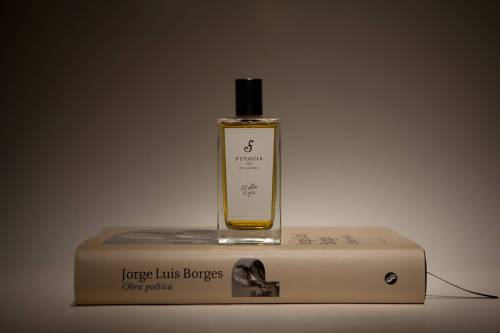
foto: gentileza de Fueguia 1833

Fueguia 1833 El Otro Tigre – Dreaming of a wild beast

I was to be on the prowl for the most animalic fragrance  I could find; if it ventured to cross the threshold of Fauvism, all the better.  My aim was to layer it with certain soliflores in order to turn them dirtier, tainted, not so virginal.

Almost sure it would be the right place to find my beast, I headed straight to the Fueguia 1833 boutique. Once there, my curiosity was piqued by El Otro Tigre, a perfume  named after the poem by Jorge Luis Borges which can be read below. 

A charming sales assistant warned me about its strong and masculine character but I generally disregard gender divisions (and, to be honest, most advice) when it comes to scents. I didn’t find the fragrance particularly masculine, or feminine for that matter. No femme, no homme: this juice was animalic and dangerous. 

The opening, aggressive and pungent with ambrette is almost indecent, redolent of the smell of big cats.  Muscone and muscenone -synthetic compounds that substitute natural musk –  play a key role mimicking the sexual attractant power of this secretion (natural musk has practically been banned due ethical motives).  After a few moments, the fragrance gets softer and brighter as a tuberose note emerges. This tuberose isn’t  overtly floral but chooses to exalt its green camphoraceous aspect instead. The addition of oud takes the wild aspect of the blend to the extreme.

Despite its intense animality, El Otro Tigre retains a certain  freshness which wafts now and then, casting lights on the shadowy composition, painting  a  portrait of the tiger and the foliage around him.  Sandalwood and Madagascan vanilla tame the beast and make the drydown surprisingly warm and sweetish. This animal is now docile, only a reflection of the bloodthirsty tiger I first met.

Relatively compact in structure, El Otro Tigre layers wonderfully well with the rose bouquet of Fueguia 1833 Juan Manuel. Combined with the softer and sweeter Ballena de la Pampa, it becomes pure musk heaven. 

I prefer to wear the extrait when I layer it with other fragrances and the absolu –applied with the lightest hand- if I want to enjoy it on its own. This essence,  powerful in all concentrations, works best in very moderate quantities.

Caro

Origin of sample: Bottles purchased at Fueguia 1833, Buenos Aires

The Other Tiger

A tiger comes to mind. The twilight here
Exalts the vast and busy Library
And seems to set the bookshelves back in gloom;
Innocent, ruthless, bloodstained, sleek
It wanders through its forest and its day
Printing a track along the muddy banks
Of sluggish streams whose names it does not know
(In its world there are no names or past
Or time to come, only the vivid now)
And makes its way across wild distances
Sniffing the braided labyrinth of smells
And in the wind picking the smell of dawn
And tantalizing scent of grazing deer;
Among the bamboo’s slanting stripes I glimpse
The tiger’s stripes and sense the bony frame
Under the splendid, quivering cover of skin.
Curving oceans and the planet’s wastes keep us
Apart in vain; from here in a house far off
In South America I dream of you,
Track you, O tiger of the Ganges’ banks.

It strikes me now as evening fills my soul
That the tiger addressed in my poem
Is a shadowy beast, a tiger of symbols
And scraps picked up at random out of books,
A string of labored tropes that have no life,
And not the fated tiger, the deadly jewel
That under sun or stars or changing moon
Goes on in Bengal or Sumatra fulfilling
Its rounds of love and indolence and death.
To the tiger of symbols I hold opposed
The one that’s real, the one whose blood runs hot
As it cuts down a herd of buffaloes,
And that today, this August third, nineteen
Fifty-nine, throws its shadow on the grass;
But by the act of giving it a name,
By trying to fix the limits of its world,
It becomes a fiction not a living beast,
Not a tiger out roaming the wilds of earth.

We’ll hunt for a third tiger now, but like
The others this one too will be a form
Of what I dream, a structure of words, and not
The flesh and one tiger that beyond all myths
Paces the earth. I know these things quite well,
Yet nonetheless some force keeps driving me
In this vague, unreasonable, and ancient quest,
And I go on pursuing through the hours
Another tiger, the beast not found in verse.

Jorge Luis Borges, 1960
Translation taken from www.poemhunter.com

Chanel Les Exclusifs Coromandel – Nuevo barroco

foto: Chanel-news.chanel.com

Cuando descubrí Les Exclusifs de Chanel encontré toda la colección muy interesante y exquisitamente construida, pero -coup de foudre!- el primer perfume que estuvo a punto de hacerme desmayar de emoción fue Coromandel.

Coromandel toma su nombre de los biombos de Coromandel, tan caros a Mademoiselle,  que formaban parte esencial de la decoración de su departamento de la Rue Cambon. Creado por Jacques Polge -nariz in-house de Chanel–  junto con  Christopher Sheldrake –el afamado colaborador de Serge LutensCoromandel es un voluptuouso oriental ambarado.

Este ultraliviano barroco abre con un acorde especiado. Antes de poder siquiera reaccionar, me encontré rodeada por sus doradas volutas de ámbar. La rosa está definitivamente presente en la mezcla, pero se manifiesta de una manera sutil: es preciso estar atentos para notarla. El patchouli, en cambio, es dominante aunque transparente y muestra su cara más dulce, con suaves toques de polvo de cacao. Bordea lo gourmand pero sin cruzar la línea. El blend, decididamente oriental, está sublimado por el  benjuí  y cubierto por un velo de inciensoCoromandel no se siente opresivo en ningún punto a pesar de la sobredosis de patchouli y ámbar. 

La sensación es que Coromandel se despliega poco a poco, igual que un biombo laqueado, revelando sus distintas facetas. Refinado, y con gran sillage, tiene la mejor longevidad de toda la línea. Aprecio su dorada cualidad otoñal especialmente ahora que el tiempo más frío está entre nosotros.

Los amantes de Chanel Coco probablemente adorarán a Coromandel, que es igualmente sensual pero sin la pesadez característica de los ’80s.

Caro

Origen de la muestra: Botella comprada en la boutique Chanel, Galerías Pacífico, Buenos Aires

foto: Chanel.com

Chanel Les Exclusifs Coromandel – New baroque

When I discovered Les Exclusifs de Chanel I found the whole line interesting and exquisitely crafted but -coup de foudre!- the first fragrance that truly made me swoon was Coromandel.

Coromandel takes its name from the lacquered Coromandel screens, so dear to  Mademoiselle, that were essential part of the decorations of her Rue Cambon apartment. Created by Jacques PolgeChanel  in-house nose- in collaboration with Christopher Sheldrake –of Serge Lutens fame- Coromandel is a voluptuous ambery oriental.

This lightweight baroque opens with a spicy accord and, before I could even react, I found myself surrounded by golden ambery swirls. Rose is definitely present in the blend but manifests itself in a subtle way: one must pay attention to notice it. The patchouli, instead, is dominant but sheer and shows its sweeter face, with hints of cocoa powder. It borders on gourmand but never crosses the line. The decidedly oriental blend is veiled with frankincense and sublimated by benzoin. Coromandel doesn’t feel oppressive despite the patchouli and amber overdose. 

The feel is that Coromandel unfolds, much like a lacquered screen, slowly revealing its different facets. Refined, with great sillage, it has the best lasting power in the whole line. I particularly appreciate its golden autumnal quality now that colder weather is here.

Lovers of Chanel Coco will probably worship Coromandel, which is equally sensual but without the characteristic heft of the ’80s.

Caro

Origin of sample: Bottle bought at the Chanel boutique, Galerías Pacífico, Buenos Aires

Amouage Interlude Woman – Un momento hipnótico

foto: En.wikipedia.org

Esta es mi primera review para Té de Violetas (todas las reviews previas, aunque ahora revisadas y corregidas,  fueron publicadas con anterioridad en  Notas & Acordes).  Estaba preguntándome sobre qué trataría mi primer post cuando el cartero  entregó un paquetito con muestras de Interlude, la creación más reciente de Amouage.

Interlude Woman fue compuesto por la nariz Karine Vinchon Spehner bajo la dirección creativa de Christopher Chong. Sabe Dios por qué, yo no estaba esperando que Interlude me gustara. Imaginé que sería caótico y estridente ¿Quizás me engañaron las coloridas pinceladas que decoran la caja? Interlude es adulto, fuerte y firme, pero está lejos del escándalo.

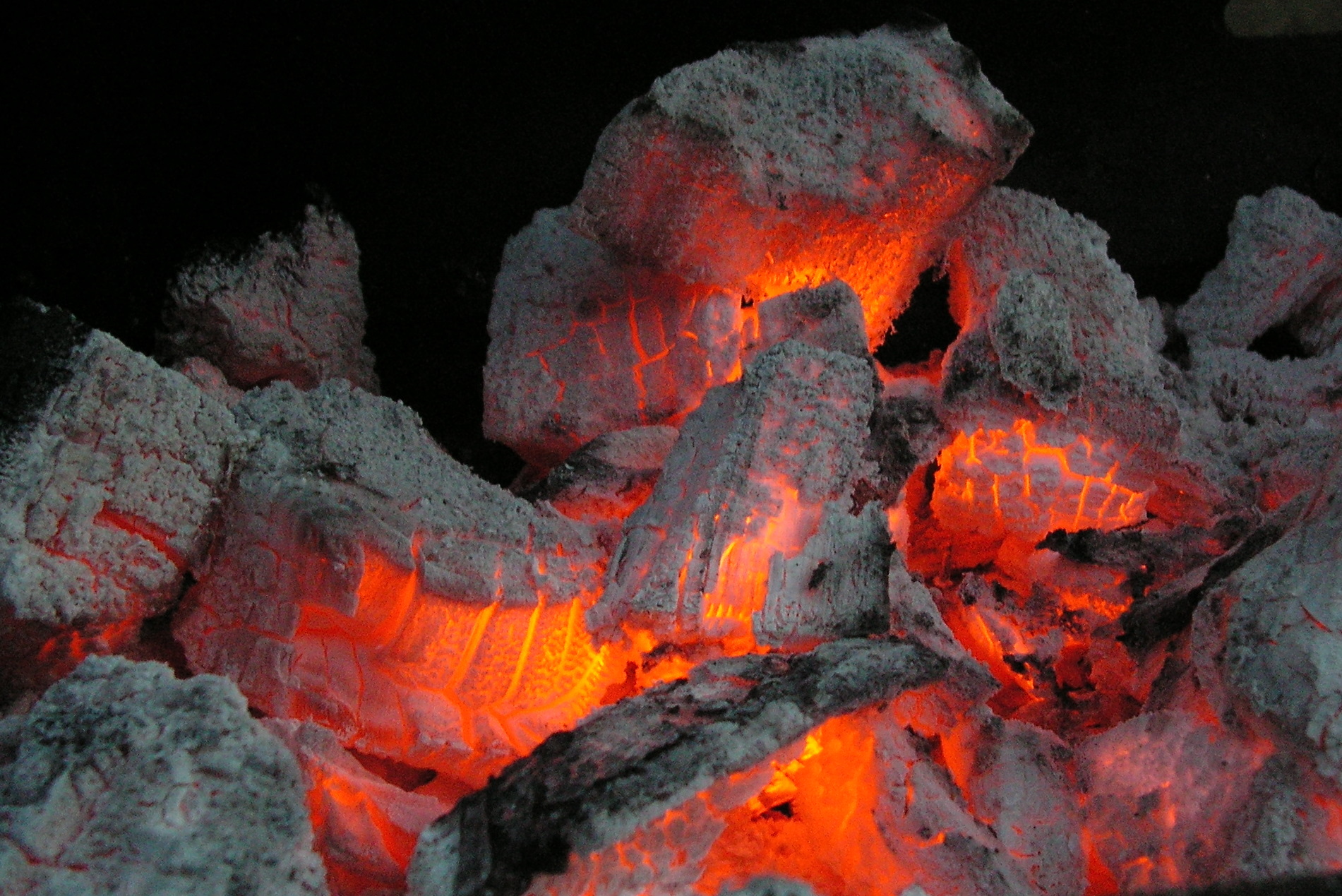
Luego de un enérgico y breve saludo con notas de bergamota pomelo y el atractivo bucólico del tagetes (esto es lo más caótico que llega a ser el perfume) la mezcla se torna más cálida y profunda. Flor de naranjo, absoluto de rosas y jazmín endulzan el líquido que, en este punto, conjura brasas ardientes, su calor y el efecto hipnótico que ejercen. Esta fascinante sensación se ve realzada por el opopanax, una de las notas que encuentro más magnéticas, y la cualidad introspectiva del incienso.  La base es un reconfortante abrazo de  dulce, dulce cuero, atalcada haba tonka,  majestuoso oud y un toque animal de almizcle. Esta equilibrada mélange da a luz una fragancia que se funde con la piel en vez de meramente apoyarse sobre ella.

Interlude no huele realmente como perfume, sino más como un ramillete de items fragantes, ensamblados de manera artística.  Estoy segura de que gustará a los amantes de Memoir Woman;  su estructura es más similar a la de Memoir que a la de los más tradicionales y sinfónicos Gold, Jubilation 25 y Ubar.

El resultado es sereno y sólido; seguro, pero no rígido. Inhalen profundamente y sean bienvenidos al nirvana olfativo.

Caro

Origen de la muestra: muestra cortesía de Amouage

foto: Amouage.com

Amouage Interlude Woman – An hypnotic moment

This is my first review for Té de Violetas (all former reviews, although now revised and corrected,  have previously been published on Notas & Acordes).  I was wondering what my first post would be about, when the postman (no pun intended) delivered a small package with samples of Amouage‘s most recent creation, Interlude.

Interlude Woman was composed by nose Karine Vinchon Spehner under the creative direction of Christopher Chong. God knows why, I was not expecting to like Interlude. I thought it would be chaotic and loud. Maybe I was misguided by the colourful brushstrokes that decorate the box? Interlude is grown up, strong and assertive but far from scandalous.

After a brief salute with bracing notes of bergamot, grapefruit and the  bucolic allure of tagetes (this is as chaotic as the fragrance ever gets) the blend becomes warmer and deeper. Orange blossom, rose absolute and jasmine sweeten the juice which, at this point, conjures glowing embers, their warmth and the entrancing effect they have. The fascinating feeling is enhanced by opopanax, one of the notes I find most hypnotic, and the introspective quality of frankincense.  The base is a comforting embrace of sweet, sweet leather, powdery tonka bean, majestic agarwood and animalic musk. This balanced mélange gives birth to a fragrance that melds into the skin instead of merely sitting on top of it.

Interlude doesn’t really smell like perfume, more like a bunch of  wonderfully fragrant items artfully arranged together. I am sure it will appeal to lovers of Memoir Woman; I find it a lot closer in structure to it than to the more traditional and symphonic Gold, Jubilation 25 and Ubar.

The result is serene and grounding, confident but not rigid. Inhale deeply and be welcome to olfactory nirvana.

Caro

Origin of sample: sample courtesy of Amouage